
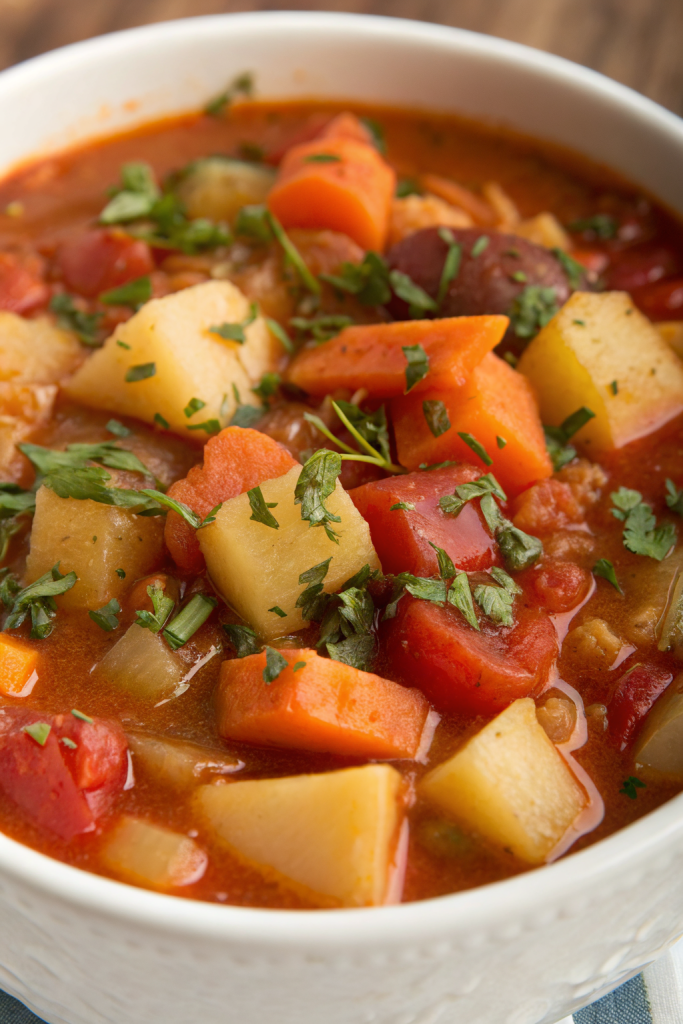
Fall Harvest Vegetable Soup Recipe tastes cozy and earthy, with sweet roasted squash, tender root vegetables, and a hint of fresh herbs in every spoonful. It works perfectly for busy weeknights or lazy Sundays, since you can get it on the table in about 50 minutes total. I first made a version of this soup in a tiny apartment kitchen with one dull knife and a wobbly cutting board, so you and your tools already have an advantage.
Why Choose This Fall Harvest Vegetable Soup Recipe
This Fall Harvest Vegetable Soup Recipe packs in seasonal vegetables, rich flavor, and a hearty texture that actually fills you up. It uses simple techniques, so newer cooks feel confident, and experienced cooks can tweak it to taste without much effort.
You can keep it vegetarian or make it more protein heavy with beans or shredded chicken. The soup also reheats beautifully, so meal preppers and lunch packers get a big win.
“This Fall Harvest Vegetable Soup tastes like a cozy sweater in a bowl, and my whole family asked for seconds on a Tuesday night. ★★★★★”
Ingredients You’ll Need
Vegetables
- 2 tablespoons olive oil
- 1 large yellow onion, diced
- 2 medium carrots, peeled and sliced
- 2 celery stalks, sliced
- 3 garlic cloves, minced
- 2 cups peeled and cubed butternut squash
- 2 medium Yukon Gold potatoes, cubed
- 1 small sweet potato, peeled and cubed
- 1 cup chopped green beans, fresh or frozen
- 1 cup corn kernels, fresh or frozen
- 1 cup chopped kale or baby spinach, loosely packed
You can swap butternut squash with acorn squash or pumpkin if that fits what you have. Use frozen chopped onions and mixed vegetables as a shortcut on busy nights. I like Yukon Gold potatoes because they hold shape and taste buttery, but russets work if you cut them a bit larger.
Broth, Beans, and Seasoning
- 6 cups vegetable broth or chicken broth
- 1 can (14.5 ounces) diced tomatoes, with juices
- 1 can (15 ounces) cannellini beans or great northern beans, drained and rinsed
- 1 teaspoon kosher salt, plus more to taste
- 1 teaspoon black pepper
- 1 teaspoon smoked paprika
- 1 teaspoon dried thyme
- 1 teaspoon dried oregano
- 1 bay leaf
- 1 tablespoon tomato paste
- 1 teaspoon maple syrup or honey, optional, to balance acidity
- Red pepper flakes to taste, optional
Use low sodium broth so you control the salt level. I like Muir Glen or similar brands for diced tomatoes because they taste bright and not metallic. If you only have chickpeas, use those instead of white beans and adjust the cooking time so they soften slightly.
Optional Finishing Touches
- 2 tablespoons chopped fresh parsley
- 1 tablespoon chopped fresh sage or rosemary
- Grated Parmesan or Pecorino for serving, or nutritional yeast for a dairy free option
- A squeeze of lemon juice for brightness
Fresh herbs at the end make the soup taste like you simmered it all day. Parmesan rinds add extra flavor if you simmer one in the pot and fish it out before serving. A little lemon juice at the end wakes up the vegetables and balances the sweetness of squash and carrots.
Equipment List
- Large heavy bottomed soup pot or Dutch oven, at least 5 quarts
- Sharp chef’s knife and cutting board
- Wooden spoon or heat safe spatula
- Ladle
- Measuring cups and spoons
A heavy pot helps prevent scorching on the bottom and keeps the simmer gentle. If you own an immersion blender, you can blend a portion of the soup right in the pot for a thicker texture. A simple peeler and a decent knife handle most of the prep without any fancy gadgets.
Tips & Tricks
- Cut vegetables in similar sizes so they cook evenly and finish at the same time.
- Brown the onions and carrots until they get a little color to build deeper flavor in the broth.
- Use frozen vegetables when you feel short on time, and add them during the last 10 to 15 minutes of simmering.
- Taste the broth before you add salt, since different broth brands vary a lot in sodium.
- Add leafy greens at the end so they stay bright and tender instead of overcooked.
- Stir in a spoonful of tomato paste and cook it for a minute before adding broth to add richness.
- Keep the soup at a gentle simmer, not a hard boil, so the vegetables stay tender and not mushy.
- If the soup tastes flat, add a pinch of salt and a splash of lemon juice instead of more herbs.
- Use leftover roasted vegetables from another meal and stir them in near the end to avoid overcooking.
- Cool the soup in shallow containers before chilling so it stays safe and keeps its fresh taste.
How to Make Fall Harvest Vegetable Soup Recipe
Step 1: Prep the Vegetables
Wash, peel, and chop all vegetables before you start cooking so the process feels smooth. Dice the onion, slice the carrots and celery, and cube the potatoes, sweet potato, and squash into bite size pieces. Mince the garlic and set it aside so it does not burn while you prep the rest.
If you use frozen vegetables, keep them in the freezer until you need them so they do not turn watery. Rinse and drain the beans so they do not add extra starch or canning liquid to the soup. Lay everything out near the stove to keep the cooking flow easy.
Step 2: Sauté the Aromatics
Heat the olive oil in your soup pot over medium heat until it shimmers. Add the onion, carrots, and celery, then stir and cook for 6 to 8 minutes until the vegetables soften and the onion turns lightly golden around the edges. Sprinkle in a pinch of salt to help them release moisture and cook more evenly.
Add the garlic and tomato paste and stir constantly for about 1 minute. The tomato paste will darken slightly and smell sweet and rich, which signals that it caramelized a bit. Keep the heat moderate so the garlic does not burn and turn bitter.
Step 3: Build the Base
Pour in the diced tomatoes with their juices and stir to scrape up any browned bits from the bottom of the pot. Add the cubed potatoes, sweet potato, squash, green beans, corn, thyme, oregano, smoked paprika, bay leaf, salt, and pepper. Stir everything so the spices coat the vegetables.
Add the broth and stir again, then raise the heat until the soup just starts to bubble. Once it reaches a gentle boil, lower the heat to maintain a steady simmer. Cover the pot partially so steam can escape and the liquid can reduce slightly.
Step 4: Simmer Until Tender
Let the soup simmer for 20 to 25 minutes, stirring occasionally so nothing sticks to the bottom. Check the potatoes and squash with a fork; they should feel tender and break apart easily. If the vegetables still feel firm, keep simmering and check again every 3 to 4 minutes.
Taste the broth at this point and adjust the seasoning with more salt, pepper, or smoked paprika. If the tomatoes taste sharp, stir in the maple syrup or honey to soften the acidity. Keep the simmer gentle so the vegetables hold their shape.
Step 5: Add Beans and Greens
Stir in the rinsed beans and chopped kale or spinach. Simmer for another 5 to 10 minutes until the greens wilt and the beans heat through. If the soup looks too thick, add a splash of broth or water.
If you like a thicker, creamier texture, use an immersion blender and blend a few quick pulses right in the pot. Blend only a portion so you keep some chunks of vegetables for texture. Taste again and adjust seasoning as needed.
Step 6: Finish and Serve
Turn off the heat and remove the bay leaf. Stir in the fresh parsley and sage or rosemary, along with a squeeze of lemon juice if you like a brighter flavor. Let the soup sit for 5 minutes so the flavors settle.
Ladle the Fall Harvest Vegetable Soup into bowls and top with grated Parmesan or nutritional yeast. Add a pinch of red pepper flakes if you enjoy some heat. Serve hot and enjoy that cozy fall aroma that will probably pull people into the kitchen.
What to Serve with it?
Serve this Fall Harvest Vegetable Soup Recipe with warm crusty bread, garlic toast, or simple buttered rolls to soak up the broth. A crisp green salad with apples, toasted nuts, and a light vinaigrette pairs nicely with the earthy vegetables. You can also offer grilled cheese sandwiches, quesadillas, or a simple pan toasted cheese sandwich for a kid friendly option. If you want more protein, add a side of roasted chicken thighs or baked tofu cubes and spoon the soup over cooked brown rice or quinoa.
Storage Options
- Cool the soup to room temperature within 1 to 2 hours, then store it in airtight containers in the fridge for up to 4 days.
- Freeze portions in freezer safe containers or zip bags for up to 3 months, leaving a little space at the top for expansion.
- Reheat on the stove over medium heat, adding a splash of broth or water if it thickened in the fridge.
- Reheat individual bowls in the microwave in 1 minute bursts, stirring between each, until the soup steams and the vegetables feel hot in the center.
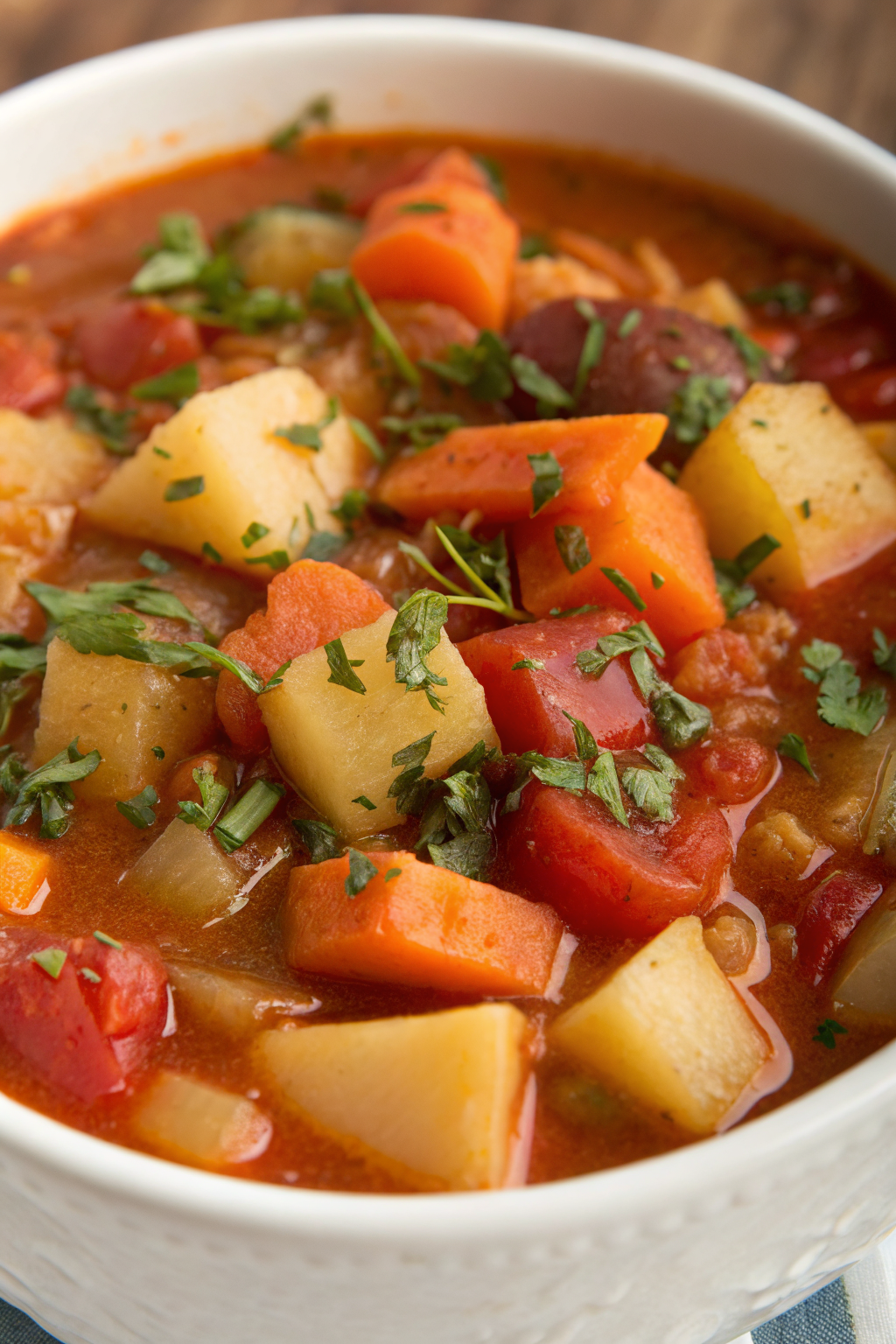
Fall Harvest Vegetable Soup Recipe
Ingredients
Method
- Wash, peel, and chop all the vegetables. Dice the onion, slice the carrots and celery, and cube the potatoes, sweet potato, and squash into bite-size pieces. Mince the garlic and set it aside.
- If using canned beans, drain and rinse them well. Keep any frozen vegetables in the freezer until needed so they don’t become watery.
- Heat the olive oil in a large heavy-bottomed soup pot or Dutch oven over medium heat until it shimmers.
- Add the onion, carrots, and celery. Cook, stirring occasionally, for 6 to 8 minutes, until the vegetables soften and the onion turns lightly golden around the edges. Season with a pinch of salt.
- Stir in the minced garlic and tomato paste. Cook, stirring constantly, for about 1 minute, until the tomato paste deepens in color and smells sweet and rich, without letting the garlic burn.
- Pour in the diced tomatoes with their juices, scraping up any browned bits from the bottom of the pot.
- Add the cubed potatoes, sweet potato, squash, green beans, corn, dried thyme, dried oregano, smoked paprika, bay leaf, salt, and black pepper. Stir to coat the vegetables evenly with the seasonings.
- Pour in the broth and stir again. Raise the heat to bring the soup just to a gentle boil, then reduce to maintain a steady simmer. Partially cover the pot so some steam can escape.
- Simmer the soup for 20 to 25 minutes, stirring occasionally, until the potatoes and squash are fork-tender and break apart easily.
- Taste the broth and adjust the seasoning with more salt, pepper, or smoked paprika as needed. If the tomatoes taste sharp, stir in the maple syrup or honey to balance the acidity.
- Stir in the rinsed beans and the chopped kale or spinach. Simmer for another 5 to 10 minutes, until the greens are wilted and the beans are heated through.
- If the soup seems too thick, add a splash of broth or water. For a creamier texture, use an immersion blender to partially blend the soup in the pot, leaving some chunks for texture.
- Turn off the heat and remove the bay leaf. Stir in the fresh parsley and sage or rosemary, along with a squeeze of lemon juice if you like a brighter flavor.
- Let the soup rest for about 5 minutes so the flavors can settle. Taste once more and adjust seasoning if needed.
- Ladle the soup into bowls and top with grated Parmesan or nutritional yeast. Add red pepper flakes for a little heat if desired. Serve hot with crusty bread, salad, or your favorite sides.
Notes
Approximate per 1 of 6 servings (made with vegetable broth, cannellini beans, and no cheese): 230 calories; fat 7 g; saturated fat 1 g; carbohydrates 36 g; fiber 7 g; sugars 9 g; protein 8 g; sodium 680 mg. Values will vary based on broth, beans, added cheese, and portion size.