
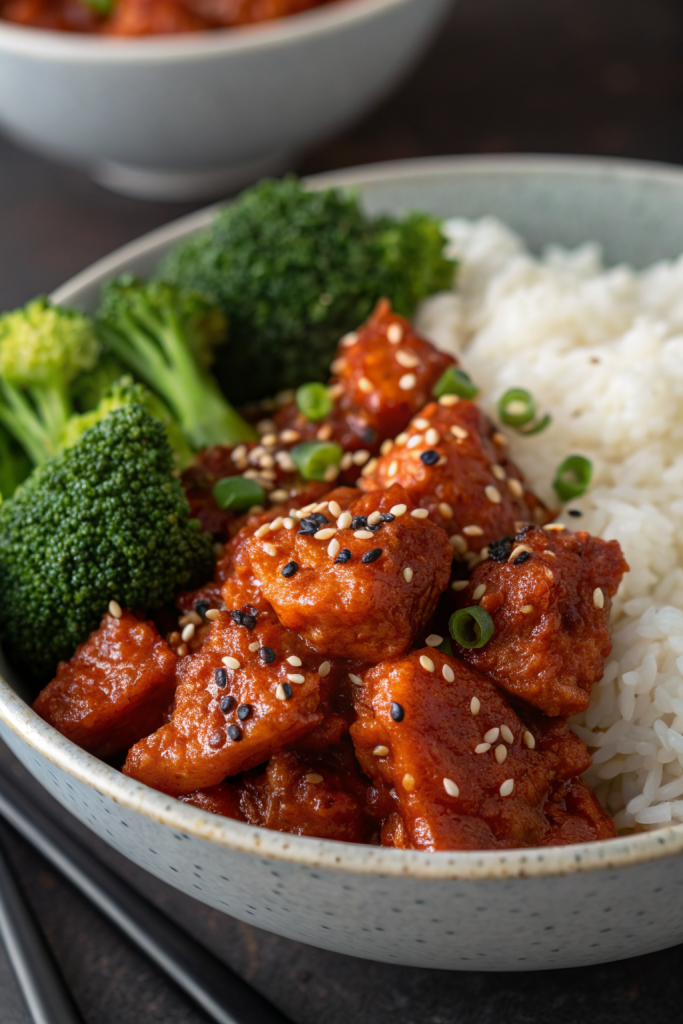
Spicy Korean Chicken Recipe hits you with a sweet, garlicky, gochujang heat that clings to juicy chicken and makes rice disappear in record time, and it works perfectly for busy weeknights or casual weekend dinners in about 35–40 minutes total. This recipe suits spice lovers, meal preppers, and anyone who wants big flavor without restaurant prices. I tested versions of this dish so many times that my family started rating them like a TV cooking show.
Why You Should Try This Spicy Korean Chicken Recipe
This Spicy Korean Chicken Recipe packs bold flavor from gochujang, garlic, ginger, and a touch of sweetness, so every bite tastes sticky, spicy, and slightly smoky. The sauce caramelizes around the chicken and turns into a glossy coating that clings to each piece.
You can cook it in a skillet, grill pan, or outdoor grill, so the recipe fits whatever setup you have. It works great for meal prep, rice bowls, lettuce wraps, or a quick dinner that tastes like takeout but uses simple pantry ingredients.
“This Spicy Korean Chicken Recipe tastes better than my local Korean takeout and comes together faster than delivery ★★★★★”
Ingredients You’ll Need
You can use boneless skinless chicken thighs or chicken breast, but thighs stay juicier and handle high heat better. I prefer thighs for this Spicy Korean Chicken Recipe, especially when I grill or sear in a cast iron pan.
Chicken
- 1.5 to 2 pounds boneless skinless chicken thighs
- Optional: 1 pound boneless skinless chicken breast, sliced into thin strips, if you want a mix of light and dark meat
Marinade & Sauce
Gochujang gives this recipe its signature spicy depth. Look for brands like Chung Jung One, Bibigo, or CJ at Asian markets or the international aisle.
- 3 tablespoons gochujang (Korean red chili paste)
- 1 to 2 tablespoons gochugaru (Korean red pepper flakes), adjust to your heat level
- 3 tablespoons low sodium soy sauce
- 2 tablespoons toasted sesame oil
- 3 tablespoons brown sugar or honey
- 2 tablespoons rice vinegar or apple cider vinegar
- 4 cloves garlic, finely minced or grated
- 1 tablespoon fresh ginger, grated
- 1 tablespoon neutral oil (canola, avocado, or grapeseed)
- 1 tablespoon water, to loosen the sauce if it looks too thick
Optional Flavor Boosters
These ingredients add extra depth but you can skip them if you want to keep things simple.
- 1 tablespoon mirin or a splash of pineapple juice for extra sweetness
- 1 teaspoon fish sauce for umami depth
- 1 teaspoon roasted sesame seeds in the marinade
Toppings & Garnish
- 2 green onions, thinly sliced
- 1 tablespoon toasted sesame seeds
- Extra gochugaru for sprinkling on top
- Thinly sliced fresh chili or jalapeño if you love extra heat
Pantry Shortcuts & Substitutions
You can still cook a great Spicy Korean Chicken Recipe if you miss a few specialty items.
- No gochugaru: Use crushed red pepper flakes, start with half the amount and adjust.
- No rice vinegar: Use apple cider vinegar or white wine vinegar.
- No fresh ginger: Use 1 teaspoon ground ginger.
- No brown sugar: Use white sugar plus a tiny drizzle of molasses or just honey.
Equipment List
You do not need fancy tools, just solid basics.
- Large mixing bowl or zip-top bag for marinating
- Cutting board and sharp knife
- Measuring spoons and cups
- Large skillet, cast iron pan, grill pan, or outdoor grill
- Tongs or spatula
- Small bowl and whisk for mixing the sauce, if you prefer to mix separately
Tips & Tricks
- Slice chicken into similar sized pieces so they cook evenly and stay juicy.
- Marinate at least 20 minutes, but aim for 1 to 4 hours in the fridge for deeper flavor.
- Pat chicken lightly with a paper towel before cooking so the marinade clings but does not pool and steam.
- Preheat your pan or grill until it feels hot so the chicken sears and caramelizes instead of boiling.
- Cook in batches if needed so you avoid crowding the pan and losing that nice char.
- Taste the sauce before you add the chicken and adjust heat, sweetness, or salt to your preference.
- Add a splash of water near the end if the sauce looks too thick or sticky in the pan.
- Use thighs if you want maximum tenderness and forgiveness with cooking time.
- Keep kids in mind and cut the gochugaru in half or skip it and rely on gochujang only.
- Save extra sauce in a separate bowl before you touch raw chicken if you want a drizzle for serving.
How to Make Spicy Korean Chicken Recipe
Mix the Marinade
- Add gochujang, gochugaru, soy sauce, sesame oil, brown sugar or honey, rice vinegar, garlic, ginger, neutral oil, and water to a bowl.
- Whisk until the mixture looks smooth and glossy with no big clumps of gochujang.
- Taste a tiny bit and adjust sweetness, salt, or heat so the flavor hits your preference.
Prep the Chicken
- Trim extra fat from the chicken thighs and cut them into bite sized pieces or leave them whole if you plan to grill.
- Place the chicken in a large bowl or zip-top bag.
- Pour the marinade over the chicken and coat every piece thoroughly.
Marinate
- Cover the bowl or seal the bag and place it in the fridge.
- Marinate at least 20 minutes, but aim for 1 to 4 hours for stronger flavor.
- Stir or flip the bag halfway through if you can, so the marinade touches every surface.
Cook on the Stove
- Heat a large skillet or cast iron pan over medium high heat until it feels hot.
- Add a small drizzle of oil if your pan needs it, then add chicken in a single layer.
- Cook 4 to 6 minutes on the first side until the edges look caramelized and slightly charred.
- Flip the pieces and cook another 3 to 5 minutes until the chicken cooks through and the sauce thickens and clings.
- Check that the thickest piece reaches 165°F, then pull the pan off the heat.
Cook on the Grill or Grill Pan
- Preheat your grill or grill pan over medium high heat and oil the grates lightly.
- Place whole marinated thighs or larger pieces on the grill.
- Grill 5 to 7 minutes per side, basting with extra marinade from the bowl during the first half of cooking.
- Move pieces around if you see hot spots so they cook evenly and pick up nice char.
- When the chicken reaches 165°F and looks caramelized, transfer it to a plate and rest it a few minutes.
Finish and Garnish
- Slice or chop the cooked chicken into bite sized pieces if you grilled whole thighs.
- Spoon any thickened sauce from the pan or resting plate over the chicken.
- Sprinkle with sliced green onions, toasted sesame seeds, and a pinch of gochugaru.
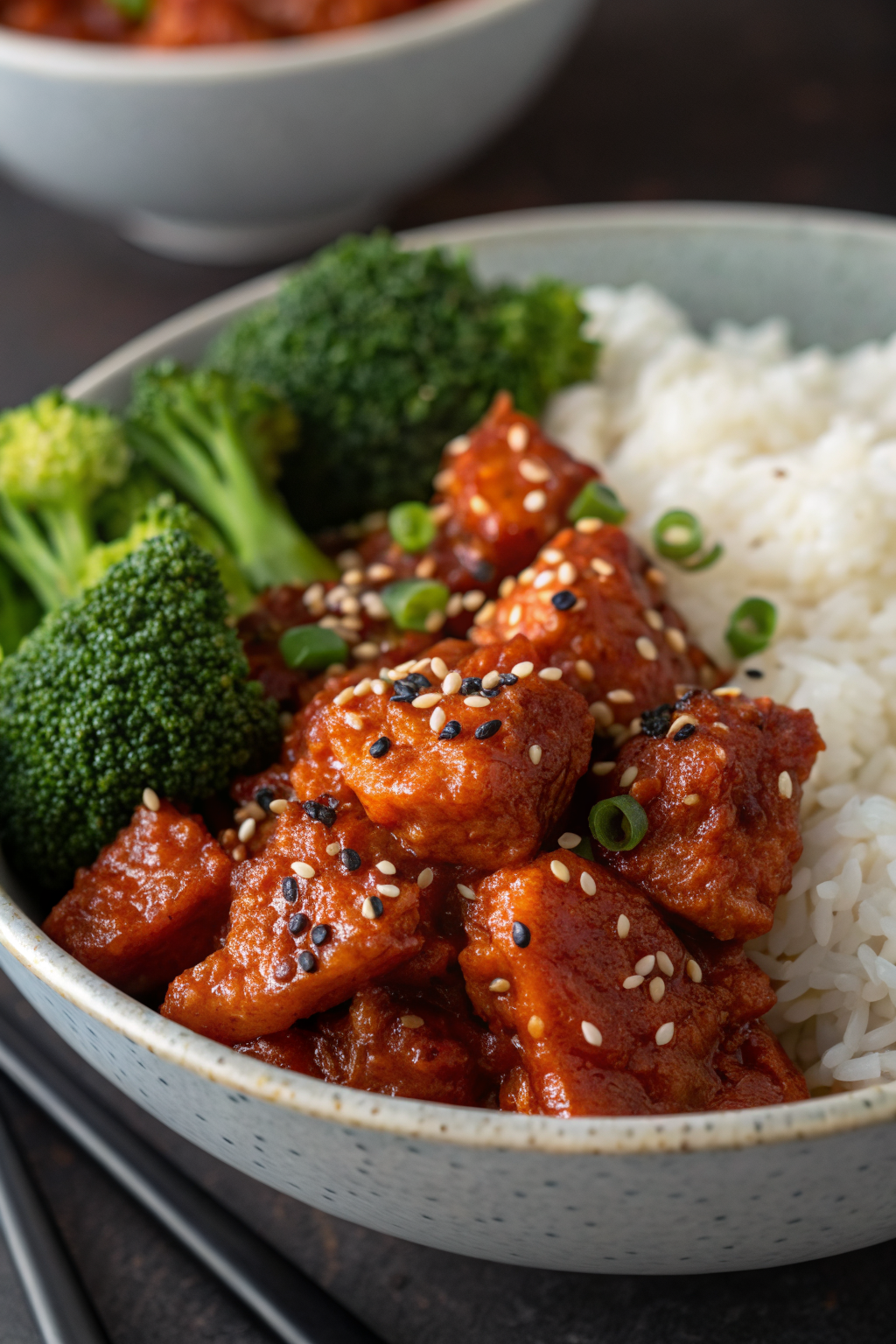
- Serve hot over rice, in lettuce wraps, or in a bowl with your favorite sides.
What to Serve with Spicy Korean Chicken Recipe
This Spicy Korean Chicken Recipe loves a big bowl of steamed white rice or jasmine rice, but brown rice or quinoa also work great. Add simple sides like cucumber salad, kimchi, sautéed spinach, or roasted broccoli to balance the heat. Lettuce leaves turn it into fun wraps, and you can add sliced avocado or a fried egg on top for extra richness. Kids often enjoy it with plain rice, sliced cucumbers, and a drizzle of mild yogurt or mayo based sauce to cool things down.
Storage Options
- Store leftover Spicy Korean Chicken Recipe in an airtight container in the fridge for up to 3 to 4 days.
- Freeze cooked chicken in freezer safe containers or bags for up to 2 months, and label with the date.
- Reheat gently in a skillet over medium heat with a splash of water to loosen the sauce and keep the chicken tender.
- Use the microwave in short bursts, stir between intervals, and stop as soon as the chicken feels hot so it does not dry out.
Spicy Korean Chicken Recipe
Ingredients
Method
- In a large bowl, combine gochujang, gochugaru, soy sauce, sesame oil, brown sugar or honey, rice vinegar, garlic, ginger, neutral oil, and water.
- Whisk until the mixture is smooth and glossy with no clumps of gochujang.
- Taste a small amount and adjust sweetness, salt, or heat to your preference.
- Trim excess fat from the chicken thighs and cut them into bite-size pieces, or leave them whole if you plan to grill.
- Place the chicken in a large mixing bowl or zip-top bag.
- Pour the marinade over the chicken and toss or massage until every piece is thoroughly coated.
- Cover the bowl or seal the bag and refrigerate for at least 20 minutes, ideally 1–4 hours for deeper flavor.
- If possible, stir the chicken or flip the bag halfway through so the marinade touches every surface.
- Heat a large skillet or cast iron pan over medium-high heat until hot.
- Lightly pat the marinated chicken with paper towels so the marinade clings but does not pool, then add the chicken in a single layer. Cook in batches if needed to avoid crowding.
- Cook for 4–6 minutes on the first side until the edges are caramelized and slightly charred.
- Flip and cook another 3–5 minutes, or until the chicken is cooked through and the sauce thickens and clings to the pieces.
- Check that the thickest pieces reach 165°F, then remove the pan from the heat.
- If the sauce becomes too thick or sticky, add a small splash of water and toss to loosen.
- Preheat an outdoor grill or grill pan over medium-high heat and lightly oil the grates.
- Place whole marinated thighs or larger pieces on the grill in a single layer.
- Grill for 5–7 minutes per side, basting with any reserved marinade from the bowl during the first half of cooking.
- Move pieces around as needed to avoid hot spots and encourage even char.
- Cook until the chicken reaches 165°F and looks deeply caramelized, then transfer to a plate and rest for a few minutes.
- If you grilled whole thighs, slice or chop the cooked chicken into bite-size pieces.
- Spoon any thickened sauce from the pan or resting plate over the chicken.
- Top with sliced green onions, toasted sesame seeds, and a pinch of gochugaru or fresh chili if you like extra heat.
- Serve hot over rice, in lettuce wraps, or in bowls with your favorite sides such as cucumber salad, kimchi, sautéed spinach, or roasted broccoli.
Notes
Approximate per serving (4 servings, using 1.75 lb thighs, without optional boosters or toppings): 340 calories; fat 17 g; saturated fat 4 g; carbohydrates 18 g; fiber 1 g; sugars 13 g; protein 29 g; sodium 930 mg. Values will vary based on exact amounts, brands, and portion size.