
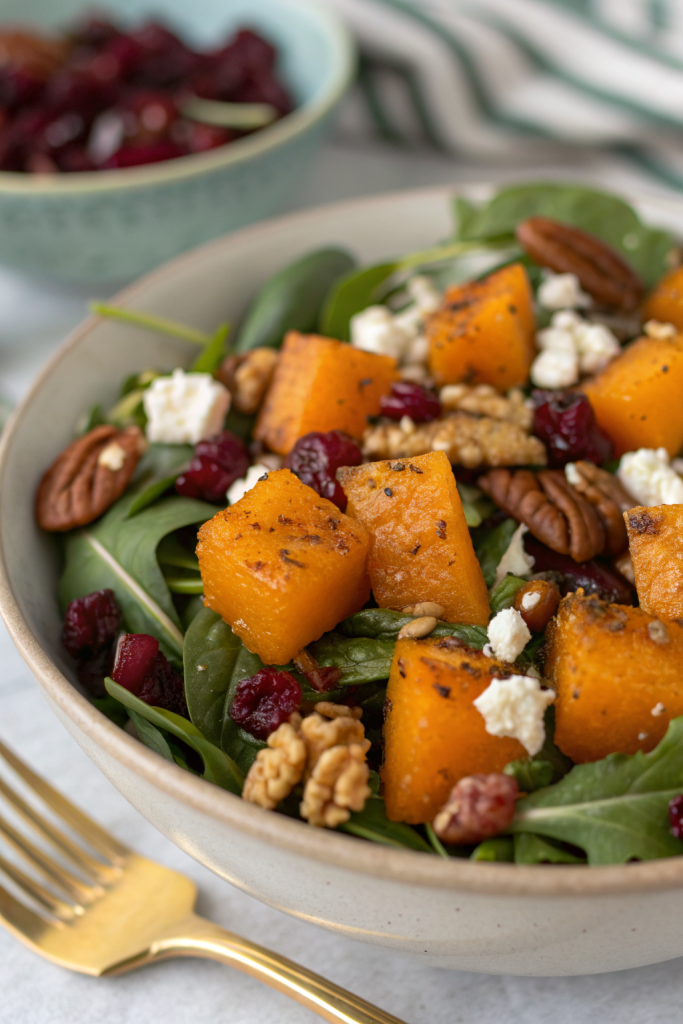
Butternut Squash Feta Salad Recipe hits all the notes: sweet roasted squash, salty feta, crunchy nuts, and a bright lemony dressing that tastes like fall in a bowl. It works perfectly for busy weeknights or holiday tables and comes together in about 45 minutes total. I first tossed this together after a fridge clean-out, and my family now requests it more often than my mac and cheese, which honestly stings a little.
Why Choose This Butternut Squash Feta Salad Recipe
This salad tastes cozy and fresh at the same time. Roasted butternut squash brings caramelized sweetness, feta adds creamy saltiness, and a simple vinaigrette ties everything together with citrus and herbs.
It suits meal prep, potlucks, and holiday spreads. You can serve it warm, room temperature, or chilled, so it fits whatever chaos your schedule throws at you.
“I made this Butternut Squash Feta Salad Recipe for a family dinner and everyone asked for seconds and the recipe ★★★★★”
Ingredients You’ll Need
Here is everything you need for this Butternut Squash Feta Salad Recipe.
Salad ingredients
-
1 medium butternut squash
- About 2 ½ to 3 pounds whole, which yields around 4 cups cubed
- Choose a squash with a long neck and a small bulb for easier peeling and more usable flesh
-
3 tablespoons olive oil
- Use extra virgin for best flavor
- I like California Olive Ranch or Kirkland organic from Costco
-
1 teaspoon kosher salt
-
½ teaspoon freshly ground black pepper
-
½ teaspoon garlic powder
-
½ teaspoon smoked paprika or sweet paprika
-
½ teaspoon dried thyme or Italian seasoning
-
4 cups baby spinach or mixed spring greens
- Prewashed boxed greens save time and dishes
-
½ small red onion, thinly sliced
- Soak slices in cold water for 10 minutes if you want a milder bite
-
½ cup crumbled feta cheese
- Use block feta in brine if possible, it tastes creamier and less chalky
- Sheep’s milk feta gives the best tang, but cow’s milk feta works fine
-
½ cup toasted nuts or seeds
- Options: chopped pecans, walnuts, sliced almonds, or pumpkin seeds
- I like salted roasted pepitas when I want extra crunch
-
½ cup dried cranberries or golden raisins
- Look for low sugar brands if you prefer less sweetness
-
1 small avocado, diced (optional but highly recommended)
-
2 tablespoons chopped fresh parsley or cilantro
Dressing ingredients
- 3 tablespoons extra virgin olive oil
- 2 tablespoons fresh lemon juice
- 1 tablespoon apple cider vinegar or red wine vinegar
- 1 to 2 teaspoons honey or pure maple syrup
- Maple pairs especially well with butternut squash
- 1 teaspoon Dijon mustard
- 1 small garlic clove, minced or grated
- ¼ teaspoon kosher salt, more to taste
- ¼ teaspoon black pepper
Substitutions and variations
- Swap butternut squash with cubed sweet potato if that is what you have.
- Use goat cheese instead of feta for a creamier, tangier salad.
- Try arugula in place of spinach if you like a peppery bite.
- Replace nuts with sunflower seeds or pumpkin seeds for a nut free version.
- Add cooked quinoa or farro to turn this into a full meal salad.
Equipment list
- Large sharp chef’s knife
- Vegetable peeler
- Large cutting board
- Large baking sheet
- Parchment paper or silicone baking mat (helps with cleanup)
- Large salad bowl
- Small jar with lid or small bowl and whisk for the dressing
- Tongs or salad servers
Tips & Tricks
- Peel the squash with a Y peeler in downward strokes and trim both ends to keep it stable.
- Cut the squash into even ¾ inch cubes so they roast at the same rate and caramelize nicely.
- Toss the squash with oil and seasoning in a bowl before spreading on the pan so every cube gets coated.
- Spread squash in a single layer with space between pieces to avoid steaming.
- Roast on high heat at 400 to 425°F to get browned edges and sweet flavor.
- Crumble feta from a block instead of buying pre crumbled for better texture and taste.
- Shake the dressing in a jar so it emulsifies quickly and stores easily in the fridge.
- Dress the greens lightly, then add more dressing only if needed so the salad never turns soggy.
- Add avocado right before serving to keep it bright and creamy.
- Taste and adjust salt and acid at the end since feta and nuts both add extra flavor.
How to Make Butternut Squash Feta Salad Recipe
Step 1: Prep and roast the butternut squash
Preheat your oven to 400°F and line a large baking sheet with parchment paper. Peel the butternut squash, slice it in half lengthwise, scoop out the seeds, and cut it into ¾ inch cubes. Add the cubes to a large bowl and drizzle with 3 tablespoons olive oil.
Sprinkle on the salt, pepper, garlic powder, smoked paprika, and dried thyme. Toss until every cube looks coated with oil and seasoning. Spread the squash in a single layer on the baking sheet with a little space between pieces.
Roast for 25 to 30 minutes, tossing halfway through. Pull the squash when the edges look browned and the centers feel tender when you pierce them with a fork. Set the pan aside and let the squash cool slightly while you prep the rest of the salad.
Step 2: Toast the nuts or seeds
Place your nuts or seeds in a dry skillet over medium heat. Stir frequently until they smell fragrant and look lightly golden, about 3 to 5 minutes. Transfer them to a plate to cool so they do not keep cooking in the hot pan.
Step 3: Mix the dressing
Add olive oil, lemon juice, vinegar, honey or maple syrup, Dijon mustard, garlic, salt, and pepper to a small jar. Screw on the lid and shake until the dressing looks thick and blended. Taste and adjust with more salt, lemon, or honey to match your preference.
If you do not have a jar, whisk everything in a small bowl until it looks smooth. Keep the dressing at room temperature while you assemble the salad so the oil does not firm up.
Step 4: Prep the salad base
Add the spinach or mixed greens to a large salad bowl. Pat the red onion slices dry if you soaked them, then scatter them over the greens. Add dried cranberries or raisins and most of the toasted nuts, saving a small handful for garnish.
Drizzle a few tablespoons of dressing over the greens. Toss gently until the leaves look lightly coated but not drenched. Taste a leaf and add another spoonful of dressing if it needs more flavor.
Step 5: Add squash, feta, and avocado
Add the warm or room temperature roasted butternut squash to the salad bowl. Sprinkle the crumbled feta over the top. Add diced avocado if you use it.
Gently toss everything together so the squash and feta distribute through the greens without turning into mush. Sprinkle the remaining nuts and the chopped fresh herbs over the top. Finish with a light drizzle of dressing if the salad looks dry.
Step 6: Taste and serve
Taste a forkful that includes squash, feta, greens, and dressing. Adjust with a pinch of salt, extra lemon juice, or a tiny drizzle of honey if you want more brightness or sweetness. Serve the salad right away while the squash still feels slightly warm, or let it sit for 10 minutes so the flavors mingle.
What to Serve with it?
This Butternut Squash Feta Salad Recipe pairs nicely with grilled chicken, roasted turkey breast, or simple baked salmon. You can serve it alongside a bowl of tomato soup or lentil soup for a cozy, veggie packed dinner. It also works well with roasted carrots, steamed green beans, or a simple garlic butter pasta.
I like to add warm crusty bread, garlic toast, or whole grain rolls on the side to soak up any extra dressing. If you pack lunches, spoon leftovers into containers and add a hard boiled egg or some chickpeas for extra protein.
Storage Options
- Store leftover salad in an airtight container in the fridge for up to 3 days, but keep the greens and dressing separate if possible.
- Keep roasted butternut squash in a separate container in the fridge for up to 4 days and add it to fresh greens as needed.
- Store the dressing in a jar in the fridge for up to 1 week and shake it again before each use.
- Avoid freezing the assembled salad, but you can freeze plain roasted squash in a freezer bag for up to 2 months and reheat it in a hot skillet or oven before adding to fresh salad.
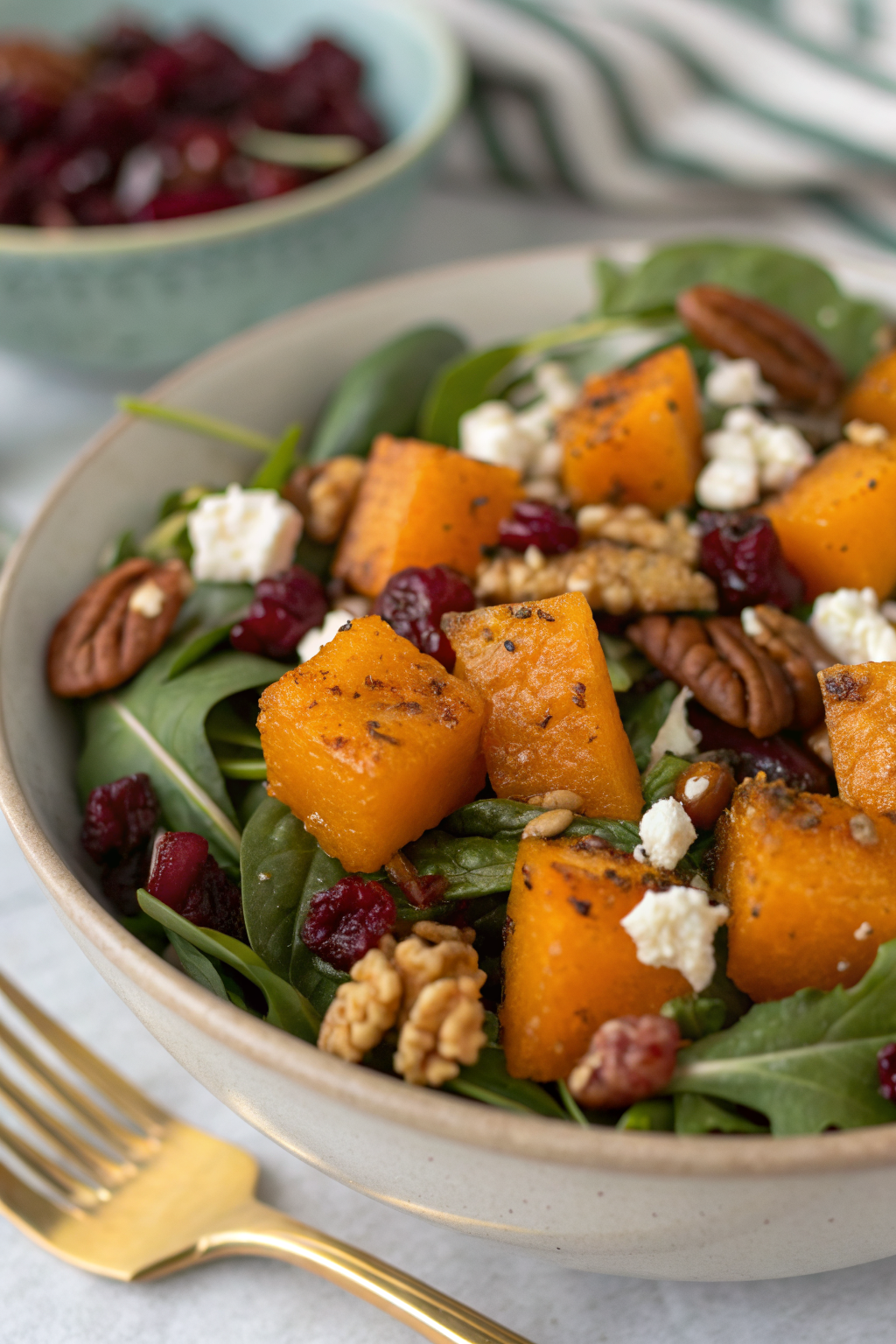
Butternut Squash Feta Salad Recipe
Ingredients
Method
- Preheat the oven to 400°F (200°C) and line a large baking sheet with parchment paper.
- Peel the butternut squash, slice it in half lengthwise, scoop out the seeds, and cut it into 3/4-inch cubes.
- Place the squash cubes in a large bowl. Add 3 tablespoons olive oil, kosher salt, black pepper, garlic powder, smoked paprika, and dried thyme. Toss until all the squash is evenly coated.
- Spread the squash in a single layer on the prepared baking sheet, leaving a little space between pieces so they roast instead of steam.
- Roast for 25 to 30 minutes, tossing halfway through, until the edges are browned and the centers are tender when pierced with a fork. Set aside to cool slightly.
- While the squash roasts, toast the nuts or seeds in a dry skillet over medium heat, stirring frequently, until fragrant and lightly golden, 3 to 5 minutes. Transfer to a plate to cool.
- Make the dressing by combining olive oil, lemon juice, vinegar, honey or maple syrup, Dijon mustard, garlic, salt, and pepper in a small jar. Secure the lid and shake until thick and emulsified, or whisk together in a small bowl until smooth.
- Add the spinach or mixed greens to a large salad bowl. Pat the red onion slices dry if you soaked them, then scatter over the greens. Add the dried cranberries or raisins and most of the toasted nuts, reserving a small handful for garnish.
- Drizzle a few tablespoons of the dressing over the greens and toss gently until the leaves are lightly coated. Taste and add more dressing if needed.
- Add the warm or room temperature roasted butternut squash to the bowl. Sprinkle with crumbled feta and add the diced avocado, if using.
- Gently toss the salad so the squash, feta, and avocado are evenly distributed without mashing them. Top with the remaining nuts and the chopped fresh herbs. Add a final drizzle of dressing if the salad looks dry.
- Taste and adjust with a pinch of salt, extra lemon juice, or a small drizzle of honey if you want more brightness or sweetness. Serve warm, at room temperature, or chilled.
Notes
Approximate per serving (1 of 6): 310 calories; fat 20 g; saturated fat 5 g; carbohydrates 30 g; fiber 6 g; sugars 12 g; protein 7 g; sodium 520 mg. Values will vary based on specific ingredients, brands, and portion size.