
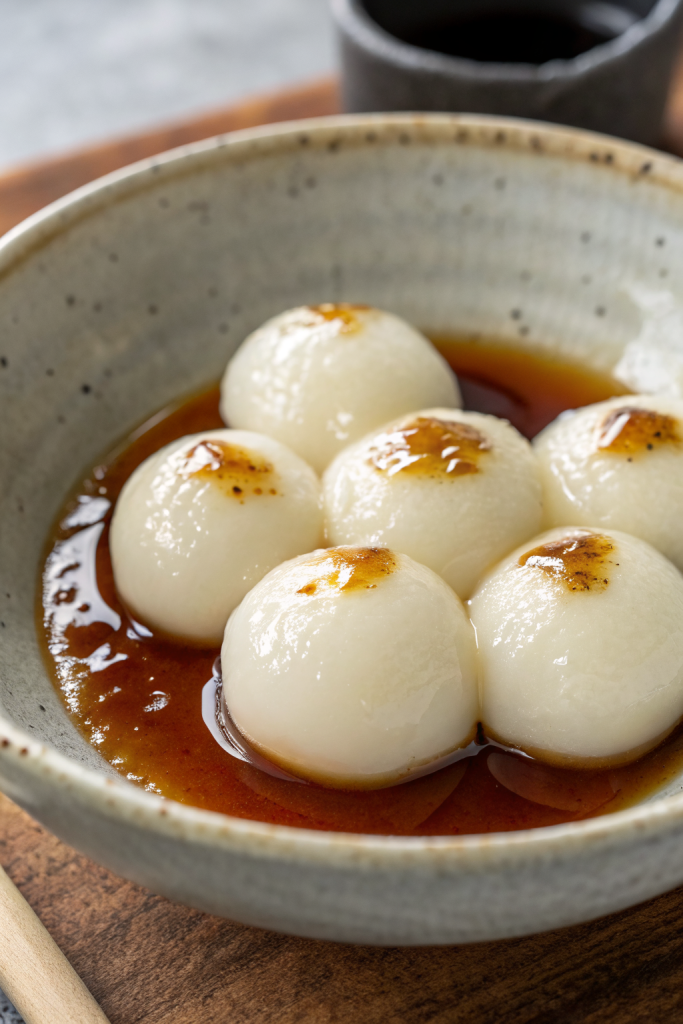
Shiratama Dango Japanese Dessert Recipe tastes soft, chewy, and slightly sweet, like a cross between mochi and marshmallows that decided to behave themselves. It suits anyone who loves Japanese desserts, wants a gluten free treat, and has about 25 minutes from start to finish. I still remember the first time I made shiratama in my tiny apartment kitchen and accidentally ate the entire batch over the sink.
Why Make This Shiratama Dango Japanese Dessert Recipe at Home
Homemade shiratama dango taste fresher, softer, and bouncier than anything from a package. You control the sweetness, toppings, and texture, so you can make them extra chewy or very tender.
You also need only a few ingredients and one pot, which makes this a great beginner friendly Japanese dessert. Kids love to roll the little dumplings, and adults love that the recipe uses pantry staples and cooks fast.
Soft, chewy, and perfectly bouncy, this Shiratama Dango Japanese Dessert Recipe tastes like a dessert shop treat that you made in under 30 minutes at home ★★★★★
Ingredients You Need
Main ingredients
- Shiratamako (glutinous rice flour for shiratama)
- Classic choice for this Shiratama Dango Japanese Dessert Recipe.
- Brands I like: Shirakiku, Koda Farms, or any Japanese brand labeled “shiratamako”.
- Do not swap with regular rice flour, since that gives a gritty texture.
- Water
- Use room temperature water.
- Add it gradually so you control the dough texture.
- Sugar (optional, for slightly sweet dumplings)
- Use regular granulated sugar.
- You can skip it if you plan a very sweet topping like anko or syrup.
- Cornstarch or potato starch
- Use this for dusting the cooked dumplings so they do not stick.
- Katakuriko (potato starch) works very well and feels traditional.
Classic toppings and sauces
Pick one or mix and match. This dessert loves variety.
- Anko (sweet red bean paste)
- Tsubuan (chunky) or koshian (smooth), either works.
- Canned anko from Japanese or Asian markets saves time and tastes great.
- Kinako sugar mix
- 3 tablespoons kinako (roasted soybean flour)
- 1.5 to 2 tablespoons sugar
- Small pinch of salt
- Mix in a small bowl and adjust sweetness to taste.
- Kuromitsu style syrup shortcut
- 3 tablespoons dark brown sugar
- 2 tablespoons water
- Tiny pinch of salt
- Heat in a small pot until sugar dissolves and thickens slightly.
- Fresh fruit
- Strawberries, kiwi, mango, or sliced banana pair nicely with the chewy dumplings.
- Canned fruit cocktail in juice works as a quick pantry shortcut.
- Matcha sauce (optional)
- 1 teaspoon matcha powder
- 2 to 3 teaspoons hot water
- 1.5 tablespoons sugar or honey
- Stir until smooth and slightly thick.
Pantry shortcuts
- Use canned anko instead of cooking beans from scratch.
- Use bottled kuromitsu from a Japanese market if you find it.
- Use frozen fruit when fresh fruit costs too much or looks sad.
Equipment list
- Medium mixing bowl
- Silicone spatula or wooden spoon
- Kitchen scale or measuring cups
- Small bowl of water for your hands
- Large pot for boiling water
- Slotted spoon or small strainer
- Large bowl with cold water and ice
- Tray or plate dusted with starch
Tips & Mistakes
- Add water to the shiratamako gradually so you hit the right texture and avoid a sticky mess.
- Aim for a dough that feels like soft earlobe or playdough, not dry and crumbly and not wet and sticky.
- If the dough cracks when you roll it, knead in a teaspoon of water at a time.
- If the dough sticks to your hands, dust your palms with a tiny bit of shiratamako or starch.
- Roll the balls small, about marble size, so they cook evenly and stay cute in the bowl.
- Press a tiny dent in the center of each ball with your finger so they cook through and do not burst.
- Keep the water at a gentle boil, not a wild one, so the dumplings hold their shape.
- Stir right after you add the dumplings so they do not stick to the bottom of the pot.
- Move the cooked dumplings to ice water so they keep a bouncy, chewy texture.
- Do not leave them in the fridge overnight without syrup or liquid, or they harden and turn sad.
- Add toppings just before serving so the dumplings stay pretty and do not soak up too much sauce.
- Taste one dumpling from each batch so you adjust cooking time to your stove and pot.
How to Make Shiratama Dango Japanese Dessert Recipe
Step 1: Mix the dough
Add shiratamako to a medium bowl.
Sprinkle sugar over the flour if you use it.
Pour in water a little at a time while you mix with a spatula or your hand.
When the dough starts to clump, switch to your hand and knead.
Press and fold until the dough feels smooth and soft.
You want a texture that holds together without cracks and does not stick to your fingers.
Step 2: Adjust the texture
If the dough feels dry or cracks when you press it, add 1 teaspoon of water and knead again.
If it feels sticky, sprinkle a small pinch of shiratamako and knead.
You should shape a ball, press it, and see a smooth surface without crumbling.
Step 3: Shape the dumplings
Divide the dough into 4 equal pieces, then roll each piece into a log.
Cut each log into small pieces about the size of a large marble.
Roll each piece into a smooth ball between your palms.
Press a tiny dent in the center of each ball with your finger or thumb.
This helps the center cook evenly and gives the dumpling a cute dimpled look.
Place the shaped dumplings on a plate so they do not touch too much.
Step 4: Boil the dumplings
Bring a large pot of water to a gentle boil.
Carefully slide the dumplings into the water and stir right away so they do not stick.
The dumplings sink at first, then float as they cook.
Once they float, cook them for about 1 to 2 more minutes so the center cooks through.
Taste one dumpling to check the texture.
It should feel chewy and bouncy, not powdery in the middle.
Step 5: Chill in ice water
Prepare a large bowl with cold water and some ice.
Use a slotted spoon to scoop the cooked dumplings from the pot.
Transfer them straight into the ice water.
Let them sit in the cold water for a few minutes so they firm up and keep their chew.
Gently swish them so they do not stick together.
Drain them well before you plate them.
Step 6: Plate and add toppings
Dust a tray or plate with cornstarch or potato starch.
Place the drained dumplings on the tray in a single layer.
Roll them lightly so they pick up a thin coat of starch and stay separate.
Serve them in small bowls.
Top with anko, kinako sugar mix, fruit, or syrup.
Drizzle matcha sauce or brown sugar syrup if you like extra sweetness.
Variations I’ve Tried
I like to mix a little matcha powder into the shiratamako before I add water for green tea shiratama dango.
The dough turns pale green and tastes slightly earthy, which pairs nicely with sweet red bean paste.
I also add a tiny bit of cocoa powder for chocolate style dumplings, then serve them with sliced strawberries.
Another favorite version uses half water and half silken tofu, which gives a softer, slightly richer texture and extra protein.
You can also color small portions of the dough with natural powders like beet powder or pumpkin powder.
Those versions look fun in fruit parfaits and kids love the colorful bowl.
How to Serve Shiratama Dango Japanese Dessert Recipe
Serve shiratama dango slightly chilled with a generous spoonful of anko and a drizzle of brown sugar syrup.
Add fresh fruit like strawberries, kiwi, or mango for color and a bright flavor contrast.
You can also roll the dumplings in kinako sugar and serve them with a side of matcha or hot green tea.
For a parfait style dessert, layer fruit, sweetened yogurt or vanilla ice cream, and shiratama dango in a glass.
How to store
- Room temperature: Keep plain cooked shiratama dango at cool room temperature for up to 2 hours.
- Fridge, plain dumplings: Store in a container covered with cold water for up to 1 day, then drain and briefly warm in hot water to soften.
- Fridge, with toppings: Store dumplings with anko or syrup in an airtight container for up to 1 day, but expect a softer, less bouncy texture.
- Freezer: Freeze plain dumplings on a tray until firm, then move to a freezer bag for up to 1 month; reheat straight from frozen in hot water until soft.
- Reheating: Drop chilled or frozen dumplings into hot water for 30 to 60 seconds until they turn soft and bouncy again, then drain and serve with fresh toppings.
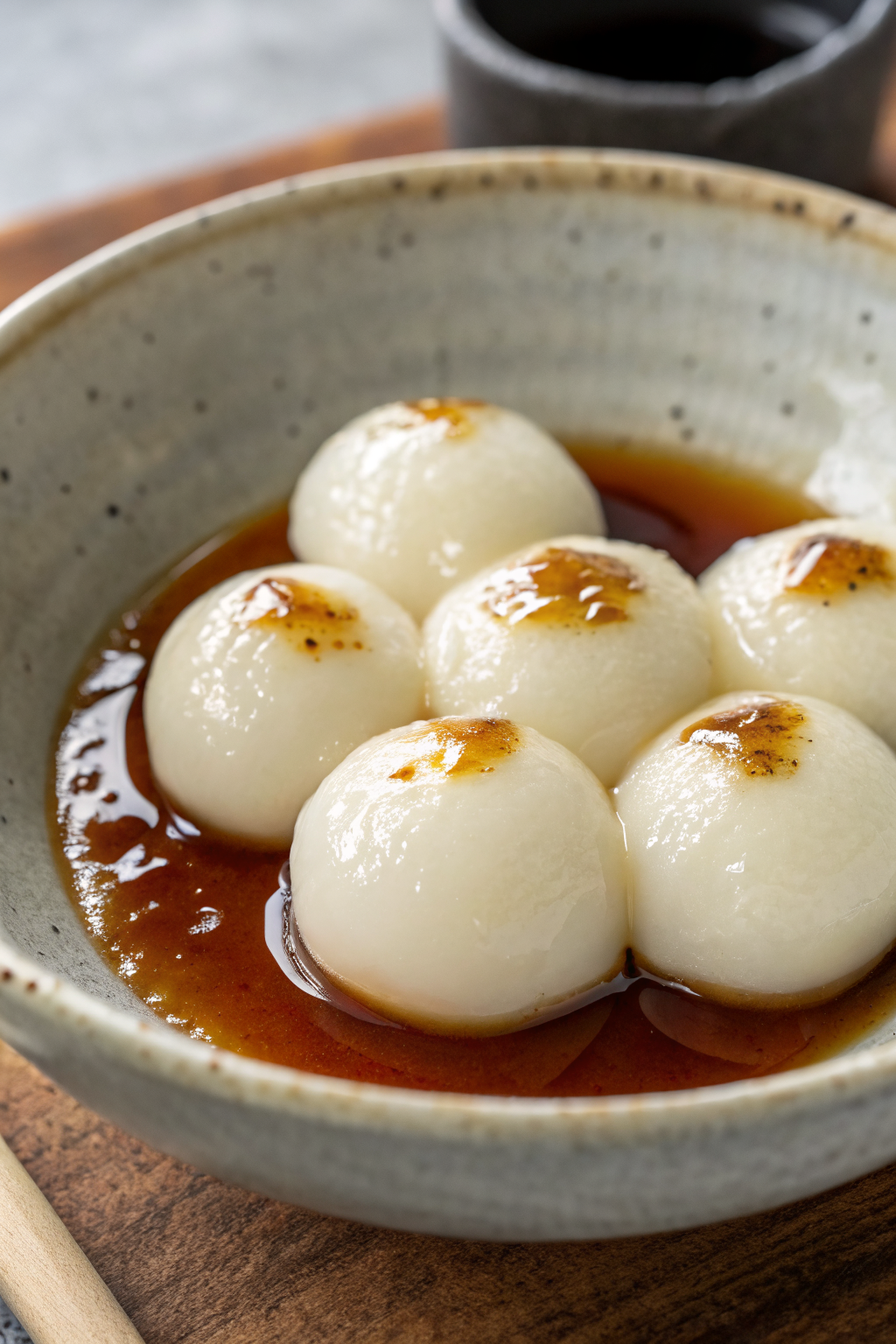
Shiratama Dango Japanese Dessert Recipe
Ingredients
Method
- In a bowl, add shiratamako and gradually mix in water, stirring with your fingers until the dough comes together.
- Knead the dough until smooth and soft, similar to an earlobe in texture. If it feels dry or cracks, add a few drops of water at a time.
- Roll the dough into small balls about 2 cm (3/4 inch) in diameter, aiming for even size so they cook uniformly.
- Bring a pot of water to a gentle boil. Carefully drop in the dumplings, stirring once to prevent sticking.
- Cook until the dumplings float to the surface, then continue to cook for another 1–2 minutes.
- Use a slotted spoon to transfer the cooked dumplings into a bowl of ice water to stop the cooking and firm up the texture.
- Once cooled, drain well and set aside.
- In a small saucepan, combine dark brown sugar and water.
- Heat over low to medium heat, stirring until the sugar dissolves completely.
- Add soy sauce if using, and simmer for 1–2 minutes until slightly thickened. Remove from heat and let cool.
- In a small bowl, combine kinako, granulated sugar, and a pinch of salt if desired.
- Arrange the drained shiratama dango in serving bowls.
- Sprinkle with the kinako-sugar mixture.
- Add small spoonfuls of sweet red bean paste (anko) on the side.
- Drizzle with the cooled syrup, if using, just before serving.
- Serve immediately to enjoy the soft and chewy texture.
Notes
Approximate per serving (1/4 of recipe, without optional soy sauce): 220 calories; fat 2 g; saturated fat 0 g; carbohydrates 47 g; fiber 3 g; sugars 18 g; protein 5 g; sodium 35 mg. Values will vary based on brands, add-ins, and portion size.