
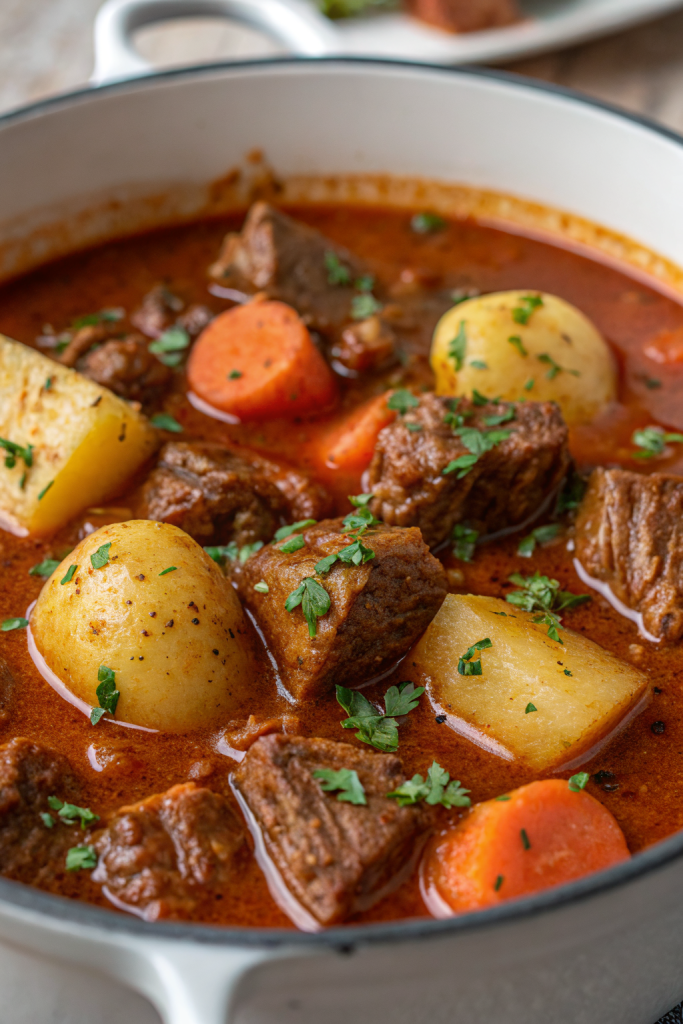
Hungarian Goulash Recipe tastes rich, beefy, smoky from paprika, and a little sweet from slow-cooked onions, with tender chunks of meat in a thick, cozy sauce. It suits busy home cooks who want a hearty, family-friendly dinner in about 2 to 2½ hours total, with most of that as hands-off simmer time. I grew up in a house where a pot of stew meant everyone wandered into the kitchen early, and this Hungarian Goulash Recipe gives me that same “what’s cooking?” moment every single time.
Why Make This Hungarian Goulash Recipe at Home
Homemade Hungarian Goulash tastes deeper and more complex than most restaurant versions, because you control the paprika quality, salt, and cooking time. You get tender beef, a silky sauce, and that signature paprika aroma that fills the whole house.
You also stretch a relatively affordable cut of beef into several generous servings. Leftovers taste even better the next day, so you cook once and eat twice with zero complaints from the table.
“This Hungarian Goulash Recipe tastes like a cozy hug in a bowl, with melt-in-your-mouth beef and smoky paprika flavor that rivals any restaurant version ★★★★★”
Ingredients You Need
Beef and Vegetables
-
2 pounds beef chuck, cut into 1 to 1½ inch cubes
- Chuck gives the best flavor and tenderness after a long simmer.
- You can use beef shoulder or round in a pinch, but they stay a bit firmer.
-
3 tablespoons neutral oil (canola, sunflower, or avocado)
- Traditional recipes often use lard, but neutral oil works great and keeps things simple.
-
3 large yellow onions, finely chopped
- Onions form the base of the sauce, so do not skimp.
- Pre-chopped frozen onions work if you feel short on time, but fresh tastes sweeter.
-
3 medium carrots, sliced into coins
-
2 medium russet or Yukon Gold potatoes, peeled and cut into chunks
- Yukon Gold holds shape better, russet gives a thicker sauce.
-
1 red bell pepper, chopped
- Sweet pepper adds color and a mild sweetness.
- Jarred roasted red peppers work if you drain them well.
-
4 cloves garlic, minced
Paprika and Seasonings
-
3 tablespoons Hungarian sweet paprika
- Use real Hungarian paprika if possible; brands like Pride of Szeged or Kalocsa taste fantastic.
- Do not swap with smoked paprika for the full amount, or the flavor turns too smoky.
-
1 to 2 teaspoons Hungarian hot paprika or hot paprika blend
- Adjust to your heat preference; start with 1 teaspoon if you cook for kids.
-
1 teaspoon caraway seeds, lightly crushed
- Caraway gives that classic Central European flavor.
- If you do not enjoy caraway, reduce to ½ teaspoon rather than skipping completely.
-
1½ teaspoons kosher salt, plus more to taste
-
1 teaspoon freshly ground black pepper
-
1 teaspoon dried marjoram (optional but traditional)
-
1 bay leaf
Liquid and Thickening
-
3 cups low sodium beef broth
- Use a good quality boxed broth; I like Kitchen Basics or Pacific.
- If you only have regular broth, reduce the added salt a bit and adjust at the end.
-
1 cup water, as needed
-
2 tablespoons tomato paste
- Tomato paste adds richness and color without turning it into tomato stew.
-
1 tablespoon flour or cornstarch mixed with 2 tablespoons cold water (optional, for thicker sauce)
Optional Finishes
- ½ cup sour cream, for serving
- Use full fat for best texture.
- Chopped fresh parsley, for garnish
Pantry Shortcuts
- Use garlic paste instead of fresh garlic if that fits your routine.
- Use frozen chopped onions and carrots to cut prep time.
- Use pre-cut stew beef if you feel okay with slightly less even cubes.
Equipment List
- Large heavy pot or Dutch oven with lid
- Cutting board and sharp chef’s knife
- Wooden spoon or heatproof spatula
- Measuring spoons and cups
- Small bowl for slurry (if you thicken the sauce)
Tips & Mistakes
- Brown the beef in batches so the pieces sear instead of steam.
- Dry the beef cubes with paper towels before searing to get better browning.
- Use real Hungarian paprika for the best flavor; old, faded paprika tastes dull.
- Store paprika in a cool, dark cabinet and replace it every 6 to 12 months.
- Keep the heat low after you add paprika so it does not burn and taste bitter.
- Cook the onions long enough to turn soft and golden; they thicken the sauce naturally.
- Do not rush the simmer; give the beef at least 1½ hours to turn tender.
- Taste the broth halfway through and adjust salt so the flavors stay balanced.
- Add potatoes in the last 30 to 40 minutes so they stay intact and not mushy.
- Stir occasionally and scrape the bottom of the pot to prevent sticking.
- Use low sodium broth so you control the salt level.
- Do not boil hard during simmering; gentle bubbles keep the beef tender.
- Let the goulash rest 10 minutes before serving so the sauce settles and thickens.
- Chill leftovers quickly and store in shallow containers for best texture.
How to Make Hungarian Goulash Recipe
Step 1: Prep the Ingredients
Pat the beef cubes dry with paper towels and season them with salt and pepper. Chop the onions, carrots, potatoes, bell pepper, and garlic. Crush the caraway seeds lightly with the back of a spoon or in a mortar.
Measure out the paprika, marjoram, bay leaf, tomato paste, and broth so everything sits ready. This little bit of prep keeps the cooking process smooth and relaxed.
Step 2: Brown the Beef
Heat 2 tablespoons of oil in a large Dutch oven over medium high heat. Add about one third of the beef cubes in a single layer and sear them until browned on two sides, about 4 to 5 minutes. Transfer the browned beef to a bowl.
Repeat with the remaining beef, adding a little more oil if the pot looks dry. Browning builds flavor on the bottom of the pot, which later enriches the sauce.
Step 3: Cook the Onions and Aromatics
Lower the heat to medium and add the remaining 1 tablespoon of oil if needed. Add the chopped onions and a pinch of salt. Cook and stir until the onions turn soft and lightly golden, about 10 to 12 minutes.
Add the garlic, crushed caraway seeds, and marjoram. Stir and cook for 1 minute until fragrant, so the spices wake up in the hot oil.
Step 4: Toast the Paprika and Add Tomato Paste
Turn the heat to low. Add the sweet paprika and hot paprika to the onions and stir constantly for about 30 seconds. The mixture should look deep red and glossy.
Add the tomato paste and stir it into the onion mixture. Cook another 1 to 2 minutes so the tomato paste darkens slightly and loses its raw taste.
Step 5: Deglaze and Build the Sauce
Pour in about ½ cup of beef broth and use a wooden spoon to scrape up the browned bits from the bottom of the pot. Those bits carry a ton of flavor. Once the bottom looks clean, add the rest of the broth and the bay leaf.
Return the browned beef and any accumulated juices to the pot. Stir everything together so the beef sits mostly submerged in the liquid.
Step 6: Simmer Until Beef Turns Tender
Bring the pot just to a gentle boil over medium heat, then lower the heat to maintain a steady simmer. Cover the pot with the lid slightly ajar. Simmer for about 60 minutes, stirring every 15 minutes.
Check the liquid level and add up to 1 cup of water during cooking if the sauce looks too thick or the beef pokes out too much. Taste and adjust salt and pepper as needed.
Step 7: Add Vegetables
After the first 60 minutes of simmering, add the carrots, potatoes, and bell pepper. Stir them into the sauce so they nestle between the beef pieces. Cover again and simmer for another 30 to 40 minutes.
Check the beef and potatoes with a fork. The beef should feel very tender and the potatoes should feel soft but not falling apart.
Step 8: Thicken the Sauce (Optional)
If you prefer a thicker goulash, mix the flour or cornstarch with cold water in a small bowl to form a smooth slurry. Stir the slurry into the simmering pot in a thin stream while you stir the goulash. Let it simmer for 5 to 10 more minutes so the sauce thickens and loses any starchy taste.
Taste again and adjust seasoning with more salt, pepper, or hot paprika as you like. Remove the bay leaf.
Step 9: Rest and Serve
Turn off the heat and let the Hungarian Goulash sit for about 10 minutes. This rest helps the sauce settle and cling to the beef and vegetables. Ladle the goulash into bowls.
Top each serving with a spoonful of sour cream and a sprinkle of fresh parsley if you like. Serve hot with your favorite side.
Variations I've Tried
I sometimes add a handful of chopped celery root or parsnips along with the carrots for extra earthy sweetness. They blend nicely with the paprika and beef. If you enjoy a thicker, almost stew-like texture, add an extra potato and mash a few chunks into the sauce at the end.
For a lighter version, I cut the oil in half and use extra broth, then skip the slurry and let the onions and potatoes thicken the sauce naturally. I also tried a version with extra bell peppers and no potatoes, served over egg noodles, and it tasted fantastic for anyone who prefers more sauce. You can also dial the heat up with more hot paprika or a pinch of red pepper flakes if your family likes a little kick.
How to Serve Hungarian Goulash Recipe
Serve Hungarian Goulash piping hot in deep bowls so the sauce stays cozy and warm. Spoon it over buttered egg noodles, plain rice, or fluffy mashed potatoes for a classic, stick-to-your-ribs dinner. Crusty bread or warm dinner rolls work perfectly to scoop up every bit of that paprika-rich sauce.
Add a simple side salad with crisp lettuce, cucumbers, and tomatoes to balance the richness. A dollop of sour cream on top cools the heat and adds tang, and a sprinkle of fresh parsley brightens the whole bowl.
How to store
- Cool the Hungarian Goulash to room temperature within 1 to 2 hours, then transfer it to airtight containers.
- Store in the fridge for up to 4 days; the flavors deepen and taste even better on day two.
- Freeze in freezer-safe containers or bags for up to 3 months; label with the date so you track it easily.
- Reheat gently on the stovetop over medium low heat, adding a splash of water or broth if the sauce looks too thick.
- You can also reheat in the microwave in short bursts, stirring between each burst so the beef heats evenly and stays tender.
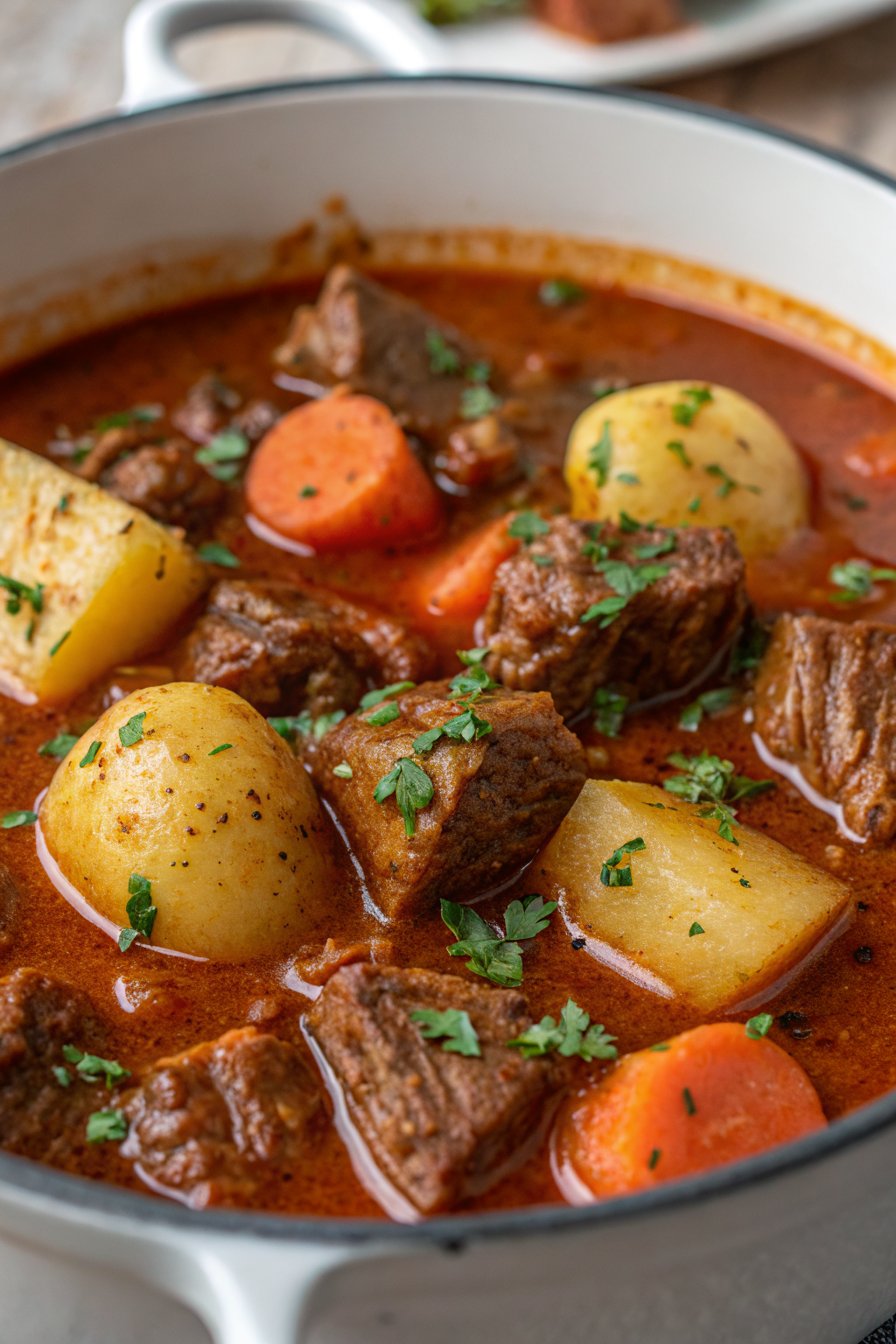
Hungarian Goulash Recipe
Ingredients
Method
- Heat the vegetable oil in a large heavy pot or Dutch oven over medium heat. Add the chopped onions and cook, stirring often, until soft and lightly golden, about 8–10 minutes.
- Stir in the minced garlic and cook for 1 minute until fragrant. Remove the pot from the heat and stir in the sweet Hungarian paprika and smoked paprika, coating the onions well to prevent the paprika from burning.
- Return the pot to low heat and add the beef cubes. Cook, stirring to coat the meat with the onion-paprika mixture, until the beef begins to brown on the outside.
- Add the caraway seeds, salt, black pepper, and tomato paste. Stir well, then pour in the beef broth. Bring the mixture to a boil, then reduce the heat to low, cover, and simmer gently for about 60 minutes, stirring occasionally.
- After 60 minutes, add the sliced carrots, cubed potatoes, and chopped red bell pepper. If the liquid seems low, add up to 1 cup of water to keep the meat and vegetables mostly submerged.
- Stir in the dried marjoram, if using, then cover and continue to simmer for another 45–60 minutes, or until the beef is very tender and the vegetables are cooked through. Adjust seasoning with additional salt and pepper to taste.
- Serve the Hungarian goulash hot, topped with a spoonful of sour cream and a sprinkle of chopped fresh parsley if desired. It can be enjoyed alone or over egg noodles or with crusty bread.
Notes
Approximate per serving (6 servings): 430 calories; fat 22 g; saturated fat 7 g; carbohydrates 22 g; fiber 4 g; sugars 6 g; protein 34 g; sodium 780 mg. Values are estimates and will vary based on specific ingredients, brands, and portion sizes.