
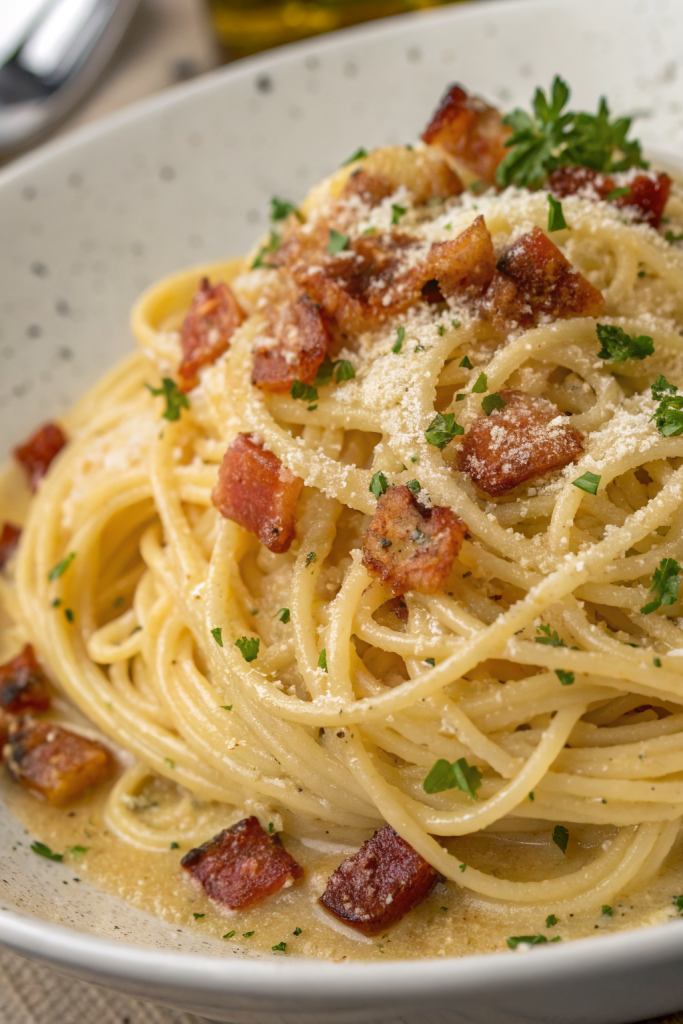
Spaghetti Carbonara Recipe tastes rich, silky, and ultra comforting, comes together in about 25 minutes, and works perfectly for busy weeknights or low-key date nights. It suits anyone who loves creamy pasta but wants a lighter, egg-based sauce instead of heavy cream. I first cooked this version in a tiny apartment kitchen with one wobbly burner, and it still came out amazing, so you and your stove can absolutely handle it.
Why Choose This Spaghetti Carbonara Recipe
This spaghetti carbonara recipe uses simple ingredients and relies on technique, not fancy tools. You get a glossy, creamy sauce without any cream, just eggs, cheese, and hot pasta water.
The method keeps the eggs silky and safe, so you avoid scrambled egg pasta. You also get clear timing, visual cues, and substitution ideas that work in a real home kitchen, not just in restaurant test labs.
“This spaghetti carbonara recipe tastes like a restaurant dish but fits into a weeknight schedule and uses ingredients I already keep in my pantry. ★★★★★”
Ingredients You’ll Need
Pasta & Main Ingredients
-
12 ounces dry spaghetti
- Use a good-quality durum wheat brand like De Cecco or Barilla for best texture.
- You can swap in linguine or fettuccine if that is what you have.
-
2 large whole eggs
- Use the freshest eggs you can find, since they build the sauce.
-
2 large egg yolks
- Yolks add richness and help the sauce cling to the spaghetti.
-
1 cup finely grated Pecorino Romano cheese
- This gives a salty, sharp flavor that defines classic carbonara.
- You can mix in up to 50 percent Parmesan if you prefer a milder taste.
-
2 tablespoons olive oil
- Use extra virgin for the best flavor, but any neutral olive oil works.
-
1 cup turkey bacon or beef bacon, diced small
- Traditional carbonara uses guanciale or pancetta, but turkey or beef bacon keeps it pork free.
- You can also use smoked turkey sausage cut into tiny cubes.
-
2 garlic cloves, smashed (optional but tasty)
-
1 teaspoon freshly ground black pepper, plus more to taste
- Freshly ground pepper makes a huge difference in aroma.
-
1/2 teaspoon kosher salt, plus more for pasta water
- Adjust salt at the end, since cheese and bacon already bring saltiness.
-
1/2 to 3/4 cup hot starchy pasta water
- This loosens and emulsifies the sauce, so do not skip it.
-
Optional garnish: extra grated Pecorino Romano, chopped fresh parsley
Pantry Shortcuts & Substitutions
- Use pre-grated cheese from the refrigerated deli section if you need speed, but avoid the dry shelf-stable stuff in the green can.
- If you do not eat any meat, use sautéed mushrooms or smoked paprika chickpeas for a savory bite.
- Gluten free spaghetti works well; just cook it slightly al dente so it holds its shape.
Equipment List
- Large pot for boiling pasta
- Large wide skillet or sauté pan
- Heatproof mixing bowl
- Tongs or pasta fork
- Measuring cups and spoons
- Whisk or fork
- Fine grater or microplane for cheese
Tips & Tricks
- Salt the pasta water generously so the spaghetti tastes seasoned before it hits the sauce.
- Cook the pasta just to al dente, since it will finish in the pan with the sauce.
- Render the turkey or beef bacon slowly over medium heat so it turns crisp and releases flavorful fat.
- Whisk eggs and cheese together until smooth before you add any pasta water so the sauce base stays creamy.
- Temper the egg mixture by streaming in a little hot pasta water while you whisk, so the eggs warm gently.
- Remove the skillet from direct heat before you add the egg mixture to avoid scrambled eggs.
- Toss the pasta vigorously with tongs so the sauce coats every strand.
- Add hot pasta water a little at a time until the sauce looks glossy and loose but still clings to the spaghetti.
- Taste at the end and adjust salt and pepper, since cheese and bacon already bring salt.
- Serve the spaghetti carbonara immediately, because the sauce thickens as it sits.
How to Make Spaghetti Carbonara Recipe
Step 1: Prep Ingredients
Grate the Pecorino Romano very finely and set it aside. Crack 2 whole eggs and 2 yolks into a heatproof bowl. Whisk in the grated cheese and 1 teaspoon black pepper until you get a thick, smooth paste.
Dice the turkey or beef bacon into small pieces so they crisp evenly. Smash the garlic cloves with the side of a knife. Set everything near the stove so you can move quickly once the pasta cooks.
Step 2: Cook the Spaghetti
Bring a large pot of water to a boil and add a generous handful of kosher salt. Add the spaghetti and stir so it does not stick. Cook until the pasta reaches al dente, usually 1 to 2 minutes less than the package suggests.
Right before you drain the pasta, scoop out at least 1 cup of the starchy cooking water and set it aside. Drain the spaghetti, but do not rinse it, since the starch helps the sauce cling. Keep the pasta hot while you finish the sauce base.
Step 3: Crisp the Bacon and Flavor the Oil
While the pasta cooks, heat the olive oil in a large skillet over medium heat. Add the diced turkey or beef bacon and cook, stirring often, until it turns golden and crisp and releases flavorful fat. Add the smashed garlic cloves and cook 1 to 2 minutes until fragrant, then remove the garlic so it does not burn.
Lower the heat to low so the pan stays warm but not scorching. You want a little sizzling, not aggressive frying. This gentle heat sets you up for a silky sauce.
Step 4: Temper the Egg and Cheese Mixture
Whisk the egg and cheese mixture again to smooth it out. Slowly stream in 2 to 3 tablespoons of hot pasta water while you whisk constantly. This step warms the eggs gradually and reduces the risk of curdling.
You should see the mixture loosen slightly and turn glossy. If it still looks very thick, whisk in another tablespoon or two of hot water. Keep the bowl near the stove so the mixture stays warm.
Step 5: Combine Pasta and Bacon
Add the hot drained spaghetti to the skillet with the crisp bacon and rendered fat. Toss well over low heat so every strand picks up that savory coating. If the pan looks dry, splash in a tablespoon or two of pasta water.
Turn off the heat under the skillet. You want the pan hot but not blazing when you add the egg mixture. This timing keeps the sauce creamy.
Step 6: Add the Egg Mixture
Pour the warm egg and cheese mixture over the hot spaghetti while you toss constantly with tongs. The residual heat from the pasta cooks the eggs gently and thickens the sauce. Keep the skillet off direct heat and move quickly.
Add a splash of hot pasta water as you toss until the sauce turns silky and coats the spaghetti. Aim for a texture that looks like glossy cream, not dry or soupy. Taste and adjust with a pinch of salt and more black pepper if you like a peppery kick.
Step 7: Plate and Garnish
Twirl portions of spaghetti carbonara into warm bowls. Top each serving with extra grated Pecorino Romano. Add a sprinkle of chopped fresh parsley if you like a little color.
Serve the pasta immediately while the sauce still feels loose and velvety. The longer it sits, the more it thickens, so call everyone to the table before you finish tossing.
What to Serve with it?
Spaghetti carbonara tastes rich and salty, so pair it with something fresh and crunchy. A simple green salad with lemony vinaigrette or a big bowl of mixed greens with cucumbers and cherry tomatoes balances the creaminess. You can add garlic bread, roasted broccoli, or sautéed green beans for a more filling meal. Sparkling water with citrus slices or a light iced tea rounds everything out without competing with the pasta.
Storage Options
- Store leftover spaghetti carbonara in an airtight container in the fridge for up to 2 days.
- Add a tablespoon of milk or water before reheating to loosen the sauce.
- Reheat gently on the stove over low heat while you toss constantly, or use short bursts in the microwave and stir between each burst.
- Avoid freezing this pasta, since the egg-based sauce can separate and turn grainy after thawing.
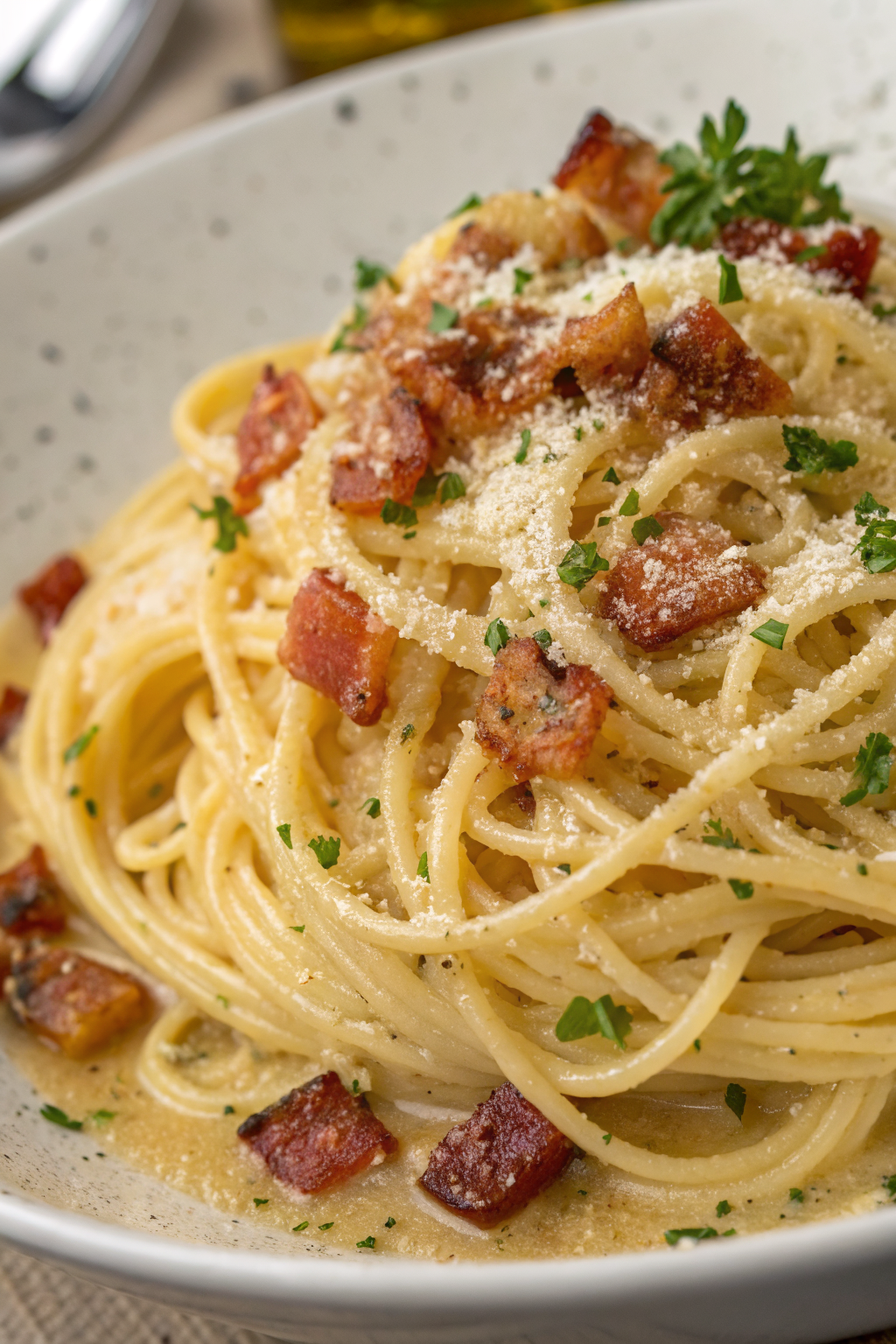
Spaghetti Carbonara Recipe
Ingredients
Method
- Bring a large pot of salted water to a boil. Add the spaghetti and cook until al dente according to package directions.
- While the pasta cooks, whisk together the whole eggs, egg yolks, Pecorino Romano, black pepper, and 1/2 teaspoon salt in a medium bowl until smooth and creamy. Set aside.
- In a large skillet over medium heat, warm the olive oil. Add the pancetta or guanciale (and garlic if using) and cook, stirring occasionally, until the fat renders and the meat is crisp, about 5–7 minutes. Remove and discard the garlic clove.
- Reserve about 1/2 cup of the hot pasta cooking water, then drain the spaghetti.
- Add the hot drained spaghetti to the skillet with the rendered pancetta fat. Toss well over low heat so the pasta is coated and slightly cooled, 1–2 minutes.
- Remove the skillet from the heat. Quickly pour in the egg and cheese mixture, tossing vigorously so the eggs thicken into a creamy sauce without scrambling. Add reserved pasta water a little at a time until the sauce is glossy and coats the pasta.
- Stir the crisp pancetta or guanciale back into the pasta. Taste and adjust with more black pepper and a pinch of salt if needed.
- Serve immediately, topped with extra Pecorino Romano and black pepper if desired.
Notes
Approximate per serving (1/4 of recipe): 650 calories; fat 30 g; saturated fat 11 g; carbohydrates 65 g; fiber 3 g; sugars 3 g; protein 28 g; sodium 820 mg. Values will vary based on specific ingredients, brands, and portion size.