
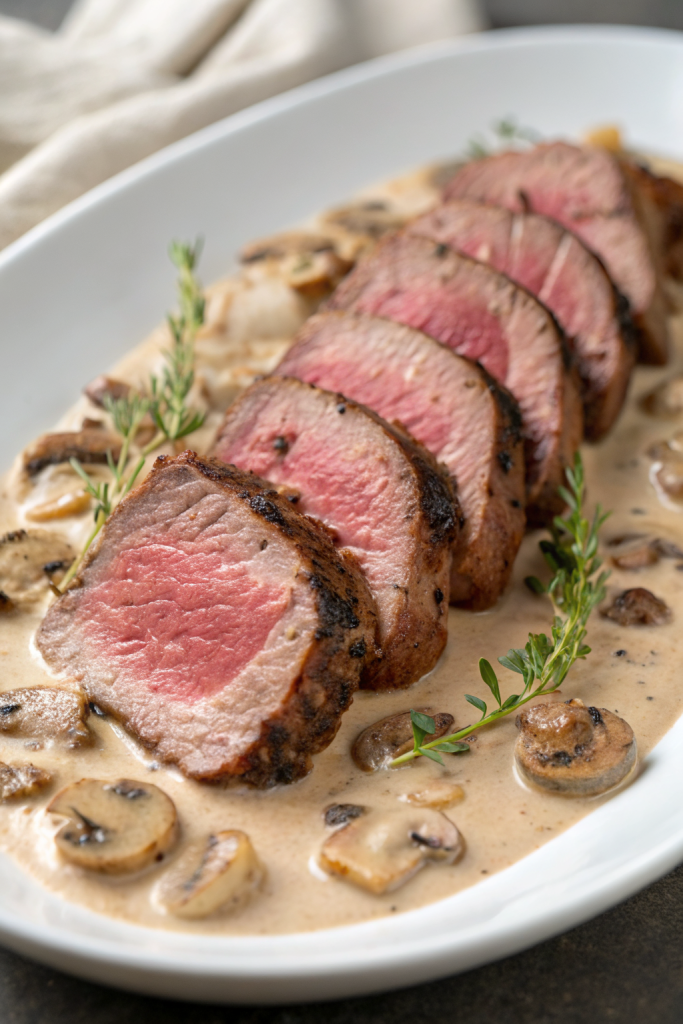
Oven Roasted Beef Tenderloin with Mushroom Sauce tastes rich, buttery, and savory with a glossy pan sauce that feels straight out of a steakhouse. It works perfectly for holidays, date nights, or any time you want a special dinner on the table in about 1 hour from start to finish. I still remember the first time I nailed this roast and did a tiny victory dance alone in my kitchen.
Why Oven Roasted Beef Tenderloin with Mushroom Sauce Is Worth It
Beef tenderloin gives you incredibly tender, slice-with-a-fork meat that cooks quickly and looks impressive on the table. The mushroom sauce soaks up all the browned bits from the pan, so every bite tastes deep, beefy, and luxurious without much effort.
You can prep the roast ahead, tie it, season it, and just slide it into the oven when guests arrive. The whole recipe uses simple ingredients, but the results taste like a high-end steakhouse dinner.
“This Oven Roasted Beef Tenderloin with Mushroom Sauce tastes like a special-occasion restaurant meal but feels totally doable at home. ★★★★★”
Ingredients You Need
Beef tenderloin
- 1 whole beef tenderloin, 3 to 4 pounds, trimmed and tied
- Ask the butcher to trim the silverskin and extra fat and to tie it, or you can tie it at home with kitchen twine.
- Choose USDA Choice or Prime if your budget allows, since marbling gives better flavor and tenderness.
Seasoning for the roast
- 2 to 3 tablespoons olive oil or avocado oil
- 2 to 3 teaspoons kosher salt
- 1 to 1½ teaspoons freshly ground black pepper
- 1 to 2 teaspoons garlic powder
- 1 teaspoon onion powder
- 1 teaspoon dried thyme or dried rosemary
- Optional: 1 teaspoon smoked paprika for a subtle smoky note
You can use any neutral high-heat oil you like. I often use Costco or store brand olive oil for roasting and save the fancy stuff for salads.
Mushroom sauce ingredients
- 3 tablespoons unsalted butter
- 1 tablespoon olive oil
- 12 ounces cremini or baby bella mushrooms, sliced
- White button mushrooms also work, but cremini give deeper flavor.
- 1 small shallot or ½ small yellow onion, finely minced
- 3 cloves garlic, minced
- 1 tablespoon fresh thyme leaves or 1 teaspoon dried thyme
- 1 tablespoon all-purpose flour
- 1 cup low sodium beef broth or stock
- ½ cup heavy cream or half and half
- 1 to 2 teaspoons Dijon mustard
- 1 teaspoon soy sauce or Worcestershire sauce for umami
- Salt and black pepper to taste
- Optional: 1 to 2 teaspoons chopped fresh parsley for garnish
Use a good quality beef broth since it drives a lot of the sauce flavor. I like Kitchen Basics or Better Than Bouillon mixed with water.
Pantry shortcuts and swaps
- Use pre-sliced mushrooms to save time on prep.
- Use jarred minced garlic if you feel rushed, though fresh garlic gives better flavor.
- Use dried thyme instead of fresh if that is what you keep in the pantry.
Equipment list
- Large roasting pan or rimmed sheet pan
- Oven-safe meat thermometer or instant-read thermometer
- Large skillet or sauté pan for the mushroom sauce
- Cutting board and sharp chef’s knife
- Kitchen twine for tying the tenderloin
- Tongs or spatula
- Small whisk for the sauce
Quick Tips & substitutions
- Pat the beef tenderloin very dry before seasoning so the surface browns nicely.
- Let the seasoned roast sit at room temperature for 30 to 45 minutes before cooking so it cooks more evenly.
- Use an oven-safe thermometer and pull the roast at 125 to 130 degrees Fahrenheit for medium rare.
- Tent the roast loosely with foil and rest it 15 to 20 minutes so the juices settle.
- Swap cremini mushrooms with white button, shiitake, or a mix for more complex flavor.
- Use half and half instead of heavy cream for a lighter mushroom sauce, or use coconut cream for a dairy-light option.
- Use gluten free flour or cornstarch slurry to thicken the sauce if you avoid gluten.
- Season lightly with salt early, then adjust at the end since soy sauce and broth already add salt.
How to Make Oven Roasted Beef Tenderloin with Mushroom Sauce
Step 1: Prep and tie the beef tenderloin
If the butcher did not tie the tenderloin, tuck the thin tail end under so the roast looks even in thickness. Tie the roast every 1½ inches with kitchen twine so it holds a uniform shape. Trim any large loose pieces of fat, but keep a thin layer for flavor.
Place the beef tenderloin on a large plate or board. Pat it very dry with paper towels on all sides. This step helps the seasoning stick and helps the roast brown in the oven.
Step 2: Season the roast
In a small bowl, mix kosher salt, black pepper, garlic powder, onion powder, dried thyme or rosemary, and smoked paprika if you use it. Rub the tenderloin with olive oil, then sprinkle the seasoning mix all over, pressing it into the meat. Make sure you season the ends as well, since those bites matter too.
Let the seasoned roast sit at room temperature for 30 to 45 minutes. This short rest takes the chill off the meat and helps it cook more evenly from edge to center. During this time, preheat your oven to 425 degrees Fahrenheit.
Step 3: Sear the tenderloin
Heat a large skillet over medium high heat and add a tablespoon of oil. When the oil shimmers, place the tenderloin in the skillet and sear each side for 2 to 3 minutes until a deep brown crust forms. Use tongs to hold the roast and sear the ends as well.
Transfer the seared tenderloin to a roasting pan or rimmed sheet pan. Place the roast on a rack if you have one so the heat circulates around it. Insert an oven-safe thermometer into the thickest part of the roast from the side.
Step 4: Roast to temperature
Place the pan in the hot oven. Roast the beef tenderloin until the thermometer reads your target temperature. Aim for:
- 120 to 125 F for rare
- 125 to 130 F for medium rare
- 135 to 140 F for medium
Check the roast after about 15 minutes, then every 5 minutes, since tenderloin cooks quickly. Most 3 to 4 pound roasts reach medium rare in 20 to 30 minutes, depending on thickness and your oven. Pull the roast 5 degrees before your target since carryover heat raises the temperature as it rests.
Step 5: Rest the roast
Transfer the cooked tenderloin to a cutting board. Tent it loosely with foil and let it rest 15 to 20 minutes. The juices will redistribute, and the temperature will rise slightly to your perfect doneness.
Use this rest time to make the mushroom sauce in the same skillet you used for searing. That skillet holds all the tasty browned bits that will flavor the sauce.
Step 6: Sauté the mushrooms
Place the skillet back over medium high heat and add 1 tablespoon olive oil and 1 tablespoon butter. Add the sliced mushrooms in a single layer as much as possible. Let them cook without stirring for 3 to 4 minutes so they brown instead of steam.
Stir the mushrooms and continue to cook 3 to 4 more minutes until they shrink and deepen in color. Add a pinch of salt and pepper. Push the mushrooms to one side of the pan.
Step 7: Build the flavor base
Add the remaining 2 tablespoons butter to the empty side of the skillet. When it melts, add the minced shallot and cook 1 to 2 minutes until it softens. Add the garlic and thyme and cook about 30 seconds until fragrant, stirring so the garlic does not burn.
Stir the mushrooms back through the shallot and garlic mixture. Sprinkle the flour over everything and stir to coat the mushrooms. Cook the flour for 1 to 2 minutes so the sauce does not taste chalky.
Step 8: Add liquids and simmer
Slowly pour in the beef broth while you whisk or stir, scraping up any browned bits from the bottom of the pan. Add the soy sauce and Dijon mustard and stir until smooth. Bring the mixture to a gentle simmer and let it thicken for 3 to 5 minutes.
Lower the heat to medium low. Stir in the heavy cream or half and half. Simmer another 2 to 3 minutes until the mushroom sauce coats the back of a spoon. Taste and adjust with more salt and pepper as needed.
If the sauce looks too thick, thin it with a splash of broth. If it looks too thin, simmer a few more minutes. Stir in chopped parsley at the end for a fresh finish.
Step 9: Slice and serve
Remove the twine from the rested beef tenderloin. Slice the roast into ½ to 1 inch thick medallions with a sharp knife. Arrange the slices on a warm platter.
Spoon the hot mushroom sauce over the sliced tenderloin or serve it in a gravy boat on the side. Garnish with extra parsley or thyme if you like. Serve right away while everything stays hot and juicy.
Recipe Variations
- Gluten free: Use a gluten free flour blend or 1 tablespoon cornstarch mixed with 2 tablespoons cold broth instead of regular flour.
- Dairy light: Use olive oil instead of butter and choose half and half or evaporated milk instead of heavy cream.
- Dairy free: Use olive oil only and swap the cream with unsweetened oat cream or cashew cream.
- Low carb: Skip the flour and reduce the sauce longer, or thicken with a tiny amount of xanthan gum.
- Herb twist: Swap thyme with rosemary, tarragon, or a mix of Italian herbs.
- Extra savory: Add a spoonful of caramelized onions to the mushroom sauce.
- Peppercorn style: Add crushed black peppercorns and a bit more cream for a steakhouse peppercorn vibe.
Ways to Serve
- Spoon the beef tenderloin and mushroom sauce over creamy mashed potatoes.
- Serve with roasted garlic mashed cauliflower for a lighter side.
- Pair with buttered egg noodles or simple olive oil pasta.
- Add a crisp green salad with lemony vinaigrette.
- Serve alongside roasted green beans, asparagus, or Brussels sprouts.
- Offer warm crusty bread to soak up extra mushroom sauce.
Storage Success
Store leftover beef tenderloin slices and mushroom sauce in separate airtight containers in the fridge for up to 3 days. Reheat the beef gently in a covered skillet over low heat or in short bursts in the microwave so it stays tender. Warm the mushroom sauce in a small saucepan with a splash of broth or cream until it loosens and turns silky again. If you want to freeze, freeze only the sauce for up to 2 months and enjoy the roast fresh for best texture.
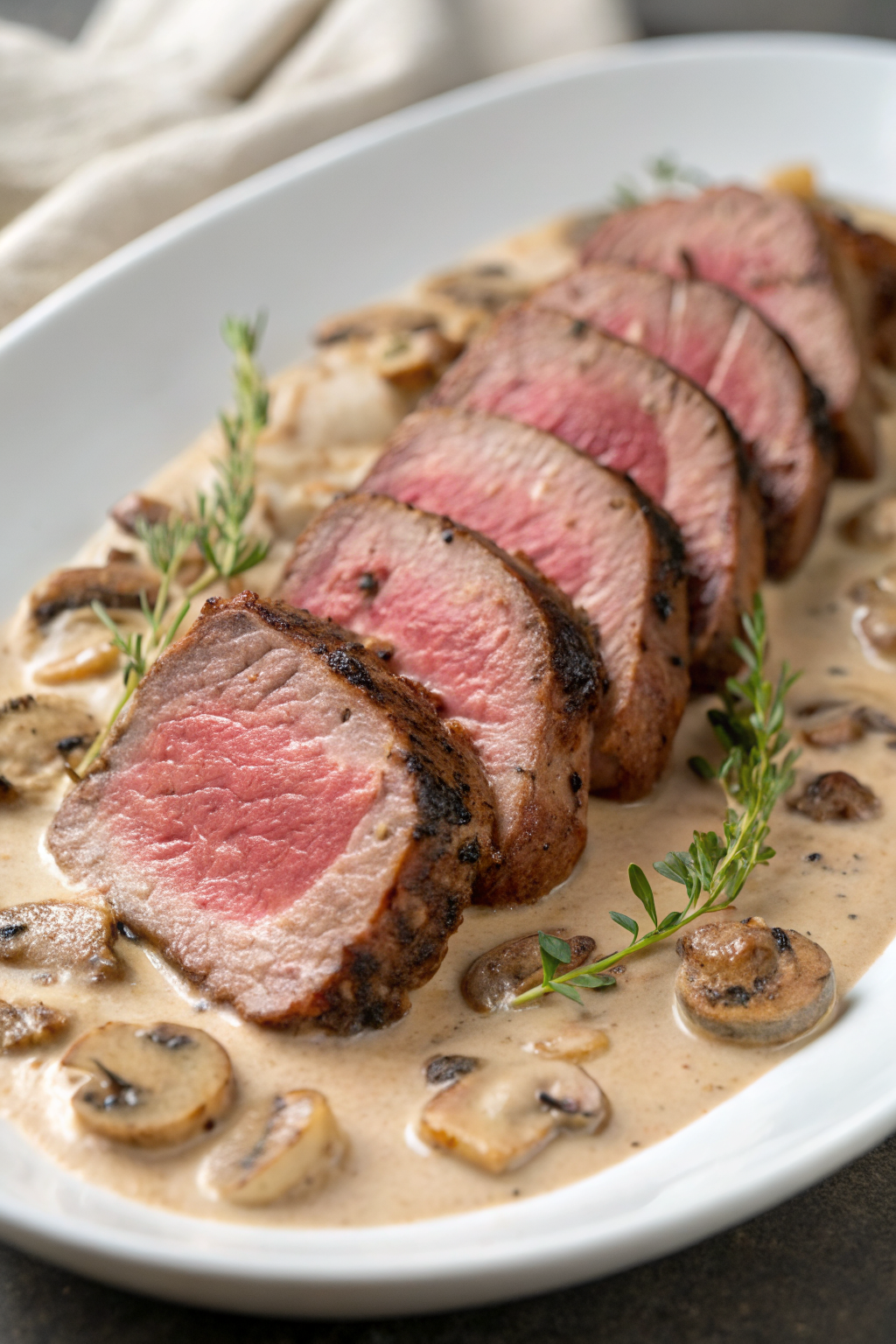
Oven Roasted Beef Tenderloin with Mushroom Sauce
Ingredients
Method
- Preheat the oven to 425°F (220°C). Place a rack in the center of the oven.
- Pat the beef tenderloin dry with paper towels and tie it with kitchen twine at 1 1/2-inch intervals for even cooking.
- In a small bowl, combine olive oil, salt, pepper, chopped rosemary, chopped thyme, and minced garlic to form a paste.
- Rub the herb and garlic mixture evenly all over the beef tenderloin. Let it rest at room temperature for 20 to 30 minutes if time allows.
- Heat a large oven-safe skillet over medium-high heat. When hot, add a thin film of oil.
- Sear the beef tenderloin on all sides until well browned, about 2 to 3 minutes per side.
- Transfer the skillet with the seared tenderloin to the preheated oven.
- Roast for 15 to 25 minutes, or until an instant-read thermometer inserted into the center reads 125°F (52°C) for medium-rare or your desired doneness.
- Remove the tenderloin from the oven, transfer it to a cutting board, tent loosely with foil, and let it rest for at least 10 to 15 minutes before slicing.
- While the beef rests, place the same skillet over medium heat, discarding any excessively burned bits but keeping the flavorful browned bits.
- Add butter and olive oil to the skillet. Once the butter is melted, add sliced mushrooms and cook, stirring occasionally, until they release their moisture and begin to brown, about 6 to 8 minutes.
- Stir in the minced shallot and garlic and cook for 1 to 2 minutes until fragrant.
- Pour in the red wine, if using, scraping up any browned bits from the bottom of the pan. Simmer until reduced by about half, 2 to 3 minutes.
- Add the beef stock and simmer another 3 to 4 minutes to slightly reduce.
- Reduce the heat to low and stir in the heavy cream, Dijon mustard, and chopped thyme. Simmer gently until the sauce thickens enough to coat the back of a spoon, 3 to 5 minutes.
- Season the sauce with salt and pepper to taste, adjusting as needed.
- Slice the rested beef tenderloin into 1/2- to 3/4-inch thick slices.
- Arrange slices on a serving platter or individual plates and spoon warm mushroom sauce over the top.
- Serve immediately with your favorite sides such as roasted potatoes, green beans, or a simple salad.
Notes
Approximate per serving (1/6 of recipe): 420 calories; fat 27 g; saturated fat 12 g; carbohydrates 5 g; fiber 1 g; sugars 2 g; protein 37 g; sodium 520 mg. Values will vary based on specific ingredients, brands, and portion sizes.