
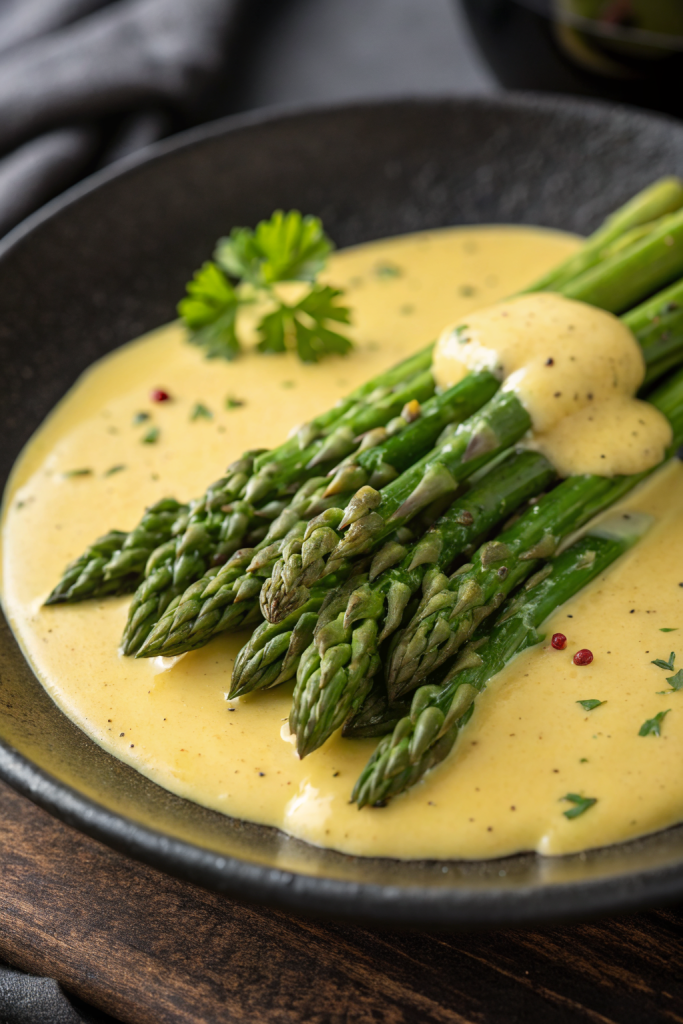
Hollandaise Sauce Recipe tastes rich, buttery, tangy, and silky, and it turns simple eggs or veggies into something that feels straight off a brunch menu. This Hollandaise Sauce Recipe works well for home cooks who want restaurant flavor in about 15 minutes from start to finish. I still remember the first time I nailed it at 2 a.m. after a long shift, and I may or may not have eaten it with a spoon over toast.
Why Make This Hollandaise Sauce Recipe at Home
Homemade Hollandaise Sauce tastes fresher, brighter, and more lemony than anything from a packet or jar. You control the thickness, the salt, and the tang, so it suits your taste and your brunch guests.
You also save money, since a few eggs and some butter cost less than a fancy brunch. Once you learn this method, you can whip it up on a sleepy Sunday or for a special breakfast without stress.
“This Hollandaise Sauce Recipe tastes like a brunch restaurant came to my kitchen, and I will never use the packet mix again. ★★★★★”
Ingredients You Need
Egg yolks
- 3 large egg yolks
- Use fresh, high quality eggs for the best flavor and color.
- Separate them while cold, then let the yolks warm slightly for smoother whisking.
Butter
- 1 stick (8 tablespoons / 113 g) unsalted butter, cut into small pieces
- Unsalted butter gives you better control over the salt level.
- You can use clarified butter or ghee for a slightly nuttier flavor and a more stable sauce.
Acid and flavor
- 1 to 2 tablespoons fresh lemon juice
- 1 to 2 teaspoons water
- 1/4 to 1/2 teaspoon Dijon mustard (optional, but it helps the emulsion and adds gentle tang)
- 1/4 teaspoon fine sea salt, plus more to taste
- Small pinch of cayenne pepper or hot paprika, optional for a mild kick
Pantry shortcuts and substitutions
- Use bottled lemon juice only in a pinch, and add a tiny extra pinch of salt to balance the flavor.
- Swap part of the lemon juice with white wine vinegar if you like a sharper bite.
- Use ghee from a jar if you want a quick clarified butter shortcut.
- If you avoid cayenne, use a pinch of black or white pepper instead.
Equipment list
- Medium heatproof bowl (glass or stainless steel)
- Small saucepan that the bowl can sit on without touching the water (for a double boiler setup)
- Small whisk (balloon whisk or sauce whisk)
- Measuring spoons and cup
- Kitchen towel to stabilize the bowl on the counter
- Instant read thermometer, optional but helpful
- Blender or immersion blender, optional for a quicker method
Tips & Mistakes
- Whisk the egg yolks constantly so they do not scramble on the heat.
- Keep the water in the saucepan at a gentle simmer, not a hard boil, to avoid curdling.
- Add the butter very slowly at first so the emulsion forms and stays smooth.
- Pull the bowl off the heat if the mixture thickens too fast or you see steam puffing strongly.
- Use warm, melted butter, not boiling hot butter, to keep the sauce stable.
- Season at the end and taste, since the lemon and salt flavor grows as the sauce sits.
- If the sauce looks too thick, whisk in a teaspoon of warm water at a time until it loosens.
- If the sauce starts to split, whisk in a teaspoon of cold water or a fresh yolk in a clean bowl and slowly whisk the broken sauce into it.
- Serve the Hollandaise Sauce Recipe soon after you make it, since it holds best while warm, not hot.
- Keep the bowl slightly warm, not over direct heat, once the sauce reaches the texture you like.
How to Make Hollandaise Sauce Recipe
Step 1: Set up the double boiler
Fill a small saucepan with about 1 to 2 inches of water and bring it to a gentle simmer over medium low heat. Place your heatproof bowl on top and check that the bottom of the bowl does not touch the water. Turn the heat to low so the water barely simmers, and keep it there.
Step 2: Whisk the yolks and flavor base
Add the egg yolks, 1 tablespoon lemon juice, 1 to 2 teaspoons water, Dijon mustard, and salt to the bowl off the heat. Whisk until the mixture looks smooth and slightly lighter in color. This step helps the yolks mix evenly and gives you a head start on a fluffy texture.
Step 3: Cook the yolks gently
Place the bowl over the barely simmering water. Whisk constantly and scrape the sides and bottom so no yolk sticks. Continue whisking until the yolks thicken, turn pale, and leave light trails from the whisk, about 3 to 5 minutes.
If you use a thermometer, stop when the yolks reach about 150 to 160°F. Lift the bowl off the heat for a few seconds if the mixture heats too quickly. You want a thick, smooth, custard like base with no scrambled bits.
Step 4: Add the butter slowly
Melt the butter in a small saucepan or microwave until fully liquid and warm, not boiling. Keep the bowl of yolks over low heat or on a folded towel on the counter, depending on how hot it feels. Start adding the melted butter a few drops at a time while you whisk constantly.
Once the mixture thickens and looks glossy, you can add the butter in a very thin stream. Whisk without stopping so the Hollandaise Sauce Recipe stays smooth and creamy. Pause once or twice to check the thickness and adjust the heat if the bowl feels too hot.
Step 5: Adjust thickness and seasoning
When you add all the butter, check the texture. The sauce should coat a spoon and slowly drip off in a ribbon. If it looks too thick, whisk in a teaspoon of warm water at a time until it reaches the texture you like.
Taste and add more lemon juice, salt, or a pinch of cayenne if you want more brightness or heat. Keep the bowl in a warm spot, such as over the turned off pot of hot water, so the sauce stays warm but not hot. Stir every few minutes to keep the texture even.
Step 6: Blender method option
Add the egg yolks, lemon juice, water, Dijon, salt, and cayenne to a blender cup. Blend on low for 10 to 15 seconds until the mixture looks frothy. With the blender running on low, drizzle in the hot melted butter in a very thin stream through the lid opening.
Blend just until the Hollandaise Sauce Recipe thickens and turns glossy. Stop and scrape the sides if needed so everything mixes evenly. Taste, adjust seasoning, and serve right away.
Variations I've Tried
I swap part of the lemon juice with lime juice for a slightly sharper, almost citrusy twist that tastes great on grilled fish or roasted vegetables. I add a spoonful of finely chopped fresh tarragon and chives for a herby version that feels perfect with salmon or asparagus. I stir in a small pinch of smoked paprika or chipotle powder for a gentle smoky flavor that works well with roasted potatoes.
I also tried a yogurt Hollandaise style sauce by whisking in a spoonful of plain Greek yogurt at the end, which lightens the richness and adds tang. A garlic version with a tiny bit of roasted garlic puree tastes great on steamed broccoli or poached chicken. You can even add a spoonful of finely grated Parmesan for a cheesy twist that clings beautifully to veggies.
How to Serve Hollandaise Sauce Recipe
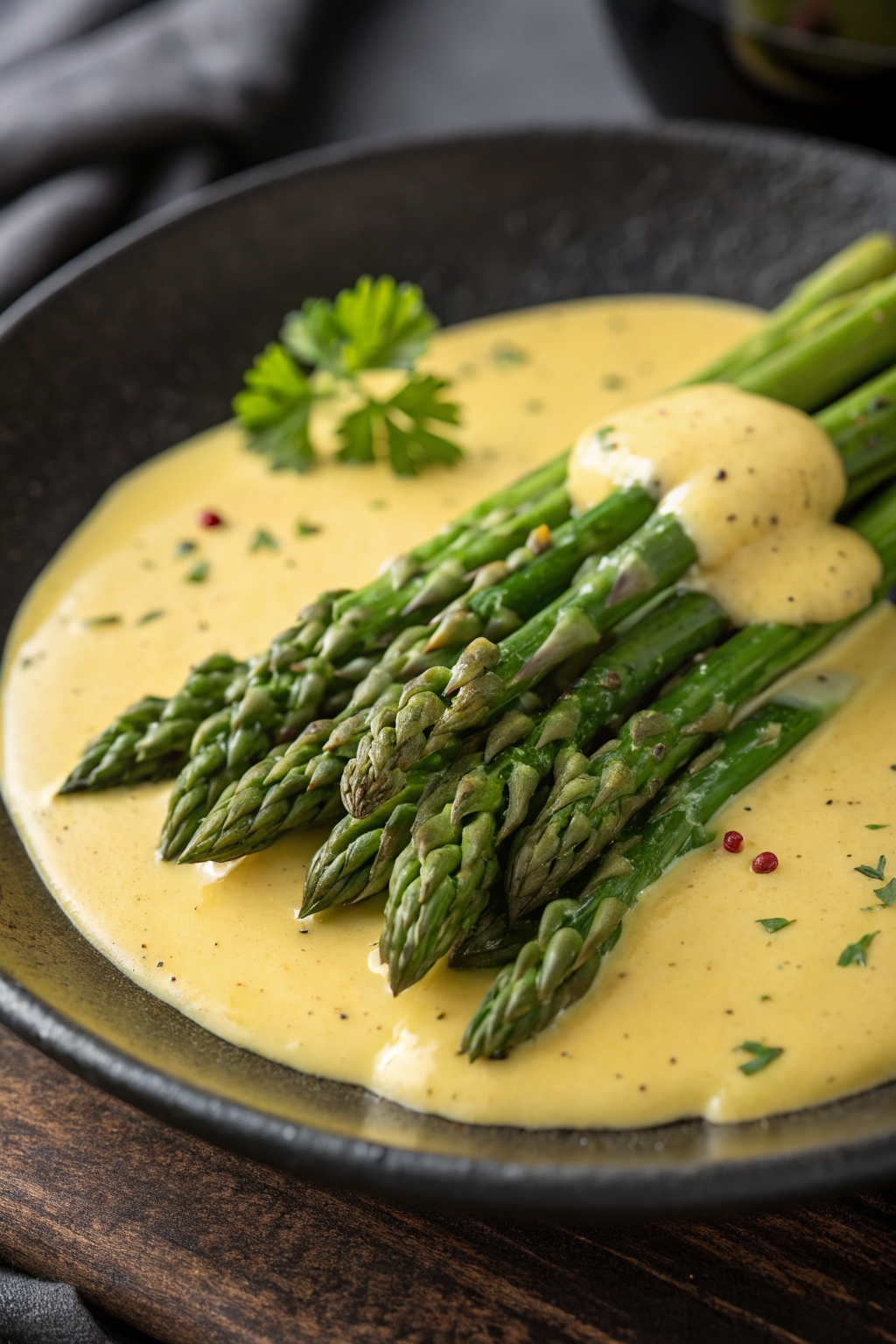
Serve Hollandaise Sauce Recipe over classic eggs Benedict with poached eggs and toasted English muffins. Spoon it over steamed or roasted asparagus, broccoli, or green beans for a simple side that tastes special. Drizzle it on top of pan seared salmon, grilled chicken, or roasted potatoes for a rich finish.
Use it as a dip for lightly cooked vegetables or breakfast potatoes when you want a brunch platter that feels restaurant level. You can also spoon a little over avocado toast with a poached egg for a quick but fancy breakfast.
How to store
- Store leftover Hollandaise Sauce Recipe in a small, airtight container in the fridge for up to 2 days.
- Do not freeze it, since the texture breaks and turns grainy after thawing.
- Reheat very gently by placing the container in a bowl of warm water and stirring, or by warming it in a heatproof bowl over barely simmering water while whisking.
- If the sauce thickens too much during reheating, whisk in a teaspoon of warm water or a squeeze of fresh lemon juice to loosen it.
Hollandaise Sauce Recipe
Ingredients
Method
- Fill a small saucepan with a few inches of water and bring to a gentle simmer over low heat. Place a heatproof bowl over the pan, ensuring the bottom does not touch the water.
- Add the egg yolks and lemon juice to the bowl. Whisk constantly until the mixture thickens slightly and lightens in color, 2 to 3 minutes.
- While whisking continuously, slowly drizzle in the warm melted butter in a thin stream, allowing it to emulsify with the egg mixture. Continue whisking until the sauce is thick, smooth, and glossy.
- Season with salt and cayenne or white pepper to taste. If the sauce is too thick, whisk in a little warm water, a teaspoon at a time, until the desired consistency is reached.
- Remove from heat and serve immediately over eggs, steamed vegetables, or fish. Keep warm over barely simmering water if not serving right away, whisking occasionally.
Notes
Approximate per serving (about 2 tablespoons): 150 calories; fat 16 g; saturated fat 9 g; carbohydrates 0 g; fiber 0 g; sugars 0 g; protein 2 g; sodium 80 mg. Values will vary based on brands, add-ins, and portion size.