
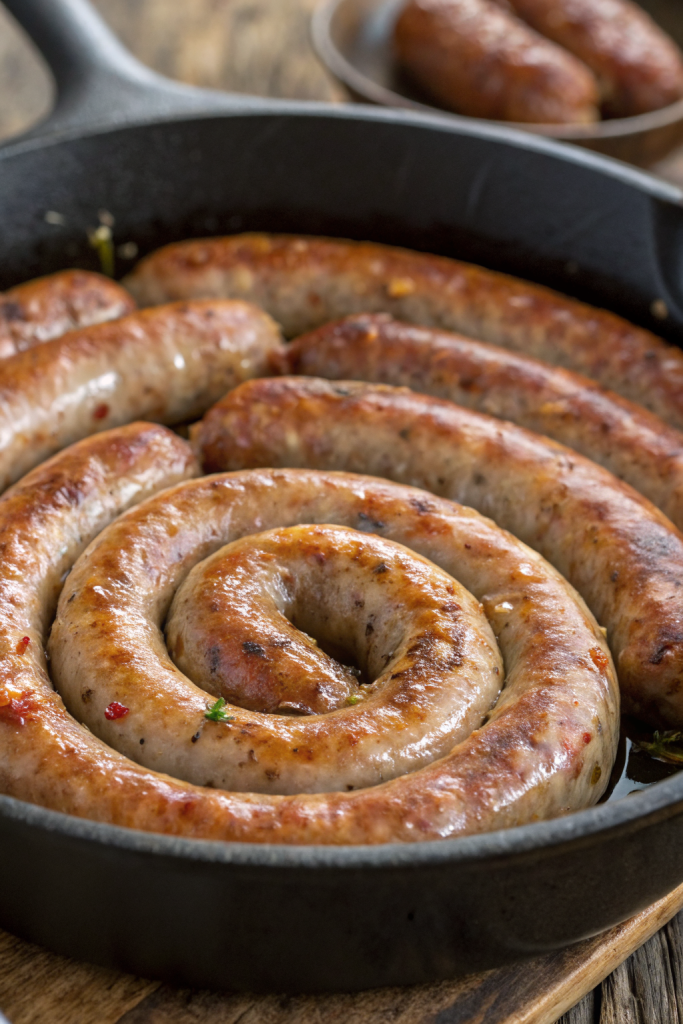
How to Make Homemade Sausage tastes juicy, savory, and a little bit rustic, perfect for anyone who loves from-scratch comfort food and has about 2 hours to play in the kitchen. It works well for curious beginners and seasoned home cooks who want more control over ingredients, flavor, and texture. I grew up in a Midwest kitchen that smelled like garlic and black pepper every Saturday, so this recipe feels like home to me.
Why Choose This Homemade Sausage
Homemade sausage gives you full control over salt, fat, spices, and texture, so every bite fits your taste and dietary needs. You skip mystery ingredients and use fresh meat, real herbs, and spices you actually recognize.
You also customize flavors for different meals, from breakfast patties to spicy Italian links. Once you learn the basic method, you mix and match seasonings without any stress.
“This Homemade Sausage recipe tastes like a butcher shop special, but comes from a regular home kitchen ★★★★★”
Ingredients You’ll Need
You can use this How to Make Homemade Sausage method with several meats, but I will list a classic mix and give options.
Meat and fat
- 2 pounds boneless skinless chicken thighs, well chilled, trimmed of large gristle
- 8 ounces beef chuck or brisket, well chilled, trimmed of excess sinew
- 6 ounces beef fat or tallow, chilled and cut into small cubes
- 1/4 cup ice water, very cold
You want about 25 to 30 percent fat for juicy sausage. If you use leaner meat like turkey or chicken breast, increase added fat slightly so the sausage does not turn dry.
Seasonings
Adjust seasonings to taste, but start here for a balanced, all purpose sausage:
- 2 1/4 teaspoons kosher salt (use slightly less if you use fine table salt)
- 1 1/2 teaspoons freshly ground black pepper
- 2 teaspoons garlic powder or 3 cloves fresh garlic, minced very fine
- 1 1/2 teaspoons onion powder
- 1 teaspoon smoked paprika
- 1 teaspoon sweet paprika
- 1 teaspoon dried oregano
- 1 teaspoon dried thyme
- 1 teaspoon dried parsley
- 1/2 teaspoon crushed red pepper flakes, optional for mild heat
- 1 teaspoon sugar or honey, optional, rounds out flavor
- 1 tablespoon apple cider vinegar, brightens the mix
You can swap dried herbs with fresh ones. Use three times the amount of fresh herbs and mince them very fine so they mix evenly.
Optional flavor variations
You can keep the same meat base and switch the spices.
Breakfast style sausage
- Add 1 teaspoon ground sage
- Add 1/2 teaspoon ground nutmeg
- Add 1/2 teaspoon ground white pepper
- Reduce smoked paprika by half
Italian style sausage (no pork)
- Add 1 teaspoon fennel seeds, lightly crushed
- Add 1 teaspoon dried basil
- Add 1 teaspoon dried rosemary, crushed between fingers
- Add 1 tablespoon tomato paste to the mix
Casings and equipment
You can make patties or links. Patties need no casings, just a pan.
If you want links, you need:
- Natural sheep or beef casings, rinsed and soaked in cool water
- Sausage stuffer attachment for a stand mixer or a hand crank stuffer
Helpful equipment:
- Meat grinder with coarse and medium plates (KitchenAid grinder works fine)
- Large metal mixing bowl
- Baking sheet or tray to chill meat
- Food safe gloves, optional but helpful
- Instant read thermometer
- Sharp knife and cutting board
You can ask the butcher to grind meat for you if you do not own a grinder. In that case, keep the meat very cold and mix gently so you keep some texture.
Tips & Tricks
- Chill meat, fat, grinder parts, and bowl in the fridge for at least 30 minutes so the grind stays clean and not mushy.
- Cut meat and fat into 1 inch chunks so the grinder feeds smoothly and does not smear.
- Mix seasonings with the meat by hand until the mixture turns sticky and tacky, which means the proteins bind and hold moisture.
- Cook a small test patty in a skillet, taste it, and adjust salt or spices before you stuff or shape the full batch.
- Keep casings in cool water and flush them with fresh water so they stay supple and easy to slide onto the stuffer.
- Do not overfill casings, leave a little slack so you twist links without tearing.
- Prick any visible air pockets with a clean pin so the links cook evenly.
- Label each batch with date and flavor so you do not play freezer roulette later.
How to Make Homemade Sausage
Step 1: Prep and chill the meat
Pat the meat dry with paper towels so excess moisture does not smear in the grinder. Trim away any large pieces of gristle or silverskin that might clog the grinder. Cut meat and fat into 1 inch cubes and spread them on a baking sheet.
Place the tray in the freezer for 20 to 30 minutes until the edges feel firm but the centers still feel pliable. Chill the grinder parts and mixing bowl in the fridge at the same time.
Step 2: Grind the meat
Set up the grinder with a coarse plate. Feed the chilled meat and fat through the grinder into the cold bowl. Alternate meat and fat pieces so they blend evenly.
Work in small batches and keep the rest of the meat in the fridge while you grind. If the meat starts to smear or look pasty, pause and chill it again for 10 minutes.
Step 3: Season and mix
Sprinkle salt, spices, herbs, and vinegar evenly over the ground meat. Pour in the ice water. Use clean hands to mix the sausage meat.
Fold and squeeze the mixture until it turns sticky and starts to cling to your hands and the bowl. This step usually takes 2 to 3 minutes and builds structure so the sausage slices cleanly.
Step 4: Test and adjust flavor
Pinch off a small piece of the sausage mixture and shape it into a mini patty. Heat a small skillet over medium heat and cook the patty until it reaches 165°F in the center. Taste it and check salt, heat, and herb levels.
Adjust the main bowl with more salt, pepper, garlic, or herbs as needed. Mix again briefly so the seasoning distributes evenly.
Step 5: Decide on patties or links
You can stop here and shape patties, or you can move on to stuffing links. Patties work well if you do not own a stuffer or feel short on time. Links look impressive and store neatly, but they take a little more setup.
Choose what fits your kitchen and patience level that day. Both versions use the same sausage mixture and taste great.
Step 6: Shape sausage patties
Scoop portions of sausage mixture, about 3 to 4 ounces each, and roll them into balls. Flatten each ball into a patty about 1/2 inch thick. Press a small dimple in the center of each patty so it cooks flat and not domed.
Place patties on a parchment lined tray. Chill them for at least 30 minutes so they firm up before cooking or freezing.
Step 7: Prep casings for links
If you use casings, rinse them under cool running water to remove excess salt. Run water through the inside of each casing like a little hose so it opens up and softens. Soak casings in a bowl of cool water while you set up the stuffer.
Cut casings into manageable lengths, about 3 to 4 feet each. This length makes them easier to handle and twist into links.
Step 8: Stuff the sausage
Load the sausage stuffer with the seasoned meat mixture. Slide one length of casing onto the nozzle, leaving a few inches hanging loose at the end. Tie a knot at the end of the casing.
Start cranking or running the stuffer on low speed. Guide the casing with one hand and control the fill with the other hand so the casing fills firmly but not tight. When you reach the end of the casing, stop the stuffer and leave a little unfilled space, then cut and tie off that end.
Step 9: Twist into links
Lay the long stuffed rope of sausage on a clean surface. Decide how big you want each link, usually 4 to 6 inches. Pinch the sausage at each link point and twist every other link in the opposite direction so they stay tight.
Work down the rope until you finish all the links. Use a clean needle or pin to prick any visible air bubbles gently.
Step 10: Chill and rest
Place patties or links on a tray in a single layer. Chill them in the fridge for at least 4 hours, or overnight if you can. This rest time helps the flavors meld and the texture set.
You can also leave the links uncovered in the fridge for a few hours to dry the surface slightly. That step helps them brown better in the pan or oven.
Step 11: Cook the sausage
You can pan fry, bake, or grill your homemade sausage.
Pan fry
Heat a skillet over medium heat with a little oil. Add patties or links and cook, turning occasionally, until browned on all sides and the center reaches 165°F. Lower the heat if they brown too quickly.
Bake
Heat the oven to 375°F. Place sausage on a parchment lined baking sheet. Bake 18 to 25 minutes, depending on size, until the internal temperature reaches 165°F.
Grill
Heat the grill to medium. Oil the grates lightly. Grill sausage, turning every few minutes, until browned and cooked through.
What to Serve with it?
Homemade sausage pairs nicely with roasted potatoes, sautéed green beans, or a simple salad with crisp lettuce and crunchy cucumbers. You can tuck slices into soft rolls with mustard, pickles, and grilled onions. Serve breakfast style with scrambled eggs, fresh fruit, and toast.
You can also slice cooked sausage into pasta, rice bowls, or veggie packed skillets. Kids usually enjoy it with ketchup and a side of sweet corn or carrot sticks.
Storage Options
- Store cooked sausage in an airtight container in the fridge for up to 4 days.
- Store uncooked patties or links in the fridge for up to 2 days, tightly wrapped.
- Freeze uncooked sausage patties or links on a tray until solid, then pack them in freezer bags for up to 3 months.
- Freeze cooked sausage in portions for up to 3 months, and label each bag with date and flavor.
- Reheat cooked sausage gently in a covered skillet over low heat with a splash of water, or in a 325°F oven until it reaches 165°F in the center.
How to Make Homemade Sausage
Ingredients
Method
- Chill the pork shoulder, pork fat, grinder parts, and mixing bowl in the freezer for 20 to 30 minutes until very cold but not frozen.
- Combine the cold pork shoulder and pork fat in a large bowl and toss to distribute the fat evenly.
- Grind the meat and fat together using a meat grinder fitted with a medium plate, catching the ground meat in the chilled bowl.
- In a small bowl, mix the salt, black pepper, brown sugar, sage, thyme, red pepper flakes (if using), nutmeg, garlic powder, and onion powder.
- Sprinkle the seasoning mixture evenly over the ground meat and add the ice-cold water.
- Using clean hands or a stand mixer fitted with the paddle attachment, mix the sausage until the meat becomes sticky and the seasonings are thoroughly incorporated, 1 to 2 minutes.
- To test the seasoning, cook a small patty of sausage in a skillet over medium heat until browned and cooked through, then taste and adjust seasonings in the main mixture as needed.
- For patties, divide and shape the seasoned sausage into equal portions, flattening each into a disk about 1/2 inch thick.
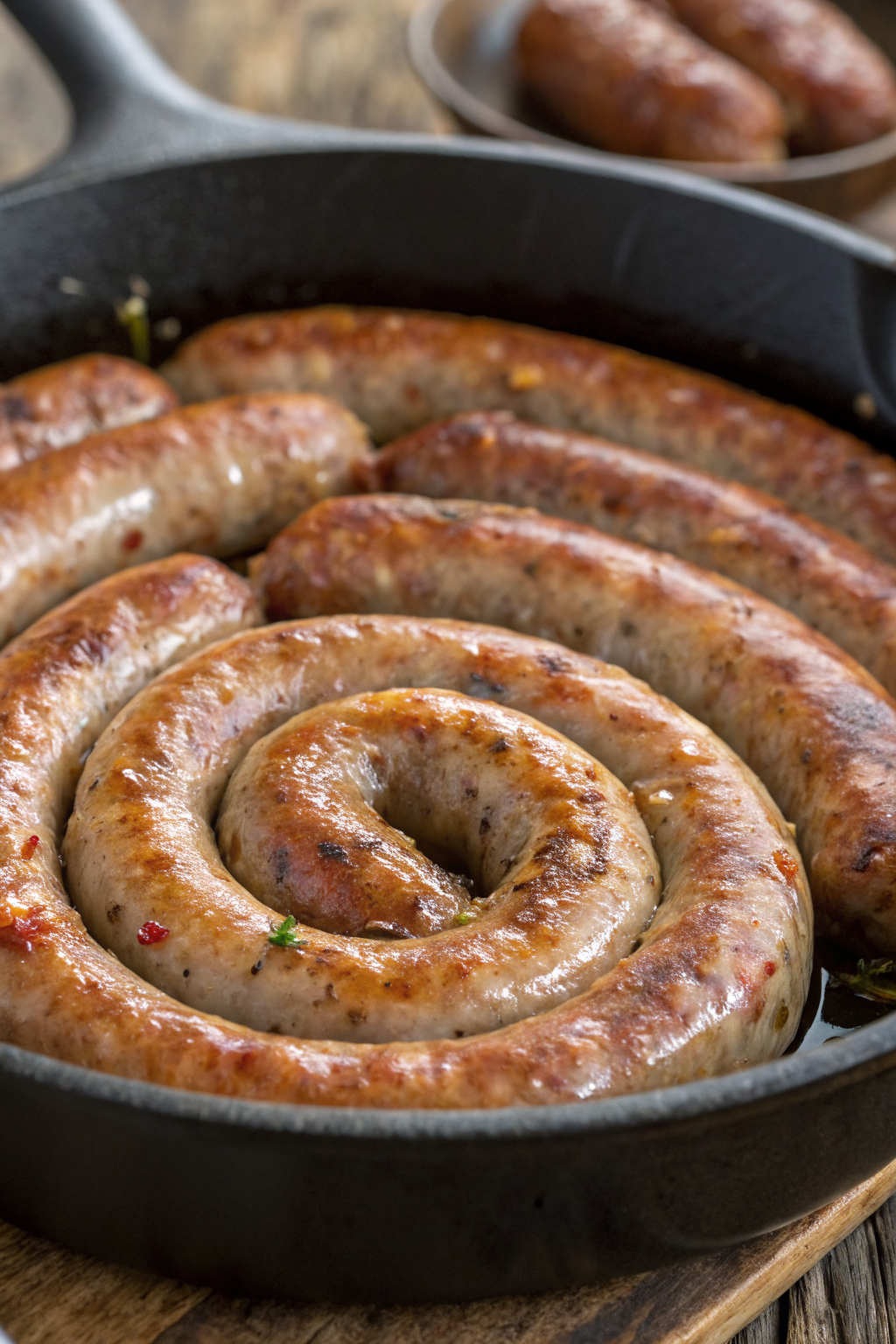
- For links, slide the soaked hog casing onto a sausage stuffer, leaving a few inches of casing hanging off the end and tying a knot. Gently stuff the casing, avoiding air pockets, then twist the long coil into links of desired length.
- To cook, heat a skillet over medium heat and cook patties or links, turning occasionally, until browned on all sides and the internal temperature reaches 160°F (71°C).
- Serve hot as part of a breakfast plate, in sandwiches, or in recipes calling for fresh sausage. Refrigerate uncooked sausage for up to 2 days or freeze for longer storage.
Notes
Approximate per serving (about 1/4 pound raw sausage): 360 calories; fat 32 g; saturated fat 11 g; carbohydrates 2 g; fiber 0 g; sugars 1 g; protein 16 g; sodium 620 mg. Values will vary based on cut of pork, added fat, exact seasonings, and portion size.