
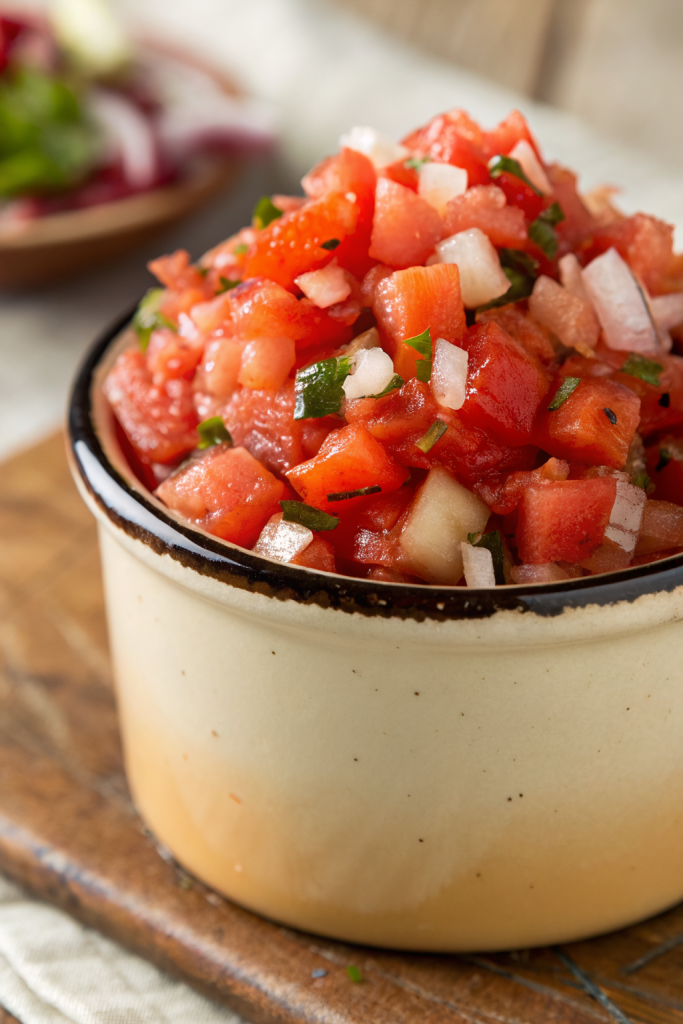
How To Make The Best Pico De Gallo tastes bright, fresh, and zippy, with crunchy onions, juicy tomatoes, and just enough heat to wake up your taste buds. It works for anyone who wants a quick, healthy flavor booster on the table in about 15 minutes, start to finish. I started making this as a broke college kid with one dull knife, and it still beats most restaurant salsa in my very biased opinion.
Why Make This Pico De Gallo at Home
Homemade pico de gallo tastes fresher, costs less, and lets you control the heat, salt, and texture. You skip preservatives and mystery ingredients and get a bowl of pure tomato, onion, cilantro, lime, and chili goodness.
You also adjust it to your crew. Mild for kids, fiery for spice lovers, extra lime for the citrus fans, or no cilantro for the cilantro skeptics.
Bright, crunchy, perfectly balanced pico de gallo that tastes like a restaurant side but comes from your own kitchen in minutes. ★★★★★
Ingredients You Need
Here is everything you need to make How To Make The Best Pico De Gallo.
Fresh ingredients
- Tomatoes
- 4 medium ripe Roma tomatoes, seeded and finely diced
- Romas keep their shape and do not release as much liquid. Use vine ripe or cherry tomatoes if they look better, and scoop out extra seeds.
- Onion
- 1 small white onion, finely diced
- White onion gives a sharper, classic flavor. Use red onion for a slightly sweeter bite and pretty color.
- Jalapeño or serrano pepper
- 1 jalapeño, seeded and finely minced, or 1 serrano for more heat
- Remove seeds and ribs for mild pico de gallo. Leave some in if you like it spicy.
- Fresh cilantro
- 1 small bunch cilantro, leaves and tender stems, finely chopped
- If you hate cilantro, swap with flat leaf parsley and a tiny pinch of dried oregano.
- Fresh lime juice
- Juice of 1 to 2 limes, about 2 to 3 tablespoons
- Use fresh limes only. Bottled lime juice tastes flat and slightly bitter.
- Garlic
- 1 small clove garlic, very finely minced or grated
- Garlic adds depth. Use half a clove if you want a lighter flavor.
Pantry ingredients
- Salt
- 1 teaspoon fine sea salt, plus more to taste
- Sea salt or kosher salt works best. Table salt tastes harsher, so use a bit less if you use it.
- Black pepper
- 1 or 2 pinches freshly ground black pepper
- Optional, but I like the tiny bit of warmth it adds.
- Optional flavor boosters
- Pinch of ground cumin for a slightly smoky note
- Tiny pinch of sugar if your tomatoes taste bland or out of season
Equipment list
You do not need fancy gear to make How To Make The Best Pico De Gallo, just a few basics.
- Sharp chef’s knife or santoku
- Cutting board
- Medium mixing bowl
- Small spoon to seed tomatoes and peppers
- Citrus juicer or your hands
- Measuring spoons
- Spoon or spatula for mixing
Tips & Mistakes
- Dice everything small and even so each bite tastes balanced and spoon friendly.
- Use ripe but firm tomatoes, not soft or mushy ones, to avoid watery pico de gallo.
- Seed tomatoes and peppers to keep the texture chunky and prevent a soupy bowl.
- Taste your tomatoes before you mix; if they taste flat, add a tiny pinch of sugar.
- Salt the mixture, then wait 5 to 10 minutes and taste again, since salt pulls out juice and changes the flavor.
- Do not drown it in lime juice; start with less, taste, and add more until it tastes bright but not sour.
- Chop cilantro with a sharp knife so you do not bruise it into a dark green smear.
- Chill the pico de gallo for at least 10 minutes before serving so the flavors mingle.
- Do not over mix; fold gently so the tomatoes keep their shape.
- Keep raw onion in check; if you hate sharp onion, rinse the diced onion in cold water, then drain and pat dry before mixing.
How to Make Pico De Gallo
Step 1: Prep the tomatoes
Slice the tomatoes in half lengthwise. Use a small spoon or your fingers to scoop out the seeds and watery pulp. Lay the tomato halves cut side down, slice into strips, then turn and dice into small cubes about pea size.
Transfer the diced tomatoes to a medium mixing bowl. If they release a lot of juice right away, drain a little off so the pico de gallo stays chunky.
Step 2: Dice the onion and pepper
Peel the onion and cut it into a fine dice, slightly smaller than the tomato pieces. Add the onion to the bowl. Cut the jalapeño in half, scrape out seeds and ribs if you want it mild, then mince it very finely.
Add the minced jalapeño to the bowl. Wash your hands after handling the pepper so you do not touch your eyes with chili oil.
Step 3: Chop the cilantro and garlic
Rinse the cilantro and pat it dry. Bunch it up tightly and slice it thin, then run your knife through it a couple of times to get a fine chop. Include tender stems since they hold a lot of flavor.
Mince the garlic very finely or grate it on a microplane so it disappears into the mixture. Add cilantro and garlic to the bowl.
Step 4: Season with lime and salt
Squeeze the limes and measure the juice. Pour about two tablespoons of lime juice over the mixture to start. Sprinkle in the salt, black pepper, and any optional cumin.
Use a spoon or spatula to fold everything together gently. Mix until the tomatoes, onion, cilantro, and pepper look evenly combined and coated with lime juice.
Step 5: Taste and adjust
Let the pico de gallo sit at room temperature for 5 to 10 minutes. This short rest lets the salt draw out juices and blend flavors. Taste a spoonful with a chip or a piece of tortilla so you taste it the way you plan to eat it.
Add more salt if it tastes dull, more lime juice if it needs brightness, or more jalapeño if you want extra heat. If the tomatoes taste slightly bland, add a tiny pinch of sugar and stir again.
Step 6: Chill briefly and serve
Cover the bowl and place it in the fridge for about 10 to 20 minutes. This quick chill helps the flavors settle and makes the pico de gallo taste extra refreshing. Give it a gentle stir before serving.
If it looks too juicy, spoon off a little liquid or serve it with a slotted spoon. Taste one last time and adjust seasoning right before it hits the table.
Variations I’ve Tried
- Extra spicy pico de gallo
I swap jalapeño for serrano and leave some seeds in. I also add a tiny pinch of cayenne. This version wakes up sleepy taste buds fast. - Mango pico de gallo
I replace one tomato with a ripe mango, diced the same size as the tomatoes. The sweetness plays nicely with the lime and chili and works great with grilled chicken or fish. - Cucumber pico de gallo
I add half a peeled, seeded cucumber, finely diced. This version tastes extra crisp and refreshing, perfect for hot summer days. - No cilantro pico de gallo
For cilantro haters, I use flat leaf parsley and a very small pinch of dried oregano. The flavor changes slightly but still tastes fresh and bright. - Roasted pepper pico de gallo
I char a jalapeño or poblano under the broiler, peel the skin, and dice it. The roasted flavor adds a deeper, slightly smoky note without any bottled sauces.
How to Serve Pico De Gallo
Serve How To Make The Best Pico De Gallo with warm tortilla chips, of course, but do not stop there. Spoon it over grilled chicken, steak, or fish tacos, or tuck it into burritos and quesadillas for a fresh crunch. Pile it on top of scrambled eggs, breakfast tacos, or a simple bowl of rice and beans to turn basic meals into something that tastes special. I also love it as a topping for baked potatoes or as a fresh side with roasted vegetables and grilled corn.
How to store
- Fridge
Store pico de gallo in an airtight container in the refrigerator. It tastes best within 24 hours but stays good for up to 3 days. Stir before serving and taste to adjust salt and lime, since flavors soften over time. - Freezer
I do not recommend freezing pico de gallo, since the tomatoes and onion turn mushy and watery after thawing. If you must freeze it, plan to use it later as a cooked ingredient, such as in soups or sauces, not as a fresh salsa. - Best way to refresh
If the pico de gallo releases a lot of liquid in the fridge, spoon off some of the excess juice. Add a squeeze of fresh lime and a pinch of salt, then stir gently. This quick refresh brings the flavor back to life.
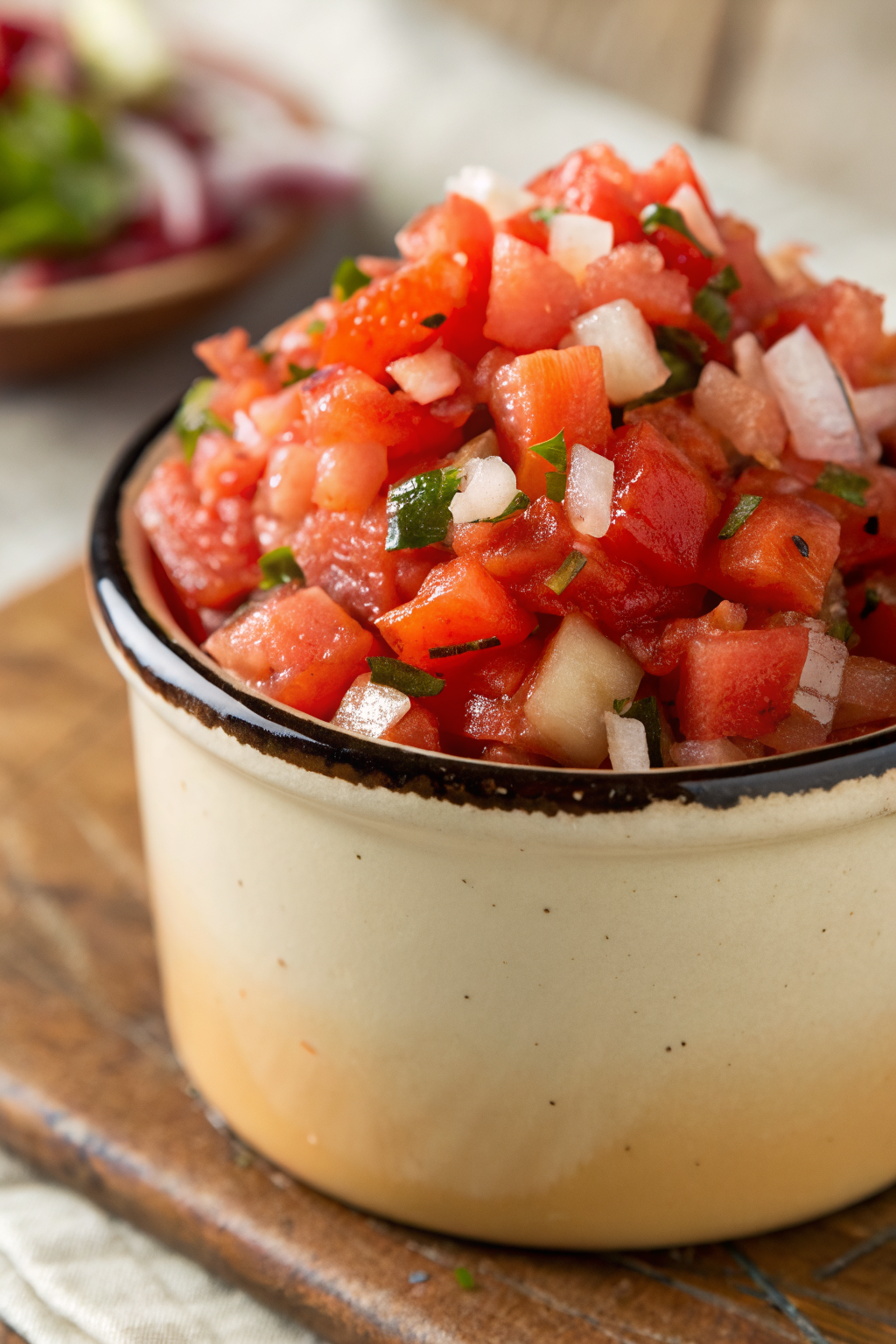
How To Make The Best Pico De Gallo
Ingredients
Method
- Slice the tomatoes in half lengthwise and use a small spoon or your fingers to scoop out the seeds and watery pulp. Lay the tomato halves cut side down, slice into strips, then turn and dice into small pea-size cubes. Transfer the diced tomatoes to a medium mixing bowl and drain off a little juice if they release a lot right away.
- Peel the onion and finely dice it slightly smaller than the tomato pieces. Add the onion to the bowl. Cut the jalapeño in half, scrape out seeds and ribs if you want it mild, then mince it very finely. Add the minced jalapeño to the bowl and wash your hands after handling the pepper.
- Rinse the cilantro and pat it dry. Bunch it up tightly and slice it thin, then run your knife through it a couple of times to get a fine chop, including tender stems. Very finely mince or grate the garlic so it almost disappears into the mixture. Add the cilantro and garlic to the bowl.
- Pour about 2 tablespoons of fresh lime juice over the mixture to start. Sprinkle in the salt, black pepper, and optional cumin. Use a spoon or spatula to gently fold everything together until the tomatoes, onion, cilantro, and pepper are evenly combined and coated with lime juice.
- Let the pico de gallo rest at room temperature for 5 to 10 minutes so the salt can draw out juices and the flavors blend. Taste with a chip or tortilla. Add more salt if it tastes dull, more lime juice if it needs brightness, or more jalapeño if you want extra heat. If the tomatoes taste bland, add a tiny pinch of sugar and stir again.
- Cover the bowl and refrigerate for 10 to 20 minutes to chill and let the flavors settle. Gently stir before serving. If it looks too juicy, spoon off a little liquid or serve with a slotted spoon. Taste once more and adjust seasoning just before serving.
Notes
Approximate per 1/4-cup serving (about 6 servings total): 15–20 calories; fat 0 g; saturated fat 0 g; carbohydrates 4 g; fiber 1 g; sugars 2 g; protein 1 g; sodium 200 mg. Values will vary based on exact tomato size, salt level, and any optional add-ins.