
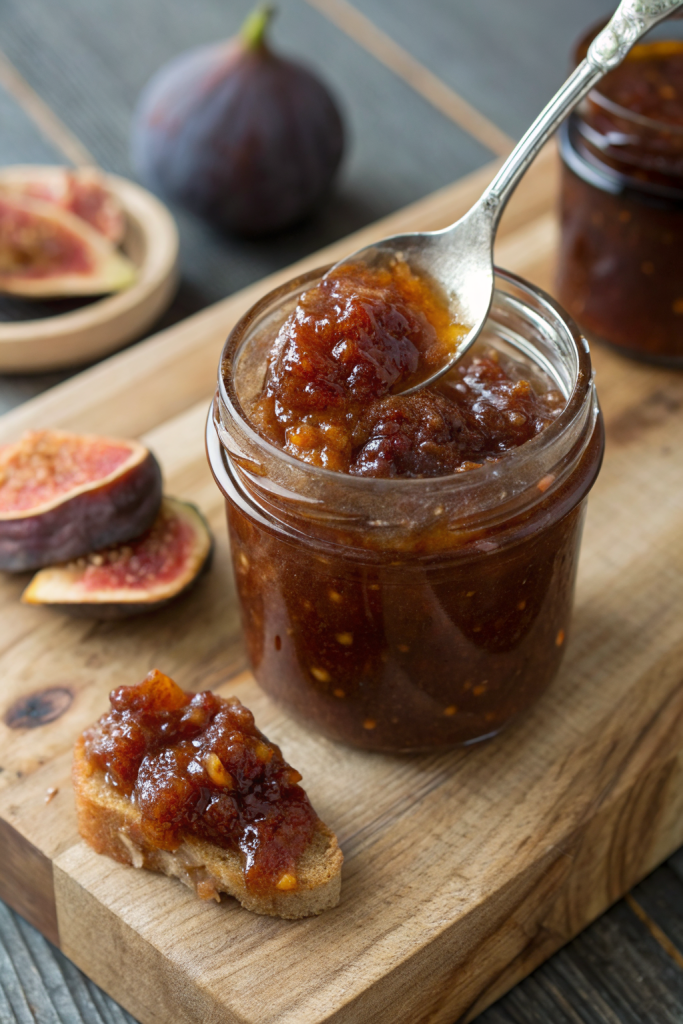
How to Make Fig Jam tastes like a spoonable fig newton with sunshine and honey tucked into every bite, and it works for breakfast people, cheese board fans, and anyone who loves a not-too-sweet spread. You can finish this small-batch stovetop fig jam in about 45 to 60 minutes, start to finish, with simple ingredients and basic kitchen tools. I grew up eating store-bought jam, so this recipe feels like a tiny upgrade that my younger self would high-five me for.
Why Fig Jam Is Worth It
Homemade fig jam tastes richer, fresher, and more complex than anything in a jar from the store. You control the sweetness, the texture, and the flavor boosters like lemon, vanilla, or warm spices.
You also use up figs before they go sad and wrinkly in the fridge, which saves money and food waste. A batch of fig jam turns simple toast, yogurt, or a snack plate into something that feels a little special with almost no extra effort.
“This How to Make Fig Jam recipe tastes like a fancy bakery spread but comes together in under an hour with simple ingredients and zero stress.” ★★★★★
Ingredients You Need
Fresh figs
- 2 pounds fresh ripe figs, stems removed, quartered
- Use Black Mission or Brown Turkey figs for deep, jammy flavor.
- Use green figs too, but expect a slightly lighter color and milder taste.
Sugar and acid
- 1 to 1¼ cups granulated sugar, to taste
- 2 to 3 tablespoons fresh lemon juice
- 1 teaspoon lemon zest
- Use organic cane sugar if you prefer a less processed option.
- Lemon keeps the jam bright and balances the sweetness.
Flavor boosters
- 1 teaspoon pure vanilla extract
- ¼ teaspoon ground cinnamon, optional
- Small pinch of salt
- Use real vanilla extract, not imitation, for better flavor.
Liquid
- 2 to 4 tablespoons water, only if the figs seem very dry
- You might skip the water if the figs feel very juicy.
Optional add-ins
- 1 to 2 tablespoons honey or maple syrup for extra depth
- 1 teaspoon finely chopped fresh rosemary or thyme for a savory twist
Equipment list
- Large heavy-bottomed saucepan or Dutch oven
- Wooden spoon or heatproof spatula
- Potato masher or fork
- Measuring cups and spoons
- Sharp knife and cutting board
- Zester or microplane for the lemon
- Clean glass jars with tight lids
- Funnel and ladle for easy jar filling (helpful but not required)
Quick Tips & substitutions
- Use very ripe figs with soft flesh and good aroma; underripe figs give bland jam.
- Taste the figs first and reduce sugar slightly if they taste very sweet.
- Add sugar gradually; you can always add more near the end of cooking.
- Swap lemon juice with a mix of lemon and orange juice for a softer citrus note.
- Replace vanilla with almond extract, but use only ¼ teaspoon since it tastes stronger.
- Keep the heat at medium to medium low so the jam thickens without scorching.
- Stir often, especially near the end, because thick jam sticks to the bottom quickly.
- Use a wide pan instead of a tall pot so the liquid evaporates faster.
- Leave some fig chunks for rustic texture, or mash more for a smoother spread.
- Skip the cinnamon and herbs if you want a neutral jam that pairs with more foods.
How to Make Fig Jam
Prep the figs
Wash the figs gently under cool water and pat them dry with a clean towel. Trim off the stems with a sharp knife. Cut each fig into quarters, or smaller pieces if the figs feel large, so they cook down evenly.
Macerate the fruit
Add the chopped figs to a large saucepan. Sprinkle in the sugar, lemon juice, lemon zest, salt, and any optional honey or maple syrup. Stir until the figs look coated and juicy, then let the mixture sit for 10 to 15 minutes so the sugar draws out more liquid.
Start the cooking
Place the pan over medium heat. Stir as the sugar melts and the figs release more juice. If the mixture looks very dry or starts to stick early, add 2 tablespoons of water and stir again.
Simmer and mash
Bring the mixture to a gentle bubble, then lower the heat to medium low. Stir often so the fruit cooks evenly and does not stick. Use a potato masher or fork to mash the figs to your desired texture while they soften.
Add flavor and adjust sweetness
Stir in the vanilla and cinnamon, if using, once the figs soften and the mixture thickens slightly. Taste a small spoonful, blow on it so you do not burn your tongue, then decide if you want more sugar or more lemon. Add a tablespoon of sugar or a teaspoon of lemon juice at a time until the flavor hits that sweet-tart balance you like.
Cook to jam consistency
Keep the jam at a gentle simmer and stir often. The mixture should thicken and leave a trail when you drag a spoon across the bottom of the pan. When the jam looks glossy and thick and slowly fills in the spoon trail, you likely reached the right point.
Test the set
Spoon a small amount of jam onto a chilled plate and wait 30 seconds. Tilt the plate slightly and watch how the jam moves. If it moves slowly and holds a soft mound, you have a nice spreadable set; if it runs quickly, cook for 3 to 5 more minutes and test again.
Cool and jar
Turn off the heat and let the jam cool in the pan for about 10 minutes. Stir once or twice to release steam and keep the texture even. Ladle the warm jam into clean jars, leave a little space at the top, wipe the rims, then close with tight lids.
Chill and store
Let the jars cool to room temperature on the counter. Move them to the fridge once cool. The jam will thicken more as it chills and usually tastes even better the next day.
Recipe Variations
- Lower sugar version: Use ¾ cup sugar and add 1 extra tablespoon lemon juice; cook a bit longer until thick.
- Vegan friendly: Use only sugar and skip honey; maple syrup works fine if you want extra flavor.
- No refined sugar: Use all maple syrup or honey, but cook on lower heat and expect a softer set.
- Spiced fig jam: Add ¼ teaspoon cinnamon, ⅛ teaspoon nutmeg, and a tiny pinch of clove.
- Herb fig jam: Stir in 1 teaspoon finely chopped rosemary or thyme at the very end of cooking.
- Chunky style: Mash only lightly and keep plenty of fig pieces.
- Smooth style: Blend the hot jam with an immersion blender, then simmer 2 more minutes.
- Citrus twist: Add orange zest along with lemon zest for a brighter, almost marmalade vibe.
Ways to Serve
- Spoon over warm toast, English muffins, or biscuits.
- Swirl into plain yogurt or cottage cheese with a sprinkle of nuts.
- Serve on a cheese board with sharp cheddar or creamy goat cheese.
- Use as a filling for thumbprint cookies or simple sandwich cookies.
- Spread inside grilled cheese with cheddar for a sweet-savory combo.
- Add to oatmeal with sliced banana and a handful of chopped almonds.
- Use as a topping for pancakes, waffles, or French toast.
Storage Success
Store fig jam in clean, tightly sealed jars in the fridge and use it within 2 to 3 weeks for best flavor. Always use a clean spoon when you scoop some out so no crumbs or butter sneak into the jar. If you want to freeze it, leave extra headspace in freezer-safe containers and keep it up to 3 months. Thaw in the fridge overnight, stir well, and enjoy that taste of fig season long after the fruit disappears from the market.
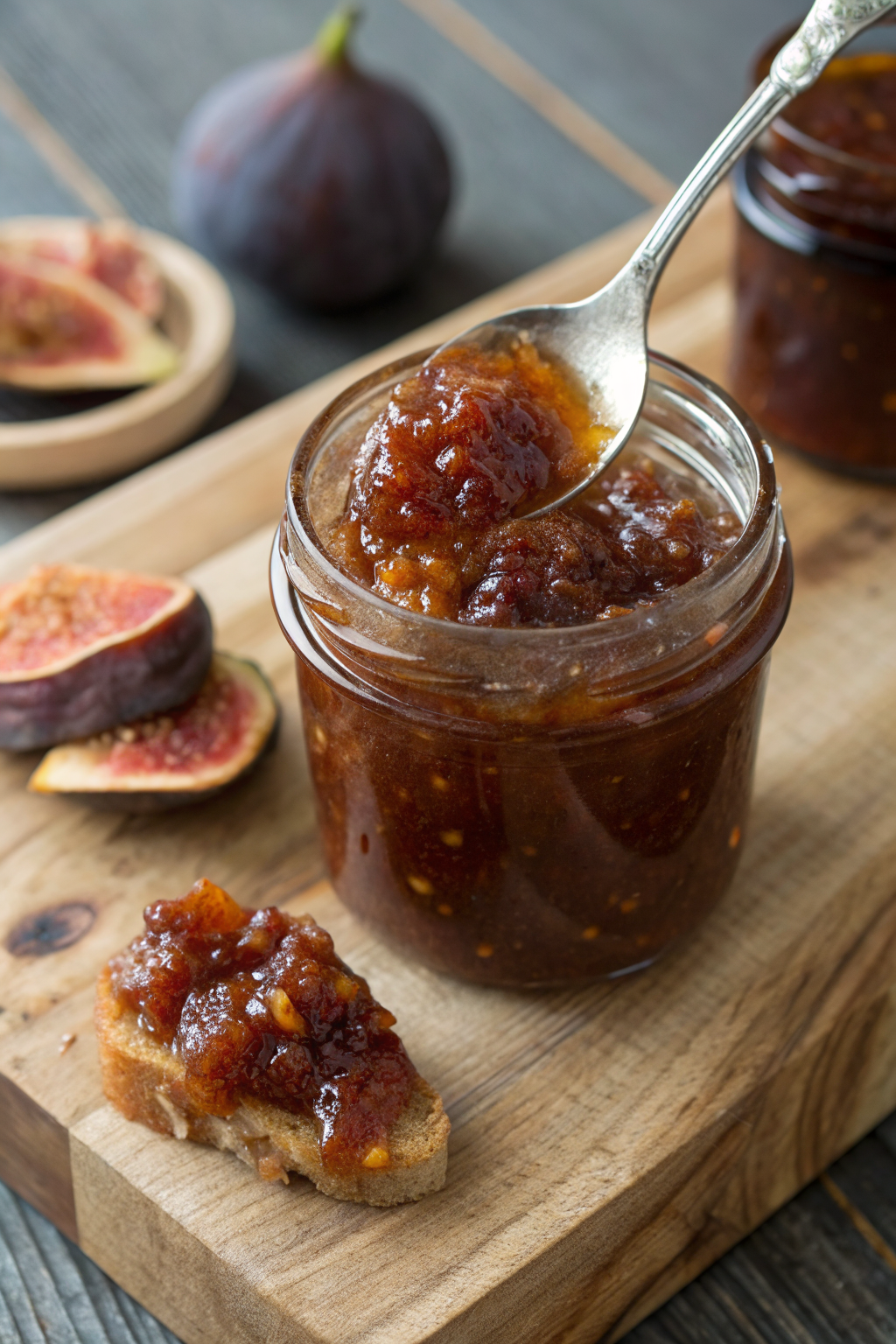
How to Make Fig Jam
Ingredients
Method
- Wash the figs under cool water, pat dry, trim off the stems, and cut into quarters or smaller pieces so they cook evenly.
- Place the chopped figs in a large heavy-bottomed saucepan. Add the sugar, lemon juice, lemon zest, salt, and honey or maple syrup if using. Stir until the figs are well coated and look juicy, then let sit for 10 to 15 minutes to macerate.
- Set the pan over medium heat. Stir as the sugar melts and the figs release more juice. If the mixture looks very dry or begins to stick, add 2 tablespoons of water and stir.
- Bring the mixture to a gentle bubble, then lower the heat to medium-low. Stir often so the fruit cooks evenly and does not stick. Use a potato masher or fork to mash the figs to your preferred texture as they soften.
- When the figs have softened and the mixture has thickened slightly, stir in the vanilla and cinnamon, if using. Taste carefully and adjust the sweetness or tartness by adding more sugar a tablespoon at a time or more lemon juice a teaspoon at a time.
- Continue simmering gently, stirring often, until the jam is glossy, thick, and leaves a clear trail when you drag a spoon across the bottom of the pan and it slowly fills in.
- To test the set, spoon a small amount of jam onto a chilled plate and wait 30 seconds. Tilt the plate; if the jam moves slowly and holds a soft mound, it is ready. If it runs quickly, cook 3 to 5 minutes more and test again.
- Remove the pan from the heat and let the jam cool for about 10 minutes, stirring once or twice to release steam and keep the texture even.
- Ladle the warm jam into clean glass jars, leaving a little space at the top. Wipe the rims and close with tight lids. Let cool to room temperature, then refrigerate. The jam will thicken further as it chills.
Notes
Approximate per 2-tablespoon serving (about 24 servings total): 80–90 calories; fat 0 g; saturated fat 0 g; carbohydrates 22 g; fiber 2 g; sugars 20 g; protein 1 g; sodium 10 mg. Values will vary based on exact sugar amount, honey or maple additions, and portion size.