
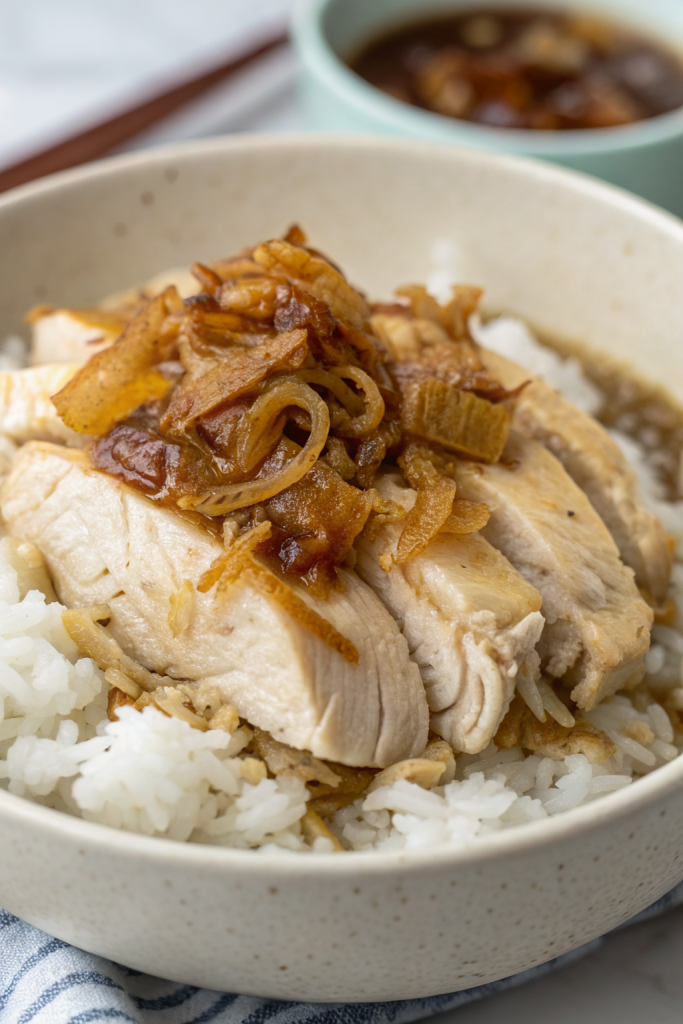
Poached Chicken with Shallot Oil Sauce tastes clean, juicy, and deeply savory with a glossy, aromatic shallot drizzle that makes plain chicken feel restaurant-level. It works perfectly for busy home cooks who want a healthy, high-protein dinner in about 40 minutes, start to finish. I make this on repeat when I crave comfort food that does not put me into a food coma.
Why Make This Poached Chicken with Shallot Oil Sauce at Home
You control the salt, the fat, and the quality of the chicken, so the flavor stays bright and clean instead of salty or greasy. The poaching liquid also turns into a light broth that you can spoon over rice or save for soup.
This method keeps chicken breast juicy and tender, so it never turns chalky or stringy. The shallot oil sauce adds a punchy, oniony aroma that tastes like chicken rice shop vibes with almost no effort.
“This Poached Chicken with Shallot Oil Sauce tastes like a lighter version of my favorite chicken rice, and the shallot aroma hits you in the best way possible. ★★★★★”
Ingredients You Need
Chicken and Poaching Liquid
- 2 large boneless, skin-on chicken breasts
- Skin-on gives more flavor and moisture. Use thighs if you prefer darker meat and extra richness.
- 6 cups water
- 1 teaspoon kosher salt
- 3 slices fresh ginger
- 2 cloves garlic, lightly smashed
- 2 green onions, cut into 2 inch pieces
- 1 tablespoon soy sauce
- 1 teaspoon sugar
- Optional: 1 teaspoon chicken bouillon powder
- This adds extra depth. I like Better Than Bouillon or Knorr.
Shallot Oil Sauce
- 4 to 5 medium shallots, thinly sliced
- 1/3 cup neutral oil
- Use canola, grapeseed, or avocado oil. Avoid extra virgin olive oil because it tastes too strong here.
- 1 teaspoon kosher salt, plus more to taste
- 1/2 teaspoon sugar
- 1 tablespoon light soy sauce
- 1 to 2 teaspoons fresh lime juice or rice vinegar
- 1 small clove garlic, very finely minced
- Optional heat: 1 to 2 teaspoons chili crisp or chili flakes
To Serve
- Steamed jasmine rice or brown rice
- Sliced cucumbers
- Fresh cilantro or green onion, chopped
- Lime wedges
Pantry Shortcuts & Substitutions
- Use pre-sliced shallots from the freezer section if your store carries them.
- Swap shallots with yellow onion in a pinch, but slice very thin so the texture stays delicate.
- Use bottled lime juice if fresh citrus runs out, but start with half the amount and taste.
- Replace soy sauce with tamari or coconut aminos for a gluten free option.
Equipment
- Medium pot with lid
- Instant-read thermometer
- Heatproof bowl for the shallot oil
- Fine mesh strainer or slotted spoon
- Sharp knife and cutting board
- Small saucepan or skillet for frying shallots
Tips & Mistakes
- Slice shallots evenly so they cook at the same rate and do not burn in spots.
- Keep the poaching liquid at a gentle simmer, not a rolling boil, to keep the chicken tender.
- Use an instant-read thermometer so you avoid overcooking; aim for 160 to 165°F in the thickest part.
- Salt the poaching liquid well, or the chicken will taste bland no matter how good the sauce tastes.
- Dry the chicken skin before slicing so the shallot oil clings instead of sliding off.
- Taste the shallot oil sauce while warm and adjust salt, acid, and heat until it tastes bold and punchy.
- Do not walk away from frying shallots; they go from golden to bitter very quickly.
- Strain and save leftover poaching broth for rice or soup so you do not waste all that flavor.
How to Make Poached Chicken with Shallot Oil Sauce
Step 1: Prep the Chicken
Pat the chicken breasts dry with paper towels. Trim any excess fat or loose bits so the pieces cook evenly. Season both sides lightly with salt.
Step 2: Build the Poaching Liquid
Place water, salt, ginger slices, smashed garlic, green onions, soy sauce, sugar, and optional bouillon powder in a medium pot. Stir to dissolve the salt and sugar. Set the pot over medium heat and bring it to a gentle simmer.
Step 3: Poach the Chicken
Lower the chicken breasts into the simmering liquid, skin side up. Adjust the heat so the surface barely bubbles, almost like hot bath water. Cover the pot and cook 12 to 15 minutes, depending on thickness.
Step 4: Check Doneness and Rest
Check the internal temperature in the thickest part of the chicken. When it reaches 160 to 165°F, lift the chicken out and place it on a plate. Cover loosely with foil and let it rest 10 minutes while you prepare the shallot oil sauce.
Step 5: Strain and Save the Broth
Strain the poaching liquid into a container. Taste and adjust salt if needed. Use some right away as a light broth over rice, and chill the rest for soup or another batch of poached chicken.
Step 6: Fry the Shallots
Place sliced shallots and neutral oil in a small saucepan or skillet. Set the pan over medium heat and stir often as the oil heats up. Cook until the shallots turn light golden and smell sweet and toasty.
Step 7: Catch the Perfect Color
Turn the heat to low when the shallots start to brown around the edges. Continue to stir until they reach a deep golden color, then remove the pan from the heat. The shallots keep darkening in the hot oil, so pull them earlier than you think.
Step 8: Season the Shallot Oil Sauce
Use a slotted spoon to transfer the crispy shallots to a paper towel lined plate. Pour the hot shallot oil into a heatproof bowl. Stir in salt, sugar, soy sauce, minced garlic, and lime juice or rice vinegar while the oil still feels hot.
Step 9: Add Heat if You Like
Taste the warm shallot oil sauce. Add chili crisp or chili flakes if you want a spicy kick. Adjust salt and acid until the flavor tastes bright, savory, and slightly tangy.
Step 10: Slice the Chicken
Uncover the rested chicken and pat the surface dry again if any juices pooled. Slice across the grain into thick, even pieces so the meat stays juicy. Arrange the slices on a plate or shallow bowl.
Step 11: Sauce and Serve
Spoon the shallot oil sauce generously over the sliced chicken. Scatter some of the crispy shallots on top for crunch. Serve right away with rice, cucumber slices, and fresh herbs.
Variations I've Tried
I swap the lime juice with yuzu or calamansi when I want a citrusy twist that tastes extra fragrant. I also stir a spoonful of finely chopped cilantro stems into the hot shallot oil sauce for a fresh, herby punch. Sometimes I use chicken thighs instead of breasts and chill the cooked meat, then serve it cold with the shallot oil sauce as a meal prep lunch.
I also stir a bit of grated ginger into the shallot oil sauce when I crave more warmth and spice. When I cook for kids, I skip the chili and add a tiny drizzle of honey to the sauce so it tastes slightly sweet and mellow.
How to Serve Poached Chicken with Shallot Oil Sauce
Serve Poached Chicken with Shallot Oil Sauce over a bowl of hot jasmine rice with cucumber slices and fresh cilantro for a simple, balanced meal. Add a side of blanched greens like bok choy or broccoli and spoon some of the poaching broth over everything. This dish also tastes great in a rice bowl with shredded lettuce, pickled carrots, and a drizzle of extra shallot oil sauce. Offer lime wedges on the side so everyone can brighten their plate to taste.
How to store
- Fridge: Store sliced chicken and shallot oil sauce in separate airtight containers for up to 3 days.
- Freezer: Freeze the plain poached chicken (without sauce) for up to 2 months; thaw overnight in the fridge before reheating.
- Reheating chicken: Warm chicken gently in a covered skillet with a splash of the reserved poaching broth until heated through, or use the microwave at 50 percent power in short bursts.
- Reheating shallot oil sauce: Bring the sauce to room temperature or warm it very lightly so the oil loosens, and add a squeeze of fresh lime if the flavor tastes muted after chilling.
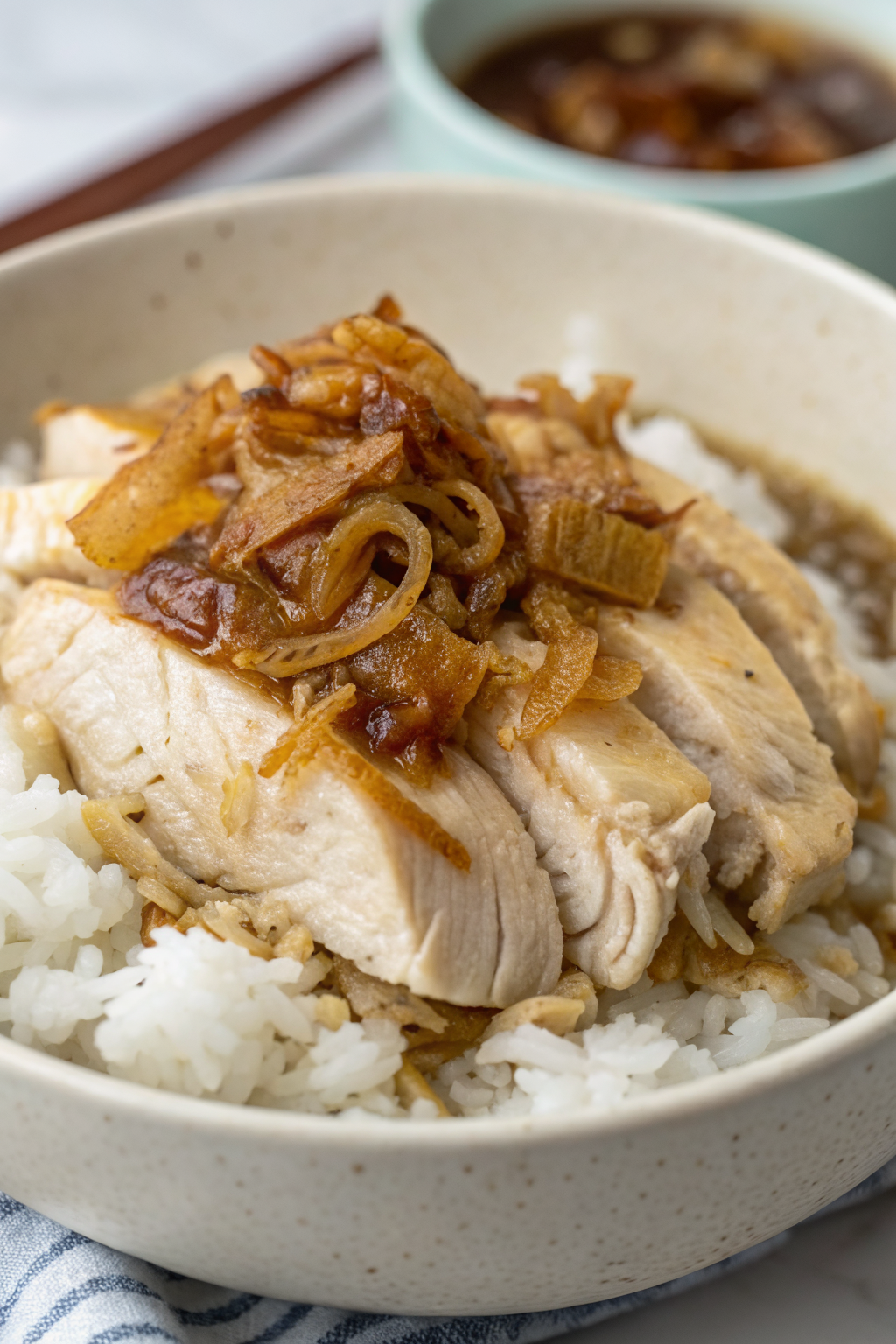
Poached Chicken with Shallot Oil Sauce
Ingredients
Method
- Pat the chicken breasts dry with paper towels. Trim any excess fat or loose bits so the pieces cook evenly. Season both sides lightly with salt.
- In a medium pot, combine the water, kosher salt, ginger slices, smashed garlic, green onions, soy sauce, sugar, and optional chicken bouillon powder. Stir to dissolve the salt and sugar, then bring to a gentle simmer over medium heat.
- Lower the chicken breasts into the simmering liquid, skin side up. Adjust the heat so the surface barely bubbles. Cover the pot and poach for 12 to 15 minutes, depending on thickness.
- Check the internal temperature in the thickest part of each chicken breast. When it reaches 160 to 165°F (71 to 74°C), remove the chicken to a plate, cover loosely with foil, and let rest for 10 minutes.
- Strain the poaching liquid into a container. Taste and adjust salt if needed. Use some as a light broth for serving and refrigerate the rest for another use.
- To make the shallot oil sauce, place the sliced shallots and neutral oil in a small saucepan or skillet. Set over medium heat and cook, stirring often, until the shallots turn light golden and smell sweet and toasty.
- Reduce the heat to low as the shallots start to brown around the edges. Continue to stir until they are deep golden, then remove the pan from the heat. The shallots will continue to darken slightly in the hot oil.
- Use a slotted spoon to transfer the crispy shallots to a paper towel–lined plate. Pour the hot shallot oil into a heatproof bowl. While the oil is still hot, stir in the kosher salt, sugar, light soy sauce, minced garlic, and lime juice or rice vinegar. Taste and adjust seasoning, adding chili crisp or chili flakes if desired.
- Uncover the rested chicken and pat the surface dry if any juices have pooled. Slice across the grain into thick, even slices and arrange on a plate or in shallow bowls.
- Spoon the warm shallot oil sauce generously over the sliced chicken and top with some of the crispy shallots. Serve with steamed rice, cucumber slices, fresh herbs, and a little of the reserved poaching broth if you like, plus lime wedges on the side.
Notes
Approximate per serving (1 of 4, without rice or sides): 310 calories; fat 19 g; saturated fat 3 g; carbohydrates 7 g; fiber 1 g; sugars 3 g; protein 28 g; sodium 620 mg. Values are estimates and will vary based on specific ingredients, brands, and portion sizes.