

Chicken Pesto Pasta Salad tastes bright, herby, cheesy, and a little bit zippy, like summer in a bowl with actual substance. It works perfectly for busy folks who want a make-ahead lunch, a potluck hero, or a quick weeknight dinner in about 30 minutes. I tested versions of this in my tiny apartment kitchen a decade ago, and my neighbors still ask when I plan another “pasta salad tasting night.”
Why Make This Chicken Pesto Pasta Salad at Home
Homemade Chicken Pesto Pasta Salad gives you control over everything: salt, oil, herbs, and how much cheese you pile on. You skip the mystery deli counter tubs and build a salad that tastes fresh, not gloopy.
You also use up leftover chicken, stray veggies, and that half jar of pesto hiding behind the pickles. The whole dish comes together fast, chills well, and feeds a crowd without much effort.
“This Chicken Pesto Pasta Salad tastes like something from a fancy café, but my kids devoured it straight from the fridge. ★★★★★”
Ingredients You Need
Here is what you need for a big bowl of Chicken Pesto Pasta Salad:
-
Pasta
- 12 ounces short pasta: rotini, fusilli, penne, or farfalle.
- Choose a shape with ridges so the pesto clings nicely.
- Whole wheat or chickpea pasta also works if you like extra fiber or protein.
-
Chicken
- 2 to 3 cups cooked chicken, chopped or shredded.
- Use rotisserie chicken as a shortcut; I often grab a Costco bird and call it meal prep.
- Leftover grilled or baked chicken thighs taste especially juicy in this salad.
-
Pesto
- 1 cup basil pesto, homemade or store bought.
- I like refrigerated brands from the deli section; they usually taste fresher than shelf-stable jars.
- If you avoid pine nuts, choose a nut free pesto or blend your own with sunflower seeds or walnuts.
-
Vegetables
- 1 cup cherry or grape tomatoes, halved.
- 1 cup cucumber, chopped small; Persian or English cucumbers stay crisp.
- 1 cup steamed or blanched broccoli florets, chopped bite size.
- 1 small red bell pepper, diced.
- 1/4 cup red onion, very thinly sliced, or 2 green onions, sliced.
-
Cheese
- 1/2 to 3/4 cup shredded or shaved Parmesan.
- Or use small mozzarella pearls for a caprese style twist.
- You can mix both if you chase that extra cheesy life.
-
Extras for flavor and texture
- 1/4 cup toasted pine nuts or slivered almonds for crunch.
- 1/4 cup sliced black olives or kalamata olives, pitted.
- 2 tablespoons capers, drained, if you enjoy a briny kick.
- A handful of fresh basil leaves, torn.
-
Dressing boosters
- 2 to 3 tablespoons extra virgin olive oil.
- Juice of 1/2 to 1 lemon, to brighten the pesto.
- Salt and black pepper to taste.
- Optional pinch of red pepper flakes for a gentle heat.
Equipment List
- Large pot for boiling pasta
- Colander
- Large mixing bowl
- Small bowl or jar for dressing
- Cutting board and sharp knife
- Tongs or a big spoon for tossing
- Airtight containers for storage
Tips & Mistakes
- Salt the pasta water generously so the pasta carries flavor from the inside out.
- Cook the pasta just to al dente; soft, mushy pasta turns the salad heavy and clumpy.
- Rinse the cooked pasta briefly under cool water so it stops cooking and does not steam itself soggy.
- Toss warm pasta with a spoonful of pesto and a drizzle of olive oil so it does not stick together.
- Cut chicken and veggies into small, similar sized pieces so every forkful feels balanced.
- Taste your pesto before adding more salt; many jarred pestos already pack a salty punch.
- Add delicate ingredients like fresh basil and nuts near the end so they stay bright and crunchy.
- Chill the salad at least 20 to 30 minutes so flavors mingle, but do not chill overnight without extra dressing on hand.
- Loosen leftovers with a splash of olive oil and lemon juice; dry pasta salad tastes sad.
- Keep raw veggies on the crisper side; avoid watery ones like big seed-heavy tomatoes that can water down the dressing.
How to Make Chicken Pesto Pasta Salad
Step 1: Cook the pasta
Bring a large pot of water to a strong boil and salt it generously. Add your pasta and cook until it reaches al dente according to package directions. Taste a piece near the end; it should feel tender but still have a little bite.
Drain the pasta in a colander and rinse briefly under cool water. Shake off excess water so the dressing does not thin out too much. Transfer the pasta to a large mixing bowl.
Step 2: Toss pasta with pesto base
While the pasta still feels slightly warm, add 2 to 3 tablespoons of pesto and a drizzle of olive oil. Toss until the pasta looks lightly coated and glossy. This step helps the pesto cling later and keeps the pasta from sticking.
Set the bowl aside to cool to room temperature. Stir the pasta once or twice while it cools so it does not clump.
Step 3: Prep the chicken and veggies
Chop or shred the cooked chicken into bite size pieces. Halve the cherry tomatoes, dice the cucumber and bell pepper, and chop the broccoli into small florets. Slice the red onion very thin so it does not overpower each bite.
If you use olives, slice them. Tear or chop the basil leaves. Toast nuts in a dry skillet over medium heat for a few minutes until they smell fragrant, then let them cool.
Step 4: Mix the dressing
In a small bowl or jar, stir together the remaining pesto, lemon juice, and 1 to 2 tablespoons of olive oil. Taste and season with a little salt, black pepper, and red pepper flakes if you like heat. Adjust the thickness with a splash of water if the pesto feels very thick.
You want a pourable, creamy consistency that coats the pasta without clumping. Set the dressing aside.
Step 5: Combine everything
Add the chicken, tomatoes, cucumber, bell pepper, broccoli, onion, olives, and most of the cheese to the cooled pasta. Pour the pesto dressing over the top. Toss gently but thoroughly so every piece gets coated.
Sprinkle in the toasted nuts and torn basil, then toss again lightly. Taste and adjust with extra lemon, salt, or pepper as needed.
Step 6: Chill and serve
Cover the bowl and chill the Chicken Pesto Pasta Salad for at least 20 to 30 minutes. This short rest helps the flavors settle and meld. Before serving, give it a quick toss and check the texture.
If the salad looks a little dry, add a small splash of olive oil or a spoonful of pesto and toss again. Top with the remaining cheese and a few extra basil leaves for color.
Variations I've Tried
- Greek-ish version: Swap basil pesto for a spinach and herb pesto, add feta instead of Parmesan, and toss in extra cucumber, olives, and cherry tomatoes. The salad starts to taste like a mashup of pasta salad and Greek salad in the best way.
- Caprese style: Use mozzarella pearls, extra tomatoes, and plenty of fresh basil. A drizzle of thick balsamic glaze on top makes it taste like a pasta caprese bowl.
- Veggie loaded: Skip the chicken and double the veggies, then add chickpeas or white beans for protein. This version works great for meatless lunches that still feel filling.
- Spicy version: Stir in more red pepper flakes, use a spicy pesto if you find one, and add chopped pepperoncini. The heat cuts through the richness and keeps each bite interesting.
- Creamier style: Mix a spoonful or two of Greek yogurt or mayo into the pesto dressing. This gives a slightly creamy texture that many classic deli pasta salads have, without turning heavy.
How to Serve Chicken Pesto Pasta Salad
Serve Chicken Pesto Pasta Salad chilled or at cool room temperature, not straight from the icy back corner of the fridge. I like it as a main dish with a simple green salad or sliced fruit on the side. It also works well as a side dish with grilled chicken, turkey burgers, or roasted vegetables.
Pack it in lunch boxes with carrot sticks and apple slices for a balanced meal that still feels fun. It travels well for picnics and potlucks, and it holds up nicely on a buffet table.
How to store
- Fridge: Store Chicken Pesto Pasta Salad in an airtight container in the refrigerator for 3 to 4 days. Toss with a little olive oil and lemon juice before serving leftovers to refresh the texture.
- Freezer: I do not recommend freezing this salad, since the pasta, veggies, and pesto lose their texture and bright flavor after thawing.
- Reheating: Enjoy this pasta salad cold or at room temperature; no need to reheat. If you prefer it slightly warm, let it sit on the counter for 20 to 30 minutes, then stir and taste for seasoning before eating.
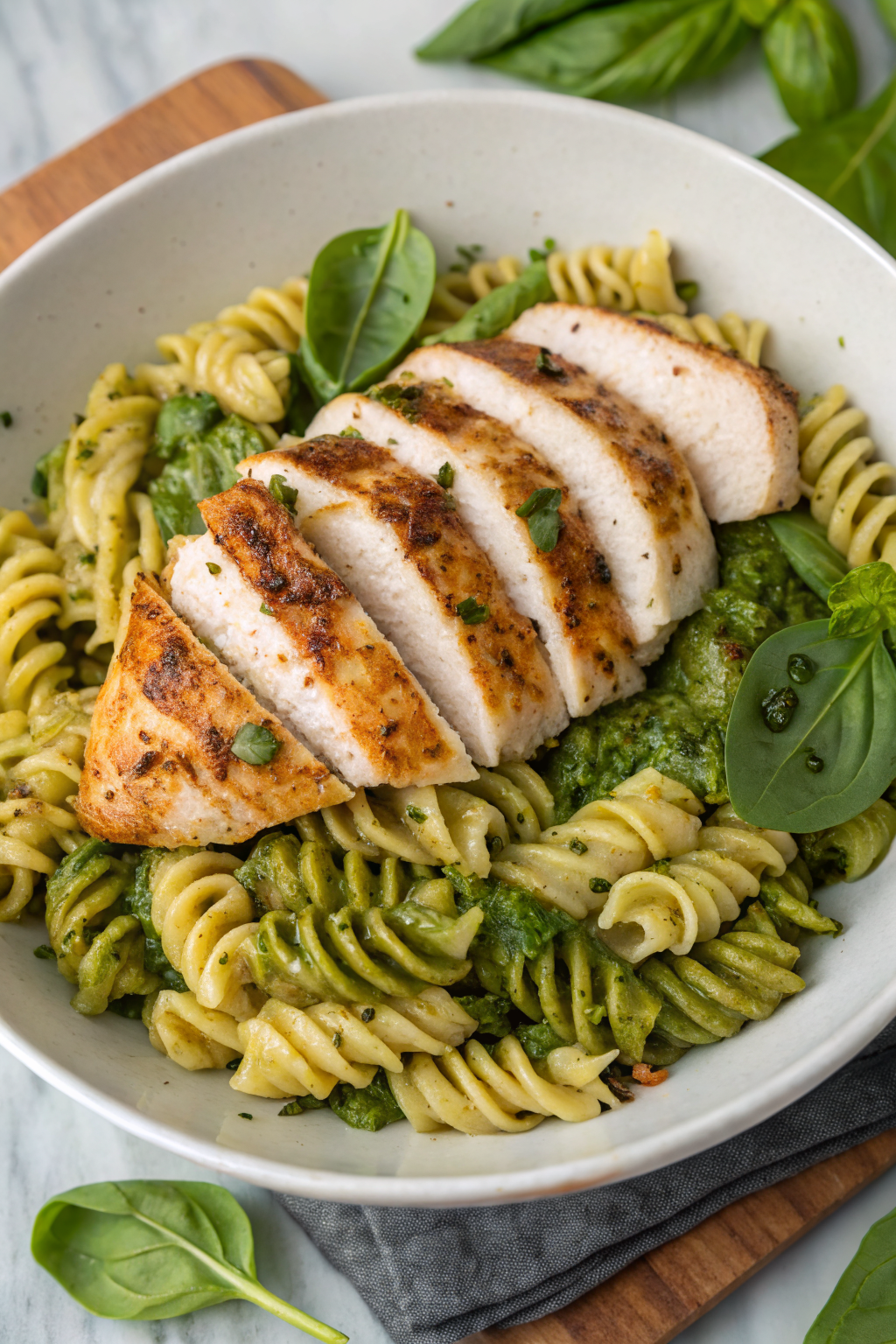
Chicken Pesto Pasta Salad
Ingredients
Method
- Bring a large pot of salted water to a boil. Add the pasta and cook until al dente according to package directions. Drain and rinse briefly under cool water, then shake off excess water and transfer to a large mixing bowl.
- While the pasta is still slightly warm, add 2 to 3 tablespoons of the pesto and a drizzle of olive oil. Toss until the pasta is lightly coated and glossy. Set aside to cool to room temperature, stirring once or twice to prevent clumping.
- Prepare the chicken and vegetables: chop or shred the cooked chicken into bite-size pieces; halve the tomatoes; chop the cucumber, broccoli, and bell pepper; and thinly slice the red onion. Toast the nuts in a dry skillet over medium heat until fragrant, then let cool. Tear the basil leaves.
- In a small bowl or jar, whisk together the remaining pesto, lemon juice, and 1 to 2 tablespoons olive oil. Season with salt, black pepper, and red pepper flakes if using. Add a splash of water if needed to reach a pourable, creamy consistency.
- Add the chicken, tomatoes, cucumber, bell pepper, broccoli, onion, olives if using, and most of the Parmesan to the cooled pasta. Pour the pesto dressing over the top and toss gently but thoroughly to coat everything.
- Sprinkle in the toasted nuts and torn basil, then toss lightly again. Taste and adjust seasoning with more lemon juice, salt, or pepper as needed.
- Cover and chill the salad for 20 to 30 minutes to let the flavors meld. Before serving, toss again and, if the salad looks dry, add a splash of olive oil or an extra spoonful of pesto. Top with the remaining Parmesan and a few basil leaves and serve chilled or at cool room temperature.
Notes
Approximate per serving (8 servings): 520 calories; fat 29 g; saturated fat 6 g; carbohydrates 38 g; fiber 3 g; sugars 4 g; protein 27 g; sodium 540 mg. Values will vary based on specific ingredients, brands, and portion sizes.