
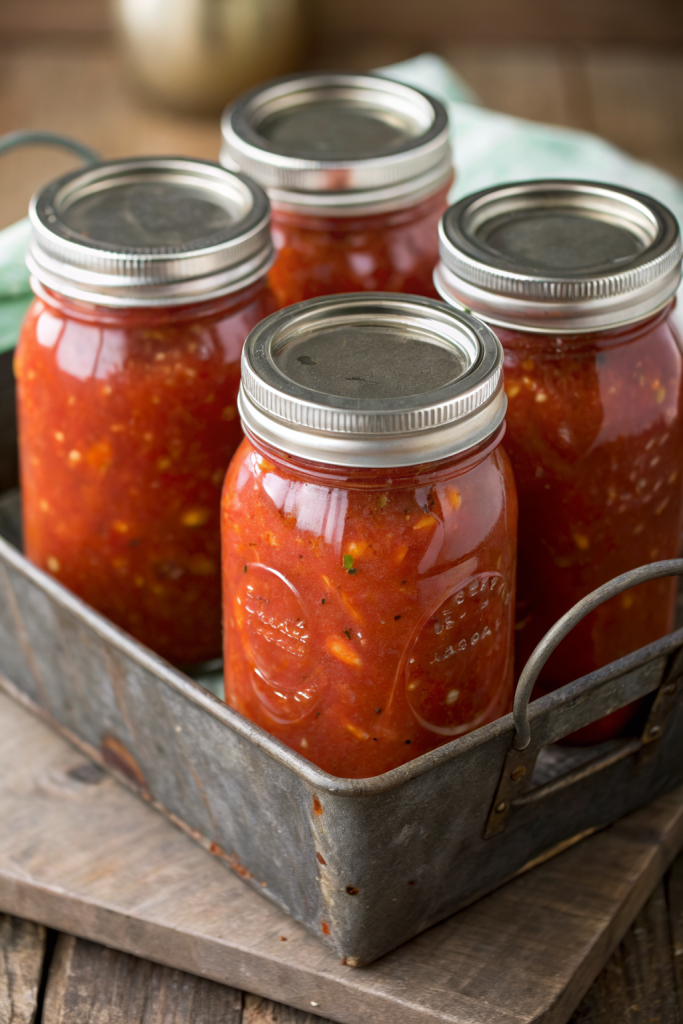
Best Ways To Preserve Tomatoes keep that late summer sweetness on your table long after the vines stop producing. This guide works well for busy home cooks who want options that range from 10-minute freezer methods to all-day canning projects. I still have tomato stains on my favorite apron from testing these, so you know I take this seriously.
Why Make This Best Ways To Preserve Tomatoes at Home
Peak-season tomatoes taste bright, juicy, and a little bit tangy, and store-bought versions rarely match that flavor. When you preserve tomatoes at home, you control the salt, the texture, and the ingredients, so every jar or bag tastes exactly how you like it.
You also save money when you stock up on tomatoes in season. A weekend of preserving gives you sauces, soups, and pizza toppings for months, which feels like a gift from your past self every time you open the freezer or pantry.
"These methods kept my garden tomatoes tasting like summer all winter long, and the step-by-step instructions felt easy to follow." ★★★★★
Ingredients You Need
You can preserve almost any tomato, but some types work better for certain methods.
- Fresh tomatoes
- Roma or plum tomatoes for canning and sauce
- Cherry or grape tomatoes for roasting and freezing
- Beefsteak or heirloom tomatoes for slow roasting and dehydrating
- Kosher or pickling salt
- Fresh lemon juice or bottled lemon juice labeled for canning
- Distilled white vinegar or apple cider vinegar
- Extra virgin olive oil
- Garlic cloves
- Fresh herbs like basil, thyme, oregano, or rosemary
- Sugar for balancing acidity in sauces or jams
- Optional spices
- Crushed red pepper flakes
- Black pepper
- Bay leaves
- Smoked paprika
Pantry shortcuts and notes:
- Use canned tomato paste to thicken quick sauces if your fresh tomatoes feel watery.
- Use bottled lemon juice for canning, since it has consistent acidity that keeps the recipe safe.
- Use pre-peeled garlic from the refrigerated section if you batch cook large amounts.
- Use dried herbs when fresh herbs cost too much out of season.
Substitutions:
- Swap cherry tomatoes for plum tomatoes in roasting recipes, just reduce the roasting time.
- Use yellow or orange tomatoes in any method, but expect a slightly milder flavor.
- Use sea salt instead of kosher salt, but measure by weight for accuracy.
Equipment list:
- Large stockpot or canning pot
- Canning rack or a folded kitchen towel for the bottom of the pot
- Canning jars with new lids and rings
- Large baking sheets for roasting
- Sharp knife and cutting board
- Slotted spoon
- Large bowls for ice water
- Food mill or high speed blender for smooth sauces
- Freezer bags or freezer safe containers
- Dehydrator or oven with low temperature setting
- Clean kitchen towels and a ladle
Tips & Mistakes
- Blanch tomatoes in boiling water for 30 to 60 seconds, then chill in ice water so the skins slip off easily.
- Score a shallow X on the bottom of each tomato to make peeling faster and cleaner.
- Taste each batch of sauce before you jar it, and adjust salt and acidity while it still sits in the pot.
- Add lemon juice to jars before canning whole or crushed tomatoes to keep acidity at a safe level.
- Avoid using overripe or moldy tomatoes, since they affect both flavor and safety.
- Do not skip headspace in jars, since crowded jars can leak or fail to seal.
- Label every jar and bag with the contents and date, because mystery red sauce in February never feels fun.
- Cool jars on a towel and keep them upright, so the contents settle evenly and lids seal correctly.
- Freeze tomatoes in a single layer on a tray before bagging them, so they do not clump into one giant tomato brick.
- Roast tomatoes until they look slightly caramelized at the edges, not just soft, to build deep, rich flavor.
How to Make Best Ways To Preserve Tomatoes
Method 1: Freezing Whole or Chopped Tomatoes
- Wash tomatoes under cool water and dry them well.
- Core large tomatoes and cut away any bruised spots.
- Leave cherry tomatoes whole, or chop larger tomatoes into halves or quarters.
- Line a baking sheet with parchment and spread tomatoes in a single layer.
- Place the tray in the freezer until tomatoes feel solid, usually 2 to 3 hours.
- Transfer frozen tomatoes to labeled freezer bags, press out extra air, and seal.
- Use frozen tomatoes directly in soups, stews, and sauces without thawing.
Method 2: Roasted Tomato Freezer Sauce
- Heat the oven to 400°F.
- Cut tomatoes into halves or thick slices and place them cut side up on a baking sheet.
- Drizzle with olive oil and sprinkle with salt, pepper, and optional herbs or garlic.
- Roast 35 to 50 minutes until tomatoes look soft and edges start to caramelize.
- Cool slightly, then blend to your preferred texture, chunky or smooth.
- Taste and adjust salt, add a pinch of sugar if the sauce tastes too sharp.
- Portion the sauce into freezer containers or bags, label, and freeze.
Method 3: Canning Crushed Tomatoes
- Wash jars, lids, and rings in hot soapy water and rinse well.
- Place jars in a large pot of hot water and keep them hot but not boiling.
- Bring a large pot of water to a boil and score an X on the bottom of each tomato.
- Blanch tomatoes for 30 to 60 seconds, then move them to an ice bath.
- Peel skins, core tomatoes, and cut them into chunks.
- Place tomato chunks in a large pot and crush them lightly with a potato masher.
- Bring tomatoes to a gentle boil and simmer 5 to 10 minutes.
- Add 2 tablespoons bottled lemon juice to each quart jar or 1 tablespoon to each pint jar.
- Fill hot jars with hot tomatoes, leaving 1 half inch headspace.
- Remove air bubbles with a clean utensil and wipe jar rims.
- Place lids on jars and screw on rings until fingertip tight.
- Process jars in a boiling water bath for the time that matches your jar size and altitude from a trusted canning guide.
- Remove jars and place them on a towel, then let them cool undisturbed for 12 to 24 hours.
- Check seals, label jars, and store them in a cool, dark place.
Method 4: Slow Roasted Tomatoes in Oil (Refrigerator Only)
- Heat the oven to 250°F.
- Slice Roma or plum tomatoes in half lengthwise and remove most of the seeds.
- Arrange them cut side up on a parchment lined baking sheet.
- Drizzle lightly with olive oil and sprinkle with salt, pepper, and herbs.
- Roast 2 to 3 hours until tomatoes look shriveled and concentrated but not burnt.
- Cool completely, then pack into clean jars and cover with olive oil.
- Store in the refrigerator and use within 1 to 2 weeks.
Method 5: Dehydrated Tomato Slices or Chips
- Slice tomatoes into even rounds about 1 quarter inch thick.
- Pat slices dry with paper towels to remove extra moisture.
- Arrange slices in a single layer on dehydrator trays or wire racks on baking sheets.
- Sprinkle lightly with salt and optional herbs or spices.
- Dry at 135°F in a dehydrator or at the lowest oven setting with the door slightly open.
- Check after 6 to 10 hours, and continue until slices feel dry and leathery with no moisture pockets.
- Cool completely, then store in airtight jars or bags in a cool, dark cabinet.
Method 6: Simple Tomato Jam
- Chop tomatoes into small pieces and place them in a heavy pot.
- Add sugar, a pinch of salt, a splash of lemon juice, and optional spices like ginger or chili flakes.
- Bring the mixture to a boil, then reduce heat to a steady simmer.
- Stir often and cook until the mixture thickens and looks glossy, about 45 to 60 minutes.
- Test thickness by running a spoon through the jam and checking if it leaves a brief trail.
- Spoon hot jam into clean jars, cool, then store in the refrigerator or freeze.
Variations I've Tried
I like to roast tomatoes with whole garlic cloves and blend everything into a smoky, rich freezer sauce. I also enjoy adding a small piece of Parmesan rind to tomato sauce while it simmers, then remove it before freezing for extra depth. Sometimes I season dehydrated tomato slices with smoked paprika and chili flakes for a snack that tastes like tomato chips.
You can season tomato jam with warm spices like cinnamon and clove for a sweet spread, or keep it savory with garlic and chili. I also like to freeze a few bags of plain chopped tomatoes with no seasoning, so I can season them differently for chili, curry, or pasta later.
How to Serve Best Ways To Preserve Tomatoes
Use frozen or canned tomatoes as a base for quick weeknight pasta sauce, tomato soup, or shakshuka style egg dishes. Spoon roasted tomatoes over grilled chicken, fish, or tofu, and add a sprinkle of fresh herbs. Layer slow roasted tomatoes on sandwiches, veggie burgers, or grilled cheese for a big punch of flavor.
Tomato jam tastes great on toast with cream cheese, on top of baked potatoes, or alongside roasted vegetables. Dehydrated tomato slices add a burst of flavor to salads, grain bowls, and homemade trail mix with nuts and seeds.
How to store
- Canned tomatoes: Store sealed jars in a cool, dark pantry for up to 12 to 18 months, then use within 1 week after opening and keep them in the refrigerator.
- Frozen tomatoes and sauces: Freeze for up to 6 months for best flavor, thaw in the refrigerator or add directly to hot dishes, and avoid refreezing once thawed.
- Roasted tomatoes in oil: Keep jars in the refrigerator, use within 1 to 2 weeks, and always keep tomatoes fully covered with oil.
- Dehydrated tomatoes: Store in airtight containers in a cool, dark place for up to 6 to 9 months, and check occasionally for any signs of moisture.
- Tomato jam: Refrigerate for up to 3 weeks or freeze for up to 6 months, and reheat gently on the stove or in the microwave, stirring often.