
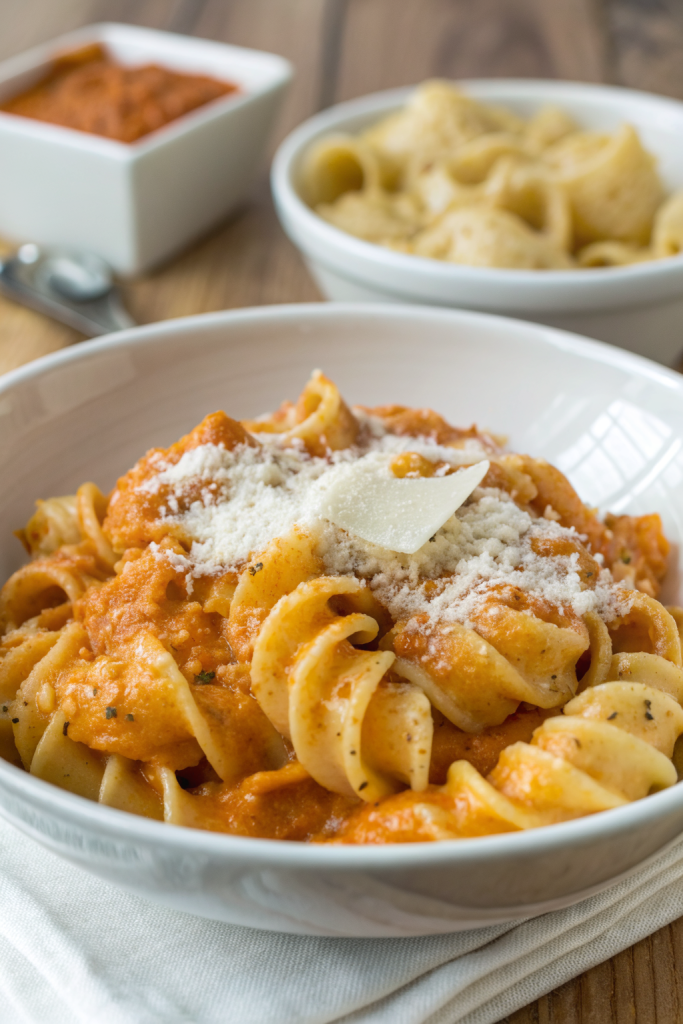
Butternut Squash Pasta Sauce Recipe tastes velvety, slightly sweet, and savory with a cozy hint of garlic and herbs. It works perfectly for busy weeknights since you can finish it in about 40 minutes, start to finish. I first tested this version on a chilly Tuesday, and my kids licked their plates clean before I even sat down.
Why Choose This Butternut Squash Pasta Sauce Recipe
This butternut squash pasta sauce recipe gives you all the comfort of Alfredo with none of the heaviness. The sauce coats noodles in a creamy, golden blanket that tastes rich but still feels light enough for a weeknight.
You blend roasted or simmered squash with broth, aromatics, and a touch of cream or coconut milk. The result tastes slightly sweet, savory, and cheesy, with a texture that hugs every piece of pasta.
“This butternut squash pasta sauce recipe tastes like fall in a bowl and turns plain pasta into something restaurant-level at home. ★★★★★”
Ingredients You’ll Need
Main ingredients
- 1 medium butternut squash, about 2 to 2½ pounds, peeled, seeded, and cubed
- 2 tablespoons olive oil (use extra virgin if you like a fruitier flavor)
- 1 small yellow onion, diced
- 3 cloves garlic, minced
- 1 teaspoon kosher salt, plus more to taste
- ½ teaspoon black pepper
- ½ teaspoon smoked paprika or sweet paprika
- ½ teaspoon dried thyme or Italian seasoning
- ¼ teaspoon ground nutmeg (freshly grated tastes best)
- 2 cups low sodium vegetable broth or chicken broth
- ½ cup heavy cream or canned full fat coconut milk
- ¼ to ½ cup grated Parmesan cheese, plus extra for serving (use a wedge and grate it yourself for best melt)
- 12 to 16 ounces pasta of choice, cooked al dente (rigatoni, penne, shells, or fettuccine all work)
- 1 to 2 tablespoons butter for finishing, optional but tasty
Optional flavor boosters
- Pinch of red pepper flakes for gentle heat
- 1 tablespoon maple syrup if your squash tastes bland and needs sweetness
- 1 tablespoon lemon juice to brighten the sauce at the end
- Fresh sage leaves or fresh thyme for garnish
Pantry shortcuts and substitutions
- Use frozen cubed butternut squash to skip peeling and chopping.
- Swap onion with 2 to 3 shallots for a milder, slightly sweet flavor.
- Replace heavy cream with half and half or plain unsweetened oat milk for a lighter sauce.
- Use nutritional yeast instead of Parmesan for a dairy free version.
Equipment list
- Large skillet or wide saucepan with high sides
- Medium pot for cooking pasta
- Cutting board and sharp chef’s knife
- Vegetable peeler if you use whole squash
- Measuring cups and spoons
- Wooden spoon or silicone spatula
- Blender or immersion blender for a silky sauce
- Colander for draining pasta
Tips & Tricks
- Cut the butternut squash into evenly sized cubes so they cook at the same rate.
- Taste the squash before blending and adjust salt and sweetness with salt and a touch of maple syrup if needed.
- Reserve at least 1 cup of starchy pasta water to thin the sauce and help it cling to the noodles.
- Warm the broth before adding it if you want the sauce to blend faster and smoother.
- Blend the sauce until completely silky, then add cheese after blending so it melts gently and stays smooth.
- Salt the pasta water generously so the noodles already taste seasoned before they meet the sauce.
- Keep the heat low after you add cream and cheese so the sauce stays glossy and does not separate.
- Add a splash of pasta water if the sauce thickens while it sits on the stove.
- Taste at the end and adjust with salt, pepper, and a squeeze of lemon juice for brightness.
- Stir in a handful of spinach or peas at the end for extra color and veggies.
How to Make Butternut Squash Pasta Sauce Recipe
Step 1: Prep the squash
Peel the butternut squash with a vegetable peeler and cut off the top and bottom. Slice the squash in half lengthwise, scoop out the seeds, then cut into 1 inch cubes. Pat the cubes dry with a towel so they caramelize better in the pan.
Step 2: Sauté the aromatics
Heat 2 tablespoons olive oil in a large skillet over medium heat. Add the diced onion and cook 4 to 5 minutes until it turns translucent and lightly golden. Stir in the minced garlic and cook 30 seconds until fragrant, and keep the heat moderate so the garlic does not burn.
Step 3: Cook the squash
Add the cubed butternut squash to the skillet and stir to coat it in the oil, onion, and garlic. Season with salt, pepper, smoked paprika, dried thyme, and nutmeg. Cook 5 to 7 minutes, stirring occasionally, until the edges of the squash start to brown.
Step 4: Simmer with broth
Pour in the broth and scrape up any browned bits from the bottom of the pan with your spoon. Bring the mixture to a gentle simmer. Cover the skillet and cook 12 to 15 minutes, stirring once or twice, until the squash feels very tender when you poke it with a fork.
Step 5: Cook the pasta
While the squash simmers, bring a large pot of salted water to a boil. Add your pasta and cook until al dente according to package directions. Reserve at least 1 cup of the starchy pasta water, then drain the pasta and set it aside.
Step 6: Blend the sauce
Turn off the heat under the squash mixture. Use an immersion blender directly in the skillet or transfer everything carefully to a blender. Blend until the sauce turns completely smooth and creamy, and thin with a splash of broth or pasta water if it looks too thick.
Step 7: Add cream and cheese
Return the smooth sauce to low heat if you used a blender. Stir in the heavy cream or coconut milk until fully combined. Add the grated Parmesan cheese in small handfuls, stirring until it melts and the sauce turns glossy and rich.
Step 8: Adjust seasoning
Taste the sauce and adjust with more salt and pepper if needed. Add a pinch of red pepper flakes for heat, a drizzle of maple syrup if the sauce tastes flat, or a squeeze of lemon juice for brightness. Stir well so the flavors blend evenly.
Step 9: Combine with pasta
Add the cooked pasta directly into the skillet with the sauce. Toss gently over low heat until every piece of pasta wears a thick coat of butternut squash sauce. Add splashes of reserved pasta water as needed until the sauce reaches your ideal consistency.
Step 10: Finish and serve
Stir in 1 to 2 tablespoons of butter if you want extra richness and shine. Top each serving with more grated Parmesan and a sprinkle of fresh sage or thyme. Serve hot while the sauce feels silky and the pasta still has a pleasant bite.
What to Serve with it?
Serve this butternut squash pasta sauce recipe with a crisp green salad loaded with cucumbers, cherry tomatoes, and a simple olive oil vinaigrette. Add a side of roasted broccoli or green beans for extra veggies and color. Garlic bread or warm focaccia makes a great partner and helps scoop up every last bit of sauce. A bowl of fresh fruit or a simple yogurt parfait finishes the meal without feeling heavy.
Storage Options
- Store leftover butternut squash pasta in an airtight container in the fridge for up to 4 days.
- Chill leftover sauce on its own in a jar or container and keep it in the fridge for up to 5 days.
- Freeze the sauce without pasta in a freezer safe container or bag for up to 3 months, and leave some space at the top for expansion.
- Reheat gently on the stove over low heat, and thin with a splash of broth or milk while you stir until the sauce turns smooth and hot again.
- Reheat single portions in the microwave at medium power in short bursts, stirring between each burst so the sauce heats evenly.

Butternut Squash Pasta Sauce Recipe
Ingredients
Method
- Peel the butternut squash, trim the ends, slice in half lengthwise, scoop out the seeds, and cut into 1-inch cubes. Pat the cubes dry with a towel so they caramelize better in the pan.
- Heat the olive oil in a large skillet over medium heat. Add the diced onion and cook for 4 to 5 minutes, until translucent and lightly golden. Stir in the minced garlic and cook for about 30 seconds, just until fragrant.
- Add the cubed butternut squash to the skillet and stir to coat in the oil, onion, and garlic. Season with salt, black pepper, smoked paprika, dried thyme, and nutmeg. Cook for 5 to 7 minutes, stirring occasionally, until the edges of the squash start to brown.
- Pour in the broth and scrape up any browned bits from the bottom of the pan. Bring to a gentle simmer, cover, and cook for 12 to 15 minutes, stirring once or twice, until the squash is very tender when pierced with a fork.
- While the squash simmers, bring a large pot of salted water to a boil. Add the pasta and cook until al dente according to package directions. Reserve at least 1 cup of starchy pasta water, then drain the pasta and set aside.
- Turn off the heat under the squash mixture. Use an immersion blender directly in the skillet, or carefully transfer the mixture to a blender. Blend until completely smooth and creamy, thinning with a splash of broth or pasta water if the sauce is too thick.
- If you used a blender, return the smooth sauce to the skillet over low heat. Stir in the heavy cream or coconut milk until fully combined. Add the grated Parmesan cheese in small handfuls, stirring until it melts and the sauce looks glossy and rich.
- Taste the sauce and adjust the seasoning with more salt and pepper as needed. Add a pinch of red pepper flakes for heat, a drizzle of maple syrup if the sauce tastes flat, or a squeeze of lemon juice for brightness, stirring well to combine.
- Add the cooked pasta to the skillet with the sauce. Toss gently over low heat until all of the pasta is coated, adding splashes of reserved pasta water as needed to reach your desired consistency.
- Stir in butter if using for extra richness. Serve the pasta hot, topped with additional grated Parmesan and a sprinkle of fresh sage or thyme.
Notes
Approximate per serving (1/4 of recipe, made with 12 oz pasta, heavy cream, and Parmesan): 560 calories; fat 22 g; saturated fat 10 g; carbohydrates 76 g; fiber 7 g; sugars 7 g; protein 19 g; sodium 780 mg. Values will vary based on specific ingredients, brands, and portion sizes.