
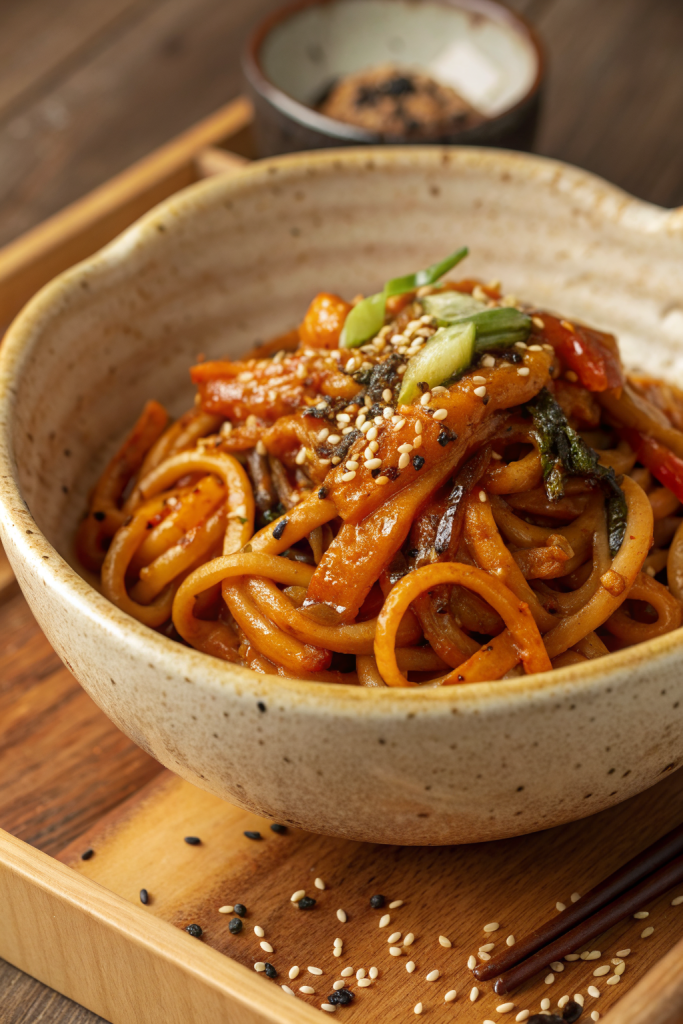
Chilli Garlic Udon Recipe hits that perfect spot between chewy, saucy, spicy, and garlicky, with a glossy noodle coat that tastes like a cozy takeout night at home. It works well for busy folks who want a fast weeknight dinner in under 20 minutes that still feels special. I tested this version on a very picky friend who now texts me photos of frozen udon packs like proud trophies.
Why Chilli Garlic Udon Recipe Is Worth It
This chilli garlic udon recipe brings serious flavor with very little effort. You toss bouncy udon noodles in a buttery, garlicky, chili-rich sauce that clings to every strand and tastes like restaurant food in sweatpants form.
You cook everything in one pan, and the sauce uses pantry staples like soy sauce, chili crisp, and garlic. Clean-up stays easy, timing stays tight, and you still get a bowl that feels like comfort food with a tiny spicy kick.
“This Chilli Garlic Udon Recipe tastes like my favorite noodle shop but comes together faster than delivery ★★★★★”
Ingredients You Need
Udon noodles
- 2 portions frozen udon noodles
- I like frozen sanuki-style udon for the best chewy texture.
- Use vacuum-packed shelf-stable udon if you cannot find frozen, but cook them slightly less so they stay bouncy.
- Fresh udon from the refrigerated section also works; reduce cooking time so they do not turn mushy.
Aromatics and flavor base
- 5 to 6 cloves garlic, finely minced
- 1 to 2 tablespoons finely chopped green onion whites (save greens for garnish)
- 1 teaspoon grated ginger (optional, but it adds a nice warmth)
- 1 to 2 tablespoons neutral oil (canola, avocado, or light olive oil)
Chilli garlic sauce
- 1 tablespoon unsalted butter
- Use vegan butter or a splash more oil for a dairy free version.
- 1 to 1½ tablespoons chili crisp or chili oil with crunchy bits
- Lao Gan Ma, Fly By Jing, Momofuku, or any favorite brand works.
- If you prefer milder heat, use 1 teaspoon and add more at the end to taste.
- 1½ tablespoons soy sauce
- Use low sodium if you watch salt.
- Use tamari or coconut aminos for gluten free.
- 1 teaspoon dark soy sauce (optional, for color and deeper flavor)
- 1 teaspoon rice vinegar or apple cider vinegar
- 1 teaspoon sugar or honey
- 1 to 2 teaspoons toasted sesame oil
Veggies and add-ins
- 1 cup thinly sliced bell pepper, carrot matchsticks, or snap peas
- 1 cup baby spinach or chopped bok choy
- ½ cup sliced mushrooms (shiitake, cremini, or button)
- ½ to 1 cup cooked protein: tofu cubes, rotisserie chicken, shrimp, or leftover grilled chicken
Garnishes
- Sliced green onion tops
- Toasted sesame seeds
- Extra chili crisp or chili oil
- Lime wedge (optional, but brightens the whole bowl)
Equipment
- Large nonstick skillet or wok
- Medium pot for boiling udon (if not cooking directly in skillet)
- Tongs or chopsticks for tossing noodles
- Small bowl for mixing sauce ingredients
Quick Tips & substitutions
- Use frozen udon for the best chewy texture; cook just until they loosen, then drain quickly.
- Rinse cooked udon briefly with warm water to remove excess starch and keep them from clumping.
- Stir soy sauce, vinegar, sugar, and sesame oil together in a small bowl before cooking so the sauce goes in fast.
- Swap chili crisp with sriracha, gochujang, or red pepper flakes if that matches what you keep in your pantry.
- Use tamari and gluten free chili crisp to turn this into a gluten free chilli garlic udon recipe.
- Add more butter for a richer, glossy finish, or reduce it and increase vinegar for a lighter taste.
- Toss in pre-cut stir fry veggie mixes to save chopping time on busy nights.
- Use firm tofu, tempeh, or edamame for a vegetarian or vegan protein boost.
- Keep the heat medium so garlic turns golden and fragrant but never burns.
- Taste at the end and adjust with a splash of soy for salt, vinegar for brightness, or chili oil for heat.
How to Make Chilli Garlic Udon Recipe
Step 1: Prep the noodles
- Bring a pot of water to a boil and add frozen udon blocks.
- Gently loosen the noodles with chopsticks or tongs as they soften.
- Cook just until they separate and turn tender but still chewy, usually 1 to 2 minutes for frozen.
- Drain, rinse briefly with warm water, shake off excess water, and set aside.
Step 2: Mix the sauce
- In a small bowl, add soy sauce, dark soy sauce, rice vinegar, sugar or honey, and toasted sesame oil.
- Stir until the sugar dissolves and the mixture looks smooth.
- Taste a drop and adjust sweetness or salt to your liking.
- Keep the bowl near the stove so you can pour it in quickly.
Step 3: Sauté aromatics
- Heat a large skillet or wok over medium heat and add neutral oil.
- Add minced garlic, ginger, and the white parts of the green onion.
- Stir constantly and cook until the garlic turns lightly golden and fragrant, about 30 to 60 seconds.
- Add chili crisp or chili oil and stir so the aromatics coat in that spicy goodness.
Step 4: Cook veggies and protein
- Add sliced mushrooms and any firm veggies like carrots or bell peppers.
- Stir fry until they soften slightly but still keep some crunch.
- Add quick wilting greens like spinach or bok choy and toss until they just wilt.
- Add cooked protein such as tofu, chicken, or shrimp and warm it through.
Step 5: Build the chilli garlic udon sauce
- Push the veggies and protein to the sides of the skillet and add butter to the center.
- Let the butter melt and foam slightly, then stir it into the chili garlic mixture.
- Pour in the soy sauce mixture and stir everything together.
- Let the sauce bubble for 20 to 30 seconds so it thickens slightly and the flavors deepen.
Step 6: Toss in the udon
- Add the cooked udon noodles directly into the skillet.
- Use tongs to lift and toss the noodles so the sauce coats every strand.
- If the noodles look dry, splash in 1 to 2 tablespoons of hot water to loosen the sauce.
- Taste and adjust with more chili crisp, soy sauce, or vinegar until the chilli garlic udon hits your perfect balance.
Step 7: Finish and garnish
- Turn off the heat and toss in green onion tops and sesame seeds.
- Plate the noodles in warm bowls and spoon any extra sauce from the pan over the top.
- Add a final drizzle of chili oil if you want extra heat.
- Serve with lime wedges on the side so everyone can squeeze to taste.
Recipe Variations
- Gluten free: Use gluten free udon or thick rice noodles, tamari instead of soy sauce, and gluten free chili crisp.
- Vegan: Use oil or vegan butter, skip animal proteins, and load up on tofu, mushrooms, and greens.
- Low carb: Swap udon with shirataki noodles or spiralized zucchini and cook them briefly in the sauce.
- Extra protein: Add scrambled egg ribbons, more tofu, or extra chicken or shrimp.
- Extra veggies: Toss in broccoli florets, edamame, cabbage, or zucchini for a veggie-heavy chilli garlic udon recipe.
- Mild version: Use less chili crisp and add more garlic and sesame oil for flavor without strong heat.
Ways to Serve
- Serve chilli garlic udon in deep bowls with extra green onions and sesame seeds on top.
- Add a side of cucumber salad with rice vinegar and a pinch of sugar for a cool contrast.
- Pair with miso soup or a simple broth for a cozy noodle night.
- Pack leftovers in a lunch container and eat at room temperature like a spicy noodle salad.
- Top with a jammy soft boiled egg or a fried egg for a more filling meal.
Storage Success
Store leftover chilli garlic udon in an airtight container in the fridge for up to 3 days. The noodles soak up sauce as they sit, so I usually add a teaspoon of water or a splash of soy sauce before reheating. Reheat in a skillet over medium heat and toss until hot, or use the microwave in short bursts and stir between each round. If the noodles feel a bit dry after reheating, finish with a small drizzle of sesame oil or chili oil to bring them back to life.
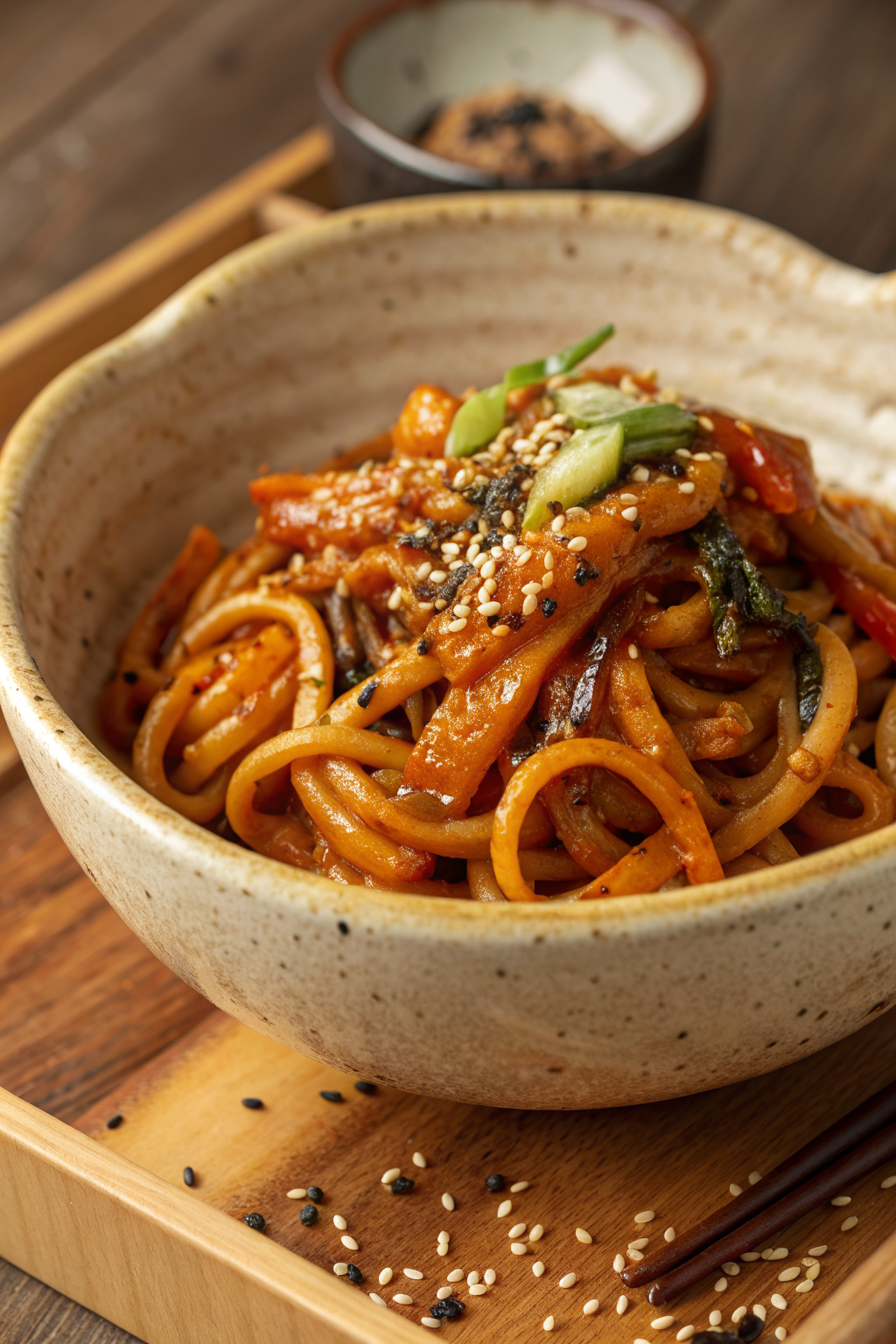
Chilli Garlic Udon Recipe
Ingredients
Method
- Bring a pot of water to a boil and add the frozen udon noodle blocks.
- Gently loosen the noodles with chopsticks or tongs as they soften.
- Cook just until they separate and turn tender but still chewy, about 1 to 2 minutes for frozen udon.
- Drain, rinse briefly with warm water to remove excess starch, shake off excess water, and set aside.
- In a small bowl, combine soy sauce, dark soy sauce (if using), rice vinegar or apple cider vinegar, sugar or honey, and toasted sesame oil.
- Stir until the sugar dissolves and the mixture is smooth, then set near the stove.
- Heat a large skillet or wok over medium heat and add the neutral oil.
- Add minced garlic, grated ginger, and the white parts of the green onions.
- Stir constantly and cook until the garlic turns lightly golden and fragrant, about 30 to 60 seconds.
- Add the chili crisp or chili oil and stir to coat the aromatics.
- Add sliced mushrooms and any firm vegetables like carrots, bell peppers, or snap peas to the skillet.
- Stir-fry until they soften slightly but still keep some crunch.
- Add quick-wilting greens such as spinach or bok choy and toss until just wilted.
- Stir in the cooked protein, if using, and warm it through.
- Push the veggies and protein to the sides of the skillet and add the butter to the center.
- Let the butter melt and foam slightly, then stir it into the chili garlic mixture.
- Pour in the soy sauce mixture and stir everything together.
- Let the sauce bubble for 20 to 30 seconds so it thickens slightly and the flavors deepen.
- Add the cooked udon noodles directly into the skillet.
- Use tongs to lift and toss the noodles so the sauce coats every strand.
- If the noodles look dry, add 1 to 2 tablespoons of hot water to loosen the sauce.
- Taste and adjust with more chili crisp, soy sauce, or vinegar until the flavor suits your preference.
- Turn off the heat and toss in the green onion tops and toasted sesame seeds.
- Divide the noodles between warm bowls, spooning any extra sauce from the pan over the top.
- Drizzle with extra chili oil if you like more heat and serve with lime wedges on the side, if desired.
Notes
Approximate per serving (2 servings total, including veggies and a modest amount of protein): 550–650 calories; fat 24–30 g; saturated fat 7–10 g; carbohydrates 70–80 g; fiber 4–6 g; sugars 6–10 g; protein 18–25 g; sodium 1400–1900 mg. Values will vary based on noodle brand, amount/type of chili crisp, protein choice, and added vegetables.