
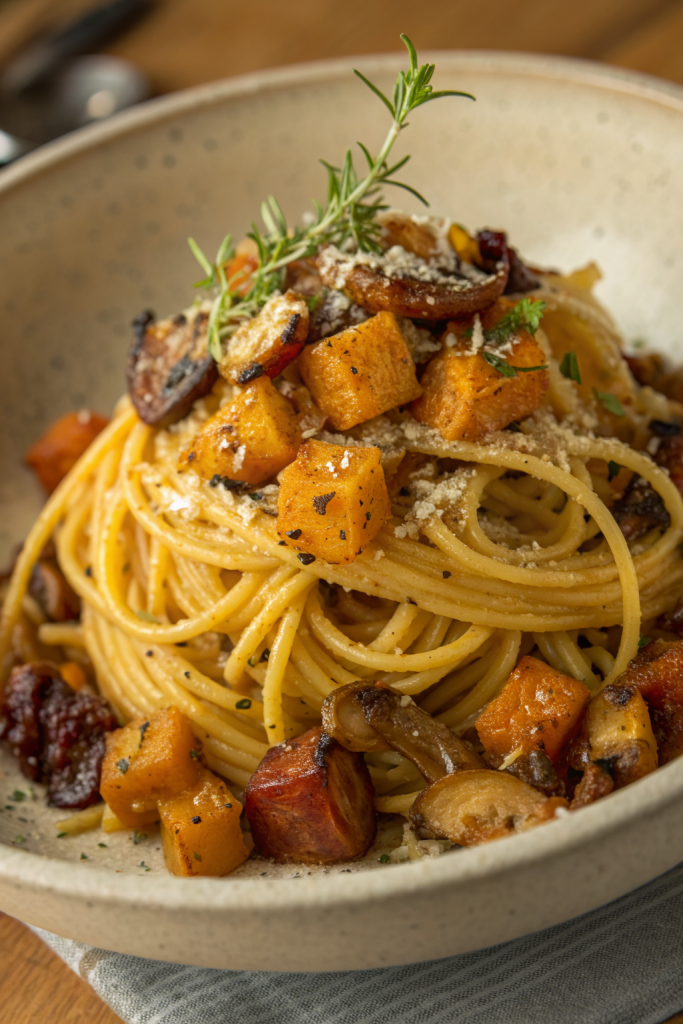
Creamy Lemon Butternut Squash Pasta Recipe tastes velvety, bright, and cozy, like mac and cheese that went on a sunshine vacation. It works perfectly for busy weeknights or casual date nights and comes together in about 40 minutes. I tested this on my own picky family, and no one spoke for the first five minutes except to ask for more.
Why Make This Creamy Lemon Butternut Squash Pasta Recipe at Home
You get a silky, restaurant-level sauce with simple ingredients and no heavy cream. The butternut squash gives natural sweetness, the lemon keeps everything fresh, and the Parmesan ties it all together.
You control the salt, the richness, and the texture, so the pasta fits your taste and dietary needs. The recipe also uses pantry staples, so you probably own half of what you need already.
“This creamy lemon butternut squash pasta tastes like a cozy bowl of sunshine and comfort, and I could happily eat it every week. ★★★★★”
Ingredients You Need
Pasta
- 12 ounces short pasta
- I like rigatoni, fusilli, or shells, because the sauce clings inside and outside.
- Use gluten free pasta if you need it; choose a sturdy shape that holds up to stirring.
Sauce base
-
3 cups peeled, cubed butternut squash
- Fresh squash tastes best, but frozen cubed squash works very well and saves time.
- If you use frozen, do not thaw; cook it straight from frozen and add 5 minutes to simmer time.
-
1 small yellow onion, diced
-
3 cloves garlic, minced
-
2 tablespoons olive oil
-
1 tablespoon unsalted butter
- Use all olive oil if you want a dairy lighter version.
-
2 cups low sodium vegetable broth or chicken broth
- I like Better Than Bouillon because it gives strong flavor without extra clutter in the pantry.
Creamy lemon finish
-
1 teaspoon fine sea salt, plus more to taste
-
½ teaspoon black pepper
-
½ teaspoon red pepper flakes, optional, for gentle heat
-
½ teaspoon dried thyme or Italian seasoning
-
Zest of 1 lemon
-
2–3 tablespoons fresh lemon juice
- Start with 2 tablespoons, then taste and add more if you like a sharper lemon flavor.
-
½ cup grated Parmesan cheese, plus extra for serving
- Use real Parmigiano Reggiano or a good domestic Parmesan, not the green can.
-
¼ to ½ cup half and half, heavy cream, or full fat canned coconut milk
- Coconut milk works nicely if you want a dairy lighter version; it will taste slightly different but still rich.
Optional add ins
- 2 cups baby spinach or chopped kale
- ½ cup thawed peas
- 1 cup cooked shredded chicken or rotisserie chicken, if you want extra protein
- Chopped fresh parsley or basil for garnish
Equipment
- Large pot for boiling pasta
- Large deep skillet or Dutch oven for the sauce
- Blender, immersion blender, or food processor
- Microplane or fine grater for lemon zest and Parmesan
- Measuring cups and spoons
- Tongs or a pasta spoon
Tips & Mistakes
- Salt the pasta water generously so the noodles taste seasoned, not bland.
- Scoop out a cup of starchy pasta water before you drain, because it helps loosen and silk up the sauce.
- Cut the butternut squash into even cubes so they cook at the same speed and blend smoothly.
- Sauté the onion until it turns soft and lightly golden, since pale onion gives less flavor.
- Add the garlic near the end of sautéing so it turns fragrant but does not burn.
- Blend the sauce until completely smooth, because small squash chunks can feel grainy.
- Add lemon juice gradually and taste as you go so the sauce stays bright but not sour.
- Stir in the Parmesan off the heat so it melts gently and does not clump.
- Thin the sauce with broth or pasta water in small splashes so you keep control of the texture.
- Toss the pasta with the sauce right away, since hot pasta absorbs flavor better than cooled pasta.
How to Make Creamy Lemon Butternut Squash Pasta Recipe
Step 1: Boil the pasta
Bring a large pot of water to a strong boil and add a big pinch of salt.
Add the pasta and cook until al dente, following the package time but start checking a minute early.
Scoop out 1 cup of pasta water, then drain the pasta and set it aside.
Step 2: Sauté the aromatics
Heat the olive oil and butter in a large skillet or Dutch oven over medium heat.
Add the diced onion and cook 5 to 7 minutes, stirring often, until it turns soft and lightly golden.
Stir in the garlic and cook 30 seconds until it smells fragrant.
Step 3: Cook the butternut squash
Add the cubed butternut squash to the skillet and stir to coat it in the oil and onion mixture.
Sprinkle in the salt, black pepper, red pepper flakes, and dried thyme or Italian seasoning.
Pour in the broth, stir, and bring everything to a gentle simmer.
Cover the skillet and cook 15 to 20 minutes, stirring a few times, until the squash feels very tender when you poke it with a fork.
If the liquid cooks down too much before the squash softens, add a splash more broth or water.
Turn off the heat when the squash reaches a very soft, mashable texture.
Step 4: Blend the sauce
Carefully transfer the squash mixture to a blender, or use an immersion blender right in the pot.
Blend until the mixture turns completely smooth and velvety, with no visible chunks.
If the sauce looks too thick to blend, add a small splash of broth or pasta water and blend again.
Return the blended sauce to the skillet if you used a stand blender.
Stir in the lemon zest, 2 tablespoons of lemon juice, and the cream, half and half, or coconut milk.
Taste and adjust with more lemon juice, salt, or pepper until the flavor hits that creamy, bright balance you like.
Step 5: Add the cheese and greens
Lower the heat to low and add the grated Parmesan.
Stir until the cheese melts into the sauce and turns glossy.
If you use spinach, kale, peas, or cooked chicken, stir them in now and let them warm through for 2 to 3 minutes.
Check the thickness of the sauce and add small splashes of pasta water until it coats the back of a spoon.
You want it thick enough to cling to pasta, but loose enough to move when you tilt the pan.
Step 6: Toss with pasta
Add the cooked pasta to the skillet with the sauce.
Use tongs or a large spoon to toss until every piece of pasta wears a generous coat of creamy lemon butternut squash sauce.
If the mixture looks tight, add a bit more pasta water and toss again until it looks glossy and silky.
Taste one last time and adjust seasoning with extra salt, pepper, or lemon juice.
Serve hot with extra Parmesan and a sprinkle of fresh herbs on top.
Variations I've Tried
I stirred in a big handful of baby spinach at the end, and it wilted into the sauce and added color and a little earthiness.
I also tried a version with peas and shredded rotisserie chicken, which turned the pasta into a full one pot dinner.
Another time I swapped Parmesan for pecorino Romano, which gave a sharper, saltier edge that my cheese lovers adored.
I tested a dairy lighter version with coconut milk and nutritional yeast instead of Parmesan, and it still tasted rich and comforting.
I also swapped the pasta for whole wheat penne, which added a nutty flavor and extra fiber that kept everyone full longer.
How to Serve Creamy Lemon Butternut Squash Pasta Recipe
Serve this creamy lemon butternut squash pasta in warm bowls so the sauce stays silky and comforting. Pair it with a simple green salad, roasted broccoli, or steamed green beans to add crunch and freshness. I like to top each bowl with extra Parmesan, black pepper, and a tiny squeeze of lemon for brightness. A glass of sparkling water with lemon or a fruity iced tea on the side fits the cozy vibe perfectly.
How to store
- Store leftovers in an airtight container in the fridge for up to 4 days.
- Add a splash of broth, water, or milk before you chill the pasta if it looks very thick, since the noodles soak up sauce.
- Freeze portions in freezer safe containers for up to 2 months, and label them with the date.
- Reheat gently on the stove over low heat with a splash of liquid, or in the microwave in short bursts, stirring between each burst until the sauce turns smooth and hot again.
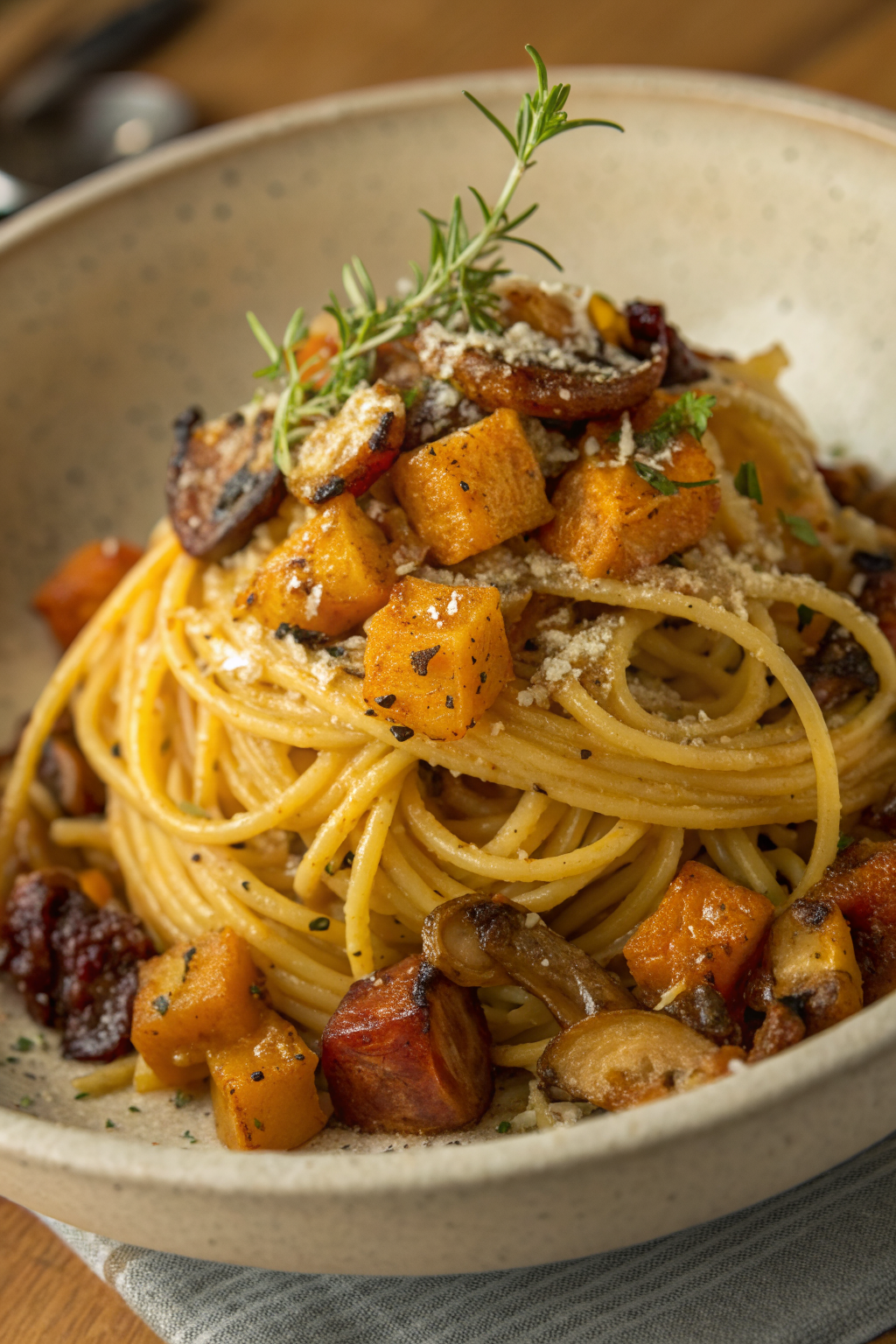
Creamy Lemon Butternut Squash Pasta Recipe
Ingredients
Method
- Bring a large pot of water to a strong boil and salt it generously so the noodles are well seasoned.
- Add the pasta and cook until al dente, following the package time but start checking a minute early.
- Scoop out 1 cup of starchy pasta water, then drain the pasta and set it aside.
- Heat the olive oil and butter in a large deep skillet or Dutch oven over medium heat.
- Add the diced onion and cook for 5 to 7 minutes, stirring often, until soft and lightly golden.
- Stir in the minced garlic and cook for about 30 seconds, just until fragrant.
- Add the cubed butternut squash to the skillet and stir to coat it in the oil and onion mixture.
- Season with the sea salt, black pepper, red pepper flakes if using, and dried thyme or Italian seasoning.
- Pour in the broth, stir, and bring to a gentle simmer.
- Cover and cook for 15 to 20 minutes, stirring a few times, until the squash is very tender and mashable. Add a splash more broth or water if the pan looks too dry before the squash is soft.
- Turn off the heat once the squash is fully tender.
- Carefully transfer the squash mixture to a blender, or use an immersion blender directly in the pot.
- Blend until completely smooth and velvety with no visible chunks. If the mixture is too thick to blend, add a small splash of broth or reserved pasta water.
- Return the blended sauce to the skillet if you used a stand blender.
- Stir in the lemon zest, 2 tablespoons of lemon juice, and the half and half, cream, or coconut milk.
- Taste and adjust with more lemon juice, salt, or pepper until the sauce tastes creamy, bright, and balanced.
- Set the heat to low and stir in the grated Parmesan until it melts and the sauce looks glossy.
- If using spinach, kale, peas, or cooked chicken, stir them into the sauce and cook for 2 to 3 minutes, just until the greens wilt and everything is warmed through.
- If needed, thin the sauce with small splashes of reserved pasta water until it is thick enough to cling to pasta but loose enough to move when you tilt the pan.
- Add the cooked pasta to the skillet with the sauce.
- Use tongs or a large spoon to toss until every piece of pasta is well coated in the creamy lemon butternut squash sauce, adding more pasta water as needed to keep it silky.
- Taste and adjust with more salt, pepper, or lemon juice if desired.
- Serve hot in warm bowls with extra Parmesan, freshly ground black pepper, and a sprinkle of fresh herbs on top.
Notes
Approximate per serving (about 1/4 of recipe, without optional add-ins): 520 calories; fat 20 g; saturated fat 7 g; carbohydrates 70 g; fiber 6 g; sugars 6 g; protein 18 g; sodium 880 mg. Values will vary based on exact ingredients, brands, salt level, and portion size.