
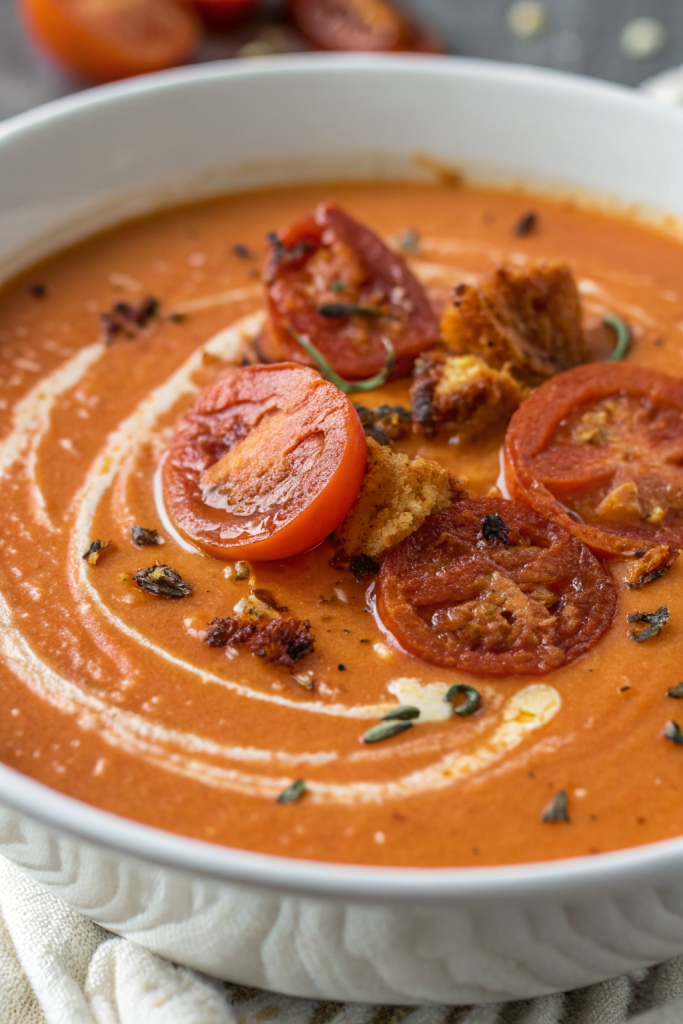
Creamy Roasted Garlic Tomato Soup Recipe tastes rich, velvety, and deeply savory with a gentle sweetness from slow-roasted tomatoes and garlic. It works perfectly for busy weeknights or cozy weekends and takes about 1 hour from start to finish. I grew up on canned tomato soup, so this upgraded version feels like a warm hug for my inner child.
Why Choose This Creamy Roasted Garlic Tomato Soup Recipe
This soup packs serious flavor from simple ingredients: roasted garlic, tomatoes, and a touch of cream. Roasting concentrates the sweetness, so the soup tastes restaurant-level without fancy techniques.
You can use canned tomatoes from your pantry, which keeps the recipe budget friendly and weeknight friendly. The texture turns silky, and the roasted garlic gives it a mellow, almost buttery flavor that even garlic skeptics enjoy.
“This Creamy Roasted Garlic Tomato Soup Recipe tastes like a cozy café lunch at home, but my sink stays almost clean. ★★★★★”
Ingredients You’ll Need
Main ingredients
- 2 pounds ripe tomatoes, halved or quartered
- Use Roma or vine tomatoes for best flavor.
- In winter, use two 28-ounce cans of whole peeled tomatoes for a consistent result.
- 1 large head garlic
- 1 large yellow onion, sliced
- 3 tablespoons olive oil
- 1 teaspoon kosher salt, plus more to taste
- ½ teaspoon freshly ground black pepper
- 1 teaspoon sugar
- Balances acidity, especially if you use canned tomatoes.
- 1 teaspoon dried oregano or Italian seasoning
- ½ teaspoon smoked paprika
- Adds a subtle smoky note without any meat.
- 3 cups low-sodium vegetable broth or chicken broth
- I like Kitchen Basics or Better Than Bouillon for deeper flavor.
- ½ to ¾ cup heavy cream
- Swap with half-and-half for a lighter version, or full-fat coconut milk for dairy free.
- 2 tablespoons tomato paste
- Tube tomato paste works great and stores easily in the fridge.
- 1 to 2 teaspoons balsamic vinegar or red wine vinegar
- Brightens the flavor at the end.
Optional flavor boosters
- ¼ cup grated Parmesan cheese
- Stir in at the end for extra richness.
- Pinch of red pepper flakes
- Adds gentle heat without turning it into spicy soup.
- Fresh basil leaves or parsley, chopped, for garnish
- A drizzle of good olive oil on top before serving
Pantry shortcuts and substitutions
- Use canned fire-roasted tomatoes if you want a slightly smoky flavor without extra steps.
- Use jarred roasted garlic in a pinch, though fresh roasted garlic gives better depth.
- Use onion powder and garlic powder if you run out of fresh onion and garlic, but keep at least one fresh allium for best flavor.
Equipment list
- Large rimmed baking sheet
- Parchment paper or foil
- Chef’s knife and cutting board
- Large pot or Dutch oven
- Immersion blender
- Or a regular blender (blend in batches and vent the lid slightly).
- Ladle
- Measuring cups and spoons
Tips & Tricks
- Roast the garlic in its skin so it turns soft, sweet, and spreadable without burning.
- Spread tomatoes and onions in a single layer on the baking sheet so they caramelize instead of steam.
- Use canned whole tomatoes when fresh tomatoes taste bland; they usually taste better out of season.
- Warm the broth before blending so the soup blends smoother and heats faster.
- Add cream slowly at the end and taste as you go so you control richness and thickness.
- Blend longer than you think; extra 30 to 60 seconds gives a silkier texture.
- If you use a regular blender, blend in small batches and hold a towel over the lid so hot liquid does not escape.
- Adjust thickness with extra broth for a lighter soup or simmer longer to thicken.
- Add a pinch of sugar only after tasting; some tomato brands taste sweeter than others.
- Finish with a splash of vinegar or lemon juice to wake up the flavors.
How to Make Creamy Roasted Garlic Tomato Soup Recipe
Step 1: Prep the garlic and vegetables
Preheat your oven to 400°F. Slice the top off the head of garlic to expose the cloves. Place the garlic on a small piece of foil, drizzle with 1 teaspoon olive oil, and wrap it loosely.
Spread the tomatoes and sliced onion on a parchment-lined baking sheet. Drizzle with the remaining olive oil, then sprinkle with salt, pepper, oregano, smoked paprika, and sugar. Toss everything with your hands so the vegetables coat evenly.
Step 2: Roast until caramelized and soft
Place the wrapped garlic on the baking sheet next to the tomatoes and onions. Roast for 30 to 40 minutes, until the tomatoes look soft and slightly blistered and the onions look golden at the edges. The garlic should feel very soft when you press it with tongs.
If the onions brown faster, pull them off the tray and keep roasting the tomatoes and garlic. You want deep color on the vegetables because that builds flavor in the soup.
Step 3: Transfer to the pot
Set a large pot or Dutch oven over medium heat. Add the roasted tomatoes and onions to the pot, scraping in any juices from the baking sheet. Squeeze the roasted garlic cloves out of their skins directly into the pot.
Stir in the tomato paste and cook for 1 to 2 minutes to toast it slightly. This step deepens the tomato flavor and removes any raw, tinny taste.
Step 4: Add broth and simmer
Pour in the vegetable or chicken broth and stir well. Bring the soup to a gentle boil, then lower the heat and let it simmer for 10 to 15 minutes. Stir occasionally so nothing sticks to the bottom.
Taste the broth and adjust salt and pepper as needed. If the soup tastes too sharp, add another pinch of sugar.
Step 5: Blend until silky
Turn off the heat. Use an immersion blender to blend the soup directly in the pot until completely smooth. Move the blender around the pot so you catch every chunk.
If you use a regular blender, work in small batches and vent the lid slightly. Blend until silky, then return the soup to the pot. If you prefer a rustic texture, blend only part of the soup and leave some chunks.
Step 6: Add cream and finish the flavor
Return the pot to low heat. Stir in ½ cup of cream and let the soup heat gently. Taste and add more cream if you want a richer, thicker soup.
Stir in Parmesan if you use it, then add a small splash of balsamic or red wine vinegar. Taste again and adjust salt, pepper, or red pepper flakes. The soup should taste balanced, with a gentle sweetness, a little tang, and a rich, creamy finish.
Step 7: Serve
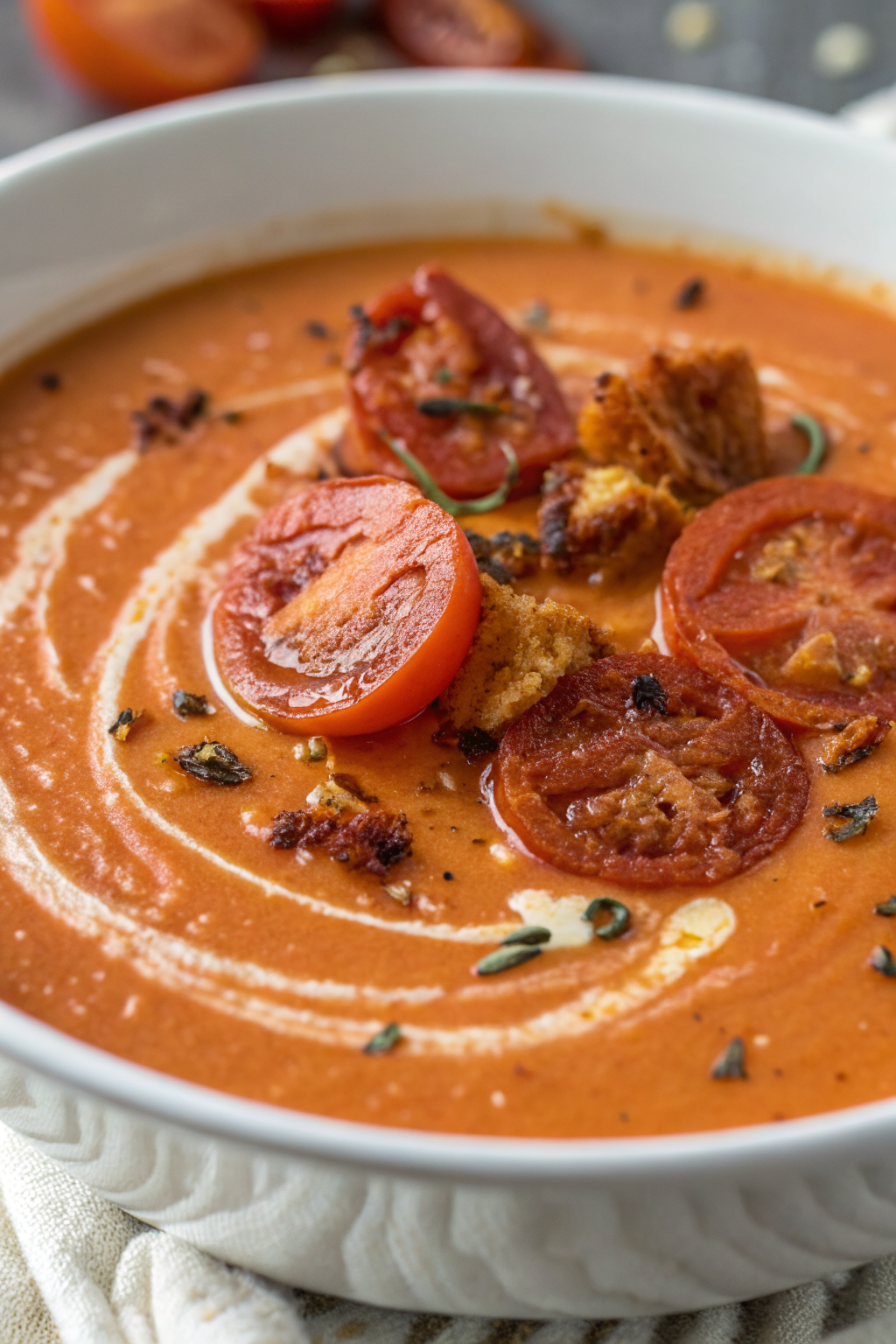
Ladle the Creamy Roasted Garlic Tomato Soup into bowls. Swirl a spoonful of cream or a drizzle of olive oil on top. Sprinkle with fresh basil or parsley.
Serve hot with your favorite sides and toppings. I like to add a few crunchy croutons or a sprinkle of extra Parmesan for texture.
What to Serve with it?
This Creamy Roasted Garlic Tomato Soup Recipe pairs perfectly with a classic grilled cheese sandwich, whether you use cheddar, mozzarella, or a mix of both. You can also serve it with toasted sourdough, garlic bread, or a simple baguette for dunking. Add a crisp green salad with cucumbers, carrots, and a light vinaigrette for a fresh contrast. Kids usually love it with buttery crackers or a side of cheese quesadillas.
Storage Options
- Cool the soup to room temperature, then store it in airtight containers in the fridge for up to 4 days.
- Freeze the soup in freezer-safe containers or bags for up to 3 months; leave a little space at the top for expansion.
- Thaw frozen soup overnight in the fridge or in a bowl of cold water if you need it faster.
- Reheat gently on the stove over low to medium heat, stirring often, and add a splash of broth or cream if the soup thickens too much.
Creamy Roasted Garlic Tomato Soup Recipe
Ingredients
Method
- Preheat the oven to 400°F (200°C). Slice the top off the head of garlic to expose the cloves. Place it on a small piece of foil, drizzle with about 1 teaspoon of olive oil, and wrap loosely.
- Line a large rimmed baking sheet with parchment paper. Spread the tomatoes and sliced onion in a single layer. Drizzle with the remaining olive oil, then sprinkle with kosher salt, black pepper, sugar, dried oregano or Italian seasoning, and smoked paprika. Toss with your hands to coat evenly.
- Place the wrapped garlic on the baking sheet next to the tomatoes and onions. Roast for 30 to 40 minutes, until the tomatoes are soft and slightly blistered, the onions are golden at the edges, and the garlic feels very soft when gently pressed. If the onions brown faster, remove them and continue roasting the tomatoes and garlic until deeply colored.
- Set a large pot or Dutch oven over medium heat. Transfer the roasted tomatoes and onions to the pot, scraping in any juices from the baking sheet. Squeeze the roasted garlic cloves out of their skins directly into the pot.
- Stir in the tomato paste and cook for 1 to 2 minutes, stirring often, to toast it slightly and deepen the tomato flavor.
- Pour in the vegetable or chicken broth and stir well. Bring to a gentle boil, then reduce the heat and let the soup simmer for 10 to 15 minutes, stirring occasionally so nothing sticks to the bottom. Taste and adjust salt and pepper; add a pinch more sugar if the soup tastes too sharp.
- Turn off the heat. Use an immersion blender to blend the soup directly in the pot until completely smooth and silky, moving the blender around to catch all the chunks. If using a regular blender, work in small batches, vent the lid slightly, and blend until smooth, then return the soup to the pot.
- Return the pot to low heat. Stir in the heavy cream and warm gently, adding more cream if you prefer a richer, thicker soup. Stir in Parmesan cheese if using, then add a small splash of balsamic or red wine vinegar. Taste and adjust salt, pepper, red pepper flakes, and vinegar until the flavors taste balanced with gentle sweetness, a little tang, and a creamy finish.
- Ladle the soup into bowls. Swirl in a spoonful of cream or a drizzle of olive oil and garnish with fresh basil or parsley if desired. Serve hot with grilled cheese, crusty bread, or your favorite sides.
Notes
Approximate per 1 of 6 servings (made with vegetable broth, 1/2 cup heavy cream, and no Parmesan): 190–220 calories; fat 13 g; saturated fat 5 g; carbohydrates 18 g; fiber 4 g; sugars 10 g; protein 4 g; sodium 520 mg. Adding Parmesan or extra cream will increase calories, fat, protein, and sodium. Values are estimates and will vary based on brands, substitutions, and portion size.