
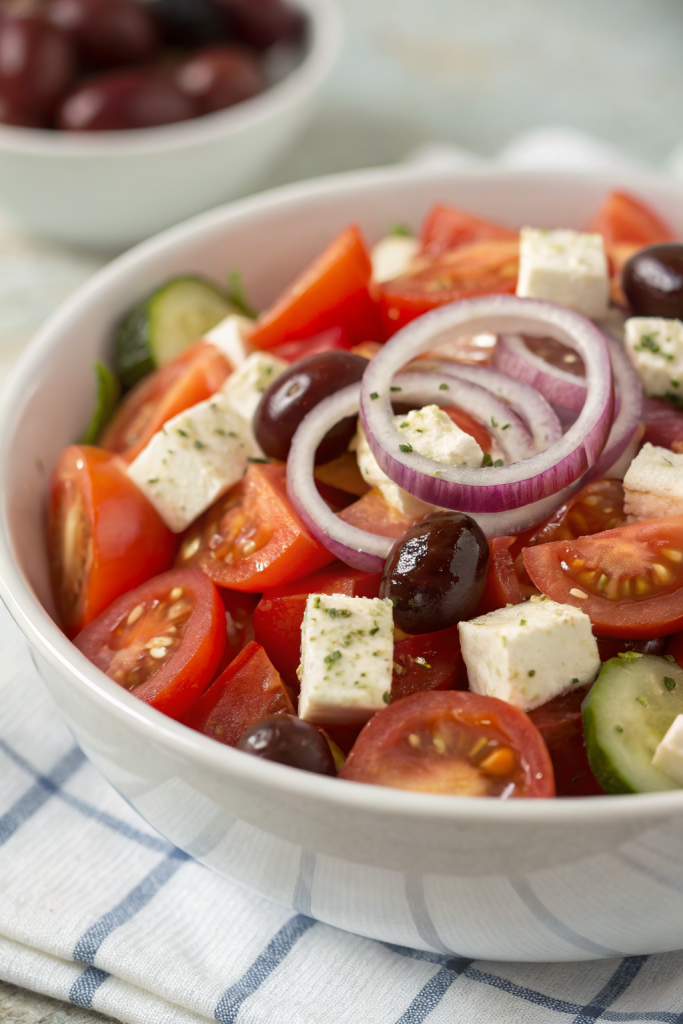
Greek Zucchini Salad tastes bright, crunchy, and herby with salty pops of feta and briny olives in every bite. It works perfectly for busy cooks who want a fresh side dish or light lunch on the table in about 25 minutes, start to finish. I tested this version in my tiny apartment kitchen while my dog judged my knife skills from the doorway.
Why Make This Greek Zucchini Salad at Home
You control the crunch level, the amount of feta, and the seasoning, so every bowl hits your exact preferences. You also skip soggy, overdressed deli salads and enjoy super fresh zucchini that still tastes like a vegetable, not a memory.
Homemade Greek Zucchini Salad also uses simple pantry ingredients and basic equipment. You can prep it ahead, pack it for work lunches, or bring it to a potluck without worrying about it wilting in ten minutes.
“Bright, crunchy, and loaded with flavor, this Greek Zucchini Salad tastes like a vacation in a bowl. ★★★★★”
Ingredients You Need
Fresh produce
- Zucchini: 3 medium, firm, and glossy, no mushy spots. Small to medium zucchini taste sweeter and less watery than the giant ones.
- Cherry or grape tomatoes: 1 to 1 ½ cups, halved. They hold their shape better than big tomatoes and keep the salad juicy but not soupy.
- Cucumber: 1 small English cucumber, thinly sliced. English cucumbers have fewer seeds and a tender peel, so you skip peeling and seeding.
- Red onion: ¼ to ½ small, thinly sliced. Soak slices in cold water for 5 to 10 minutes if you want a milder bite.
- Bell pepper: 1 small, any color, chopped. Red or yellow peppers add sweetness and color contrast.
- Fresh herbs: ¼ cup chopped fresh parsley and 2 tablespoons chopped fresh dill or mint. Dill gives a classic Greek salad vibe, while mint makes it extra refreshing.
Salty and creamy add-ins
- Feta cheese: ¾ to 1 cup, crumbled from a block. I prefer feta in brine from brands like Dodoni or Mt Vikos because it tastes creamier and less chalky than pre-crumbled.
- Kalamata olives: ½ cup, pitted and halved. Use jarred olives in brine, not the canned black pizza olives, which taste flat in this salad.
Pantry staples for the dressing
- Extra virgin olive oil: ¼ cup. Use a decent fruity olive oil since it carries a lot of the flavor; California Olive Ranch or Kirkland Signature organic both work nicely.
- Red wine vinegar: 2 to 3 tablespoons, to taste. You can swap with fresh lemon juice or use half vinegar and half lemon for extra brightness.
- Garlic: 1 to 2 cloves, finely minced or grated. Grating on a microplane helps the garlic blend smoothly into the dressing.
- Dried oregano: 1 teaspoon. Greek oregano tastes best, but any good dried oregano works.
- Dijon mustard: ½ teaspoon. It helps the dressing cling to the vegetables and adds a gentle tang.
- Honey: ½ to 1 teaspoon. It balances the acidity and keeps the salad from tasting too sharp.
- Salt and black pepper: to taste. Start light on the salt since feta and olives already bring plenty.
Optional flavor boosters
- Capers: 1 to 2 tablespoons, rinsed. They add extra briny punch if you love bold flavors.
- Crushed red pepper flakes: a pinch or two. They give a gentle heat that pairs nicely with the cool zucchini.
Equipment list
- Cutting board and sharp chef’s knife
- Large mixing bowl
- Small bowl or jar with lid for the dressing
- Whisk or fork
- Tongs or salad spoons
- Colander or salad spinner
- Optional: mandoline for super thin zucchini and cucumber slices
Tips & Mistakes
- Slice zucchini fairly thin so it absorbs the dressing but still keeps a little crunch.
- Salt zucchini lightly and let it sit 5 to 10 minutes, then pat dry, so it does not water down the salad.
- Taste the feta and olives first, then season the dressing so you do not oversalt the whole bowl.
- Add the dressing gradually and toss, instead of dumping it all at once, so the salad does not turn oily.
- Chill the salad at least 15 minutes before serving so flavors meld, but do not store it dressed overnight if you want maximum crunch.
- Use a block of feta and crumble it yourself so it tastes creamy, not dry.
- Slice onions very thin and soak them in cold water if you dislike harsh onion flavor.
- Keep herbs fresh by adding a portion right before serving and saving a little extra for garnish.
- Avoid overloading with too many add-ins, or the zucchini flavor disappears under everything else.
- Taste and adjust acidity at the end with a splash more vinegar or lemon if the salad tastes flat.
How to Make Greek Zucchini Salad
Step 1: Prep the zucchini
Wash the zucchini and trim the ends. Slice them into thin half-moons or ribbons, about ⅛ inch thick, so they stay crisp but tender. If you use very large zucchini, cut out any big seeds in the center.
Sprinkle the sliced zucchini with a small pinch of salt and toss. Let it sit in a colander for 5 to 10 minutes so some moisture releases. Pat the slices dry with a clean towel or paper towels.
Step 2: Prep the rest of the vegetables
Halve the cherry tomatoes. Slice the cucumber into thin rounds or half-moons, depending on size. Thinly slice the red onion and chop the bell pepper into bite-size pieces.
Add all these vegetables to a large mixing bowl. Add the olives and most of the chopped herbs, saving a spoonful of herbs for garnish. Add the zucchini to the bowl once you dry it.
Step 3: Mix the dressing
In a small bowl or jar, combine olive oil, red wine vinegar, Dijon mustard, honey, minced garlic, dried oregano, salt, and black pepper. Whisk or shake until the dressing looks emulsified and slightly thick. Taste and adjust with more vinegar or honey until it hits that tangy but balanced spot you like.
If you want a little heat, add a pinch of red pepper flakes. If the dressing tastes too sharp, add a tiny splash more olive oil. Keep the dressing nearby for final adjustments.
Step 4: Dress the salad
Pour about two thirds of the dressing over the zucchini mixture. Toss gently with tongs or salad spoons so every piece gets a light coating. Taste a piece of zucchini and a tomato to check seasoning.
Add more dressing as needed, a spoonful at a time, until the salad tastes bright and flavorful but not soggy. Fold in the crumbled feta gently so it stays in nice chunks. Sprinkle in capers if you use them.
Step 5: Chill and finish
Cover the bowl and chill the Greek Zucchini Salad for 15 to 30 minutes. This short rest lets the zucchini absorb the dressing and the flavors meld. Right before serving, taste again and adjust salt, pepper, or acidity.
Top with the reserved herbs and a small drizzle of olive oil. Give everything one last gentle toss. Serve it slightly chilled or at cool room temperature.
Variations I've Tried
I sometimes swap half the zucchini with yellow squash for extra color and a slightly sweeter flavor. The combo still tastes very Greek, just a bit more mellow. Kids often go for the yellow slices first, which cracks me up every time.
I also tried a version with crumbled chickpeas for extra protein, which turned the salad into a more filling lunch. That version works great stuffed into pita with a little extra feta. A sprinkle of smoked paprika on top added a fun twist.
Another favorite variation uses lemon juice instead of vinegar and adds a spoonful of Greek yogurt to the dressing. That version turns slightly creamy but still tastes light and fresh. It pairs nicely with grilled chicken or salmon.
Sometimes I toss in cooked, cooled orzo or quinoa to stretch the salad into a full meal. The grains soak up the dressing and make great next-day lunches. Just add a splash of extra olive oil before serving so it does not feel dry.
How to Serve Greek Zucchini Salad
Serve Greek Zucchini Salad as a side with grilled chicken, fish, or simple roasted potatoes for a fresh, colorful plate. It also works beautifully as a light main dish with warm pita, hummus, and a scoop of plain Greek yogurt on the side. You can spoon it over a bed of romaine or mixed greens to turn it into a bigger salad bowl.
Pack leftovers in lunch containers with some whole grain crackers or flatbread for an easy work lunch. The flavors stay bright, and the zucchini keeps a pleasant crunch when you handle it gently.
How to store
- Store Greek Zucchini Salad in an airtight container in the fridge for 2 to 3 days; it softens over time but still tastes great.
- Keep some dressing separate and add it right before serving if you plan to store the salad longer than a few hours.
- Skip the freezer, since raw zucchini and fresh tomatoes turn mushy and watery after thawing.
- Eat it chilled straight from the fridge or let it sit at room temperature for 10 to 15 minutes; no reheating needed, just a quick toss and maybe a tiny splash of fresh olive oil or vinegar.
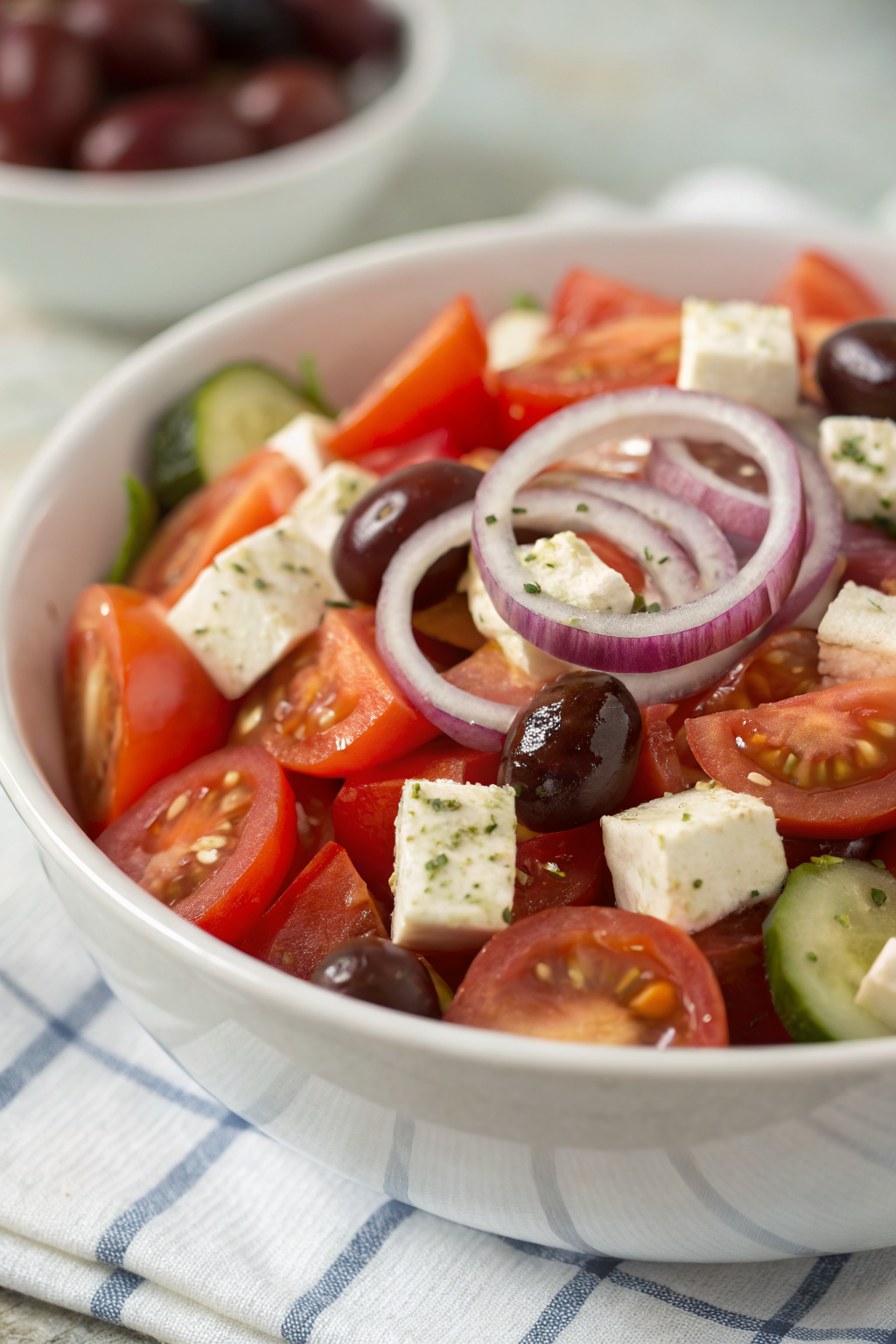
Greek Zucchini Salad
Ingredients
Method
- Wash the zucchini and trim the ends. Slice into thin half-moons or ribbons about 1/8 inch thick. Sprinkle lightly with salt, toss, and let sit in a colander for 5 to 10 minutes. Pat dry with a clean towel or paper towels.
- Halve the cherry tomatoes. Thinly slice the English cucumber, red onion, and chop the bell pepper into bite-size pieces. Add tomatoes, cucumber, onion, bell pepper, olives, and most of the chopped herbs to a large mixing bowl. Add the dried zucchini slices to the bowl.
- In a small bowl or jar, combine the olive oil, red wine vinegar, Dijon mustard, honey, minced garlic, dried oregano, salt, and black pepper. Whisk or shake until emulsified and slightly thick. Taste and adjust vinegar or honey to balance, and add a pinch of red pepper flakes if you like heat.
- Pour about two thirds of the dressing over the vegetables. Toss gently so everything is lightly coated. Taste and add more dressing a spoonful at a time until the salad tastes bright and flavorful but not soggy. Gently fold in the crumbled feta and capers, if using.
- Cover and chill the salad for 15 to 30 minutes so the flavors meld and the zucchini absorbs some dressing. Taste and adjust salt, pepper, or acidity. Top with reserved herbs and a small drizzle of olive oil just before serving, and serve slightly chilled or at cool room temperature.
Notes
Approximate per 1 of 4 servings: 230–260 calories; fat 21 g; saturated fat 6 g; carbohydrates 9 g; fiber 2 g; sugars 6 g; protein 6 g; sodium 520 mg. Values will vary based on specific ingredients, feta brand, and portion size.