

Homemade Ramen Noodles Recipe gives you chewy, springy noodles that soak up broth and taste way better than anything from a packet. This recipe works for anyone who loves ramen, wants a fun kitchen project, and has about 1 hour from start to finish. I still remember the first time I nailed that perfect chewy texture and did a tiny victory dance in my kitchen.
Why Homemade Ramen Noodles Recipe Is Worth It
Fresh ramen noodles taste bouncy, chewy, and silky in a way dried noodles never match. You control the thickness, bite, and ingredients, so the bowl fits your taste and dietary needs.
You also skip mystery ingredients and get a simple, budget friendly recipe that uses pantry staples. The process feels relaxing and oddly satisfying, especially when you slice those long ribbons of dough into real ramen noodles.
“These homemade ramen noodles turned my simple broth into a restaurant-level bowl at home, and the texture absolutely blew me away. ★★★★★”
Ingredients You Need
Dry ingredients
- 2 cups (260 g) all purpose flour
- 2 tablespoons vital wheat gluten
- 1 teaspoon fine sea salt
- 1 teaspoon baking soda or baked baking soda (for extra chew)
Wet ingredients
- 2 large eggs, room temperature
- 6 to 8 tablespoons water, cold
- 1 teaspoon neutral oil (canola, avocado, or grapeseed)
Ingredient notes and substitutions
- Use unbleached all purpose flour for the best balance of chew and tenderness. If you only have bread flour, use it and reduce the vital wheat gluten to 1 tablespoon.
- Vital wheat gluten boosts chew and spring; if you skip it, the noodles still work but taste softer.
- Baking soda raises the pH and gives that classic ramen bite; baked baking soda works even better if you feel nerdy enough to heat it in the oven.
- Swap eggs with 2 tablespoons aquafaba plus 2 extra tablespoons water for an egg free version.
- Use kosher salt instead of sea salt if that is what you keep in your pantry; just measure by volume as written.
Equipment list
- Digital scale or measuring cups and spoons
- Medium mixing bowl
- Fork or chopsticks for mixing
- Stand mixer with dough hook or strong hands for kneading
- Rolling pin or pasta machine
- Sharp knife or pizza cutter
- Cutting board or clean counter
- Large pot for boiling
- Colander or spider strainer
Quick Tips & substitutions
- Use cold water so the dough stays firm and easy to roll.
- Knead until the dough feels very stiff and smooth; tough dough gives chewy ramen noodles.
- Rest the dough at least 30 minutes so the gluten relaxes and rolls out without fighting you.
- Dust the dough sheets with plenty of flour before cutting so the noodles do not clump.
- Cook a small test batch first and adjust cooking time by 30 second increments.
- Swap half the flour with bread flour for extra bite, or with cake flour for a softer noodle.
- Use soy sauce and a pinch of turmeric in the dough for a deeper color without food coloring.
- Make egg free noodles by skipping eggs and adding 2 extra tablespoons water plus 1 tablespoon oil.
How to Make Homemade Ramen Noodles
Mix the dry ingredients
Add flour, vital wheat gluten, salt, and baking soda to a medium bowl. Whisk or stir until everything looks evenly combined and no streaks remain. This step keeps the dough texture even and prevents clumps.
Combine the wet ingredients
Crack the eggs into a small bowl and beat them with a fork. Add 6 tablespoons cold water and the neutral oil, then stir again. The mixture should look smooth and slightly frothy.
Bring the dough together
Pour the wet mixture into the dry ingredients while you stir with a fork or chopsticks. The dough will look shaggy and dry at first, which means you head in the right direction. Add extra water 1 teaspoon at a time until no dry flour remains and the dough clumps together.
Knead until smooth and firm
Turn the dough onto a lightly floured surface. Knead with the heels of your hands for 8 to 10 minutes until the dough feels very firm, smooth, and elastic. If the dough cracks, wet your fingers lightly and keep kneading until it softens and comes together.
Rest the dough
Shape the dough into a ball and wrap it tightly in plastic wrap or place it in a covered bowl. Let it rest at room temperature for 30 to 45 minutes. This rest time relaxes the gluten and makes rolling much easier.
Divide and pre shape
Unwrap the dough and cut it into 2 or 4 equal pieces, depending on your workspace. Flatten each piece into a rough rectangle with your hands. Dust both sides with flour so the dough does not stick to the counter or rolling pin.
Roll by hand
Use a rolling pin and roll from the center out, turning the dough often. Aim for a thin sheet, about 1 to 2 millimeters thick, similar to fresh fettuccine. Keep dusting with flour so the sheet stays dry and easy to handle.
Or roll with a pasta machine
Set your pasta machine to the widest setting. Feed one piece of dough through, fold it in thirds like a letter, and feed it through again. Repeat this 3 to 4 times, then gradually move to thinner settings until you reach your desired thickness.
Dust and fold for cutting
Lay the sheet on a floured surface and dust the top with more flour. Fold the sheet loosely into thirds or roll it into a loose log. This fold makes cutting even strands much easier.
Slice into noodles
Use a sharp knife or pizza cutter and slice the folded dough into thin strips, about 2 to 3 millimeters wide. Toss the cut noodles gently with extra flour to separate the strands. Shake off excess flour and form loose nests.
Boil the noodles
Bring a large pot of water to a rolling boil and salt it lightly. Add the noodles and stir right away to prevent sticking. Cook 1 to 2 minutes for very thin noodles or 2 to 3 minutes for thicker ones, until they taste chewy but not raw in the center.
Rinse and use
Scoop the noodles out with a spider strainer or drain in a colander. Rinse quickly under hot water to remove extra starch, then drain well. Add the noodles straight into hot ramen broth and serve right away.
Recipe Variations
- Gluten free: Use a gluten free all purpose blend that works for pasta and skip the vital wheat gluten, then add 1 teaspoon xanthan gum if the blend does not include it.
- Vegan: Replace eggs with 2 tablespoons aquafaba and add 2 extra tablespoons water plus 1 tablespoon oil.
- Low carb: Use a low carb baking mix designed for pasta and follow the same method, adjusting water as needed.
- Spinach noodles: Blend 1 cup fresh spinach with the water, strain if needed, and use that liquid in place of plain water.
- Spicy noodles: Add 1 teaspoon chili powder or Korean gochugaru to the dry ingredients.
- Garlic noodles: Mix 1 teaspoon garlic powder into the flour for a subtle garlic aroma.
Ways to Serve
- Drop the noodles into a rich chicken or vegetable ramen broth with soft boiled eggs and scallions.
- Serve with miso based broth, tofu, mushrooms, and corn for a cozy vegetarian bowl.
- Toss the cooked noodles with soy sauce, sesame oil, and sautéed veggies for a quick stir fry.
- Use the noodles in a chilled ramen salad with cucumbers, carrots, and a soy sesame dressing.
- Add them to a simple clear broth with shredded chicken and bok choy for a light dinner.
Storage Success
Store uncooked ramen noodles in a container dusted with flour in the fridge for up to 2 days. Freeze them on a tray in loose nests, then transfer to a freezer bag and keep them for up to 2 months. Drop frozen noodles straight into boiling water and add 30 to 60 seconds to the cooking time. Keep cooked noodles separate from broth in the fridge and use them within 2 days for the best texture.
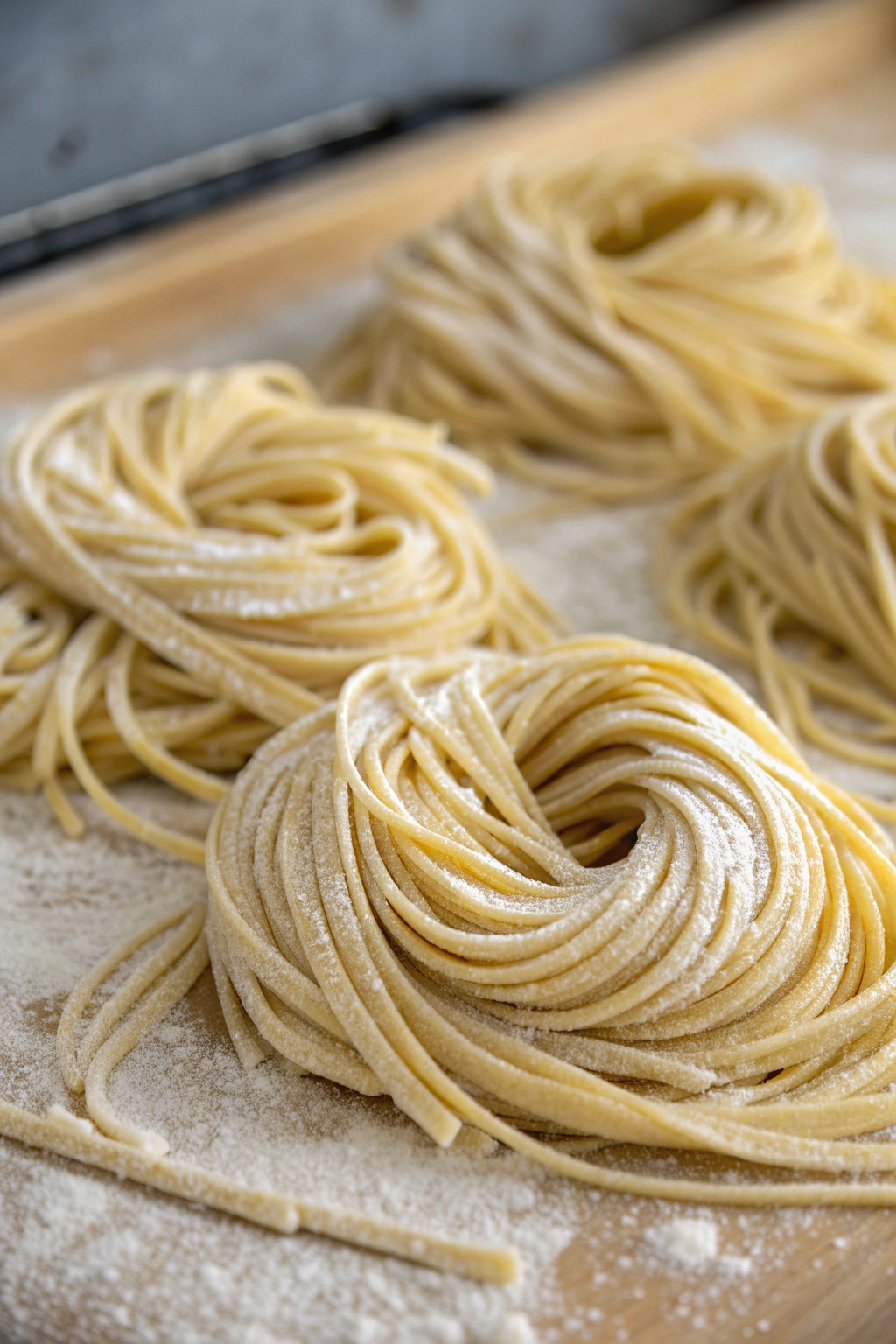
Homemade Ramen Noodles Recipe
Ingredients
Method
- In a large bowl, whisk together the all-purpose flour, salt, and baking soda.
- In a measuring cup, combine the warm water, egg (if using), and vegetable oil, beating lightly to blend.
- Gradually drizzle the wet mixture into the flour, mixing with chopsticks or a fork until a shaggy dough forms.
- Knead the dough on a lightly floured surface for 8–10 minutes, until smooth and elastic. The dough will be firm but should hold together.
- Wrap the dough tightly in plastic wrap and let it rest at room temperature for 30 minutes to relax the gluten.
- After resting, divide the dough into 2–4 portions. Working with one piece at a time, roll it out with a rolling pin or pasta machine to a thin sheet, dusting with cornstarch or flour as needed.
- Fold the sheet loosely and slice into thin noodle strands with a sharp knife, or use the cutter attachment on a pasta machine.
- Toss the cut noodles generously with cornstarch or flour to prevent sticking and gently shake them apart.
- Bring a large pot of salted water to a rolling boil. Add the noodles and cook for 2–3 minutes, or until just tender but still chewy.
- Drain well and rinse briefly under hot water if desired. Use immediately in your favorite ramen broth or stir-fry.
Notes
Approximate per serving (1/4 of recipe): 290 calories; fat 6 g; saturated fat 1 g; carbohydrates 50 g; fiber 2 g; sugars 1 g; protein 9 g; sodium 310 mg. Values are estimates and will vary based on exact ingredients, brands, and portion sizes.