
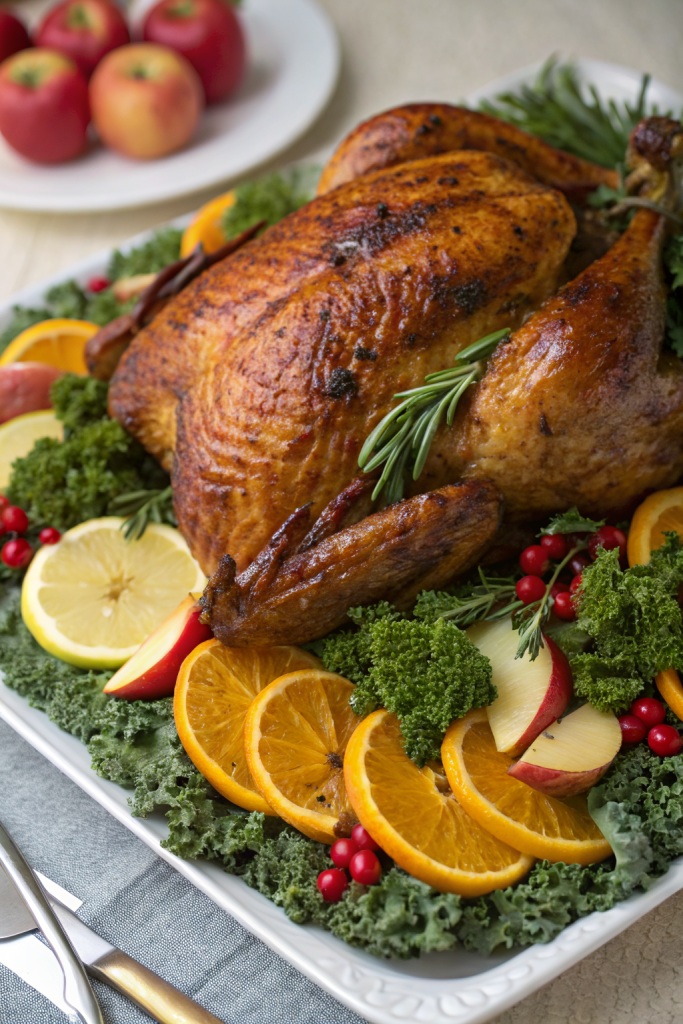
Juicy Roast Turkey Recipe gives you tender meat, shatteringly crisp skin, and rich pan gravy, all in about 4 to 5 hours total time depending on bird size. This recipe works well for beginners who feel nervous about dry turkey and for seasoned home cooks who want consistent, juicy results every single time. I still remember my first solo Thanksgiving bird in a tiny apartment kitchen, and this method would have saved me from that tragically dry turkey of 2012.
Why Make This Juicy Roast Turkey Recipe at Home
You control everything at home, from the salt level to the herbs to how golden you like the skin. Store bought cooked turkeys often taste bland or sit under heat lamps too long, while this one tastes juicy, herby, and deeply savory from the first slice to the leftovers.
This Juicy Roast Turkey Recipe also stretches your budget. One turkey feeds a crowd, gives you stock bones, and loads of leftovers for sandwiches, soups, and casseroles.
"This Juicy Roast Turkey Recipe gave us the most flavorful, moist turkey we have ever had, and the leftovers stayed tender for days. ★★★★★"
Ingredients You Need
Turkey
- 1 whole turkey, 12 to 14 pounds, thawed completely
- Use a natural turkey without added solution if possible, since that gives you better control over seasoning.
- If your turkey comes pre brined or injected, reduce the salt in the recipe by half.
Dry brine
- 3 tablespoons kosher salt (Diamond Crystal; use 2 tablespoons if you use Morton)
- 2 teaspoons freshly ground black pepper
- 2 teaspoons garlic powder
- 2 teaspoons onion powder
- 2 teaspoons paprika (smoked or sweet, your choice)
- 1 teaspoon dried thyme
- 1 teaspoon dried rosemary, crushed between fingers
- 1 teaspoon dried sage
Aromatics for the cavity
- 1 small onion, quartered
- 1 small lemon, quartered
- 4 garlic cloves, smashed
- 4 fresh thyme sprigs
- 2 fresh rosemary sprigs
- 4 fresh parsley stems
You can skip fresh herbs and use extra dried herbs if you want a pantry shortcut. I often keep a big jar of dried poultry seasoning on hand and use 2 teaspoons inside the cavity when I run out of fresh herbs.
Butter and basting mixture
- 1 cup (2 sticks) unsalted butter, softened
- 2 tablespoons olive oil
- 1 tablespoon fresh lemon juice
- 1 tablespoon chopped fresh thyme
- 1 tablespoon chopped fresh rosemary
- 1 tablespoon chopped fresh parsley
- 1 teaspoon kosher salt
- 1 teaspoon black pepper
If you want a dairy free option, use a neutral oil like avocado or canola in place of butter. Butter gives the richest flavor and browning, though, so I reach for it when I can.
Under the turkey (for flavor and gravy)
- 2 large carrots, cut into chunks
- 2 celery stalks, cut into chunks
- 1 large onion, cut into wedges
- 2 cups low sodium chicken broth or turkey broth
Use boxed low sodium broth for an easy pantry shortcut. I like brands such as Swanson or Kitchen Basics because they taste clean and not too salty.
Equipment list
- Large roasting pan with a rack
- Paper towels
- Small bowl for dry brine
- Small bowl for butter mixture
- Basting brush or spoon
- Aluminum foil
- Instant read thermometer (Thermapen style works great)
- Cutting board with a groove for juices
- Sharp carving knife or chef’s knife
Tips & Mistakes
- Pat the turkey very dry before seasoning so the skin crisps instead of steaming.
- Dry brine at least 24 hours and up to 48 hours so the salt seasons the meat all the way through.
- Keep the turkey uncovered in the fridge during the last 12 to 24 hours of brining so the skin dries and browns better.
- Do not roast a partially frozen turkey; thaw it completely in the fridge to avoid overcooked edges and undercooked center.
- Use an instant read thermometer and pull the turkey when the breast hits 160 F and the thigh hits 170 to 175 F to keep the meat juicy.
- Tent the turkey loosely with foil if the skin browns too quickly so it does not burn.
- Avoid stuffing the turkey with bread stuffing, since that slows cooking and dries the meat; cook stuffing in a separate dish.
- Let the turkey rest at least 30 minutes before carving so the juices stay in the meat instead of running all over the board.
- Do not baste every 10 minutes; open the oven only a few times so the temperature stays stable and the turkey cooks evenly.
- Slice against the grain when you carve, especially on the breast, so each bite tastes tender.
How to Make Juicy Roast Turkey Recipe
Step 1: Thaw and prep the turkey
Place the frozen turkey on a rimmed tray in the fridge and thaw it 3 to 4 days for a 12 to 14 pound bird. Remove the turkey from its packaging, pull out the neck and giblets, and set those aside for stock or gravy. Rinse the cavity lightly if needed, then pat the entire bird very dry with paper towels.
Tuck the wing tips behind the turkey so they do not burn. Trim any large excess fat around the cavity opening. Place the turkey on a rack set in a roasting pan.
Step 2: Dry brine the turkey
Mix the kosher salt, pepper, garlic powder, onion powder, paprika, dried thyme, dried rosemary, and dried sage in a small bowl. Sprinkle this mixture all over the turkey, including under the skin on the breast if you feel comfortable loosening the skin with your fingers. Rub some seasoning inside the cavity as well.
Place the seasoned turkey uncovered in the fridge at least 24 hours and up to 48 hours. During the last 12 to 24 hours, keep it uncovered so the skin dries slightly and browns better in the oven.
Step 3: Bring to room temp and preheat
Take the turkey out of the fridge 45 to 60 minutes before roasting so it loses the chill a bit. This step helps the turkey cook more evenly and reduces the risk of overcooked outer meat. Preheat your oven to 425 F and adjust the rack so the turkey sits in the center of the oven.
While the oven heats, toss the carrots, celery, and onion in the bottom of the roasting pan under the rack. Pour the broth into the pan.
Step 4: Stuff aromatics and tie legs
Stuff the cavity with onion quarters, lemon quarters, smashed garlic, and fresh herb sprigs. Do not pack it tightly; leave some space for air to circulate. Tie the legs loosely with kitchen twine so the turkey holds a nice shape and cooks evenly.
Pat the skin dry one more time if needed. This step feels small, but it really helps the skin crisp.
Step 5: Make the butter mixture
In a small bowl, mix the softened butter, olive oil, lemon juice, chopped thyme, chopped rosemary, chopped parsley, salt, and pepper. Stir until the mixture looks smooth and spreadable. Gently loosen the skin over the breast with your fingers and slide some of the butter mixture under the skin.
Rub the remaining butter mixture all over the outside of the turkey. Coat every surface, including the legs and wings, so the skin browns evenly and tastes flavorful.
Step 6: Start roasting at high heat
Place the turkey in the hot oven at 425 F and roast it for 30 minutes. This high heat jump starts browning and crisps the skin. Rotate the pan halfway through this first 30 minutes if your oven has hot spots.
If the skin at the top browns very quickly, tent that area loosely with a small piece of foil. You want deep golden color, not blackened patches.
Step 7: Lower heat and continue roasting
After 30 minutes, reduce the oven temperature to 325 F. Roast the turkey until the thickest part of the breast reaches 160 F and the thickest part of the thigh reaches 170 to 175 F. Start checking the temperature around the 2 hour mark for a 12 pound turkey and around 2 hours 30 minutes for a 14 pound turkey.
Spoon some pan juices over the turkey every 45 minutes. Keep the oven door closed as much as possible between bastes so the temperature stays steady.
Step 8: Rest the turkey
When the turkey hits the target temperatures, remove the pan from the oven. Lift the turkey carefully to a cutting board with a groove to catch juices. Tent it loosely with foil and let it rest at least 30 minutes and up to 45 minutes.
Use this time to make gravy with the pan drippings and roasted vegetables. Skim excess fat, mash the vegetables into the juices, add a bit more broth, and thicken with a slurry of cornstarch and water or a quick roux.
Step 9: Carve and serve
Remove the legs by cutting through the joint where the thigh meets the body. Separate drumsticks from thighs. Slice the breast meat off each side in big lobes, then cut crosswise into slices against the grain.
Arrange the sliced turkey on a warm platter and spoon a little hot gravy over the top to keep everything glossy and juicy. Serve extra gravy on the side.
Variations I've Tried
Herb citrus version: Add orange zest and extra lemon zest to the butter mixture and stuff the cavity with orange slices along with the lemon and herbs. This version tastes bright and fresh and pairs well with lighter side dishes.
Garlic herb version: Double the garlic in the cavity and add 1 tablespoon minced garlic to the butter mixture. The turkey comes out super savory and makes incredible leftovers for garlic turkey sandwiches.
Spice rubbed version: Swap paprika, thyme, rosemary, and sage for a mix of smoked paprika, ground cumin, coriander, and a pinch of cayenne. This twist gives a slightly smoky, warm flavor that works well with simple sides like roasted potatoes and green beans.
Butter free version: Use all olive oil instead of butter and increase the dried herbs slightly. The skin still crisps nicely, and this option works well if you cook for someone who avoids dairy.
How to Serve Juicy Roast Turkey Recipe
Serve slices of juicy roast turkey on a warm platter with classic sides like mashed potatoes, green beans, roasted carrots, and cranberry sauce. Spoon hot turkey gravy over the meat and potatoes, and keep extra gravy on the table for second helpings. Offer soft dinner rolls, cornbread, or biscuits so everyone can mop up the juices.
This Juicy Roast Turkey Recipe also tastes great with a fresh green salad, roasted sweet potatoes, or a simple rice pilaf. Keep drinks simple with sparkling water, cider, or iced tea.
How to store
- Cool leftover turkey to room temperature within 2 hours, then store slices in shallow airtight containers in the fridge for up to 4 days.
- Keep the turkey separate from the gravy so the skin stays as crisp as possible.
- Freeze leftover turkey in freezer bags or containers for up to 3 months; press out extra air to prevent freezer burn.
- Reheat slices gently in a covered baking dish with a splash of broth or gravy at 300 F until hot, or warm individual portions in a covered skillet over low heat so the meat stays juicy.
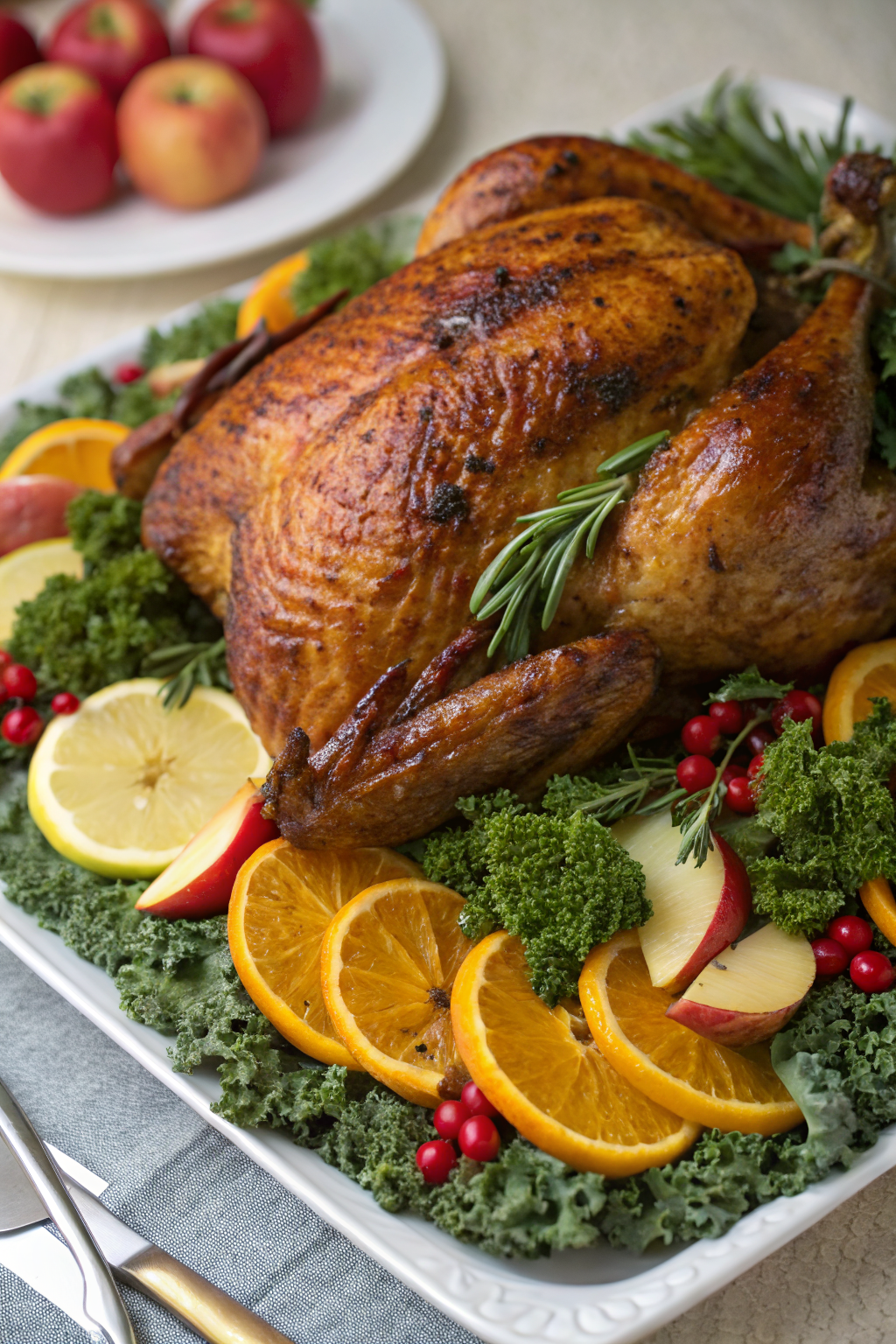
Juicy Roast Turkey Recipe
Ingredients
Method
- Preheat the oven to 325°F (165°C). Place a rack in a large roasting pan.
- Remove the turkey giblets and neck from the cavity. Pat the turkey very dry with paper towels, inside and out.
- In a small bowl, combine the softened butter, salt, pepper, garlic powder, onion powder, dried thyme, dried rosemary, and paprika to form a seasoned butter paste.
- Loosen the skin over the turkey breasts by gently sliding your fingers underneath. Spread some of the seasoned butter under the skin directly over the breast meat. Rub the remaining seasoned butter all over the outside of the turkey.
- Stuff the cavity with the onion, lemon, garlic head, and fresh herb sprigs if using. Tuck the wing tips under the body and tie the legs together with kitchen twine.
- Drizzle the turkey lightly with olive oil and place it breast side up on the rack in the roasting pan. Pour 2 cups of broth into the bottom of the pan.
- Roast the turkey, uncovered, for about 3 to 3 1/2 hours, basting every 45 minutes with the pan juices and adding more broth as needed to prevent the pan from drying out.
- Begin checking for doneness during the last 45 minutes. The turkey is done when an instant-read thermometer inserted into the thickest part of the thigh (without touching bone) registers 165°F (74°C). If the skin browns too quickly, loosely tent the turkey with foil.
- Remove the turkey from the oven and tent loosely with foil. Let rest for at least 20 to 30 minutes before carving to allow the juices to redistribute.
- Transfer the turkey to a carving board, carve into slices, and serve with the pan juices or your favorite gravy.
Notes
Approximate per serving (1/12 of turkey, without skin or gravy): 320 calories; fat 15 g; saturated fat 6 g; carbohydrates 1 g; fiber 0 g; sugars 0 g; protein 45 g; sodium 520 mg. Values will vary based on turkey size, added ingredients, and portion size.