
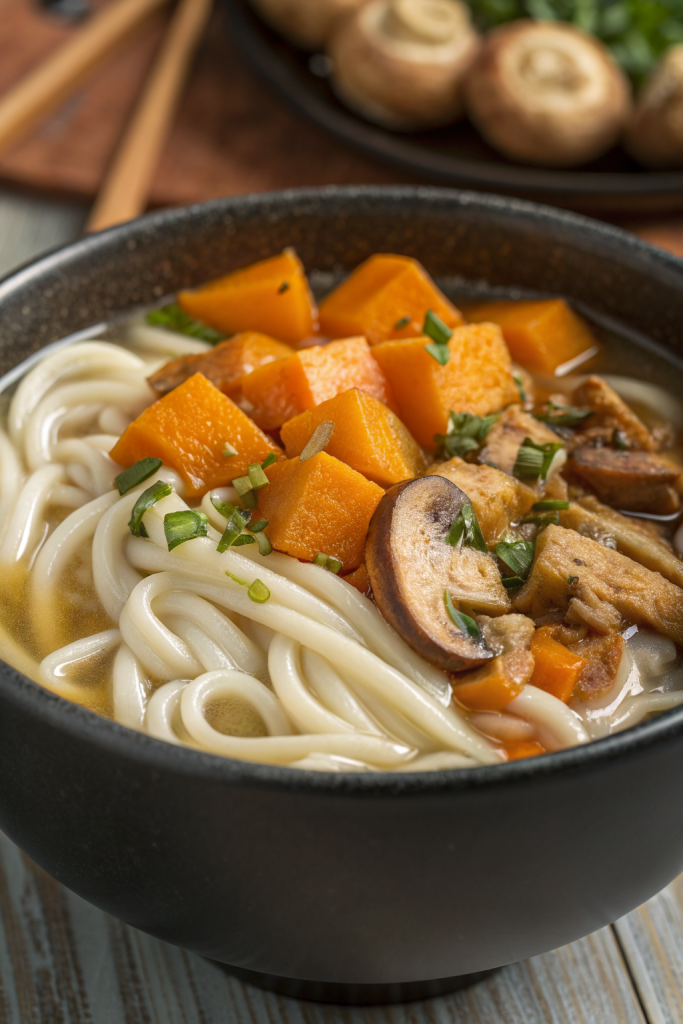
Miso Udon Noodle Soup with Teriyaki Mushrooms tastes savory, slightly sweet, and deeply comforting, like a hug in a bowl with extra umami. It works perfectly for busy weeknights, cozy weekends, or meal prep, and you can get it on the table in about 35 minutes. I first made a version of this on a cold Chicago night when I refused to go outside, and it has stayed in my regular rotation ever since.
Why Make This Miso Udon Noodle Soup with Teriyaki Mushrooms at Home
You control the salt, the sweetness, and the richness of the broth, so the soup fits your taste instead of the other way around. Restaurant versions often taste too salty or too oily, but a homemade miso udon noodle soup with teriyaki mushrooms tastes clean, balanced, and still very satisfying.
You also pack in way more mushrooms and veggies at home than most takeout spots. The recipe uses simple pantry ingredients like miso paste, soy sauce, and frozen udon, so you build big flavor without complicated steps.
This Miso Udon Noodle Soup with Teriyaki Mushrooms tastes like something from a cozy noodle bar, but it comes together in my tiny kitchen in under 40 minutes. ★★★★★
Ingredients You Need
For the miso udon soup base
-
Neutral oil
I like avocado or grapeseed oil. Use what you have, as long as it has a mild flavor. -
Garlic, 3 to 4 cloves, minced
Fresh garlic gives the broth a punchy base. Use jarred minced garlic if you need a shortcut, but fresh tastes brighter. -
Fresh ginger, 1 to 2 tablespoons, minced or grated
Ginger adds warmth and depth. Use ginger paste from a tube if you want a quick option. -
Green onions, 4 to 5, sliced (white and green parts separated)
Use the white parts for cooking and the green tops for garnish. They add freshness and a little crunch. -
Low sodium vegetable broth or dashi, about 6 cups
Use veggie broth for a vegetarian version, or use kombu and dried shiitake dashi for extra umami. Low sodium broth gives you more control over seasoning. -
White or yellow miso paste, 3 to 4 tablespoons
White miso tastes mild and slightly sweet, while yellow miso tastes a bit stronger. I often use brands like Hikari or Miko, but any good refrigerated miso works. -
Soy sauce or tamari, 1 to 2 tablespoons
Tamari works well if you want a gluten free option. Add more at the end if you want a saltier broth. -
Mirin, 1 tablespoon
Mirin adds gentle sweetness and depth. If you do not have mirin, use a small splash of rice vinegar plus a pinch of sugar. -
Sesame oil, 1 to 2 teaspoons
Toasted sesame oil brings a nutty aroma. Add it at the end so the flavor stays strong. -
Fresh or frozen udon noodles, 2 to 3 portions (about 14 to 16 ounces total)
I love frozen sanuki-style udon because it stays chewy. Shelf-stable udon works too, but cook it slightly under so it stays bouncy. -
Vegetables
- Baby bok choy or regular bok choy, 3 to 4 heads, halved or chopped
- Carrots, 1 to 2, thinly sliced or julienned
- Snow peas or snap peas, 1 cup
- Corn kernels, 1 cup (frozen works great)
Use what you have in the fridge. Spinach, napa cabbage, or thinly sliced bell peppers also fit nicely.
For the teriyaki mushrooms
-
Mushrooms, 12 to 16 ounces, sliced
Shiitake, cremini, or a mix of mushrooms all work. I like a combo of shiitake for flavor and cremini for texture. -
Neutral oil, 1 to 2 tablespoons
Use the same oil as the soup base for simplicity. -
Soy sauce or tamari, 3 tablespoons
This forms the salty backbone of the teriyaki glaze. -
Mirin, 2 tablespoons
Balances the saltiness and gives a slight sheen. -
Brown sugar or maple syrup, 1 to 2 tablespoons
Brown sugar gives a deeper caramel note, while maple syrup adds a subtle extra flavor. -
Rice vinegar, 1 teaspoon
A small hit of acid keeps the glaze from tasting flat. -
Garlic, 1 clove, minced
Adds punch to the mushrooms. -
Cornstarch, 1 teaspoon mixed with 1 tablespoon water
Thickens the teriyaki glaze so it clings to the mushrooms. -
Sesame seeds, 1 tablespoon
Optional, but they add texture and a nutty taste.
Garnishes
- Sliced green onion tops
- Toasted sesame seeds
- Chili oil or shichimi togarashi for heat
- Nori strips if you like a little sea flavor
Use whatever you enjoy and already keep in your pantry.
Equipment list
- Medium pot or Dutch oven for the soup
- Large skillet or sauté pan for the teriyaki mushrooms
- Small bowl for the miso paste
- Tongs or chopsticks for noodles
- Ladle for serving
- Cutting board and sharp knife
Tips & Mistakes
- Slice mushrooms in similar sizes so they brown evenly and do not steam.
- Let mushrooms sit in the hot pan without stirring for a minute or two so they caramelize instead of turning soggy.
- Add miso paste off the heat and whisk it with a bit of hot broth in a bowl first, so it dissolves smoothly and does not clump.
- Keep the broth below a boil after you add miso, since high heat can dull the flavor and make it taste harsh.
- Slightly undercook udon noodles if you plan to store leftovers, since they soften more in the broth.
- Taste the broth at the end and adjust with soy sauce for salt, mirin or a pinch of sugar for sweetness, or a splash of rice vinegar for brightness.
- Use low sodium broth so you avoid an overly salty soup once you add miso and soy sauce.
- Dry your mushrooms well after rinsing so they brown nicely and do not release too much water.
- Keep veggies slightly crisp by adding them near the end of cooking, so they keep color and texture.
- Portion noodles and mushrooms into bowls first, then add broth, so every bowl gets a balanced mix.
How to Make Miso Udon Noodle Soup with Teriyaki Mushrooms
Step 1: Prep ingredients
Slice mushrooms, mince garlic and ginger, and chop green onions, keeping white and green parts separate. Halve or chop bok choy, slice carrots, and prep any other veggies you use. Set everything in small bowls so cooking feels relaxed and organized.
Step 2: Make the teriyaki sauce
In a small bowl, mix soy sauce, mirin, brown sugar or maple syrup, and rice vinegar. Stir until the sugar dissolves. In another tiny bowl, stir cornstarch with water to make a slurry and set it aside.
Step 3: Cook the teriyaki mushrooms
Heat a large skillet over medium high heat and add neutral oil. Add mushrooms in a single layer and let them sit for 1 to 2 minutes before stirring so they brown. Stir and cook until they shrink and develop golden edges.
Add minced garlic and cook about 30 seconds until fragrant. Pour in the teriyaki sauce and stir to coat the mushrooms. Add the cornstarch slurry and stir until the sauce thickens and glazes the mushrooms, about 1 to 2 minutes. Sprinkle sesame seeds over the mushrooms, turn off the heat, and set the pan aside.
Step 4: Start the soup base
Heat a medium pot over medium heat and add a little neutral oil. Add the white parts of the green onions, garlic, and ginger. Sauté 1 to 2 minutes until fragrant and slightly softened.
Pour in the vegetable broth or dashi and bring it to a gentle simmer. Add carrots and the thicker parts of the bok choy stems. Let them cook for about 3 to 5 minutes until they start to soften.
Step 5: Cook the noodles and veggies
Add udon noodles to the simmering broth. If you use frozen udon, separate the strands with chopsticks or tongs as they loosen. Cook according to package directions, but stop about 1 minute early so they stay chewy.
Add bok choy leaves, peas, and corn. Simmer another 1 to 2 minutes until the veggies look bright and just tender. Turn the heat to low.
Step 6: Add the miso
Scoop miso paste into a small bowl. Ladle in a bit of hot broth and whisk until the miso dissolves into a smooth mixture. Pour this mixture back into the pot and stir well.
Taste the broth and adjust seasoning with soy sauce, a bit more miso, or a splash of mirin. Drizzle in sesame oil and stir again. Keep the soup hot over low heat, but do not let it boil.
Step 7: Assemble the bowls
Divide noodles and veggies among bowls. Ladle hot miso broth over each portion. Top each bowl with a generous pile of teriyaki mushrooms.
Sprinkle with green onion tops, sesame seeds, and a little chili oil or shichimi togarashi if you like heat. Add nori strips on top for extra umami. Serve right away while the noodles stay bouncy and the mushrooms taste glossy and caramelized.
Variations I've Tried
I often swap the vegetable broth for a kombu and dried shiitake dashi, which gives the miso udon noodle soup even more depth. I also like to add cubes of silken or firm tofu for extra protein and a creamy contrast to the chewy noodles. If I want more veggies, I toss in shredded napa cabbage, spinach, or thinly sliced mushrooms directly into the broth.
For a spicy version, I stir a spoonful of gochujang or a bit of chili crisp into the broth, which adds heat and a subtle smokiness. I also enjoy a miso udon noodle soup with teriyaki mushrooms that includes roasted sweet potato cubes, which bring a sweet and hearty element. If I cook for kids, I keep the broth mild, skip the chili oil, and add extra corn and carrots for natural sweetness.
How to Serve Miso Udon Noodle Soup with Teriyaki Mushrooms
Serve miso udon noodle soup with teriyaki mushrooms piping hot in deep bowls so the broth stays warm and the noodles stay chewy. Add toppings at the table, like extra green onions, sesame seeds, chili oil, or nori strips, so everyone customizes their bowl. Pair the soup with simple sides like cucumber salad, steamed edamame, or a small bowl of rice if you want a more filling meal. I also like to serve orange slices or fresh fruit on the side, since the brightness cuts through the rich, savory broth.
How to store
- Fridge, soup and noodles together: Cool completely, then store in airtight containers for up to 2 days. The noodles soften more in the broth, but the flavor still tastes great.
- Fridge, soup and noodles separate: Store broth with veggies in one container and cooked noodles in another for up to 3 to 4 days. This keeps the udon texture bouncier.
- Teriyaki mushrooms in the fridge: Store in a small airtight container for up to 4 days. Reheat in a skillet with a splash of water if the glaze thickens too much.
- Freezer: Freeze the broth and veggies without noodles in freezer safe containers for up to 2 months. Cook fresh udon when you reheat so the noodles keep their texture.
- Reheating on the stove: Warm the broth over medium heat until hot but not boiling, then add noodles and mushrooms just until heated through. This method keeps the miso flavor bright and the noodles from turning mushy.
- Reheating in the microwave: Heat broth and noodles in short bursts, stirring between each, and add mushrooms near the end so they do not overcook. Cover loosely so the soup does not splatter.
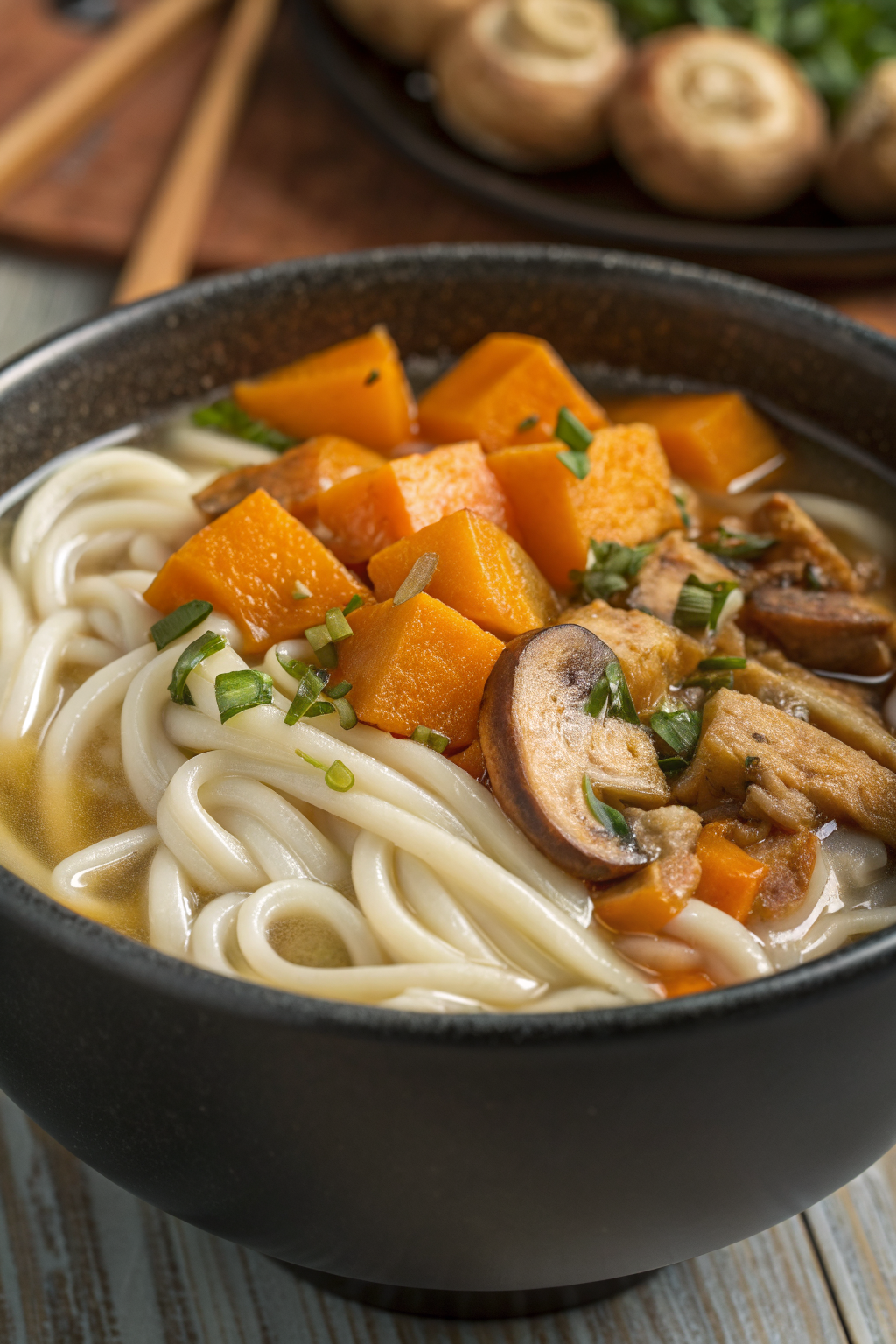
Miso Udon Noodle Soup with Teriyaki Mushrooms
Ingredients
Method
- Slice the mushrooms, mince the garlic and ginger, and slice the green onions, keeping the white and green parts separate. Halve or chop the bok choy, slice the carrots, and prep the peas and corn.
- In a small bowl, stir together the soy sauce, mirin, and brown sugar or maple syrup with the rice vinegar until the sugar dissolves. In another small bowl, mix the cornstarch with water to form a slurry and set aside.
- Heat a large skillet over medium-high heat and add neutral oil. Spread the sliced mushrooms in a single layer and let them cook without stirring for 1 to 2 minutes so they begin to brown.
- Stir and continue cooking until the mushrooms shrink and develop golden edges. Add the minced garlic and cook for about 30 seconds until fragrant.
- Pour the prepared teriyaki sauce into the skillet and stir to coat the mushrooms. Add the cornstarch slurry and cook, stirring, until the sauce thickens and glazes the mushrooms, about 1 to 2 minutes. Sprinkle with sesame seeds if using, turn off the heat, and set aside.
- Heat a medium pot or Dutch oven over medium heat and add a little neutral oil. Add the white parts of the green onions along with the minced garlic and ginger. Sauté for 1 to 2 minutes until fragrant and slightly softened.
- Pour in the vegetable broth or dashi and bring it to a gentle simmer. Add the sliced carrots and the thicker stems of the bok choy. Simmer for 3 to 5 minutes until they begin to soften.
- Add the udon noodles to the simmering broth. If using frozen udon, gently separate the strands with chopsticks or tongs as they loosen. Cook according to package directions, stopping about 1 minute early so the noodles stay chewy.
- Add the bok choy leaves, peas, and corn. Simmer for another 1 to 2 minutes until the vegetables look bright and just tender. Reduce the heat to low.
- Place the miso paste in a small bowl. Ladle in a bit of hot broth from the pot and whisk until the miso dissolves completely. Pour this mixture back into the pot and stir well to combine.
- Season the broth to taste with soy sauce or tamari and a splash of mirin if you like a bit more sweetness. Drizzle in the toasted sesame oil and stir again, keeping the soup hot over low heat without letting it boil.
- To serve, divide the noodles and vegetables among deep bowls. Ladle the hot miso broth over each portion, then top each bowl with a generous amount of teriyaki mushrooms.
- Garnish with sliced green onion tops, extra sesame seeds, and a little chili oil or shichimi togarashi for heat if desired. Add nori strips on top for extra umami and serve immediately.
Notes
Approximate per serving (1 of 4): 420 calories; fat 13 g; saturated fat 2 g; carbohydrates 63 g; fiber 6 g; sugars 13 g; protein 13 g; sodium 1550 mg. Values are estimates and will vary based on exact ingredients, brands, and portion sizes.