
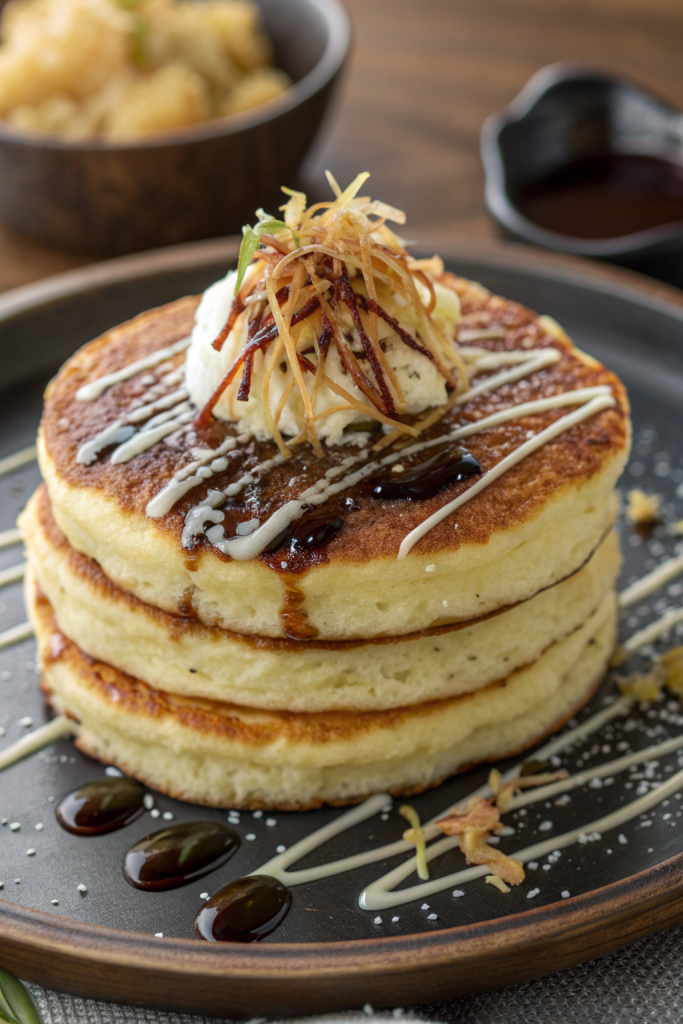
Okonomiyaki Japanese Pancakes Recipe tastes savory, a little sweet, super saucy, and loaded with crunchy cabbage and toppings that make every bite fun. It works perfectly for weeknight dinners or lazy weekends, takes about 35–40 minutes start to finish, and feeds anyone who loves cozy, flavor-packed comfort food. I first fell in love with okonomiyaki in a tiny Osaka shop, and I have chased that same sizzling griddle smell in my kitchen ever since.
Why Choose This Okonomiyaki Japanese Pancakes Recipe
This version sticks very close to classic Osaka style okonomiyaki, so you get a fluffy center, crisp edges, and that signature sweet-savory sauce swirl on top. The batter uses easy pantry ingredients, and you can tweak the fillings to match what you already have in the fridge.
You do not need a teppan grill or fancy tools, just a good skillet and some patience while the pancakes cook. Kids usually love this recipe because it feels like a build-your-own savory pancake party with toppings.
“Best Okonomiyaki Japanese Pancakes Recipe I have tried at home so far, super flavorful and fun to customize ★★★★★”
Ingredients You’ll Need
Core batter ingredients
- 1 cup all-purpose flour
- 2 tablespoons cornstarch or potato starch
- 1 teaspoon baking powder
- 1 teaspoon sugar
- 1 teaspoon kosher salt
- 3 large eggs
- 3/4 cup dashi stock (instant dashi powder with water works great; chicken broth or veggie broth works in a pinch)
- 2 tablespoons soy sauce
- 1 teaspoon toasted sesame oil
Vegetables and mix-ins
- 4 cups finely shredded green cabbage
- Use regular green cabbage, not Napa, for better crunch.
- 1/2 cup thinly sliced green onions, plus extra for topping
- 1/2 small carrot, grated (optional, adds color and a hint of sweetness)
- 1/2 cup tenkasu (tempura bits; use store bought or crush plain shrimp chips as a shortcut)
- 1/4 cup pickled red ginger, chopped (beni shoga; skip if you dislike pickles, but it adds classic flavor)
Protein options
Pick one or mix a couple:
- 6 to 8 shrimp, peeled, deveined, and chopped
- 1/2 cup cooked shredded chicken
- 1/2 cup firm tofu cubes, patted dry
- 1/2 cup thinly sliced mushrooms for a vegetarian version
Toppings
- Okonomiyaki sauce
- Use a bottled brand like Otafuku, or mix 3 tablespoons ketchup, 2 tablespoons Worcestershire sauce, and 1 tablespoon oyster sauce as a quick hack.
- Japanese mayonnaise (Kewpie tastes best, but any rich mayo works)
- Aonori (dried green seaweed flakes; optional but classic)
- Katsuobushi (bonito flakes; skip for vegetarian)
- Extra sliced green onions
- Extra pickled red ginger
Oil and equipment
- Neutral oil with high smoke point, such as canola, vegetable, or avocado oil
- Large nonstick skillet or well seasoned cast iron skillet
- Mixing bowls
- Whisk and spatula
- Measuring cups and spoons
- Large spoon or ladle
- Wide spatula or two smaller spatulas to flip the pancakes
Tips & Tricks
- Slice the cabbage very thin so it softens inside the pancake while the outside crisps.
- Mix the batter gently and stop as soon as no dry flour shows to keep the texture light.
- Add the cabbage and mix-ins right before cooking so the batter does not thin out too much.
- Preheat the skillet fully on medium heat so the pancakes brown evenly and do not stick.
- Shape the batter into thick, round disks about 3/4 inch tall so the center cooks without burning the surface.
- Cook on medium or medium low heat, not high, to avoid scorching the outside while the inside stays raw.
- Use two spatulas for flipping if the pancake feels heavy, and slide it onto a plate if you feel nervous.
- Drizzle the okonomiyaki sauce and mayo while the pancake still feels hot so they spread easily.
- Cut the pancakes into wedges before serving to make them easier to eat with chopsticks.
- Keep the first pancake warm in a low oven while you cook the rest so everyone eats hot okonomiyaki together.
How to Make Okonomiyaki Japanese Pancakes Recipe
Mix the batter
- Add flour, cornstarch, baking powder, sugar, and salt to a large bowl and whisk until everything looks evenly combined.
- In a separate bowl, whisk the eggs, dashi, soy sauce, and sesame oil until smooth.
- Pour the wet mixture into the dry ingredients and whisk until the batter looks smooth with no dry pockets, then stop so you do not overwork the gluten.
Prep the vegetables and mix-ins
- Slice the cabbage into very thin shreds, then chop the shreds into shorter pieces so they mix easily into the batter.
- Slice the green onions and chop the pickled red ginger.
- Pat dry any protein like shrimp, chicken, or tofu so it does not water down the batter.
Combine everything
- Add cabbage, green onions, carrot, tenkasu, pickled ginger, and your chosen protein to the batter.
- Use a spatula to fold everything together until the cabbage and mix-ins look evenly coated, and the batter clings to the vegetables.
- The mixture should look more like cabbage held together with batter, not batter with a little cabbage, so add a bit more shredded cabbage if it looks too runny.
Cook the pancakes
-
Heat a large skillet over medium heat and add about 1 tablespoon of oil, swirling to coat the bottom.
-
Scoop about 1 to 1 1/4 cups of the mixture into the skillet and shape it into a round pancake about 6 inches wide and 3/4 inch thick.
-
Tuck in any stray cabbage pieces with your spatula so the edges stay neat and cook evenly.
-
Cook the first side for 5 to 6 minutes until the bottom looks golden brown and the edges start to look set.
-
Slide a wide spatula under the pancake, support it with a second spatula if needed, and flip it in one confident motion.
-
Cook the second side for another 5 to 6 minutes, then lower the heat slightly and cook 2 to 3 more minutes per side if the pancake feels very thick.
-
Press the top gently with the spatula; if it feels firm and springs back, it finished cooking.
-
Transfer the pancake to a plate and keep it warm, then repeat with the remaining batter, adding a bit more oil between batches.
-
Stir the batter between pancakes because the cabbage and mix-ins tend to settle at the bottom.
Sauce and toppings
- Squeeze okonomiyaki sauce in a spiral or zigzag pattern over the hot pancake.
- Add Japanese mayo in thin lines across the sauce and drag a chopstick through the lines to create a fun pattern if you feel artsy.
- Sprinkle aonori, katsuobushi, extra green onions, and a bit more pickled ginger on top, then cut into wedges and serve right away.
What to Serve with it?
Serve this Okonomiyaki Japanese Pancakes Recipe with a simple bowl of steamed white rice or brown rice if you want a heartier meal. Add a light side like miso soup, cucumber salad, or a crisp green salad with sesame dressing to balance the richness. You can also serve edamame, roasted vegetables, or a small bowl of fruit on the side for a fresh finish.
Storage Options
- Cool leftover okonomiyaki completely, then store slices in an airtight container in the fridge for up to 3 days.
- Place parchment between stacked pieces so they do not stick together.
- Freeze individual portions wrapped tightly in plastic, then in a freezer bag, for up to 1 month.
- Reheat in a skillet over medium low heat with a tiny bit of oil, or in an air fryer at 350°F until hot and crisp; use the microwave only for quick reheating and expect a softer texture.
Okonomiyaki Japanese Pancakes Recipe
Ingredients
Method
- In a large bowl, whisk together the flour, cornstarch, baking powder, sugar, and salt until evenly combined.
- In a separate bowl, whisk the eggs, dashi, soy sauce, and toasted sesame oil until smooth.
- Pour the wet mixture into the dry ingredients and whisk just until the batter is smooth with no dry pockets, being careful not to overmix.
- Finely shred the green cabbage, then chop the shreds into shorter pieces so they mix easily into the batter.
- Slice the green onions and grate the carrot if using. Chop the pickled red ginger.
- Pat dry any protein such as shrimp, chicken, or tofu so it does not water down the batter.
- Add the cabbage, green onions, carrot, tenkasu, pickled red ginger, and your chosen protein to the batter.
- Fold everything together with a spatula until the vegetables and mix-ins are evenly coated and the batter clings to the cabbage.
- Check the consistency; it should look like lots of cabbage held together with batter. If it seems too runny, fold in a bit more shredded cabbage.
- Heat a large nonstick or well-seasoned cast iron skillet over medium heat and add about 1 tablespoon of neutral oil, swirling to coat the bottom.
- Scoop about 1 to 1 1/4 cups of the mixture into the skillet and shape it into a round pancake about 6 inches wide and 3/4 inch thick, tucking in any stray cabbage pieces so the edges stay neat.
- Cook the first side for 5 to 6 minutes, until the bottom is golden brown and the edges look set.
- Slide a wide spatula under the pancake, using a second spatula for support if needed, and flip it in one confident motion.
- Cook the second side for another 5 to 6 minutes. If the pancake is very thick, lower the heat slightly and cook 2 to 3 minutes more per side.
- Press the top gently with the spatula; if it feels firm and springs back, it is cooked through. Transfer to a plate and keep warm while you cook the remaining batter, adding a little more oil between batches and stirring the batter occasionally so the cabbage and mix-ins do not settle.
- Drizzle okonomiyaki sauce in a spiral or zigzag over each hot pancake.
- Add thin lines of Japanese mayonnaise across the sauce and, if you like, drag a chopstick through the lines to create a pattern.
- Sprinkle with aonori, katsuobushi, extra green onions, and extra pickled red ginger as desired, then cut into wedges and serve right away.
Notes
Approximate per serving (1 of 4, using cabbage, tenkasu, ginger, and shrimp, not including optional toppings): 420 calories; fat 22 g; saturated fat 4 g; carbohydrates 37 g; fiber 4 g; sugars 6 g; protein 19 g; sodium 1450 mg. Values will vary based on protein choice, toppings, brands used, and portion size. Storage
Cool leftovers completely, then store slices in an airtight container in the refrigerator for up to 3 days. Place parchment between stacked pieces if needed. Reheat in a lightly oiled skillet over medium-low heat or in an air fryer at 350°F until hot and crisp; use the microwave only for quick reheating as the texture will be softer.