
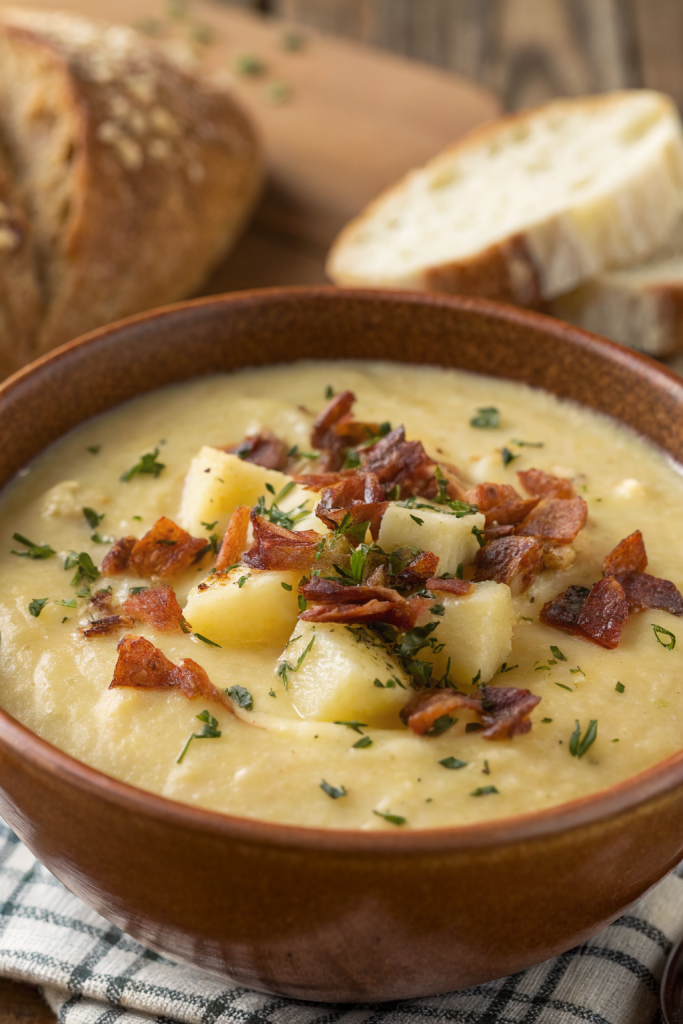
Outback Steakhouse Potato Soup Recipe tastes thick, creamy, cheesy, and loaded with tender potatoes and toppings, and it comes together in about 45–55 minutes, perfect for busy weeknights or lazy Sundays. This copycat soup works well for anyone who loves hearty restaurant-style comfort food but wants control over ingredients, budget, and seasoning. I still remember burning my tongue on the first batch I tested, because patience never stood a chance against that cheesy potato smell.
Why Make This Outback Steakhouse Potato Soup Recipe at Home
You control the salt, the richness, and the toppings, so the soup fits your taste and any dietary needs. The homemade version tastes just as rich and creamy as the restaurant bowl, but you skip the drive, the wait, and the bill.
You also get leftovers, which might be the best part. One pot feeds a family, or you can portion it into containers for easy lunches that taste like a treat instead of sad desk food.
This Outback Steakhouse Potato Soup Recipe tastes just like the restaurant version, only creamier, cheesier, and somehow even more comforting at home. ★★★★★
Ingredients You Need
Potatoes and veggies
-
3 pounds russet potatoes, peeled and cut into 1/2 inch cubes
- Russets give a fluffy, creamy texture that thickens the soup naturally.
- Yukon Golds also work and give a slightly buttery flavor and smoother texture.
-
1 medium yellow onion, finely diced
-
2 medium celery stalks, finely diced
-
2 medium carrots, finely diced (optional, not classic, but adds sweetness and color)
-
3 cloves garlic, minced
Fat and thickener
- 4 tablespoons unsalted butter
- 3 tablespoons neutral oil (canola, vegetable, or avocado oil)
- 1/2 cup all purpose flour
- This flour and fat combo thickens the soup, similar to a classic roux.
- Gluten free: use a 1:1 gluten free flour blend or 3 tablespoons cornstarch mixed with cold broth.
Liquids
-
4 cups low sodium chicken broth
- Use low sodium so you control the salt level.
- Vegetarian version: use vegetable broth instead.
-
2 cups whole milk
-
1 cup heavy cream
- You can swap the cream for half and half to lighten it slightly.
- Avoid fat free milk; it makes the soup thin and less creamy.
Seasonings
- 1 1/2 teaspoons kosher salt, plus more to taste
- 1 teaspoon black pepper
- 1 teaspoon garlic powder
- 1 teaspoon onion powder
- 1/2 teaspoon paprika
- 1/2 teaspoon dried parsley or 1 tablespoon fresh parsley, chopped
- Optional: 1/4 teaspoon cayenne pepper for a gentle kick
Cheese and toppings
-
2 cups shredded sharp cheddar cheese, divided
- Use block cheese and shred it yourself; bagged shreds often contain anti-caking starch that affects melting.
-
1/2 cup sour cream
-
1/4 cup green onions or chives, thinly sliced
-
Optional toppings: extra shredded cheddar, more sour cream, extra green onions, crushed crackers, or crunchy croutons
Pantry shortcuts and notes
- Use pre-chopped mirepoix (onion, celery, carrot mix) from the produce section to save time.
- Use jarred minced garlic if you feel tired or rushed; use 1 to 1 1/2 teaspoons.
- Use boxed broth and shelf stable milk; the flavor still turns out rich once the potatoes and cheese join the party.
Equipment list
- Large heavy bottomed pot or Dutch oven (5 to 6 quart)
- Sharp chef’s knife and cutting board
- Ladle
- Wooden spoon or silicone spatula
- Measuring cups and spoons
- Potato masher or immersion blender (for texture control)
- Cheese grater
Tips & Mistakes
- Cut potatoes into even cubes so they cook at the same rate and stay tender, not mushy.
- Use low to medium heat after adding dairy so the milk and cream stay smooth and do not curdle.
- Stir often once the soup thickens so it does not scorch on the bottom of the pot.
- Shred cheddar from a block so it melts creamy instead of clumpy.
- Season in layers: add some salt early, then taste again after the cheese and sour cream go in.
- Do not boil hard after adding cheese; keep the soup hot but just under a simmer so the cheese stays silky.
- Add sour cream at the end off the heat so it blends in smoothly and does not separate.
- Adjust thickness with extra broth or milk if the soup gets thicker than you like.
- Do not overblend; keep some potato chunks so the soup feels hearty and not like baby food.
- Cool leftovers in shallow containers before chilling so the texture stays nice and safe.
How to Make Outback Steakhouse Potato Soup Recipe
Step 1: Prep the ingredients
Peel the potatoes and cut them into 1/2 inch cubes. Dice the onion, celery, and carrots, and mince the garlic. Shred the cheddar cheese and slice the green onions or chives.
Step 2: Sauté the aromatics
Heat the butter and oil in a large pot over medium heat. Add onion, celery, and carrots, then cook 5 to 7 minutes until the veggies soften and the onion turns translucent. Add garlic and cook 30 seconds until fragrant, while you stir to prevent browning.
Step 3: Build the roux
Sprinkle the flour over the veggies and stir until the flour coats everything and no dry spots remain. Cook this mixture 2 to 3 minutes, stirring often, so the flour loses its raw taste and smells slightly nutty. Keep the heat at medium so the flour does not burn.
Step 4: Add liquids and potatoes
Slowly pour in the chicken broth while you whisk or stir constantly to avoid lumps. Add the milk and cream, then stir again until the mixture looks smooth. Add the cubed potatoes, salt, black pepper, garlic powder, onion powder, paprika, and parsley.
Step 5: Simmer until potatoes turn tender
Bring the soup just to a gentle simmer, then lower the heat to medium low. Cover the pot partially and cook 20 to 25 minutes, stirring every few minutes. Check a potato cube with a fork; it should feel tender and break easily.
Step 6: Adjust the texture
Use a potato masher to mash some of the potatoes directly in the pot, about 10 to 15 quick presses. This thickens the soup while you keep plenty of chunks. If you prefer a smoother texture, use an immersion blender and pulse a few times, but stop before the soup turns completely smooth.
Step 7: Add cheese and sour cream
Lower the heat to low so the soup stays hot but does not bubble hard. Stir in 1 1/2 cups of the shredded cheddar until it melts and the soup turns velvety. Turn off the heat, then stir in the sour cream until it blends in fully.
Step 8: Taste and adjust
Taste the soup and add more salt or pepper if needed. If the soup feels too thick, stir in a splash of broth or milk until it reaches your favorite consistency. If you want more heat, add a pinch of cayenne and stir again.
Step 9: Serve with toppings
Ladle the soup into bowls. Top with the remaining shredded cheddar, green onions or chives, and any extra toppings you like. Serve hot and enjoy the copycat Outback Steakhouse Potato Soup Recipe while it still steams.
Variations I've Tried
I swap in vegetable broth and use extra sharp cheddar plus a little smoked paprika for a vegetarian version with big flavor. I also tried half Yukon Gold and half russet potatoes, which gave a slightly silkier texture and a natural buttery taste. Sometimes I stir in a handful of steamed broccoli florets at the end, which turns the soup into a loaded potato and broccoli bowl that feels like a full meal.
I also enjoy a lighter version with half and half instead of cream and a bit less cheese, then I bulk it up with extra veggies like diced carrots and peas. On cold nights, I add a pinch of chipotle powder for a smoky kick that plays nicely with the cheddar and potatoes. You can also top each bowl with crunchy croutons or crushed crackers for texture.
How to Serve Outback Steakhouse Potato Soup Recipe
Serve this Outback Steakhouse Potato Soup Recipe in warm bowls and pile on toppings like shredded cheddar, sour cream, and plenty of green onions or chives. Add a side of crusty bread, garlic toast, or soft dinner rolls to scoop up every last bit. A simple green salad or steamed veggies like broccoli or green beans balances the richness and adds freshness.
This soup also works well as a starter before grilled chicken, steak, or roasted vegetables. If you host a casual gathering, set up a topping bar with cheese, sour cream, green onions, and crunchy add ons so everyone customizes their own bowl.
How to store
- Cool the soup in shallow containers, then store in the fridge up to 3 to 4 days.
- Freeze in airtight containers or freezer bags up to 2 months; leave a little space at the top for expansion.
- Reheat gently on the stove over low to medium heat, stirring often, and add a splash of milk or broth if it thickens too much.
- You can also reheat individual portions in the microwave at 50 to 70 percent power, stirring every 45 to 60 seconds until hot.
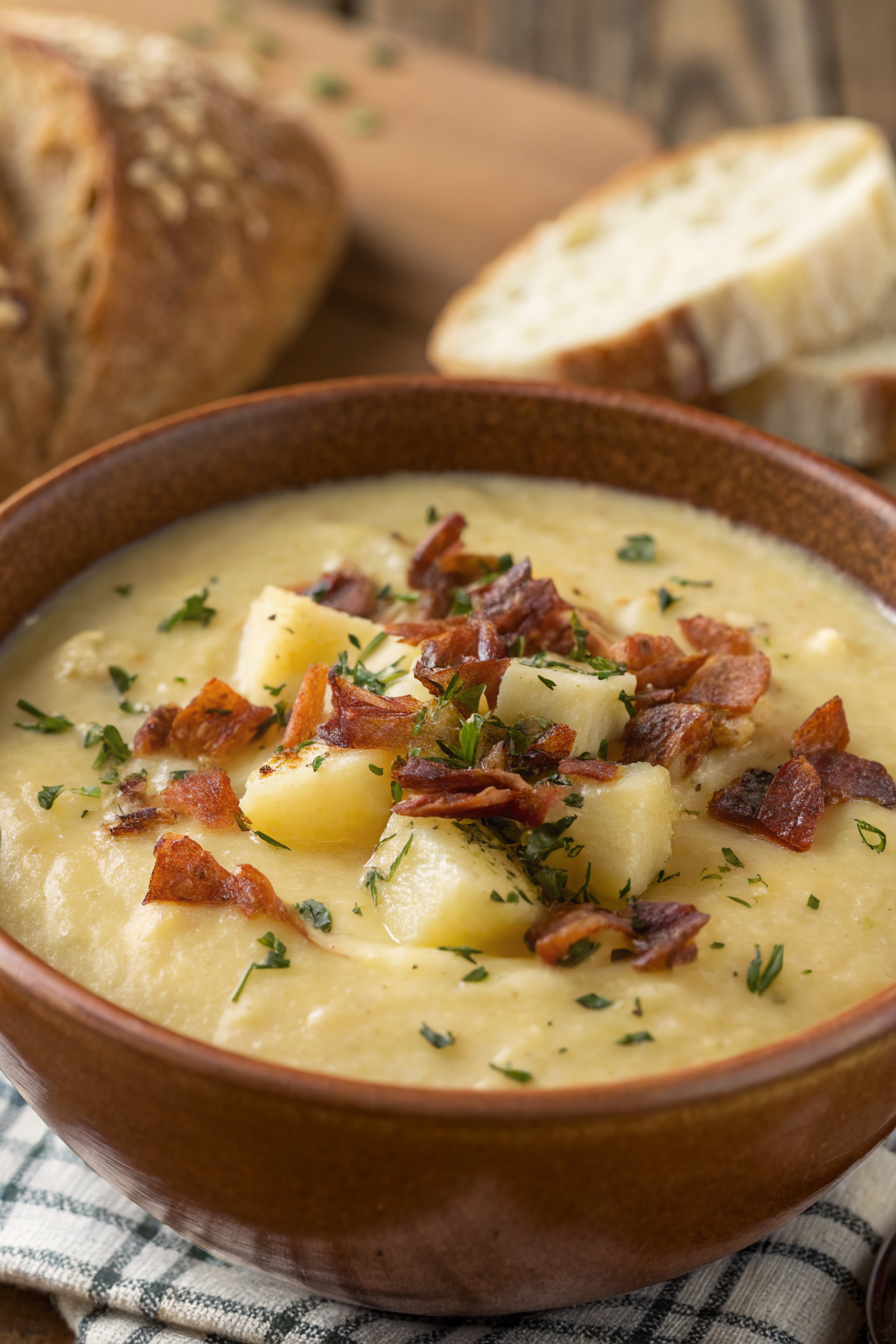
Outback Steakhouse Potato Soup Recipe
Ingredients
Method
- In a large pot or Dutch oven, cook the chopped bacon over medium heat until crisp. Remove the bacon with a slotted spoon and set aside, leaving about 2 tablespoons of bacon drippings in the pot.
- Add the butter to the pot with the bacon drippings. Once melted, stir in the chopped onion and cook for 4–5 minutes until softened and translucent. Add the minced garlic and cook for 30 seconds more until fragrant.
- Sprinkle the flour over the onion mixture and whisk continuously for 1–2 minutes to form a roux, cooking off the raw flour taste.
- Gradually whisk in the chicken broth, followed by the milk and heavy cream, whisking constantly to avoid lumps.
- Add the diced potatoes, salt, black pepper, paprika, and dried thyme. Bring to a gentle boil, then reduce heat to medium-low, cover, and simmer for 15–20 minutes, stirring occasionally, until the potatoes are very tender.
- Using a potato masher or the back of a spoon, lightly mash some of the potatoes in the pot to thicken the soup, leaving plenty of chunks for texture.
- Stir in the shredded cheddar cheese until melted and smooth, then add the sour cream and sliced green onions. Adjust seasoning with additional salt and pepper if needed.
- Ladle the soup into bowls and top with the reserved crispy bacon, extra cheddar cheese, and more green onions. Serve hot.
Notes
Approximate per serving (1/6 of recipe): 520 calories; fat 34 g; saturated fat 18 g; carbohydrates 37 g; fiber 3 g; sugars 7 g; protein 16 g; sodium 980 mg. Values are estimates and will vary based on ingredient brands, exact measurements, and portion size.