
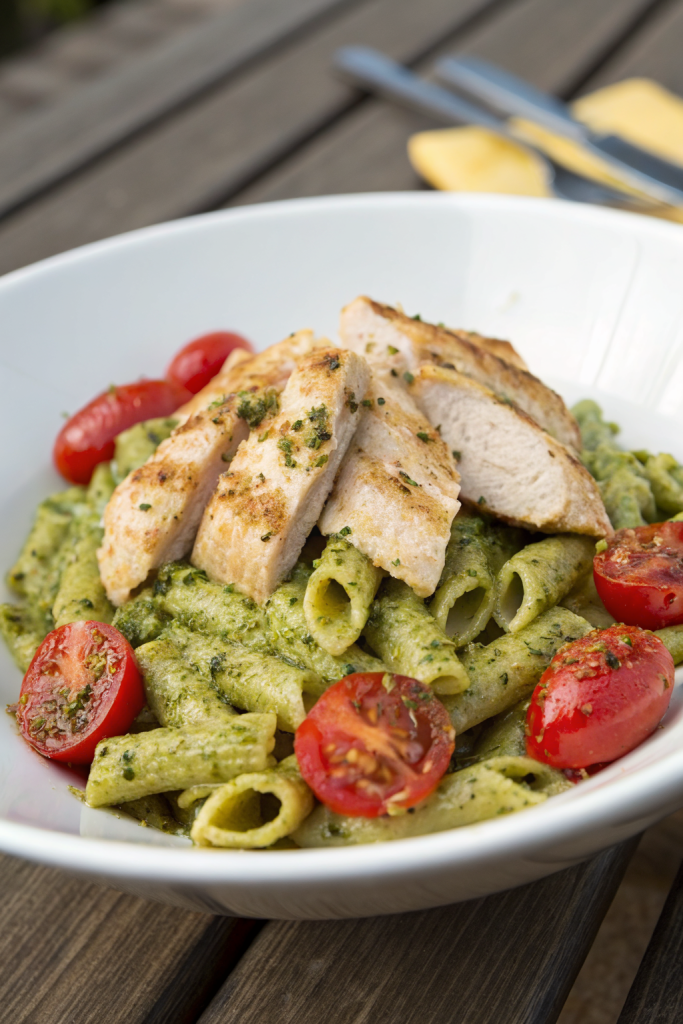
Pesto Chicken Pasta Recipe tastes bright, garlicky, and cheesy with juicy bites of chicken and twirls of saucy pasta that feel like weeknight comfort food with a summer vibe. It works perfectly for busy home cooks who want a 30-minute dinner that still feels special enough for guests. I make this at least twice a month, usually when I forget to thaw anything and need to turn a jar of pesto and a pack of chicken into something that looks intentional.
Why Make This Pesto Chicken Pasta Recipe at Home
Homemade pesto chicken pasta gives you control over everything: salt, garlic level, creaminess, and how much basil flavor hits your taste buds. You avoid greasy takeout and get a fresher, brighter sauce that clings to the pasta instead of pooling at the bottom of the bowl.
You also use simple pantry ingredients and leftover chicken if you have it. The recipe scales easily, so you cook it for two or feed a crowd without extra stress.
My whole family asks for this pesto chicken pasta every week because it tastes fresh, creamy, and restaurant-level good in under 30 minutes. ★★★★★
Ingredients You Need
Pasta
- 12 ounces short pasta
- Good options: penne, rotini, fusilli, farfalle.
- Short shapes hold the pesto sauce and chicken pieces better than long noodles.
- Use whole wheat or chickpea pasta if you want more fiber and protein.
Chicken
- 1 to 1.25 pounds boneless skinless chicken breast or thighs, cut into bite-size pieces
- Thighs stay juicier and forgive slight overcooking.
- Use leftover grilled chicken or rotisserie chicken to save time.
- 1 teaspoon kosher salt
- ½ teaspoon black pepper
- ½ teaspoon garlic powder
- ½ teaspoon Italian seasoning or dried oregano
- 1 to 2 tablespoons olive oil for cooking
Pesto and sauce
- ½ to ¾ cup basil pesto
- Store-bought works great; I like refrigerated brands such as Rana or Kirkland for brighter flavor.
- Jarred shelf-stable pesto tastes stronger and saltier, so start with ½ cup and adjust.
- ½ cup pasta cooking water
- This starchy water helps the pesto cling to the pasta and chicken.
- ¼ to ½ cup heavy cream or half-and-half
- Cream softens the sharpness of the pesto and adds a silky texture.
- Use a splash of whole milk in a pinch, but the sauce will look thinner.
- ¼ cup freshly grated Parmesan, plus more for serving
- Freshly grated cheese melts smoother than the green can style.
- 1 tablespoon fresh lemon juice
- This brightens the sauce and balances the richness.
Veggie add-ins (optional but tasty)
- 1 cup cherry or grape tomatoes, halved
- 1 cup baby spinach or arugula
- ½ cup frozen peas, thawed under warm water
- 2 to 3 cloves garlic, minced, if you want extra garlicky flavor
Salt and pepper
- Extra kosher salt and black pepper to taste at the end
Equipment list
- Large pot for boiling pasta
- Large deep skillet or sauté pan
- Tongs or a pasta spoon
- Measuring cups and spoons
- Cutting board and sharp knife
- Colander
- Wooden spoon or spatula
Tips & Mistakes
- Salt the pasta water generously so the pasta and sauce taste seasoned from the inside out.
- Keep some pasta water before you drain, since it turns thick pesto into a silky sauce.
- Cut chicken into even pieces so everything cooks at the same speed.
- Brown the chicken in a single layer and avoid constant stirring so you get nice color and flavor.
- Do not overcook the chicken; pull it when the center turns opaque and juices run clear.
- Add pesto off direct high heat so the basil stays bright and the cheese in the pesto does not turn oily.
- Start with less pesto and cream, then add more to taste so you avoid a heavy or greasy sauce.
- Toss pasta with the sauce quickly while everything stays hot so the pesto coats every piece.
- Taste before adding extra salt, since pesto and Parmesan already bring plenty of salt.
- Stir in delicate greens like spinach at the end so they wilt gently and do not turn mushy.
How to Make Pesto Chicken Pasta Recipe
Step 1: Boil the pasta
Bring a large pot of water to a strong boil and salt it until it tastes pleasantly salty. Add the pasta and cook it until al dente, following the package time but checking a minute early. Scoop out at least 1 cup of pasta water, then drain the pasta and set it aside.
Step 2: Season the chicken
While the pasta cooks, pat the chicken pieces dry with paper towels. Toss the chicken in a bowl with salt, pepper, garlic powder, and Italian seasoning until every piece looks coated. Dry, seasoned chicken browns better and tastes more flavorful.
Step 3: Cook the chicken
Heat olive oil in a large skillet over medium high heat until it shimmers. Add the chicken in a single layer and let it cook without moving it for 2 to 3 minutes so it browns. Stir and continue to cook for another 3 to 5 minutes until the chicken cooks through and no pink remains in the center.
If you use garlic or cherry tomatoes, add them during the last 2 minutes of cooking. Stir and let the tomatoes soften slightly and the garlic turn fragrant. Turn the heat down to medium low once the chicken cooks through.
Step 4: Build the pesto sauce
Add the pesto to the skillet with the cooked chicken and stir to coat the pieces. Pour in ¼ cup of pasta water and ¼ cup of cream, then stir until the mixture looks like a loose, glossy sauce. Add the Parmesan and lemon juice and stir again until the cheese melts into the sauce.
Adjust the consistency with more pasta water or a splash more cream if the sauce looks too thick. Taste and adjust salt and pepper as needed. The sauce should taste bright, slightly tangy, and rich but not heavy.
Step 5: Combine pasta and sauce
Add the drained pasta straight into the skillet with the pesto chicken sauce. Toss everything together over low heat for 1 to 2 minutes until the pasta absorbs some sauce and everything looks evenly coated. If the pasta looks dry, add more pasta water a few tablespoons at a time until you see a light, glossy coating.
If you use spinach, arugula, or peas, stir them in now and cook just until the greens wilt and the peas warm through. Turn off the heat so the basil in the pesto stays vibrant. Taste one more time and adjust seasoning.
Step 6: Finish and serve
Sprinkle extra Parmesan over the top and add a pinch of black pepper. Squeeze a little more lemon juice if you like extra brightness. Serve the pesto chicken pasta hot, with more pesto on the table for anyone who wants an extra spoonful.
Variations I've Tried
I swap the chicken for shrimp and cook the shrimp quickly in the same skillet, which turns this into a pesto shrimp pasta that tastes fancy but still takes about 20 minutes. I also use leftover shredded rotisserie chicken and just warm it gently in the pesto sauce, which saves time on busy nights. When I want more veggies, I toss in roasted broccoli, zucchini, or asparagus.
Sometimes I skip the cream and use a splash of pasta water and extra olive oil for a lighter pesto chicken pasta. I also switch the pasta to whole wheat or chickpea versions when I want more protein and fiber. If you like a little heat, you can add a pinch of red pepper flakes with the garlic.
How to Serve Pesto Chicken Pasta Recipe
Serve pesto chicken pasta hot in shallow bowls so the sauce pools around the pasta instead of hiding at the bottom. Add a shower of freshly grated Parmesan and a squeeze of lemon on each serving. Pair it with a simple green salad, garlic bread, or steamed veggies like green beans or broccoli.
Kids often like this with a side of sliced cucumbers or carrot sticks, since the cool crunch balances the warm pasta. A glass of iced tea, sparkling water with lemon, or lemonade goes really well with the basil and garlic flavors.
How to store
- Fridge: Cool leftovers to room temperature within 1 hour, then store them in an airtight container in the fridge for up to 3 days.
- Freezer: Place cooled pesto chicken pasta in a freezer-safe container or bag, press out extra air, and freeze for up to 2 months. The texture softens slightly after thawing, but the flavor still tastes great.
- Reheating on stove: Reheat gently in a skillet over low to medium heat with a splash of water, broth, or milk, stirring often until hot and creamy again.
- Reheating in microwave: Add a spoonful of water or milk, cover loosely, and heat in short bursts, stirring between each burst until it warms through.
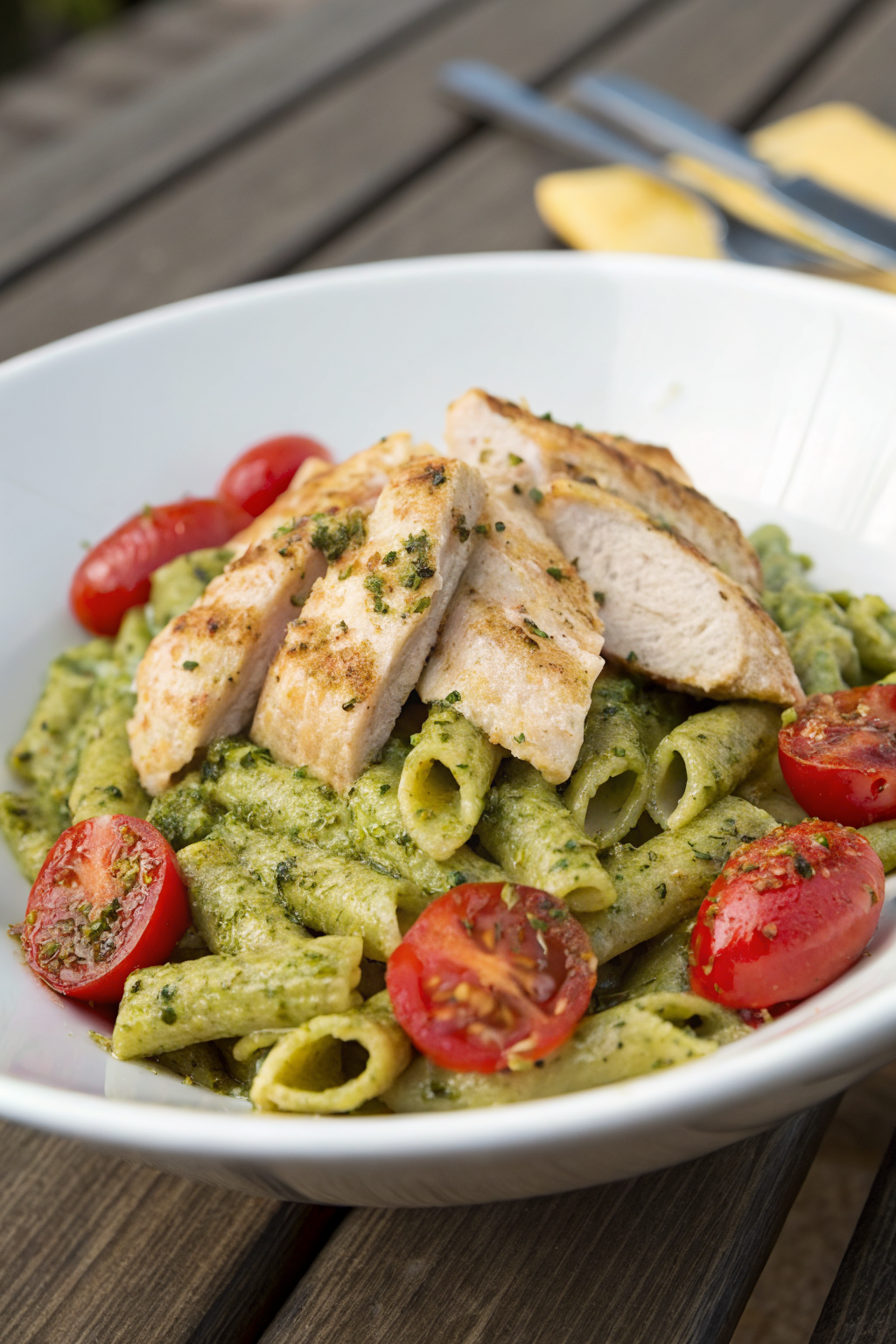
Pesto Chicken Pasta Recipe
Ingredients
Method
- Bring a large pot of water to a rolling boil and salt it generously so it tastes pleasantly salty. Add the pasta and cook until al dente according to package directions, checking a minute early. Before draining, scoop out at least 1 cup of the pasta cooking water, then drain the pasta and set aside.
- While the pasta cooks, pat the chicken pieces dry with paper towels. Place them in a bowl and season with 1 teaspoon kosher salt, 1/2 teaspoon black pepper, 1/2 teaspoon garlic powder, and 1/2 teaspoon Italian seasoning or dried oregano. Toss until all the pieces are evenly coated.
- Heat 1 to 2 tablespoons olive oil in a large deep skillet over medium-high heat until shimmering. Add the seasoned chicken in a single layer and let it cook undisturbed for 2 to 3 minutes to brown. Stir and continue cooking for another 3 to 5 minutes, until the chicken is cooked through and no pink remains in the centers.
- If using minced garlic or cherry tomatoes, add them to the skillet during the last 2 minutes of cooking the chicken. Stir and cook until the tomatoes begin to soften and the garlic is fragrant but not browned. Reduce the heat to medium-low once the chicken is cooked through.
- Add the pesto to the skillet with the chicken and stir to coat. Pour in about 1/4 cup of the reserved pasta water and 1/4 cup of cream, stirring until the mixture loosens into a glossy sauce. Add the 1/4 cup grated Parmesan and 1 tablespoon lemon juice and stir until the cheese melts smoothly into the sauce.
- Adjust the sauce as needed by adding more pasta water or a splash more cream until it reaches a silky, pourable consistency that lightly coats the chicken. Taste and season with additional salt and black pepper if needed; the sauce should taste bright, slightly tangy, and rich but not heavy.
- Add the drained pasta directly to the skillet with the pesto chicken sauce. Toss over low heat for 1 to 2 minutes until the pasta is evenly coated and absorbs some of the sauce. If the mixture looks dry, add more reserved pasta water a few tablespoons at a time until the pasta has a light, glossy coating.
- If using spinach, arugula, or peas, stir them into the skillet now. Cook just until the greens wilt and the peas are warmed through, then turn off the heat so the basil in the pesto stays vibrant. Taste again and adjust seasoning with more salt, pepper, or lemon juice if desired.
- Serve the pesto chicken pasta hot in shallow bowls. Top with extra grated Parmesan and a pinch of black pepper, and offer additional pesto and lemon wedges at the table for anyone who wants more brightness or basil flavor.
Notes
- Salt the pasta water generously so the pasta and sauce are well seasoned.
- Reserve some pasta water before draining; the starch helps turn the pesto into a silky sauce.
- Cut the chicken into even pieces so they cook at the same rate.
- Brown the chicken in a single layer and avoid constant stirring to develop good color and flavor.
- Do not overcook the chicken; remove it when the centers are opaque and juices run clear.
- Add pesto off direct high heat so the basil stays bright and the cheese in the pesto does not separate and turn oily.
- Start with the lower amounts of pesto and cream, then add more to taste to avoid a heavy or greasy sauce.
- Toss the pasta with the sauce while everything is hot so the pesto coats every piece.
- Taste before adding extra salt, since pesto and Parmesan are already salty.
- Stir delicate greens like spinach in at the end so they just wilt and do not become mushy. How to Store
- Fridge: Cool leftovers to room temperature within 1 hour, then store in an airtight container in the refrigerator for up to 3 days.
- Freezer: Transfer cooled pesto chicken pasta to a freezer-safe container or bag, press out excess air, and freeze for up to 2 months. The texture may soften slightly after thawing, but the flavor will still be good.
- Reheating on the stove: Reheat gently in a skillet over low to medium heat with a splash of water, broth, or milk, stirring often until hot and creamy again.
- Reheating in the microwave: Add a spoonful of water or milk, cover loosely, and heat in short bursts, stirring between each burst until warmed through. Nutrition Information
Approximate per serving (1/4 of recipe, made with 12 oz pasta, 1 lb chicken breast, 1/2 cup pesto, 1/4 cup heavy cream, and 1/4 cup Parmesan): 650–750 calories; fat 32–38 g; saturated fat 10–13 g; carbohydrates 55–65 g; fiber 3–5 g; sugars 3–5 g; protein 35–45 g; sodium 900–1200 mg. Values will vary based on exact ingredients, brands, and portion size.