
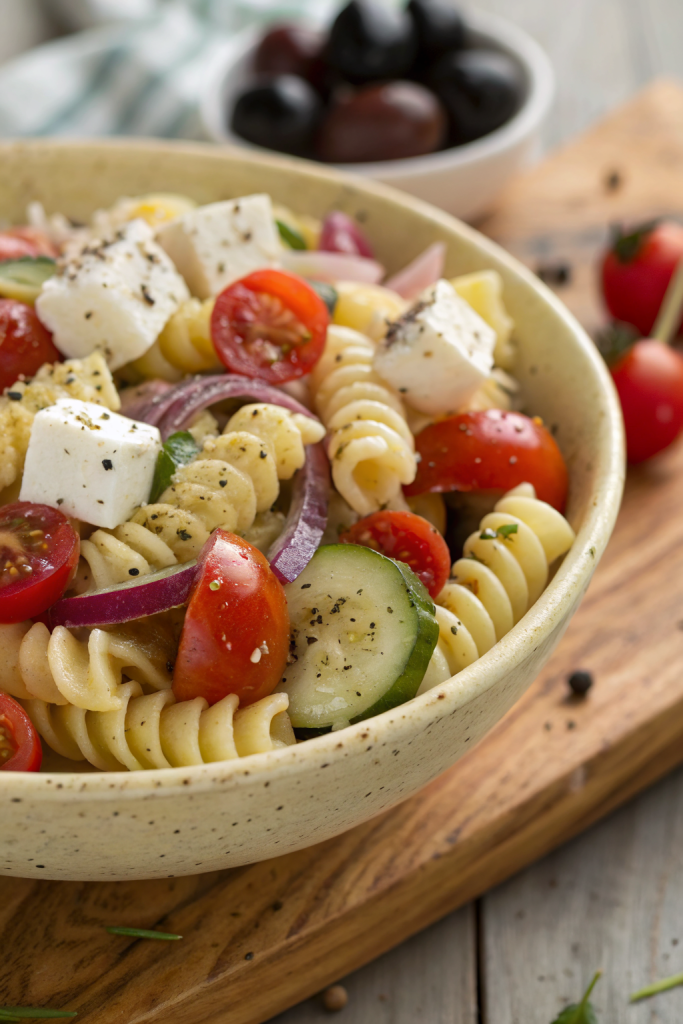
Pesto Pasta Salad tastes bright, herby, cheesy, and a little garlicky, with juicy pops of tomato and creamy mozzarella in every bite. It works perfectly for busy home cooks who want a make-ahead side or light main in about 30 minutes. I first made a version of this for a chaotic family potluck, and my bowl went empty before my aunt even finished her story about her cat.
Why Make This Pesto Pasta Salad at Home
Homemade pesto pasta salad tastes fresher, brighter, and more customizable than any store deli version. You control the basil, the garlic, the salt, and the cheese, so the flavor hits exactly how you like it.
You also save money and stretch pantry staples into a crowd-pleasing dish. This recipe travels well, holds up at room temperature for a bit, and works for picnics, potlucks, lunches, and easy weeknight dinners.
"This pesto pasta salad tastes like summer in a bowl and disappears at every party I bring it to." ★★★★★
Ingredients You Need
Here is what you need to make a big bowl of pesto pasta salad.
-
Pasta
- Short shapes work best: fusilli, rotini, farfalle, penne, or cavatappi.
- Choose regular wheat pasta or a good quality gluten free brand that holds its shape.
- Avoid very tiny shapes, since they soak up too much pesto and turn clumpy.
-
Pesto
- Use homemade basil pesto if you can: fresh basil, garlic, pine nuts or walnuts, Parmesan, olive oil, salt, and lemon.
- As a shortcut, use a good jarred pesto; I like refrigerated brands from the deli section more than shelf-stable jars.
- If your pesto tastes very salty or oily, thin it with a spoonful of pasta water and a squeeze of lemon juice.
-
Cheese
- Fresh mozzarella balls (ciliegine or bocconcini), halved, give creamy bites.
- You can also cube a mozzarella log or use mini pearls.
- Add extra Parmesan or Pecorino Romano for a sharper, nuttier flavor.
-
Vegetables and add-ins
- Cherry or grape tomatoes, halved, add sweetness and juiciness.
- Cucumber, chopped, adds crunch and freshness.
- Red onion or shallot, very thinly sliced, adds a mild bite.
- Kalamata or black olives, sliced, add briny flavor.
- Baby spinach or arugula, roughly chopped, adds greens and peppery notes.
- Optional: roasted red peppers, artichoke hearts, sun dried tomatoes for extra flavor.
-
Acid and seasoning
- Fresh lemon juice brightens the pesto and balances the richness.
- Salt and black pepper to taste.
- A pinch of red pepper flakes if you like a little heat.
-
Oil
- A splash of extra virgin olive oil helps loosen the pesto and coats the pasta.
- If your pesto already looks very oily, add less and adjust at the end.
Pantry shortcuts
- Use jarred pesto, marinated mozzarella balls, and canned olives to cut prep time.
- Use prewashed baby spinach or arugula so you only need a quick chop.
- Use store bought roasted red peppers from a jar instead of roasting your own.
Equipment list
- Large pot for boiling pasta
- Colander
- Large mixing bowl
- Cutting board and sharp knife
- Small bowl and whisk or spoon for thinning pesto
- Measuring cups and spoons
- Airtight containers for storage
Tips & Mistakes
- Boil the pasta in well salted water so the noodles taste seasoned from the inside.
- Cook the pasta just to al dente; soft pasta turns mushy in salad.
- Rinse the pasta quickly under cool water so it stops cooking and does not steam itself into a sticky clump.
- Toss the pasta with a little olive oil while it cools so the pieces do not stick together.
- Add half the pesto while the pasta is slightly warm so it absorbs flavor, then add the rest after it cools to keep it vibrant.
- Taste your pesto before mixing; adjust salt and lemon so the salad does not taste flat or too salty.
- Cut vegetables into bite sized pieces so every forkful feels balanced.
- Avoid watery cucumbers and tomatoes; seed them if very juicy so the salad does not turn soupy.
- Chill the salad at least 30 minutes before serving so flavors mingle.
- Right before serving, taste and re-season, since cold pasta dulls flavors.
- Do not overload the bowl with too many mix-ins; keep a good pasta to add-in ratio so pesto still shines.
- If you use gluten free pasta, cook it slightly under al dente so it holds up after chilling.
- Stir gently when you mix in mozzarella and tomatoes so you do not smash them.
- If the salad looks dry after chilling, loosen it with a spoonful of olive oil or lemony water instead of more pesto.
- Keep dairy safe; chill leftovers quickly and do not leave the salad at room temperature for hours.
How to Make Pesto Pasta Salad
Step 1: Cook the pasta
Bring a large pot of water to a strong boil and salt it generously. Add your pasta and cook until it reaches al dente according to package directions, tasting a piece near the end. Scoop out about 1 cup of pasta water, then drain the pasta in a colander.
Rinse the pasta briefly under cool water while you toss it with your hand or a spoon. Shake off excess water and transfer the pasta to a large mixing bowl. Drizzle with a tablespoon of olive oil and toss so the pieces separate and cool.
Step 2: Prep the vegetables and add-ins
While the pasta cooks and cools, slice the cherry tomatoes in half. Chop the cucumber into small cubes and thinly slice the red onion or shallot. Roughly chop any spinach, arugula, roasted red peppers, or artichoke hearts.
Slice or halve the mozzarella balls. Drain olives and slice them. Keep everything in small, bite sized pieces so the salad feels easy to eat.
Step 3: Adjust the pesto
Add your pesto to a small bowl. Stir in a squeeze of lemon juice and a spoonful of the reserved warm pasta water. Mix until the pesto loosens into a thick but pourable sauce.
Taste the pesto and adjust with more lemon, salt, or pepper as needed. If it tastes very strong, plan to use a little less at first and add more at the end.
Step 4: Toss the warm pasta with pesto
Add about half of the pesto to the slightly warm pasta in the mixing bowl. Toss until the pasta looks evenly coated. The warm pasta absorbs flavor and helps the pesto cling.
Let the pasta sit for about 5 to 10 minutes so it cools closer to room temperature. Stir it once or twice so it cools evenly and does not clump.
Step 5: Add vegetables, cheese, and more pesto
Add the tomatoes, cucumber, onion, olives, greens, and mozzarella to the pasta. Spoon on more pesto, a little at a time, and toss gently. Stop when the pasta and add-ins look nicely coated but not greasy.
Sprinkle in grated Parmesan or Pecorino and toss again. Taste and adjust with salt, pepper, red pepper flakes, and more lemon juice if you want extra brightness.
Step 6: Chill and finish
Cover the bowl and chill the pesto pasta salad for at least 30 minutes. This rest time helps the flavors blend and the pasta soak up the dressing. Right before serving, give it a good stir.
If it looks a bit dry from the chill, drizzle on a little olive oil or a spoonful of water mixed with lemon juice. Toss again and taste one last time, then garnish with extra basil or cheese if you like.
Variations I've Tried
-
Chicken pesto pasta salad: Add shredded rotisserie chicken or grilled chicken strips for extra protein. Toss the chicken with a spoonful of pesto first so it carries flavor into the salad. This version works great for meal prep lunches.
-
Mediterranean pesto pasta salad: Add artichoke hearts, roasted red peppers, cucumber, olives, and feta instead of mozzarella. Use a mix of basil pesto and a splash of red wine vinegar. This combo tastes bold and tangy.
-
Veggie loaded pesto pasta salad: Pack in broccoli florets, peas, spinach, and cherry tomatoes. Blanch the broccoli and peas in the pasta water during the last couple of minutes of cooking. This version feels hearty but still light.
-
Caprese style pesto pasta salad: Keep it simple with pasta, pesto, cherry tomatoes, and fresh mozzarella. Add lots of fresh basil and a drizzle of thick balsamic glaze on top. This one always disappears fast at summer gatherings.
-
Dairy free pesto pasta salad: Use a dairy free pesto or blend your own with basil, nuts, garlic, lemon, and nutritional yeast instead of cheese. Skip the mozzarella and add creamy avocado right before serving. The avocado gives that rich, satisfying texture.
How to Serve Pesto Pasta Salad
Serve pesto pasta salad slightly chilled or at cool room temperature so the flavors stay bright and the cheese stays tender. Pair it with grilled chicken, roasted vegetables, or simple baked fish for a balanced meal. It also works well as a main dish with a big green salad and some crusty bread or garlic toast.
Pack it into lunch boxes with carrot sticks, fruit, and hummus for an easy midday meal. At picnics or potlucks, set it out with other salads and veggie trays, and keep a small spoon nearby so people can scoop easily.
How to store
- Fridge: Store pesto pasta salad in an airtight container in the refrigerator for 3 to 4 days.
- Moisture control: If you plan to keep it several days, store extra fresh basil and any avocado separately and add them right before serving.
- Freezer: Freeze plain cooked pasta with pesto only (no fresh veggies or cheese) for up to 2 months, then thaw in the fridge and add fresh mix-ins later.
- Reheating: Eat pesto pasta salad chilled or at room temperature; if you prefer it slightly warmer, let it sit on the counter for 15 to 20 minutes and stir in a spoonful of warm water or olive oil to loosen the sauce.
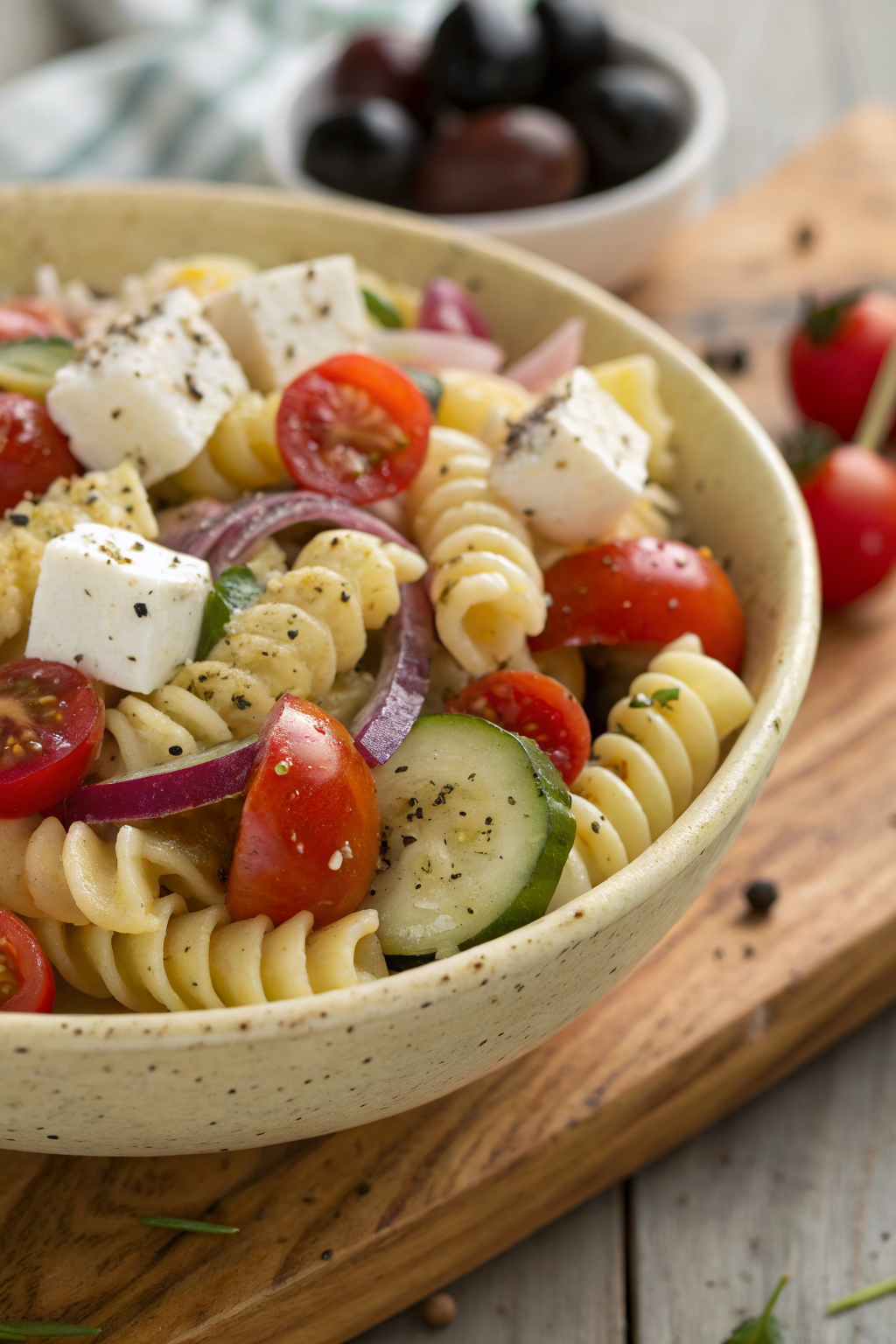
Pesto Pasta Salad
Ingredients
Method
- Cook the pasta in a large pot of salted boiling water according to package directions until al dente. Drain, rinse under cool water, and set aside to cool completely.
- While the pasta cools, prepare the pesto. In a food processor, combine the basil, garlic, nuts, 1/4 cup grated Parmesan (for the pesto), lemon juice, salt, and pepper. Pulse until finely chopped.
- With the processor running, slowly stream in the olive oil until the pesto is smooth and emulsified. Taste and adjust seasoning with additional salt, pepper, or lemon juice if needed.
- In a large mixing bowl, add the cooled pasta, cherry tomatoes, cucumber, red bell pepper, red onion, and olives.
- Spoon the pesto over the pasta mixture and toss gently until everything is evenly coated.
- Add 1/3 cup grated Parmesan cheese and toss again. Taste and adjust salt and pepper as desired.
- Chill the salad for at least 20–30 minutes before serving to allow the flavors to meld. Toss once more just before serving.
Notes
Approximate per serving (1 of 4): 430 calories; fat 24 g; saturated fat 5 g; carbohydrates 42 g; fiber 3 g; sugars 4 g; protein 13 g; sodium 370 mg. Values are estimates and will vary based on specific ingredients, brands, and portion sizes.