
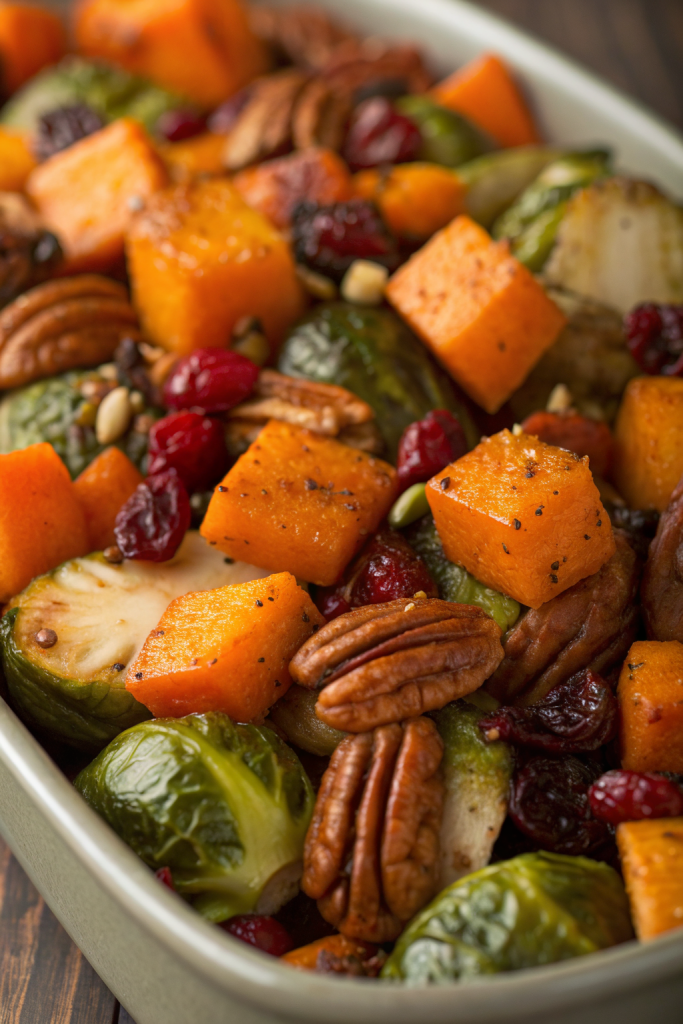
Roasted Butternut Squash and Brussels Sprouts Salad hits that sweet-savory, cozy-but-fresh spot that tastes like autumn in a bowl. It works perfectly for weeknights or holidays, and you can get it on the table in about 45 minutes. I first made a version of this on a Tuesday when my fridge looked sad, and it still became one of my most requested recipes.
Why Choose This Roasted Butternut Squash and Brussels Sprouts Salad
This salad gives you caramelized butternut squash, crispy roasted Brussels sprouts, crunchy nuts, and a bright, tangy dressing. It feels hearty enough for a main dish but still tastes light and fresh, so you do not need a nap afterward.
You can serve it warm, room temperature, or chilled, which makes it perfect for meal prep and holiday spreads. It also uses simple pantry ingredients, so you do not need specialty items or fancy equipment.
“This Roasted Butternut Squash and Brussels Sprouts Salad tastes like a cozy fall side that accidentally turned gourmet, and everyone at my table asked for seconds. ★★★★★”
Ingredients You’ll Need
Vegetables
- 1 medium butternut squash, peeled, seeded, and cut into ¾-inch cubes
- You can buy pre-cut butternut squash from the produce section to save time.
- 1 pound Brussels sprouts, trimmed and halved
- Choose smaller sprouts for quicker roasting and better browning.
Salad add-ins
- ½ small red onion, thinly sliced
- ½ cup dried cranberries or dried cherries
- Use reduced sugar versions if you prefer a less sweet salad.
- ½ cup crumbled feta or goat cheese
- Use dairy-free feta if you want a vegan salad.
- ⅓ cup toasted pecans, walnuts, or sliced almonds
- Use pumpkin seeds or sunflower seeds for a nut-free version.
Simple maple Dijon dressing
- 3 tablespoons extra virgin olive oil
- 1 tablespoon pure maple syrup
- Use real maple syrup, not pancake syrup, for best flavor.
- 1 tablespoon Dijon mustard
- I like Maille or Whole Foods 365 Dijon for a smooth, tangy kick.
- 2 tablespoons apple cider vinegar
- 1 teaspoon fresh lemon juice
- 1 small garlic clove, finely minced or grated
- ½ teaspoon fine sea salt, plus more to taste
- ¼ teaspoon freshly ground black pepper
For roasting
- 2 to 3 tablespoons olive oil
- ½ teaspoon garlic powder
- ½ teaspoon smoked paprika or sweet paprika
- ½ teaspoon kosher salt
- ¼ teaspoon black pepper
Optional extras
- 1 to 2 cups baby arugula or baby spinach
- 1 tablespoon chopped fresh parsley or thyme
- Extra squeeze of lemon juice right before serving
Equipment list
- Large rimmed baking sheet or two medium baking sheets
- Parchment paper or a silicone baking mat
- Large mixing bowl
- Small jar with lid or small bowl and whisk for the dressing
- Sharp chef’s knife and sturdy cutting board
- Measuring cups and spoons
- Spatula or tongs
Tips & Tricks
- Cut the butternut squash and Brussels sprouts into similar sizes so they roast evenly and brown nicely.
- Dry the vegetables very well after rinsing, since moisture prevents caramelization and leads to steaming.
- Do not crowd the baking sheet; use two sheets if needed so the vegetables roast instead of turning soggy.
- Toss the vegetables with oil and seasoning right on the baking sheet to save a dish and coat everything evenly.
- Roast at a high temperature, around 400 to 425°F, to get crisp edges and sweet, caramelized flavor.
- Add the nuts near the end of roasting or toast them separately so they do not burn.
- Whisk or shake the dressing until it looks thick and glossy, which helps it cling to the warm vegetables.
- Dress the salad while the vegetables still feel warm so they soak up more flavor.
- Taste and adjust salt, acid, and sweetness at the end; a tiny extra pinch of salt or splash of vinegar can balance everything.
- If you plan to store leftovers, keep the cheese and some of the dressing on the side and add them right before serving.
How to Make Roasted Butternut Squash and Brussels Sprouts Salad
Step 1: Prep the vegetables
Preheat your oven to 400°F and line a large baking sheet with parchment paper. Peel the butternut squash, scoop out the seeds, and cut it into ¾-inch cubes. Trim the ends off the Brussels sprouts and cut them in half through the core, or quarter them if they look large.
Pat the squash and Brussels sprouts dry with a clean kitchen towel or paper towels. Add them to the baking sheet, drizzle with 2 to 3 tablespoons olive oil, and sprinkle with garlic powder, smoked paprika, salt, and pepper. Toss everything with your hands or a spatula until each piece looks lightly coated.
Step 2: Roast until caramelized
Spread the vegetables out in a single layer with some space between pieces. Place the baking sheet in the oven and roast for 20 minutes. Stir or flip the vegetables, then roast for another 10 to 15 minutes until the squash turns tender and golden and the Brussels sprouts develop browned, crispy edges.
If you want extra crispy bits, switch the oven to broil for 1 to 2 minutes at the end and watch closely. Pull the baking sheet out and let the vegetables cool for about 5 to 10 minutes so they do not wilt any greens instantly.
Step 3: Toast the nuts
While the vegetables roast, place the nuts in a dry skillet over medium heat. Stir frequently for 3 to 5 minutes until they smell fragrant and look lightly browned. Transfer them to a plate to cool so they do not keep cooking in the hot pan.
You can also toast the nuts on a small baking sheet in the oven for about 5 minutes while the vegetables roast. Just keep an eye on them so they do not burn.
Step 4: Mix the maple Dijon dressing
Add olive oil, maple syrup, Dijon mustard, apple cider vinegar, lemon juice, garlic, salt, and pepper to a small jar. Screw on the lid and shake until the dressing looks smooth and slightly thick. Taste and adjust with a pinch more salt, a drizzle more maple syrup, or a splash more vinegar to suit your preference.
If you do not have a jar, whisk everything in a small bowl until it emulsifies. Set the dressing aside while you assemble the salad.
Step 5: Assemble the salad base
Place the slightly cooled roasted butternut squash and Brussels sprouts in a large mixing bowl. Add the sliced red onion, dried cranberries, and half of the toasted nuts. If you use arugula or spinach, add it now.
Drizzle about two thirds of the dressing over the warm vegetables and toss gently. The warmth helps the vegetables soak in the dressing and boosts the flavor.
Step 6: Finish and serve
Transfer the salad to a serving platter or large shallow bowl. Sprinkle the remaining nuts and the crumbled feta or goat cheese over the top. Add chopped fresh herbs and a small extra drizzle of dressing if the salad looks dry.
Taste one more time and adjust seasoning with salt, pepper, or a squeeze of lemon juice. Serve the Roasted Butternut Squash and Brussels Sprouts Salad warm or at room temperature.
What to Serve with it?
This Roasted Butternut Squash and Brussels Sprouts Salad pairs nicely with simple grilled or baked chicken, roasted turkey breast, or seared salmon. You can also serve it with baked tofu or crispy chickpeas for a vegetarian protein boost. Add warm crusty bread, garlic breadsticks, or a side of quinoa or brown rice to turn it into a full meal. It also fits beautifully on a holiday table next to roasted vegetables, mashed potatoes, and a big green salad.
Storage Options
- Store leftover salad in an airtight container in the fridge for up to 3 days; keep the cheese and some dressing separate if possible.
- If you want to freeze components, freeze the roasted butternut squash and Brussels sprouts in a freezer bag for up to 2 months, then thaw in the fridge before reheating.
- Reheat the vegetables on a baking sheet in a 375°F oven for 8 to 10 minutes until warmed and slightly crisp again, then add fresh greens, cheese, nuts, and dressing.
- You can also eat leftovers cold straight from the fridge and add a fresh squeeze of lemon juice or a spoonful of extra dressing to wake up the flavors.
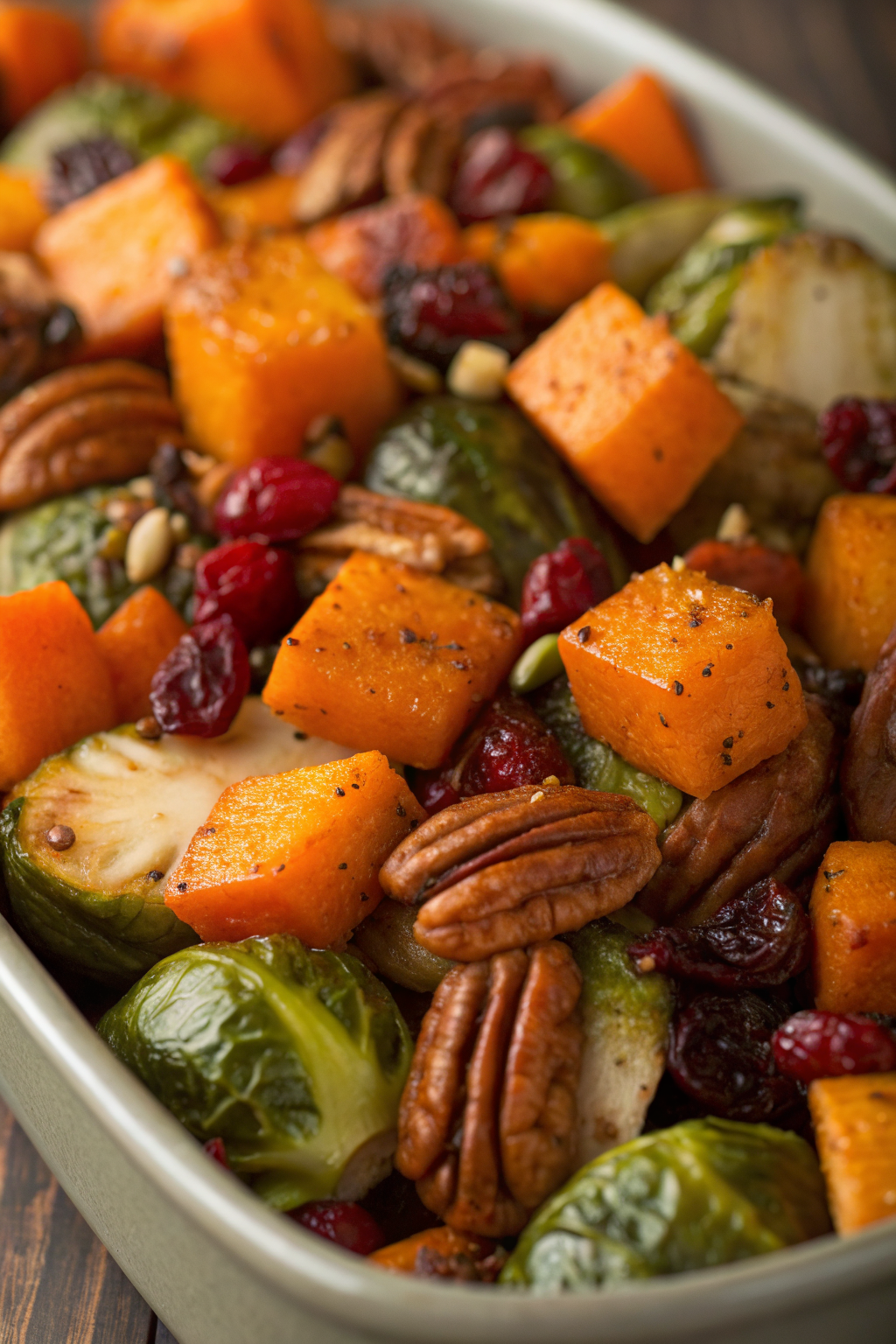
Roasted Butternut Squash and Brussels Sprouts Salad
Ingredients
Method
- Preheat the oven to 400°F (200°C) and line a large rimmed baking sheet with parchment paper.
- Peel the butternut squash, remove the seeds, and cut into 3/4-inch cubes. Trim the ends from the Brussels sprouts and cut them in half through the core, or quarter if they are large.
- Pat the squash and Brussels sprouts dry with a clean towel, then spread them on the prepared baking sheet.
- Drizzle with 2–3 tablespoons olive oil and sprinkle with garlic powder, smoked or sweet paprika, kosher salt, and black pepper. Toss directly on the baking sheet until everything is evenly coated, then spread into a single, uncrowded layer.
- Roast for 20 minutes, then stir or flip the vegetables. Continue roasting for 10–15 minutes more, until the squash is tender and golden and the Brussels sprouts have browned, crispy edges. For extra crispiness, broil for 1–2 minutes at the end, watching closely. Let cool for 5–10 minutes.
- While the vegetables roast, place the nuts in a dry skillet over medium heat.
- Cook, stirring frequently, for 3–5 minutes until fragrant and lightly browned. Transfer to a plate to cool so they do not continue to cook in the hot pan.
- In a small jar, combine the extra virgin olive oil, maple syrup, Dijon mustard, apple cider vinegar, lemon juice, minced garlic, fine sea salt, and black pepper.
- Secure the lid and shake until the dressing is smooth and slightly thickened. Taste and adjust seasoning as needed.
- Place the slightly cooled roasted butternut squash and Brussels sprouts in a large mixing bowl.
- Add the sliced red onion, dried cranberries or cherries, and half of the toasted nuts. If using arugula or spinach, add it now.
- Drizzle about two-thirds of the maple Dijon dressing over the warm vegetables and toss gently to coat.
- Transfer the salad to a serving platter or large shallow bowl.
- Top with the remaining toasted nuts and the crumbled feta or goat cheese. Sprinkle with chopped fresh herbs, if using, and add a little more dressing if the salad looks dry.
- Taste and adjust with extra salt, pepper, or a squeeze of lemon juice. Serve warm or at room temperature.
Notes
Approximate per serving (1/6 of recipe): 260–300 calories; fat 14–18 g; saturated fat 3–5 g; carbohydrates 30–36 g; fiber 5–7 g; sugars 12–18 g; protein 6–8 g; sodium 350–550 mg. Values will vary based on exact amounts, cheese choice, dried fruit, nuts, and any optional greens or extras used.