
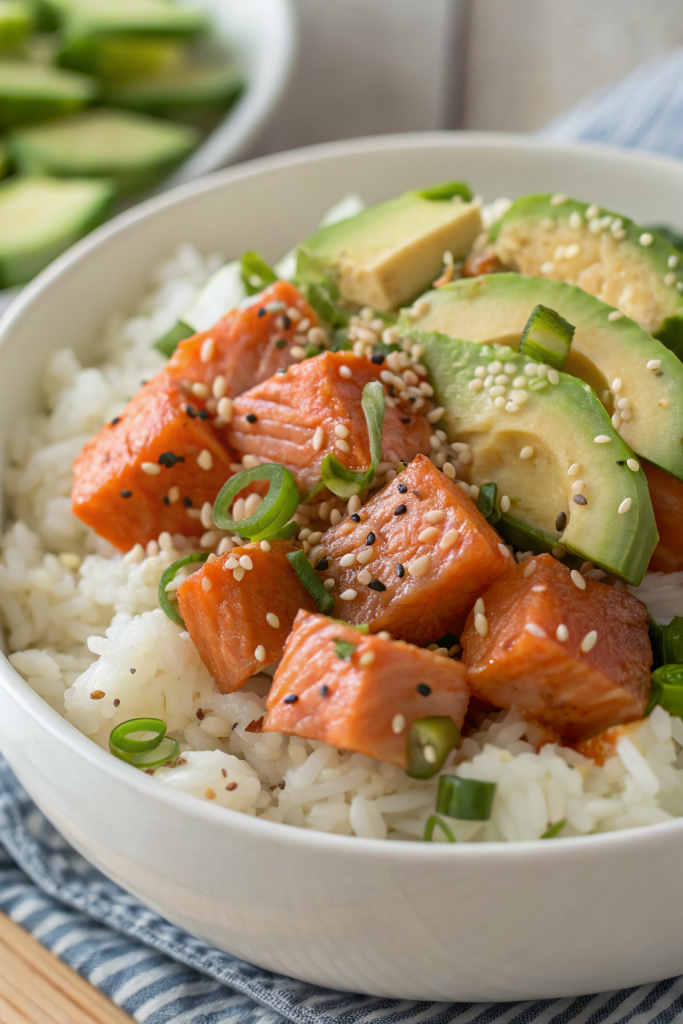
Salmon Rice Bowls Recipe hits that perfect combo of tender, flaky salmon, fluffy rice, crunchy veggies, and a punchy sauce that tastes like your favorite takeout but fresher. It suits busy weeknights, meal prep lovers, and anyone who wants a balanced, flavorful bowl in about 30 minutes. I tested versions of this so many times that my family started calling it “the bowl phase,” and honestly, I regret nothing.
Why Salmon Rice Bowls Recipe Is Worth It
You get a full meal in one bowl: protein, carbs, veggies, and healthy fats that taste like comfort food, not a chore. The salmon cooks quickly, the rice feels cozy, and the sauce ties everything together with salty, tangy, slightly sweet flavor.
You can customize each bowl so picky eaters stay happy and adventurous eaters stay interested. It works with leftover rice, frozen salmon, and whatever crunchy veggies you find in the fridge, so you avoid food waste and save money.
“This Salmon Rice Bowls Recipe tastes like a fancy restaurant lunch that I somehow pulled off in my sweatpants at home.” ★★★★★
Ingredients You Need
Salmon
- 1 to 1.5 pounds salmon fillet, skin on or off, cut into 1 to 1.5 inch cubes
- Use fresh or frozen; thaw frozen salmon overnight in the fridge.
- Wild salmon tastes richer and a bit firmer, while farmed salmon tastes milder and more buttery.
- 1 tablespoon neutral oil (avocado, canola, or grapeseed)
- 1 teaspoon fine sea salt
- 1 teaspoon garlic powder
- 1 teaspoon onion powder
- 1 teaspoon smoked paprika or regular paprika
- 1 teaspoon soy sauce or tamari (for gluten free)
- 1 teaspoon honey or maple syrup
Rice
- 3 cups cooked rice (white jasmine, basmati, or short grain)
- Use leftover rice from the fridge as a shortcut; cold rice reheats nicely.
- Brown rice or frozen microwave rice packets also work well.
- 1 teaspoon rice vinegar or apple cider vinegar
- 1 teaspoon sesame oil
- Pinch of salt
Veggies and Toppings
Mix and match based on what you have.
- 1 cup cucumber, diced or sliced
- 1 cup shredded carrots or matchstick carrots (bagged carrots save time)
- 1 cup shredded cabbage or coleslaw mix
- 2 green onions, thinly sliced
- 1 avocado, sliced or cubed
- 2 tablespoons toasted sesame seeds
- 1 tablespoon furikake seasoning, optional but tasty
- Lime or lemon wedges
Sauce
This sauce tastes like a creamy, tangy, slightly spicy drizzle.
- 1/3 cup mayonnaise (Kewpie mayo tastes amazing, but any mayo works)
- 1 to 2 tablespoons sriracha or other chili sauce, to taste
- 1 tablespoon soy sauce or tamari
- 1 tablespoon honey or maple syrup
- 1 teaspoon rice vinegar
- 1 teaspoon sesame oil
- 1 small garlic clove, grated, or 1/4 teaspoon garlic powder
Equipment List
- Sharp knife and cutting board
- Mixing bowls
- Baking sheet or air fryer basket, or large skillet
- Parchment paper (helps with cleanup if you bake)
- Small whisk or fork for the sauce
- Measuring spoons and cups
- Rice cooker, Instant Pot, or pot with lid if you cook rice from scratch
Quick Tips & substitutions
- Use leftover rice from the fridge to save time; break up clumps with a fork before reheating.
- Swap soy sauce with tamari or coconut aminos if you want a gluten free option.
- Use frozen salmon fillets when fresh costs too much; thaw in the fridge and pat dry.
- Bake, air fry, or pan sear the salmon; choose the method that fits your energy level.
- Adjust sriracha in the sauce to control heat; keep it mild for kids and add extra at the table.
- Use bagged coleslaw mix instead of chopping cabbage to shave off prep time.
- Replace mayo with plain Greek yogurt for a lighter, tangier sauce.
- Skip avocado if you do not have it and add more cucumbers or edamame for creaminess and protein.
How to Make Salmon Rice Bowls Recipe
Step 1: Cook or Reheat the Rice
If you cook rice from scratch, rinse 1 cup uncooked rice under cold water until the water runs mostly clear. Add it to a pot with 1.25 cups water and a pinch of salt, bring it to a simmer, then cover and cook on low until tender, about 12 to 15 minutes. Turn off the heat, keep the lid on, and let it sit for 5 to 10 minutes, then fluff with a fork.
If you use leftover rice, break it up in a bowl with a fork. Sprinkle in 1 teaspoon rice vinegar, 1 teaspoon sesame oil, and a pinch of salt, then microwave until warm and fluffy. Stir again so the seasoning coats the rice evenly.
Step 2: Prep and Season the Salmon
Pat the salmon cubes dry with paper towels so they sear and caramelize instead of steaming. Place them in a bowl and add oil, salt, garlic powder, onion powder, paprika, soy sauce, and honey. Toss gently so every piece gets a glossy coat of seasoning.
Let the salmon sit while you prep the sauce and veggies. This short rest helps the flavor sink in and gives you a smoother workflow. I usually use this time to clean up the cutting board and feel like a semi-organized adult.
Step 3: Mix the Sauce
In a small bowl, whisk together mayonnaise, sriracha, soy sauce, honey, rice vinegar, sesame oil, and grated garlic. Taste and adjust; add more sriracha for heat, more honey for sweetness, or a splash of vinegar for extra tang. The sauce should taste bold, because it needs to stand out against the rice and veggies.
Set the sauce aside; it thickens slightly as it sits. If you want a drizzle texture, add a teaspoon of water at a time until it reaches your ideal consistency. Transfer it to a squeeze bottle if you like that restaurant-style zigzag on top.
Step 4: Cook the Salmon
Option A: Bake
Heat the oven to 400°F and line a baking sheet with parchment. Spread the seasoned salmon cubes in a single layer so they do not crowd each other. Bake for 8 to 12 minutes, depending on thickness, until the salmon flakes easily and the edges look slightly caramelized.
If you like a bit of char, switch to broil for the last 1 to 2 minutes and watch closely. Pull the salmon out as soon as the centers look just cooked so it stays juicy. Let it rest a couple of minutes while you build the bowls.
Option B: Air Fry
Heat the air fryer to 390°F. Arrange the salmon cubes in a single layer in the basket, with a little space between each piece. Air fry for 7 to 10 minutes, shaking the basket once halfway, until the salmon looks browned on the edges and flakes easily.
This method gives you crisp edges and tender centers with very little effort. Line the basket with parchment that has holes or a silicone liner if you want easier cleanup. Just keep the salmon in a single layer so it cooks evenly.
Option C: Pan Sear
Heat a large skillet over medium high heat and add a drizzle of oil. Place the salmon cubes in the pan in a single layer, not touching, seasoned side up. Sear for 2 to 3 minutes until the bottoms look golden, then flip and cook another 2 to 4 minutes until the centers turn opaque and flaky.
If the seasoning starts to darken too quickly, lower the heat to medium. You want a nice crust, not a burnt situation. Take the pan off the heat as soon as the salmon reaches your ideal doneness.
Step 5: Prep Veggies and Toppings
While the salmon cooks, slice cucumbers, shred or slice carrots and cabbage, and chop green onions. Cube or slice the avocado right before serving so it stays bright and creamy. Set out sesame seeds, furikake, and lime or lemon wedges.
You can keep everything in separate bowls so each person builds their own salmon rice bowl. This setup works great for kids or guests with different preferences. It also makes leftovers easier, since you can store each component separately.
Step 6: Build the Salmon Rice Bowls
Scoop warm rice into each bowl as the base. Top with salmon cubes, tucking them into one side of the bowl. Add piles of cucumber, carrots, cabbage, and avocado around the salmon so you see lots of color.
Drizzle the spicy mayo sauce generously over the salmon and rice. Sprinkle with sesame seeds, furikake, and green onions. Finish with a squeeze of lime or lemon over the top to brighten everything.
Recipe Variations
- Gluten free: Use tamari or coconut aminos instead of soy sauce and check labels on mayo and sriracha.
- Dairy free: Use a dairy free mayo and keep the rest of the recipe the same.
- Low carb: Swap rice with cauliflower rice, shredded cabbage, or a mix of greens and cabbage.
- Extra protein: Add edamame, tofu cubes, or a soft boiled egg on top.
- Extra veggies: Add bell peppers, radishes, steamed broccoli, or roasted sweet potatoes.
- Mild version: Skip sriracha and season the sauce with soy sauce, honey, and a tiny bit of garlic only.
- Vegan: Replace salmon with crispy tofu or tempeh cubes seasoned the same way, and use vegan mayo in the sauce.
Ways to Serve
- Serve the salmon rice bowls warm with extra sauce on the side so people can adjust flavor.
- Pack the components in meal prep containers and assemble at work or school for lunch.
- Turn the ingredients into a salmon rice salad by using less rice and more shredded cabbage and greens.
- Roll leftovers into sushi style wraps using nori sheets and a bit of rice.
- Serve with miso soup or a simple side of steamed edamame for a fuller meal.
Storage Success
Store cooked salmon, rice, veggies, and sauce in separate airtight containers in the fridge so textures stay fresh. Keep the salmon and rice for up to 3 days, and use the sauce within 4 to 5 days. Reheat salmon and rice gently in the microwave, then add fresh toppings and sauce so the bowl tastes lively again. If the sauce thickens in the fridge, stir in a few drops of water or lime juice until it loosens.
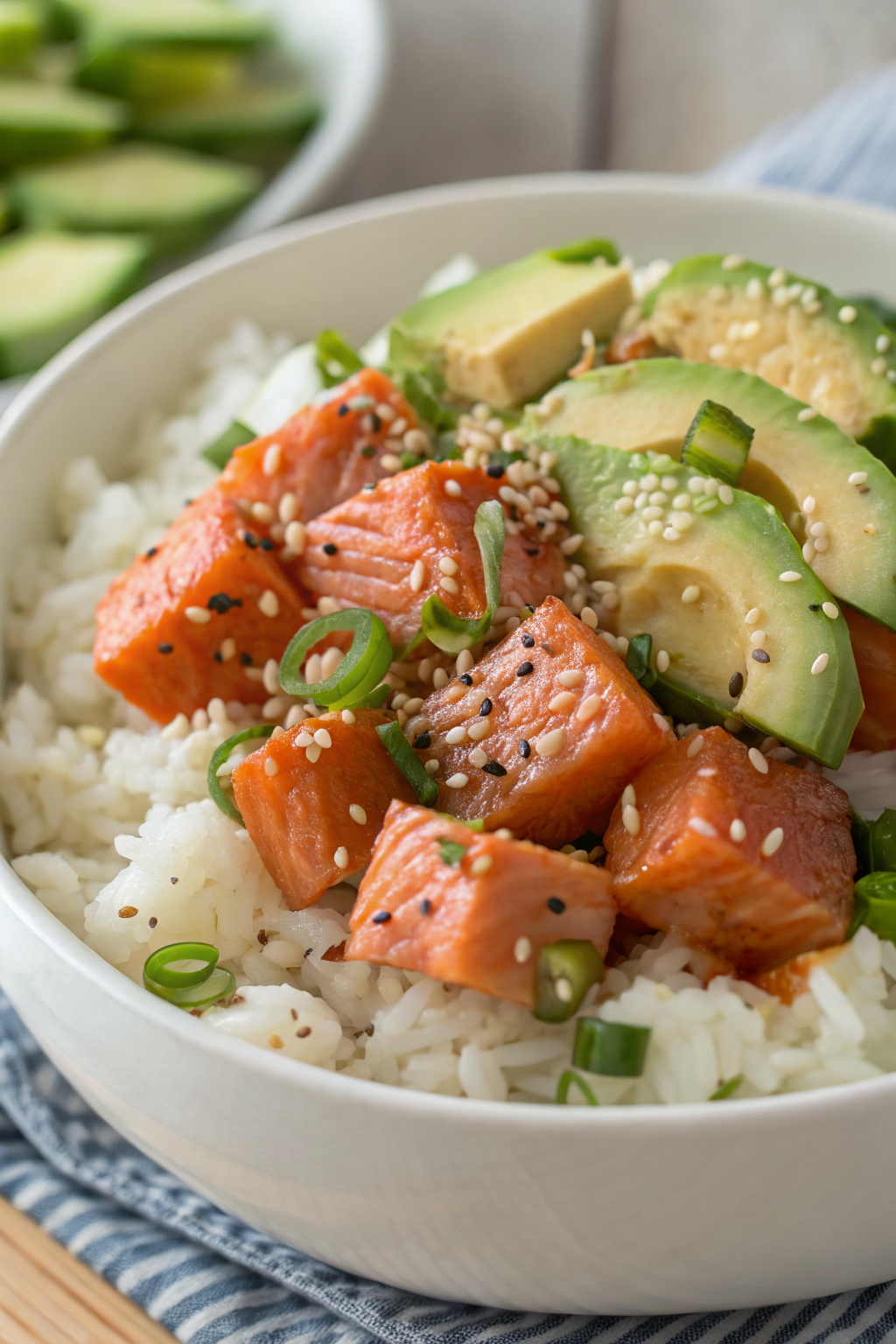
Salmon Rice Bowls Recipe
Ingredients
Method
- Preheat the oven to 400°F (200°C). Line a baking sheet with parchment paper or lightly grease it.
- Pat the salmon fillets dry with paper towels. Rub them with olive oil, then season with salt, black pepper, garlic powder, and smoked paprika.
- Place the salmon on the prepared baking sheet and bake for 12–15 minutes, or until the fish flakes easily with a fork and is cooked through.
- In a small bowl, whisk together soy sauce, rice vinegar, honey, sriracha (if using), toasted sesame oil, minced garlic, and grated ginger until well combined.
- Divide the warm cooked rice among 4 bowls.
- Top each bowl with a baked salmon fillet, flaking it into large pieces if desired.
- Arrange cucumber, shredded carrots, and edamame around the salmon in each bowl.
- Drizzle the sauce over the salmon and vegetables.
- Garnish with sliced green onions and sesame seeds if desired. Serve immediately.
Notes
Approximate per serving (1 salmon rice bowl): 520 calories; fat 23 g; saturated fat 4 g; carbohydrates 45 g; fiber 4 g; sugars 9 g; protein 34 g; sodium 880 mg. Values will vary based on specific ingredients, brands, and portion sizes.