
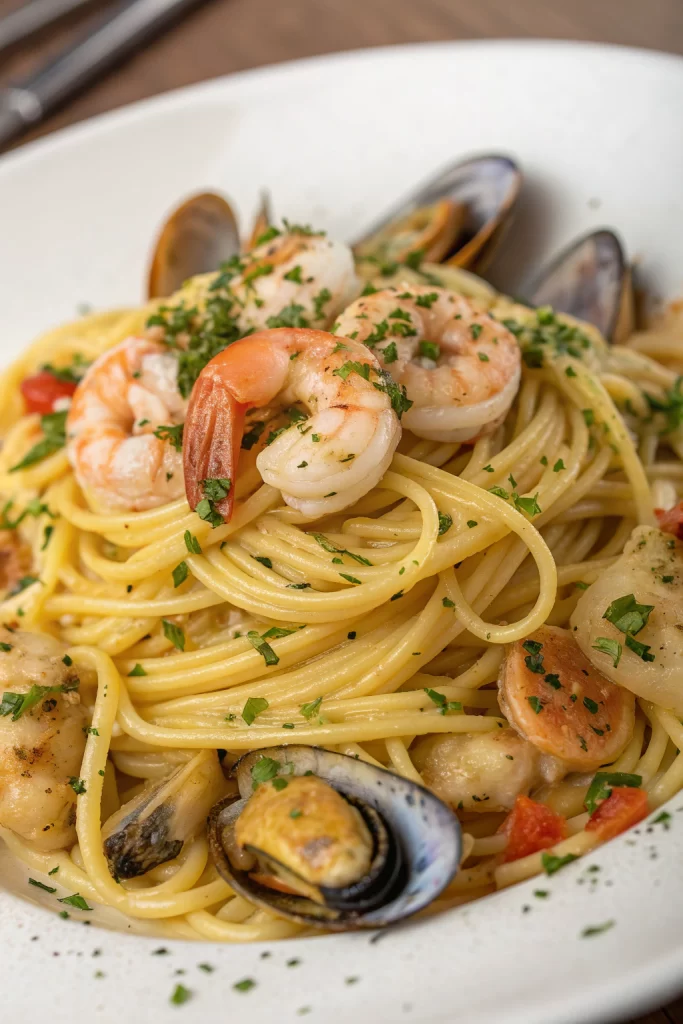
Seafood Pasta Recipe tastes rich, garlicky, a little briny, and totally cozy, with tender shrimp and juicy scallops tucked into twirls of saucy noodles. It works for busy weeknights or at-home date nights, and you can get it on the table in about 35 minutes. I cooked a version of this on a tiny apartment stove in college, so if that setup handled it, your kitchen absolutely can.
Why Seafood Pasta Recipe Is Worth It
Seafood pasta feels fancy, but it comes together faster than most casseroles. You build big flavor in one pan with garlic, chili, white sauce or tomato base, and the natural sweetness of seafood.
You also control the mix of seafood, so you can keep it budget friendly with shrimp and mussels or splurge with scallops and crab. The recipe uses simple pantry ingredients like dried pasta, canned tomatoes, and broth, so you mostly shop the seafood counter.
“This Seafood Pasta Recipe tastes like a restaurant meal on a Tuesday budget, and my family licks the plates clean every time. ★★★★★”
Ingredients You Need
Pasta
- 12 ounces dried spaghetti, linguine, or fettuccine
- Use bronze-cut Italian brands for better sauce cling.
- Whole wheat pasta works if you like a nuttier flavor.
Seafood
Pick about 1 to 1½ pounds total seafood. Mix and match.
- 8 ounces large shrimp, peeled and deveined
- 6 ounces sea scallops or bay scallops
- 6 ounces mussels or clams, scrubbed and debearded
- Optional: 4 ounces lump crab meat or firm white fish chunks
Frozen seafood works well if you thaw it in the fridge and pat it very dry. I like wild-caught shrimp when possible.
Sauce base
- 3 tablespoons olive oil
- 3 tablespoons butter
- 4 cloves garlic, minced
- 1 small shallot or ½ small onion, finely chopped
- ½ teaspoon crushed red pepper flakes, more to taste
- ½ cup low sodium chicken broth or seafood stock
- 1 cup crushed tomatoes or tomato passata
- ½ cup heavy cream or half-and-half
- ½ teaspoon sugar, only if the tomatoes taste sharp
- ¾ teaspoon fine sea salt, plus more for pasta water
- ½ teaspoon black pepper
Use good canned Italian tomatoes if possible. They taste sweeter and need less tweaking.
Finishing touches
- Zest and juice of 1 lemon
- ¼ cup chopped fresh parsley
- ¼ cup grated Parmesan or Pecorino Romano, plus more for serving
- Extra olive oil for drizzling
Skip the cheese if you prefer a more traditional seafood-only flavor, but I love a light sprinkle.
Pantry shortcuts
- Use jarred minced garlic if you feel rushed, but cut the amount slightly since it tastes stronger.
- Use boxed seafood stock or low sodium chicken broth instead of homemade.
- Use frozen mixed seafood medley from the freezer aisle as a one-bag solution.
Equipment
- Large pot for boiling pasta
- Large wide skillet or sauté pan
- Tongs for tossing pasta
- Colander
- Microplane or fine grater for lemon zest and cheese
Quick Tips & substitutions
- Salt the pasta water generously so the noodles carry flavor before they hit the sauce.
- Pat seafood very dry so it sears nicely and does not steam.
- Cook seafood in batches so it does not crowd the pan.
- Use shrimp only if you want the simplest version.
- Swap heavy cream with half-and-half or full fat coconut milk if you avoid dairy.
- Use gluten free pasta if you need a gluten free seafood pasta recipe.
- Keep a cup of starchy pasta water before draining, so you can adjust sauce thickness.
- Taste the sauce right before adding seafood and adjust salt, pepper, and chili.
How to Make Seafood Pasta Recipe
Step 1: Boil the pasta
Bring a large pot of water to a rolling boil and add a generous handful of salt. Add the pasta and cook until just shy of al dente, usually 1 minute less than package directions. Scoop out 1 cup of pasta water, then drain the pasta.
Toss the drained pasta with a small drizzle of olive oil so it does not clump while you cook the seafood. Set it aside near the stove.
Step 2: Prep and season the seafood
While the pasta cooks, pat all seafood very dry with paper towels. Season it lightly with salt and pepper on both sides. Keep the mussels or clams separate since they cook in the sauce.
If you use large scallops, remove the side muscle if it still clings to the edge. That little strip feels tough, so I pull it off and discard it.
Step 3: Sear the shrimp and scallops
Heat 1 tablespoon olive oil and 1 tablespoon butter in a large skillet over medium high heat. When the butter foams and the pan feels hot, add shrimp in a single layer. Cook about 1 to 2 minutes per side until they turn pink and opaque, then move them to a plate.
Add another small knob of butter if the pan looks dry, then add scallops in a single layer. Sear about 1½ to 2 minutes per side until they develop a golden crust and feel just firm, then move them to the same plate. Keep the fond in the pan, since that browned flavor carries into the sauce.
Step 4: Build the garlic tomato cream sauce
Lower the heat to medium and add the remaining olive oil and butter to the skillet. Add chopped shallot or onion and sauté 2 to 3 minutes until it softens and turns translucent. Add minced garlic and red pepper flakes and stir about 30 seconds until the garlic smells fragrant.
Pour in the broth or stock and scrape the bottom of the pan with a wooden spoon to lift up the browned bits. Add crushed tomatoes and stir to combine. Let the mixture simmer 3 to 4 minutes so it thickens slightly.
Stir in the cream and bring the sauce back to a gentle simmer. Taste and add salt, pepper, and a pinch of sugar if the tomatoes taste too sharp. Keep the heat low so the cream does not scorch.
Step 5: Steam the mussels or clams
Add mussels or clams directly into the simmering sauce and cover the skillet with a lid. Cook 4 to 6 minutes until the shells open. Toss the shellfish in the sauce once or twice so they cook evenly.
Discard any mussels or clams that stay closed. They did not cook properly, so they do not belong in your bowl.
Step 6: Toss in the pasta and seafood
Add the drained pasta directly into the skillet with the sauce. Use tongs to toss until the noodles soak up the sauce and look glossy. If the mixture looks tight, splash in a bit of reserved pasta water and toss again.
Add the cooked shrimp and scallops back into the skillet. Toss gently to coat everything in sauce and warm the seafood through, about 1 minute. Turn off the heat.
Step 7: Finish with lemon, herbs, and cheese
Add lemon zest, a squeeze of lemon juice, chopped parsley, and a small handful of grated Parmesan. Toss again and taste one last time. Adjust salt, pepper, chili flakes, or lemon until it hits your favorite balance.
Drizzle a tiny bit of olive oil over the top for shine. Serve the seafood pasta hot with extra parsley and cheese on the side.
Recipe Variations
- Gluten free: Use gluten free pasta and check that your broth and stock carry gluten free labels.
- Dairy free: Swap butter with olive oil and use coconut milk or a barista style oat cream instead of dairy cream.
- Tomato free: Skip tomatoes and use more broth plus a splash of cream for a white garlic seafood pasta recipe.
- Extra veggie: Add spinach, cherry tomatoes, or zucchini ribbons during the last few minutes of simmering.
- Spicy: Add more red pepper flakes or a spoon of Calabrian chili paste to the sauce.
- Budget: Use only shrimp and a bag of frozen mixed vegetables to bulk up the dish.
Ways to Serve
- Spoon seafood pasta into warm shallow bowls and top with extra parsley and lemon wedges.
- Serve with a simple green salad dressed with olive oil, lemon, and salt.
- Add a side of garlic bread or toasted baguette slices to soak up extra sauce.
- Pair with sparkling water, citrusy mocktails, or iced tea.
- Pack leftovers in a thermos for a cozy work lunch.
Storage Success
Cool leftovers to room temperature, then store them in an airtight container in the fridge for up to 2 days. Reheat gently in a skillet with a splash of water or broth so the pasta loosens and the seafood warms without overcooking. I avoid the microwave for seafood pasta, since it toughens shrimp and scallops quickly.
If you need to freeze, freeze only the sauce and add fresh seafood and pasta when you reheat. That approach keeps the texture tender and the flavor bright.
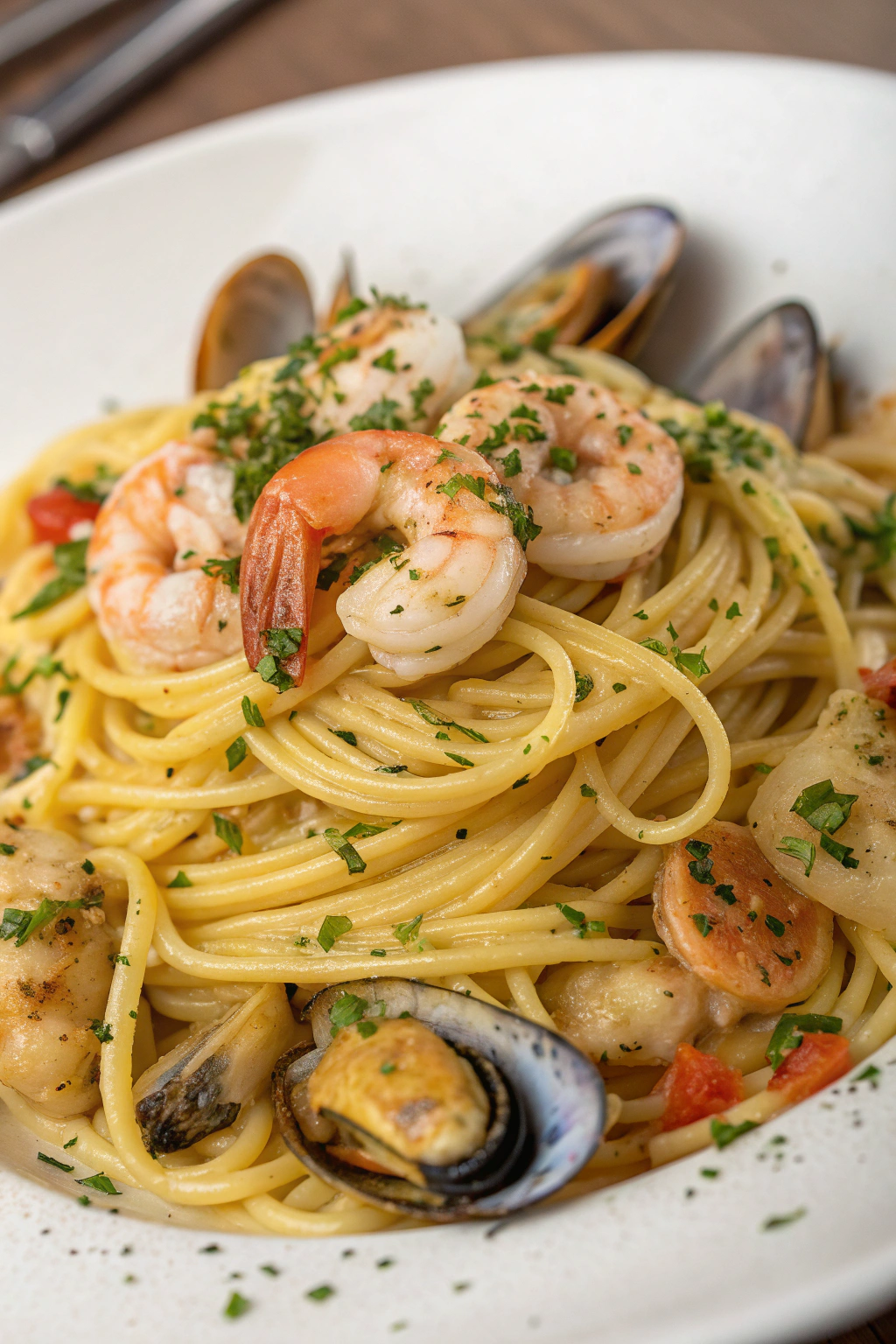
Seafood Pasta Recipe
Ingredients
Method
- Bring a large pot of salted water to a boil. Cook the pasta according to package directions until al dente, then drain, reserving about 1/2 cup of pasta water.
- While the pasta cooks, heat olive oil in a large skillet over medium heat. Add the minced garlic and red pepper flakes and sauté for 30–60 seconds, just until fragrant.
- Pour in the white wine (if using) and simmer for 2–3 minutes to reduce slightly. Add the seafood or chicken broth and crushed tomatoes, then bring to a gentle simmer.
- Stir in the shrimp, mussels, and calamari. Cover the skillet and cook for 4–6 minutes, or until the shrimp are opaque and the mussels have opened. Discard any mussels that do not open.
- Reduce the heat to low. Add the butter, lemon juice, salt, and black pepper, stirring until the butter melts and the sauce is smooth. Adjust seasoning to taste.
- Add the cooked pasta to the skillet, tossing to coat in the sauce. If the mixture seems dry, add a splash of the reserved pasta water until the desired consistency is reached.
- Sprinkle with chopped parsley, toss once more, and serve the seafood pasta hot.
Notes
Approximate per serving (4 servings): 520 calories; fat 16 g; saturated fat 5 g; carbohydrates 63 g; fiber 3 g; sugars 6 g; protein 29 g; sodium 720 mg. Values will vary based on specific seafood mix, pasta type, brands, and portion size.