
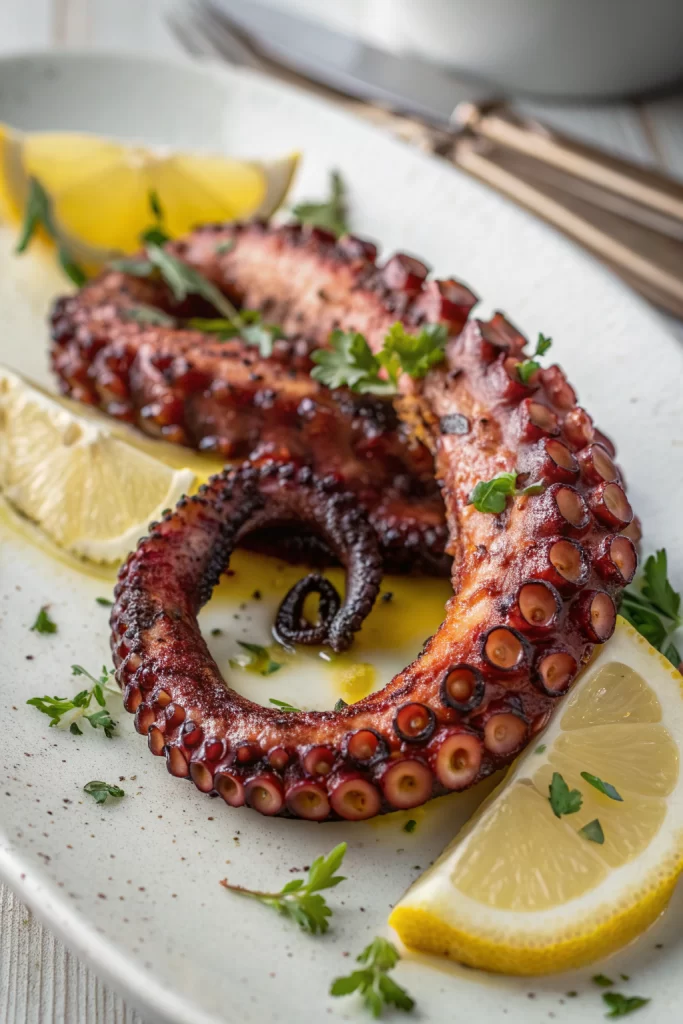
Sous Vide Octopus Recipe tastes incredibly tender, slightly sweet, and deeply savory, with a gentle ocean flavor that even seafood skeptics often enjoy. It works perfectly for adventurous home cooks who want restaurant-level results in about 4 to 5 hours total, most of it hands-off. I still remember the first time I served this to friends and watched their eyes go wide when the fork slid through the tentacle like butter.
Why Choose This Sous Vide Octopus Recipe
This sous vide octopus recipe gives you ultra-tender meat with a crisp, caramelized exterior that rivals high-end restaurants. The low-and-slow water bath keeps the texture silky instead of rubbery, which solves the biggest problem most people face with octopus.
You also get a flexible recipe that works as an appetizer, main course, or part of a seafood spread. You cook the octopus in the bag, chill it if you want, then sear it right before serving so it fits your schedule.
“This is the first time my octopus turned out tender instead of chewy, and my family now asks for it on special occasions. ★★★★★”
Ingredients You’ll Need
Octopus
- 2 to 3 pounds whole octopus, cleaned
- Ask the fishmonger to clean it, or buy it frozen and pre-cleaned.
- Frozen octopus actually works great, since freezing helps tenderize the meat.
Aromatics & Flavor
- 3 cloves garlic, smashed
- 1 small onion, quartered
- 1 small carrot, cut into chunks
- 1 celery stalk, cut into chunks
- 2 bay leaves
- 6 to 8 whole black peppercorns
- 1 teaspoon smoked paprika (adds a subtle smoky note without a grill)
- 1 teaspoon sweet paprika or regular paprika
- 1 teaspoon dried oregano or thyme
- 1 teaspoon kosher salt (Diamond Crystal) or ½ teaspoon if you use Morton
- Zest of 1 lemon
- 2 tablespoons extra-virgin olive oil
Finishing & Serving
- 2 tablespoons extra-virgin olive oil, for searing
- Juice of ½ to 1 lemon, to taste
- Flaky sea salt, for finishing
- Fresh parsley, chopped, for garnish
- Optional: pinch of red pepper flakes for a little heat
Pantry Shortcuts & Substitutions
- Use garlic powder (½ teaspoon) if you run out of fresh garlic.
- Skip the carrot and celery if you do not have them; the recipe still tastes great with just onion, garlic, herbs, and paprika.
- Swap smoked paprika with a tiny drop of liquid smoke if you already keep that in the pantry.
- Use dried Italian seasoning instead of oregano or thyme if that sits in your cabinet already.
Equipment List
- Sous vide immersion circulator
- Large pot or heatproof container for the water bath
- Large vacuum-seal bag or heavy-duty freezer zip-top bag
- Tongs
- Large skillet or cast iron pan for searing
- Cutting board and sharp knife
- Paper towels
Tips & Tricks
- Pat the octopus very dry before searing so the exterior browns instead of steaming.
- Use frozen octopus if you can; it often turns out more tender than fresh.
- Set the sous vide temperature around 171°F (77°C) for a tender, sliceable texture.
- Cook for at least 4 hours and up to 5 hours; longer time gives a softer bite.
- Do not crowd the bag; keep the octopus in a single layer so the water bath heats it evenly.
- Add olive oil and aromatics directly into the bag to infuse flavor during the cook.
- Chill the cooked octopus in the fridge before searing if you want cleaner slices and easier handling.
- Use high heat and a quick sear, about 1 to 2 minutes per side, so the inside stays tender.
- Slice the tentacles after cooking, not before, so they hold their shape.
- Taste and adjust with lemon juice and salt at the end; octopus loves bright acidity.
How to Make Sous Vide Octopus Recipe
Step 1: Prep the Octopus
Rinse the octopus under cold water and check for any remaining beak or ink sac. Trim off any loose bits that look tough or unappetizing. Pat it very dry with paper towels so it does not water down the seasonings.
Step 2: Season and Bag
Place the octopus in a large vacuum bag or heavy-duty zip-top bag. Add garlic, onion, carrot, celery, bay leaves, peppercorns, smoked paprika, sweet paprika, oregano or thyme, lemon zest, salt, and 2 tablespoons olive oil. Spread the aromatics around the octopus so they touch as much surface as possible.
If you use a vacuum sealer, seal the bag on a moist setting. If you use a zip-top bag, use the water displacement method: lower the bag slowly into a pot of water and seal it right before the top edge hits the water line. This method pushes out most of the air without special equipment.
Step 3: Set Up the Sous Vide Bath
Fill a large pot or container with water and attach your sous vide circulator. Set the temperature to 171°F (77°C). Give the water a minute to heat up while you tidy the counter.
Clip the bag to the side of the pot and make sure the octopus stays fully submerged. Use a small plate or sous vide weights if the bag tries to float. Keep the zipper or seal above the water line.
Step 4: Cook the Octopus
Cook the octopus for 4 to 5 hours. Aim for 4 hours if you like a bit more bite, or closer to 5 hours if you want it very tender. Check occasionally to make sure the bag stays submerged and the water level covers it.
During this time you can prep side dishes, clean up, or pretend you worked very hard while the circulator did all the heavy lifting. The kitchen will start to smell savory and slightly sweet from the aromatics.
Step 5: Chill or Proceed to Sear
When the time ends, lift the bag out of the water. Carefully open it and transfer the octopus to a plate or tray. Save a little of the cooking liquid if you want to drizzle it over the octopus later for extra flavor.
At this point you can either sear right away or chill the octopus. If you chill it, place it on a tray, cover it, and refrigerate until cold. Cold octopus slices more neatly and handles more easily on the grill pan or skillet.
Step 6: Portion the Tentacles
Place the cooked octopus on a cutting board. Use a sharp knife to separate the tentacles from the head where they meet in the center. Slice any very thick tentacles in half lengthwise so they brown evenly.
You can also cut the head into bite-size pieces if you enjoy that part, which many people do. Pat all the pieces dry again with paper towels so they sear nicely.
Step 7: Sear the Octopus
Heat a large skillet or cast iron pan over medium-high heat. Add 2 tablespoons olive oil and let it shimmer. Place the tentacles in a single layer and avoid crowding the pan.
Sear each side for about 1 to 2 minutes until the edges crisp and the surface picks up a deep golden color. Turn the pieces with tongs so they brown on all sides. Sprinkle a pinch of smoked paprika or red pepper flakes over them in the last 30 seconds if you want extra flavor.
Step 8: Finish and Serve
Transfer the seared octopus to a serving platter. Squeeze fresh lemon juice over the top and sprinkle with flaky sea salt. Add chopped parsley for color and freshness.
Taste a small piece and adjust with more lemon juice or salt if needed. Serve the octopus hot or warm as an appetizer or main course, depending on how you plate it.
What to Serve with it?
Serve this sous vide octopus recipe with a bright citrus salad, such as orange segments with thinly sliced fennel and arugula. Roasted potatoes with olive oil, garlic, and herbs make a hearty side that soaks up the juices. You can also pair it with grilled vegetables like zucchini, bell peppers, and asparagus for a lighter meal.
A simple bowl of lemony rice or herbed couscous works nicely if you want something more filling. Add a side of crusty bread and a green salad, and you have a full seafood dinner that feels special without much stress.
Storage Options
- Store leftover cooked octopus in an airtight container in the fridge for up to 3 days.
- Keep the tentacles whole if possible, since larger pieces stay juicier than small slices.
- Freeze cooked octopus in a freezer-safe bag for up to 2 months, and press out as much air as possible before sealing.
- Reheat gently in a skillet over medium heat with a splash of the reserved cooking liquid or a bit of olive oil, then quickly re-sear if you want to refresh the crispy edges.
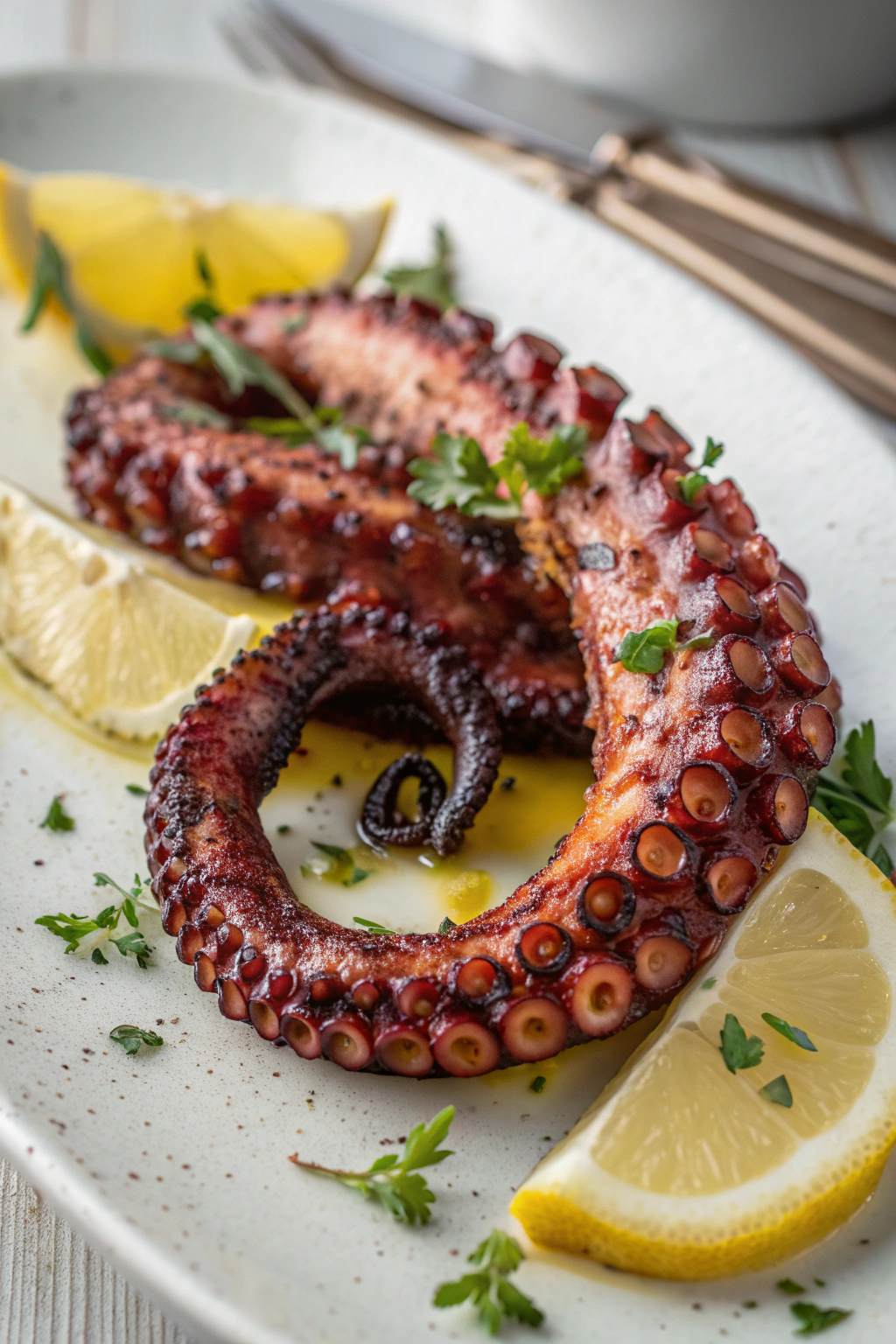
Sous Vide Octopus Recipe
Ingredients
Method
- If needed, rinse and clean the octopus, removing the beak and any remaining innards. Pat very dry with paper towels.
- Season the octopus generously with kosher salt, black pepper, and smoked paprika if using.
- Place the octopus in a large vacuum bag or heavy-duty zip-top bag. Add olive oil, garlic cloves, bay leaves, and lemon slices, arranging them around the octopus.
- Preheat a sous vide water bath to 170°F (77°C).
- Vacuum-seal the bag or use the water displacement method to remove as much air as possible if using a zip-top bag.
- Submerge the sealed bag fully in the preheated water bath, ensuring it stays below the water line.
- Cook for 4.5 to 5 hours, until the octopus is very tender when pierced with a knife but not falling apart.
- Remove the bag from the water bath and let the octopus cool in the bag juices for 10 to 15 minutes.
- Transfer the octopus to a tray and discard the aromatics. Pat the octopus dry thoroughly to promote good browning.
- Cut the tentacles away from the head and portion them into serving pieces.
- Heat a large skillet or grill pan over medium-high heat. Add olive oil and butter, if using.
- Sear the octopus pieces 1 to 2 minutes per side, just until they develop a deep golden-brown crust.
- Transfer to a serving platter, drizzle with fresh lemon juice, and sprinkle with chopped parsley and flaky sea salt.
- Serve warm as a main course alongside salad, potatoes, or crusty bread.
Notes
Approximate per serving (1/4 of recipe): 260 calories; fat 14 g; saturated fat 3 g; carbohydrates 4 g; fiber 0 g; sugars 1 g; protein 30 g; sodium 780 mg. Values will vary based on the exact size of the octopus, added fats, and side dishes served.