
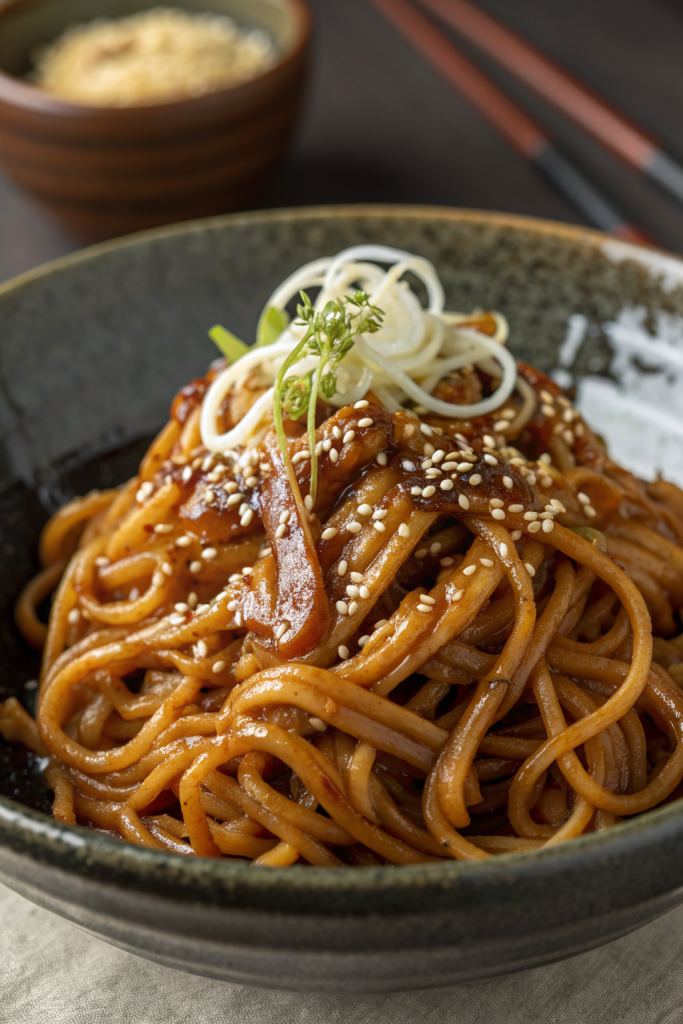
Soy sauce udon Recipe hits all the cozy notes: chewy noodles, glossy savory sauce, buttery edges, and a little garlicky punch in every bite. It works perfectly for busy nights, beginner cooks, or anyone who wants serious flavor in under 20 minutes. I first threw this together after a long restaurant shift, and it still tastes like a tiny weeknight victory every time.
Why Soy sauce udon Recipe Is Worth It
You get restaurant-style stir fried udon with almost no effort and very little chopping. The sauce uses pantry staples, so you skip any fancy shopping trip and still land a bowl that tastes rich, salty, slightly sweet, and super satisfying.
The recipe scales easily, so you cook it for one or feed a crowd with the same method. You also customize it with whatever vegetables or protein you already have in the fridge, which keeps food waste low and dinner stress even lower.
“Chewy, glossy, and slurp-worthy, this Soy sauce udon Recipe tastes like takeout comfort in a single pan. ★★★★★”
Ingredients You Need
Udon noodles
- 2 portions frozen udon noodles (about 8 to 10 ounces total)
- Frozen udon gives the best chewy texture.
- Shelf stable udon works in a pinch, but cook it slightly under the package time so it stays bouncy.
Soy sauce udon sauce
- 2 tablespoons soy sauce
- Use regular Japanese soy sauce or light soy sauce, not dark soy sauce, which tastes too intense here.
- 1 tablespoon oyster sauce
- Swap with vegetarian oyster sauce or extra soy sauce if you keep it vegan.
- 1 tablespoon mirin or 1 tablespoon water plus 1 teaspoon sugar
- 1 teaspoon sugar (skip if your mirin tastes sweet enough)
- 1 teaspoon toasted sesame oil
- 1 to 2 teaspoons chili crisp or chili oil, to taste
- 1 tablespoon water, to loosen the sauce
Aromatics and veggies
- 2 tablespoons neutral oil (canola, avocado, or grapeseed)
- 3 cloves garlic, minced
- 2 green onions, sliced, white and green parts separated
- 1 small carrot, cut into thin matchsticks
- 1 cup shredded cabbage or coleslaw mix
- Bagged coleslaw mix works as a great shortcut.
Protein options (pick one, about 4 to 6 ounces)
- Thinly sliced chicken thigh or breast
- Shrimp, peeled and deveined
- Firm or extra firm tofu, pressed and cubed
- Leftover rotisserie chicken, sliced
- Eggs, 1 or 2, lightly beaten
Toppings
- Extra sliced green onions
- Toasted sesame seeds
- Shichimi togarashi or crushed red pepper, optional
- A small knob of butter (about 1 teaspoon per serving) for a richer finish
Equipment
- Large nonstick skillet or wok
- Tongs or chopsticks for tossing noodles
- Small bowl for mixing the sauce
- Pot for blanching or loosening udon, if needed
Quick Tips & substitutions
- Use frozen udon for the best chewy texture; run it under warm water to loosen, then separate gently.
- If you use shelf stable udon, cook it 1 minute less than the package suggests, then rinse briefly to stop the cooking.
- Stir the sauce in a bowl before you start cooking, so you move fast once the noodles hit the pan.
- Swap oyster sauce with vegetarian oyster sauce or extra soy sauce plus a pinch of sugar for a vegan version.
- Use tamari or a good gluten free soy sauce if you need a gluten free option.
- Toss in bagged coleslaw mix, frozen mixed vegetables, or pre sliced mushrooms when you want a zero effort veggie boost.
- Slice protein very thin so it cooks quickly and stays tender.
- Keep the pan hot, but not smoking, so the noodles char slightly without burning the garlic.
How to Make Soy sauce udon Recipe
Mix the soy sauce udon sauce
- Add soy sauce, oyster sauce, mirin, sugar, sesame oil, chili crisp, and water to a small bowl.
- Stir until the sugar dissolves and the chili bits spread evenly.
- Taste a drop and adjust salt, sweetness, or heat to your liking.
Prep the udon noodles
- If you use frozen udon, run the blocks under warm water and gently wiggle them apart with your fingers.
- If they stay stiff, drop them in a pot of boiling water for 30 to 60 seconds, then drain well.
- Spread the noodles on a plate so they do not clump while you cook the other ingredients.
Cook the protein
- Heat 1 tablespoon neutral oil in a large skillet or wok over medium high heat.
- Add your chosen protein with a pinch of salt and cook until it browns and cooks through, stirring often.
- Transfer the cooked protein to a plate and keep it nearby.
Stir fry the aromatics and veggies
- Add the remaining 1 tablespoon oil to the same pan.
- Toss in garlic and the white parts of the green onions, then stir for about 30 seconds until fragrant.
- Add carrot and cabbage, and stir fry for 2 to 3 minutes until they soften but still keep a bit of crunch.
Add the udon and sauce
- Add the loosened udon noodles to the pan with the veggies.
- Pour the soy sauce udon sauce over the noodles.
- Use tongs or chopsticks to toss everything until the noodles soak up the sauce and turn glossy, about 2 to 3 minutes.
Bring back the protein and finish
- Return the cooked protein to the pan and toss to combine with the noodles and veggies.
- Add the green parts of the green onions and a small knob of butter, then toss until the butter melts and coats the noodles.
- Taste and adjust with a splash of soy sauce, a pinch of sugar, or extra chili oil if you want more heat.
Optional egg version
- Push the noodles to one side of the pan and lower the heat slightly.
- Pour the beaten eggs into the empty side and scramble until they set.
- Fold the scrambled eggs into the noodles and serve right away.
Plate and garnish
- Divide the soy sauce udon into bowls.
- Top with extra green onions and toasted sesame seeds.
- Sprinkle shichimi togarashi or red pepper flakes if you like a little kick.
Recipe Variations
- Gluten free: Use gluten free udon or thick rice noodles and swap soy sauce with tamari and oyster sauce with a gluten free brand.
- Vegan: Use tofu or skip protein, choose vegetarian oyster sauce or extra soy sauce plus sugar, and leave out butter or use vegan butter.
- Low carb: Swap udon with shirataki noodles or spiralized zucchini, and cook them briefly so they do not turn mushy.
- Extra veggie: Add bell peppers, snap peas, mushrooms, or baby spinach in the stir fry step.
- Spicy version: Increase chili crisp, add fresh sliced chili, or sprinkle shichimi togarashi on top.
- Kid friendly: Reduce chili oil, add a bit more sugar, and toss in mild veggies like peas or corn.
Ways to Serve
- Serve soy sauce udon as a one pan main dish with a side of cucumber salad.
- Add a soft boiled egg on top for extra richness and protein.
- Pair with miso soup and a simple green salad for a full meal.
- Pack leftovers in a lunch box with orange slices and edamame.
- Serve as a side next to grilled chicken thighs or teriyaki tofu.
Storage Success
Cool the soy sauce udon completely before you pack it into airtight containers. Store it in the fridge for up to 3 days, and keep any garnishes like green onions separate so they stay fresh. Reheat in a skillet over medium heat with a splash of water to loosen the sauce, and toss until the noodles warm through. Add a tiny drizzle of soy sauce or sesame oil at the end to bring the flavor back to life.

Soy Sauce Udon Recipe
Ingredients
Method
- In a small bowl, combine soy sauce, oyster sauce, mirin (or water and sugar), sugar if using, toasted sesame oil, chili crisp or chili oil, and water.
- Stir until the sugar dissolves and the chili bits are evenly distributed, then set aside.
- Run the frozen udon blocks under warm water and gently separate the strands with your fingers.
- If they remain stiff, drop them into a pot of boiling water for 30 to 60 seconds, then drain well.
- Spread the noodles on a plate so they do not clump while you cook the other ingredients.
- Heat 1 tablespoon neutral oil in a large skillet or wok over medium-high heat.
- Add your chosen protein with a pinch of salt and cook, stirring often, until browned and cooked through.
- Transfer the cooked protein to a plate and keep it nearby.
- Add the remaining 1 tablespoon oil to the same pan.
- Add the minced garlic and the white parts of the green onions, stirring for about 30 seconds until fragrant.
- Add the carrot matchsticks and shredded cabbage, then stir fry for 2 to 3 minutes until slightly softened but still crisp.
- Add the loosened udon noodles to the pan with the veggies.
- Pour the prepared soy sauce udon sauce over the noodles.
- Use tongs or chopsticks to toss until the noodles soak up the sauce and turn glossy, about 2 to 3 minutes.
- Return the cooked protein to the pan and toss to combine with the noodles and vegetables.
- Add the green parts of the green onions and the butter, tossing until the butter melts and coats the noodles.
- Taste and adjust with a splash of soy sauce, a pinch of sugar, or extra chili oil if desired.
- Push the noodles to one side of the pan and reduce the heat slightly.
- Pour the beaten eggs into the empty side and scramble until just set.
- Fold the scrambled eggs into the noodles and serve right away.
- Divide the soy sauce udon into bowls.
- Top with extra green onions and toasted sesame seeds.
- Sprinkle shichimi togarashi or red pepper flakes if you like more heat, then serve.
Notes
Approximate per serving (2 servings total, using chicken and butter, without optional toppings): 520 calories; fat 23 g; saturated fat 6 g; carbohydrates 60 g; fiber 4 g; sugars 10 g; protein 22 g; sodium 1650 mg. Values will vary based on protein choice, noodle brand, add-ins, and portion size.