
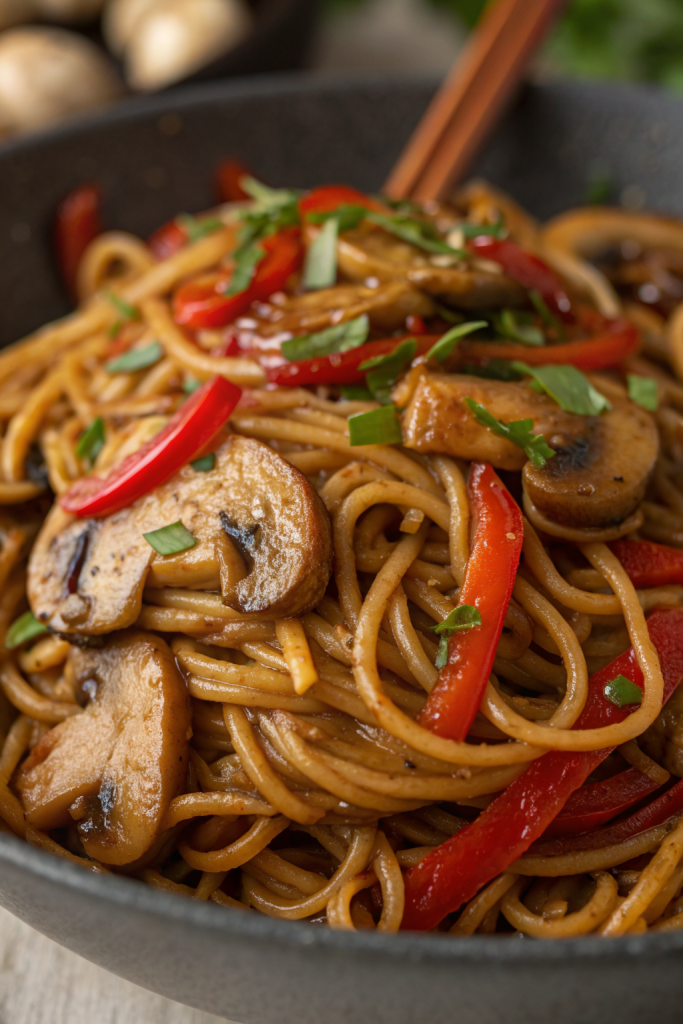
Udon Noodle Stir Fry with Mushrooms Recipe tastes savory, chewy, a little garlicky, and deeply umami, like takeout noodles that actually listen when you season them. It works perfectly for busy weeknights, beginners, or anyone who wants a 25-minute dinner that feels cozy and restaurant-level without much effort. I cook this exact dish on nights when I want comfort food, minimal dishes, and zero arguments with my stove.
Why Udon Noodle Stir Fry with Mushrooms Recipe Is Worth It
Thick udon noodles soak up soy sauce, garlic, and sesame like champs, while mushrooms bring that meaty bite without any actual meat. The sauce tastes savory, slightly sweet, and a little nutty, so every slurp hits all the right notes. Clean-up stays easy, and you only need one pan plus a pot to soften the noodles.
This recipe fits weeknight cooking, meal prep, and casual dinner with friends. You can keep it vegetarian or add protein without changing the base recipe. The ingredients stay flexible, so you can use what you already have in your fridge and pantry.
“This Udon Noodle Stir Fry with Mushrooms Recipe tastes like my favorite noodle shop but comes together faster than delivery ★★★★★”
Ingredients You Need
Udon noodles
- 14 to 16 ounces fresh or frozen udon noodles
- Use frozen sanuki-style udon for the best chewy texture.
- Shelf-stable udon works in a pinch, but cook it slightly under so it stays bouncy in the pan.
Mushrooms and veggies
- 10 to 12 ounces mushrooms, sliced
- Use a mix of shiitake and cremini for deep flavor.
- Button mushrooms work fine if that is what you have.
- 1 small yellow onion, thinly sliced
- 1 small carrot, cut into thin matchsticks
- 1 small red bell pepper, thinly sliced
- 2 to 3 green onions, sliced (white and green parts separated)
- 3 to 4 cloves garlic, minced
- 1 teaspoon fresh ginger, grated or very finely minced
Stir fry sauce
- 3 tablespoons soy sauce or tamari
- Use low sodium if you feel sensitive to salt.
- 1 tablespoon dark soy sauce
- This adds color and deeper flavor, but you can skip it and add 1 extra teaspoon regular soy sauce.
- 1 tablespoon oyster sauce or vegetarian mushroom stir fry sauce
- 1 tablespoon mirin or 1 tablespoon rice vinegar plus 1 teaspoon sugar
- 1 tablespoon brown sugar or honey
- 1 to 2 teaspoons toasted sesame oil
- 2 to 3 tablespoons water or low sodium vegetable broth
Optional protein and add-ins
- 7 to 8 ounces extra firm tofu, pressed and cubed, or cooked chicken or shrimp if you eat it
- 1 cup snap peas or snow peas
- 1 cup baby spinach or chopped bok choy
Toppings
- Toasted sesame seeds
- Extra sliced green onion
- Chili crisp, sriracha, or red pepper flakes for heat
Pantry shortcuts and brand notes
- Use bottled minced garlic and ginger if you feel short on time, though fresh tastes brighter.
- Many grocery stores sell frozen udon bricks in the Asian freezer section, and they usually taste better than shelf-stable packs.
- Use Kikkoman, Yamasa, or a similar soy sauce for consistent flavor.
- Use Lee Kum Kee or a similar brand for oyster sauce or vegetarian mushroom sauce.
Equipment list
- Large nonstick skillet or wok
- Medium pot for noodles
- Colander
- Cutting board and sharp knife
- Small bowl and whisk for the sauce
- Tongs or chopsticks for tossing noodles
Quick Tips & substitutions
- Boil or soak udon until just loosened, not fully soft, so the noodles stay chewy in the pan.
- Pat mushrooms dry and avoid crowding the pan so they brown instead of steaming.
- Mix the sauce in a bowl before you start cooking so you move quickly at the stove.
- Use tamari and gluten free oyster-style sauce for a gluten free version.
- Swap tofu for chicken or shrimp if you want more protein and cook it first, then set aside.
- Use any mushrooms you have, including portobello, oyster, or maitake.
- Skip mirin and use rice vinegar with a pinch of sugar as a quick substitute.
- Add a spoon of chili crisp or a pinch of red pepper flakes if you like heat.
- Keep a splash of water or broth nearby in case the noodles look dry in the pan.
How to Make Udon Noodle Stir Fry with Mushrooms Recipe
Step 1: Prep the noodles
Bring a medium pot of water to a boil.
Add the udon noodles and cook just until they separate and loosen, usually 1 to 2 minutes for frozen or according to package directions for shelf-stable.
Drain the noodles, rinse briefly under warm water to remove extra starch, then toss them with a tiny drizzle of sesame oil so they do not clump.
Step 2: Mix the stir fry sauce
In a small bowl, add soy sauce, dark soy sauce, oyster or mushroom sauce, mirin or rice vinegar mix, brown sugar, sesame oil, and water or broth.
Whisk until the sugar dissolves and the sauce looks smooth.
Taste a drop and adjust with a bit more sugar or soy sauce to match your preference.
Step 3: Sear the mushrooms
Heat a large skillet or wok over medium high heat.
Add 1 to 2 tablespoons neutral oil, then add the sliced mushrooms in a single layer as much as possible.
Let them cook without stirring for 2 to 3 minutes so they brown, then stir and cook another 2 to 3 minutes until they shrink and turn golden.
Step 4: Add aromatics and veggies
Add the sliced onion and carrot to the pan with the mushrooms and stir.
Cook 2 to 3 minutes until the onion softens slightly.
Add bell pepper, garlic, ginger, and the white parts of the green onion, then cook 1 to 2 minutes until fragrant.
Step 5: Add protein or extra veggies
If you use tofu or another cooked protein, add it now and toss so it warms through.
Add snap peas or other quick cooking veggies if you use them.
Stir and cook 1 to 2 minutes so everything heats evenly.
Step 6: Toss in the udon noodles
Add the drained udon noodles to the pan.
Use tongs to lift and toss the noodles with the veggies and mushrooms.
Break up any clumps gently so the noodles spread through the pan.
Step 7: Add the sauce
Pour the stir fry sauce around the edges of the pan so it hits the hot surface.
Toss everything together for 2 to 4 minutes over medium high heat until the noodles soak up most of the sauce and look glossy.
If the pan looks dry before the noodles soften to your liking, add 1 to 2 tablespoons water or broth and toss again.
Step 8: Finish and serve
Turn off the heat and stir in the green parts of the green onion and any tender greens like spinach or bok choy.
Taste and adjust seasoning with a splash of soy sauce or a pinch of sugar if needed.
Sprinkle with toasted sesame seeds and serve hot with chili crisp or hot sauce on the side.
Recipe Variations
- Gluten free: Use gluten free udon or thick rice noodles, tamari instead of soy sauce, and gluten free oyster-style mushroom sauce.
- Vegan: Use mushroom stir fry sauce instead of oyster sauce and stick with tofu or just mushrooms and veggies.
- Low carb: Swap udon for shirataki noodles or spiralized zucchini and cook them very briefly so they do not turn mushy.
- Extra protein: Add tofu, chicken, shrimp, or edamame and double the sauce so the dish stays flavorful.
- Extra veggies: Toss in broccoli, cabbage, bean sprouts, or kale for more texture and color.
Ways to Serve
- Serve in deep bowls with chopsticks and a spoon so you catch every bit of sauce.
- Add a fried or soft boiled egg on top for extra richness.
- Pack leftovers in meal prep containers with cucumber salad or steamed edamame on the side.
- Serve with miso soup or a simple green salad for a full meal.
Storage Success
Store leftover udon noodle stir fry with mushrooms in an airtight container in the fridge for up to 3 days. The noodles firm up a bit in the fridge, but they soften again when you reheat them with a splash of water. Reheat in a skillet over medium heat and toss until everything warms through and turns glossy again. You can also reheat in the microwave in short bursts, stirring between each burst so the noodles heat evenly.

Udon Noodle Stir Fry with Mushrooms Recipe
Ingredients
Method
- Bring a medium pot of water to a boil. Add the udon noodles and cook just until they separate and loosen, about 1–2 minutes for frozen or according to package directions for shelf-stable.
- Drain the noodles, rinse briefly under warm water to remove excess starch, then toss with a small drizzle of sesame oil so they do not clump. Set aside.
- In a small bowl, combine the soy sauce, dark soy sauce, oyster or mushroom sauce, mirin or rice vinegar mixture, brown sugar or honey, toasted sesame oil, and water or vegetable broth.
- Whisk until the sugar dissolves and the sauce is smooth. Taste and adjust with a bit more soy sauce or sugar to your preference. Set aside.
- Heat a large skillet or wok over medium-high heat. Add the neutral oil, then add the sliced mushrooms in as close to a single layer as possible.
- Cook without stirring for 2–3 minutes so they brown, then stir and cook another 2–3 minutes until they shrink and turn golden.
- Add the sliced onion and carrot to the pan and cook for 2–3 minutes until the onion begins to soften.
- Add the red bell pepper, garlic, ginger, and the white parts of the green onions. Cook for 1–2 minutes, stirring, until fragrant.
- If using tofu or another cooked protein, add it to the pan now along with any snap peas or other quick-cooking vegetables. Toss and cook for 1–2 minutes to heat through.
- Add the drained udon noodles to the pan. Use tongs to lift and toss the noodles with the vegetables and mushrooms, gently breaking up any clumps.
- Pour the stir fry sauce around the edges of the hot pan, then toss everything together for 2–4 minutes over medium-high heat until the noodles soak up most of the sauce and look glossy. If the pan looks dry before the noodles are tender to your liking, add 1–2 tablespoons of water or broth.
- Turn off the heat and stir in the green parts of the green onions and any tender greens like spinach or bok choy until just wilted.
- Taste and adjust seasoning with a splash of soy sauce or a pinch more sugar if needed. Serve hot topped with toasted sesame seeds, extra green onions, and chili crisp or hot sauce if desired.
Notes
Approximate per serving (4 servings, without optional protein or extra toppings): 430–480 calories; fat 11–15 g; saturated fat 2 g; carbohydrates 75–85 g; fiber 4–6 g; sugars 13–17 g; protein 11–14 g; sodium 1350–1600 mg. Values will vary based on noodle type, sauces, optional proteins, vegetables, and exact portion size.