
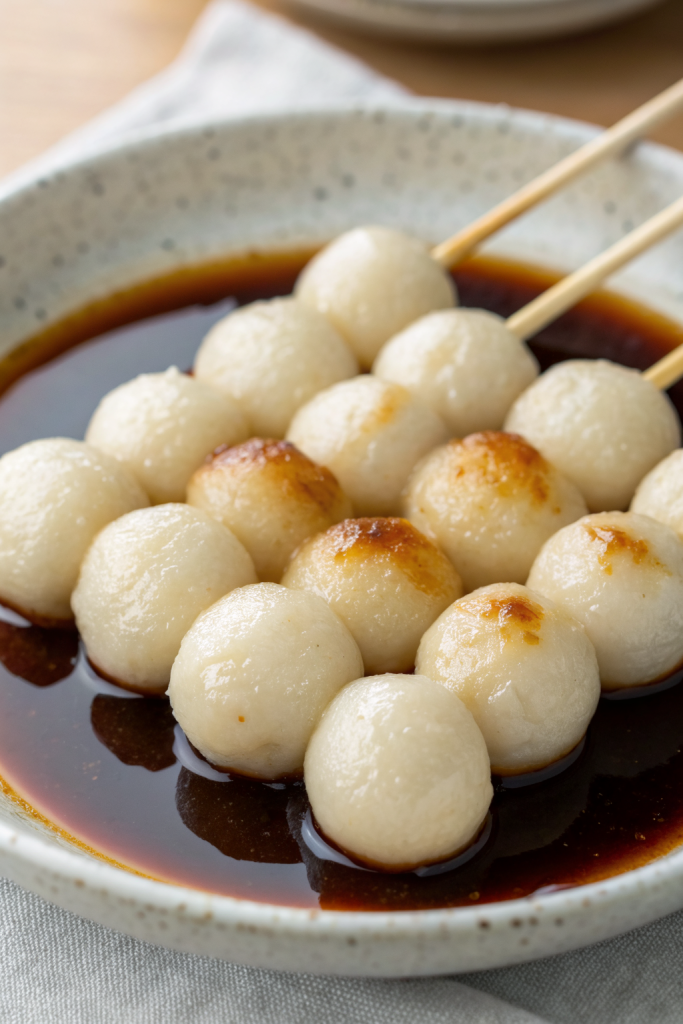
Shiratama Dango Japanese Dessert Recipe tastes soft, chewy, and lightly sweet, with a bouncy texture that feels like a cross between mochi and marshmallows. It suits anyone who loves Japanese desserts and wants a quick treat, since this recipe usually takes about 25 to 30 minutes from start to finish. I still remember the first time I overcooked the dumplings and turned them into rubber balls, so you now benefit from my mistakes instead of repeating them in your kitchen.
Why Make This Shiratama Dango Japanese Dessert Recipe at Home
Homemade shiratama dango tastes fresher and softer than most store bought versions. You control the sweetness, toppings, and texture, so you can keep it simple or turn it into a full dessert bowl.
You also only need a few ingredients and one pot. Clean up stays easy, and you can scale the recipe up for guests or down for a solo dessert night without any drama.
Soft, chewy, and perfectly balanced with sweet toppings, this Shiratama Dango Japanese Dessert Recipe tastes just like a cozy dessert shop treat at home ★★★★★
Ingredients You Need
For the shiratama dango:
- 1 cup shiratamako (glutinous rice flour made for dumplings, not regular rice flour)
- I like brands such as Shirakiku or Koda Farms since they hydrate evenly.
- 6 to 7 tablespoons water, room temperature
- Start with 6 tablespoons, then add more a teaspoon at a time.
- 1 to 2 teaspoons sugar (optional, for slightly sweet dumplings)
- Small pinch of salt (helps bring out the rice flavor)
Common toppings and sauces:
Pick one or mix and match.
- Sweet red bean paste (anko), smooth or chunky
- Canned anko works great as a pantry shortcut.
- Kinako sugar mix
- 2 tablespoons kinako (roasted soybean flour)
- 1 to 2 tablespoons sugar
- Tiny pinch of salt
- Kuromitsu style syrup
- 2 tablespoons dark brown sugar
- 1 tablespoon water
- Fresh fruit such as strawberries, kiwi, mango, or sliced banana
- Matcha syrup
- 1 teaspoon matcha powder
- 1 to 2 tablespoons hot water
- 1 to 2 teaspoons sugar or honey
Substitutions and notes:
- If you only find mochiko (sweet rice flour), you can use it, though the texture turns slightly softer and less bouncy.
- Do not use regular rice flour or all purpose flour, since they will not give the chewy mochi texture.
- You can skip sugar in the dough if you plan to serve with sweet toppings like anko or syrup.
Equipment list:
- Medium mixing bowl
- Measuring cups and spoons
- Chopsticks or spatula
- Clean kitchen scale (optional but helpful if you want exact portions)
- Pot for boiling water
- Slotted spoon or mesh strainer
- Large bowl with cold water and ice cubes
- Small bowls for toppings and serving
Tips & Mistakes
- Add water slowly to the shiratamako so the dough stays soft and smooth, not sticky and wet.
- Aim for a dough texture like soft earlobe or playdough that does not crack when you roll it.
- If the dough cracks, add a teaspoon of water and knead again until it smooths out.
- If the dough sticks to your hands, dust your fingers with a tiny bit of shiratamako instead of adding more water.
- Keep dumplings the same size so they cook evenly and finish at the same time.
- Roll the balls tightly so they do not split or form rough surfaces in the hot water.
- Do not overcrowd the pot, or the water temperature drops and the dango turn gummy.
- Cook until the dumplings float and then give them another 1 to 2 minutes so the centers turn fully chewy.
- Move cooked dango straight into ice water so they keep their bouncy texture.
- Add toppings right before serving, since the dumplings start to firm up if they sit too long.
How to Make Shiratama Dango Japanese Dessert Recipe
Mix the dough
- Add shiratamako, sugar, and a small pinch of salt to a mixing bowl.
- Pour in 6 tablespoons of water, a little at a time, while you stir with chopsticks or a spatula.
- When the mixture starts to clump, switch to your hands and knead until it forms a smooth, soft dough.
- If the dough feels dry or cracks when you press it, add water by the teaspoon and knead again until it feels like a soft earlobe.
Shape the dumplings
- Divide the dough into 14 to 16 equal pieces.
- Roll each piece between your palms into a smooth ball about 1 inch wide.
- Press a tiny dent in the center of each ball with your thumb so it cooks evenly and holds toppings better.
- Cover the shaped dumplings with a slightly damp towel so they do not dry out while you boil water.
Boil the dango
- Fill a pot with plenty of water and bring it to a gentle boil.
- Lower the dumplings into the water, a few at a time, so they do not stick together.
- Stir gently once so they do not stick to the bottom of the pot.
- Cook until the dumplings float to the surface, then keep cooking for another 1 to 2 minutes so the centers stay chewy, not doughy.
Chill and set the texture
- Prepare a large bowl with cold water and some ice cubes.
- Use a slotted spoon or strainer to move the cooked dumplings straight into the ice water.
- Let them chill for 2 to 3 minutes so the texture turns bouncy and pleasant.
- Drain well and pat them gently with a clean towel if they look very wet.
Prepare toppings
- Mix kinako, sugar, and a pinch of salt in a small bowl if you want kinako dango.
- Warm anko in a small saucepan over low heat with a splash of water if it feels too thick.
- Stir dark brown sugar and water in a small pan, then simmer for 1 to 2 minutes until it thickens into a syrup.
- Whisk matcha with hot water and sugar until smooth if you want a green tea topping.
Assemble and serve
- Place a few dumplings in each serving bowl.
- Spoon anko on top or sprinkle with kinako sugar mix.
- Drizzle with brown sugar syrup or matcha syrup if you like extra sweetness.
- Add sliced fruit on the side and serve right away while the texture still feels soft and chewy.
Variations I've Tried
I like to mix matcha powder straight into the dough for a green tea version of this Shiratama Dango Japanese Dessert Recipe. I usually add 1 teaspoon matcha to the dry shiratamako, then adjust water slightly since matcha absorbs a bit more moisture. The dumplings turn pale green and pair nicely with sweet red bean paste.
I also enjoy adding a bit of silken tofu to the dough for tofu shiratama dango. I replace part of the water with mashed silken tofu, which gives the dumplings a softer, almost custard like bite. This version tastes great with fruit and a light drizzle of honey or brown sugar syrup.
Chocolate style shiratama dango also work well. I mix a teaspoon of cocoa powder into the flour and serve the dumplings with sliced banana and a small spoon of anko. Kids usually love this twist, and it still keeps the dessert lighter than a full chocolate cake.
How to Serve Shiratama Dango Japanese Dessert Recipe
Serve shiratama dango slightly chilled or at cool room temperature, never straight from the boiling pot. I like to plate 4 to 5 dumplings in a small bowl, top them with anko, then sprinkle kinako sugar over the top. Fresh fruit on the side adds color and a juicy contrast to the chewy rice dumplings.
You can also serve this Shiratama Dango Japanese Dessert Recipe parfait style in a glass with layers of fruit, dango, anko, and a drizzle of brown sugar syrup. If you want something lighter, keep it simple with just kinako and a bit of syrup, almost like a Japanese style mochi snack bowl.
How to store
- Room temperature: Eat shiratama dango within 2 hours at room temperature, since they dry out and lose their soft texture if they sit longer.
- Fridge: Store cooked, plain dumplings in an airtight container for up to 1 day, with a light layer of water over them to keep them from drying.
- Freezer: Freeze cooked dumplings on a tray until firm, then move them to a freezer bag and keep them for up to 1 month.
- Reheating: Drop chilled or frozen dumplings into gently simmering water until they soften again, then cool them briefly in cold water and drain before adding toppings.
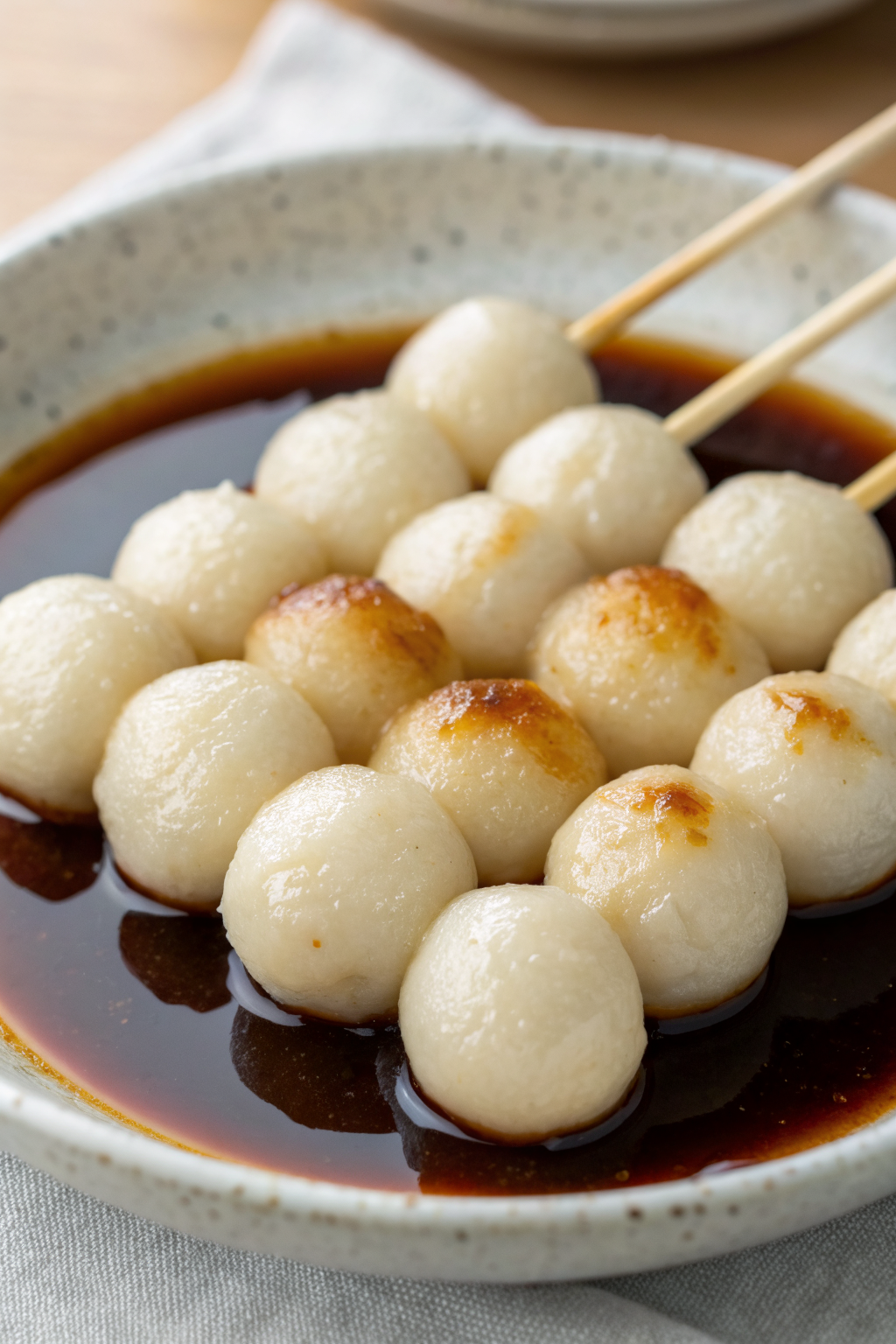
Shiratama Dango Japanese Dessert Recipe
Ingredients
Method
- Add the shiratamako, sugar, and a pinch of salt to a mixing bowl.
- Pour in 6 tablespoons of room-temperature water, a little at a time, stirring with chopsticks or a spatula until the mixture starts to clump.
- Switch to your hands and knead until the dough becomes smooth and soft.
- If the dough feels dry or cracks when pressed, add more water a teaspoon at a time and knead again until it feels like a soft earlobe and does not crack.
- Divide the dough into 14 to 16 equal pieces.
- Roll each piece between your palms into a smooth ball about 1 inch wide.
- Press a tiny dent into the center of each ball with your thumb so it cooks evenly and can hold toppings better.
- Cover the shaped dumplings with a slightly damp towel so they do not dry out while you prepare the boiling water.
- Fill a pot with plenty of water and bring it to a gentle boil.
- Lower the dumplings into the water, a few at a time, to prevent sticking.
- Stir gently once so they do not stick to the bottom of the pot.
- Cook until the dumplings float to the surface, then continue boiling for another 1 to 2 minutes so the centers become fully chewy rather than doughy.
- Prepare a large bowl with cold water and ice cubes.
- Use a slotted spoon or strainer to transfer the cooked dumplings directly into the ice water.
- Let them chill for 2 to 3 minutes so the texture becomes bouncy and pleasant.
- Drain well and gently pat the dumplings dry with a clean towel if they look very wet.
- For the kinako sugar mix, combine kinako, sugar, and a pinch of salt in a small bowl.
- If using anko, warm it gently in a small saucepan over low heat with a splash of water if it is too thick.
- For kuromitsu-style syrup, stir dark brown sugar and water in a small pan, then simmer for 1 to 2 minutes until it thickens into a syrup.
- For matcha syrup, whisk matcha with hot water and sugar or honey until smooth.
- Place a few dumplings in each serving bowl.
- Top with anko or sprinkle with the kinako sugar mix as desired.
- Drizzle with brown sugar syrup or matcha syrup for extra sweetness.
- Add sliced fresh fruit on the side and serve right away while the dumplings are still soft and chewy.
Notes
Approximate per serving (about 4 dumplings, without toppings): 150 calories; fat 0.5 g; saturated fat 0 g; carbohydrates 34 g; fiber 0 g; sugars 3 g; protein 2 g; sodium 60 mg. Toppings such as anko, kinako sugar, syrups, and fruit will increase calories, carbohydrates, and sugars. Values are estimates and will vary based on brands, toppings, and portion size.