
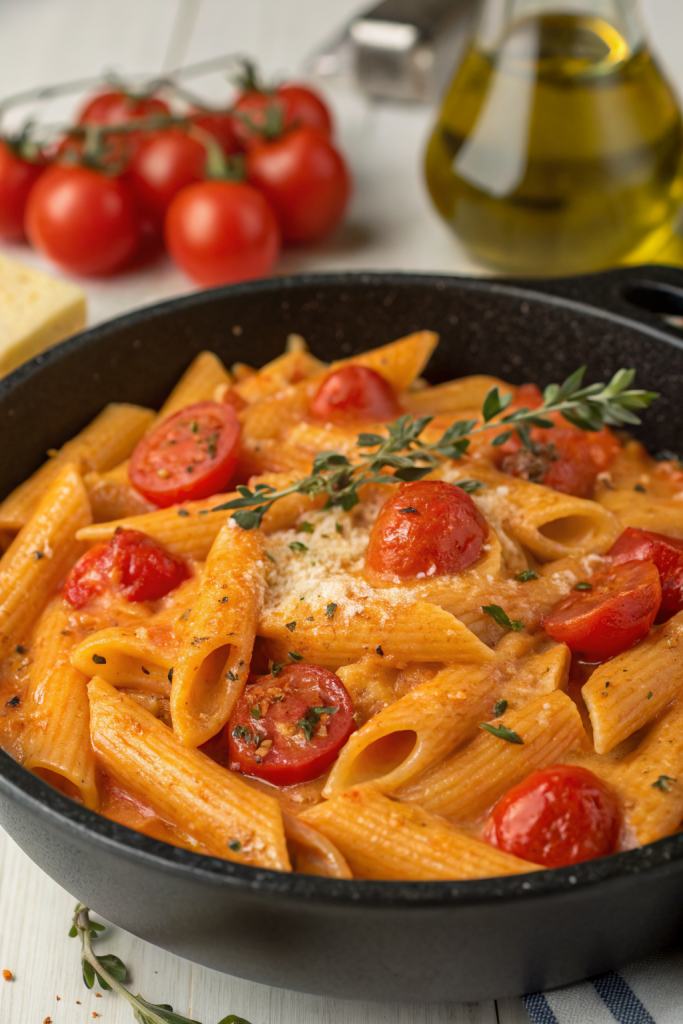
Tomato Pasta Recipe tastes bright, garlicky, and cozy, with a silky tomato sauce that clings to every noodle. It works perfectly for busy weeknights, date nights at home, or solo dinners, and you can get it on the table in about 30 minutes. I have cooked some version of this pasta more times than I can count, usually in sweatpants with a podcast on in the background.
Why Choose This Tomato Pasta Recipe
This tomato pasta recipe uses simple pantry ingredients and turns them into something that tastes like you fussed all afternoon. You get a rich, glossy sauce with real tomato flavor, not a flat, acidic one.
You can keep it basic for picky eaters or load it up with veggies and protein for a fuller meal. The recipe scales easily, so you can cook it for one or feed a crowd without stress.
“This tomato pasta recipe tastes like a cozy Italian restaurant meal, but I pulled it off in half an hour on a Tuesday night. ★★★★★”
Ingredients You’ll Need
Pasta
- 12 ounces dried pasta
- Spaghetti, linguine, penne, fusilli, or rigatoni all work.
- Choose bronze-cut pasta if possible, since it holds sauce better.
Tomato base
- 2 tablespoons extra-virgin olive oil
- Use a decent everyday brand; no need for the fancy bottle.
- 3 cloves garlic, finely minced or pressed
- 1 small yellow onion, finely chopped
- 1 can (28 ounces) crushed tomatoes or whole peeled tomatoes
- I like San Marzano style for sweeter flavor, but any good-quality canned tomato works.
- Use tomato passata if you prefer a smoother sauce.
- 2 tablespoons tomato paste
- Squeeze tube tomato paste works great and stores easily in the fridge.
Flavor boosters
- 1 teaspoon sugar, optional
- Helps balance acidity if your tomatoes taste sharp.
- 1 teaspoon kosher salt, plus more for pasta water
- ½ teaspoon freshly ground black pepper
- ½ teaspoon red pepper flakes, optional for a little heat
- 1 teaspoon dried oregano or Italian seasoning
- ½ teaspoon dried basil, or a small handful fresh basil leaves, torn
- 1–2 tablespoons unsalted butter, optional, for a richer, silkier sauce
- ¼–½ cup grated Parmesan or Pecorino Romano cheese, plus extra for serving
- Pre-grated cheese works, but freshly grated melts smoother.
Fresh finishing touches
- Small handful fresh basil or parsley, chopped
- Extra olive oil for drizzling at the end, optional
Substitutions and variations
- Use whole wheat pasta or chickpea pasta if you want more fiber or protein.
- Swap butter with a spoon of cream cheese for extra creaminess.
- Add a can of drained chickpeas or white beans for extra protein.
- Stir in sautéed mushrooms, spinach, or zucchini for more veggies.
Equipment list
- Large pot for boiling pasta
- Large skillet or wide saucepan for the sauce
- Wooden spoon or spatula
- Tongs or pasta fork
- Measuring cups and spoons
- Fine grater for cheese
- Ladle or heatproof cup to scoop pasta water
Tips & Tricks
- Salt the pasta water generously so the pasta carries flavor before it even hits the sauce.
- Cook the pasta just shy of al dente, then finish it in the sauce for the best texture.
- Scoop at least 1 cup of starchy pasta water before you drain, since it turns the sauce glossy and helps it cling.
- Let the tomato sauce simmer for at least 10 to 15 minutes so the flavors deepen and the acidity softens.
- Taste the sauce before you add sugar; only add it if the tomatoes taste too sharp.
- Stir in butter at the end for a restaurant-style silky finish.
- Toss the pasta directly in the skillet with the sauce instead of spooning sauce on top.
- Add cheese off the heat so it melts smoothly and does not clump.
- Keep red pepper flakes optional so spice-sensitive eaters stay happy.
- Use a wide skillet so the sauce reduces faster and coats the pasta evenly.
How to Make Tomato Pasta Recipe
Step 1: Boil the pasta
Bring a large pot of water to a strong boil. Salt it generously until it tastes pleasantly salty, like the sea. Add the pasta and cook it 1 to 2 minutes less than the package suggests, since it will finish in the sauce.
Scoop out about 1 cup of pasta water and set it aside. Drain the pasta but do not rinse it, since the starch helps the sauce cling.
Step 2: Build the flavor base
Heat the olive oil in a large skillet over medium heat. Add the chopped onion with a pinch of salt and cook until it turns soft and lightly golden, about 5 to 7 minutes, while you stir often. Add the garlic and cook 30 to 60 seconds, just until it smells fragrant.
Stir in the tomato paste and cook it for 1 to 2 minutes so it darkens slightly and tastes sweeter. This step adds a deep, cooked-tomato flavor that tastes like you simmered the sauce all day.
Step 3: Add tomatoes and seasonings
Pour in the crushed tomatoes or break up whole peeled tomatoes with your spoon as you add them. Stir in the oregano, dried basil, black pepper, and red pepper flakes if you use them. Add a pinch of salt and bring the sauce to a gentle simmer.
Taste a spoonful and decide if it needs sugar to balance acidity. Add up to 1 teaspoon sugar if the tomatoes taste sharp, then stir and taste again.
Step 4: Simmer the tomato sauce
Let the sauce bubble gently over medium-low heat for 10 to 15 minutes. Stir every few minutes so it does not stick. The sauce should thicken slightly and take on a richer color and flavor.
If the sauce thickens too much, add a splash of pasta water to loosen it. Taste again and adjust salt and pepper so the flavor pops.
Step 5: Marry the pasta and sauce
Add the undercooked pasta straight into the skillet with the tomato sauce. Toss well so every piece of pasta gets coated. Pour in a small splash of pasta water, about ¼ cup, and keep tossing over medium heat.
Let the pasta finish cooking in the sauce for 2 to 3 minutes. Add more pasta water as needed until the sauce turns glossy and clings to the noodles.
Step 6: Finish with richness and herbs
Turn the heat to low. Stir in the butter and grated Parmesan until they melt into the sauce and turn it silky. Toss in the fresh basil or parsley.
Taste one last time and adjust salt, pepper, or red pepper flakes. Drizzle a tiny bit of olive oil on top if you like a glossy finish.
Step 7: Serve
Twirl the tomato pasta into warm bowls. Shower each serving with extra grated cheese and a few herb leaves. Add a pinch of red pepper flakes on top for anyone who loves a little kick.
Serve right away while the sauce still hugs the pasta and the cheese stays melty. Leftovers taste great, but the first bowl always wins.
What to Serve with it?
Serve this tomato pasta recipe with a simple green salad tossed with lemon, olive oil, and a pinch of salt. Add garlic bread or toasted baguette slices so you can swipe up every last bit of sauce. Steamed or roasted vegetables like broccoli, green beans, or carrots pair nicely and keep the meal balanced.
You can also add grilled chicken, sautéed shrimp, or pan-seared tofu on the side if you want extra protein. Finish the meal with fresh fruit or a light dessert, and you have a cozy, satisfying dinner that feels special without much effort.
Storage Options
- Cool leftovers to room temperature, then store the tomato pasta in an airtight container in the fridge for up to 3 to 4 days.
- Reheat on the stove over low to medium heat with a splash of water or broth, and stir often until the sauce loosens and the pasta heats through.
- Use the microwave in short bursts, stirring between each burst, and add a spoon of water if the pasta looks dry.
- Freeze the sauce by itself for up to 3 months in a freezer-safe container, then thaw in the fridge and toss with freshly cooked pasta for the best texture.
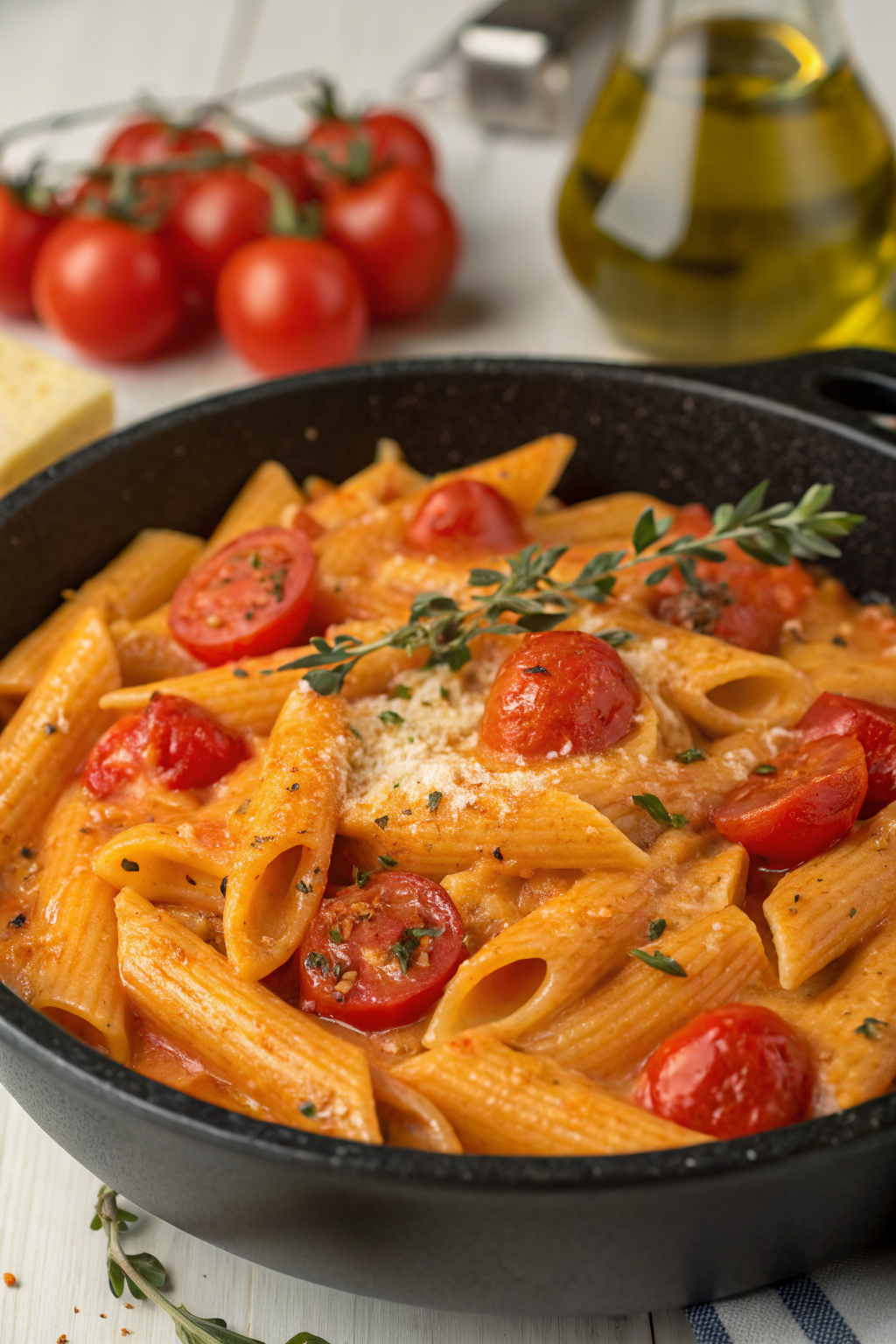
Tomato Pasta Recipe
Ingredients
Method
- Bring a large pot of water to a strong boil. Salt it generously until it tastes pleasantly salty. Add the pasta and cook 1 to 2 minutes less than the package suggests so it can finish in the sauce.
- Scoop out about 1 cup of pasta water and set it aside. Drain the pasta but do not rinse it so the starch helps the sauce cling.
- Heat the olive oil in a large skillet over medium heat. Add the chopped onion with a pinch of salt and cook, stirring often, until soft and lightly golden, about 5 to 7 minutes.
- Add the garlic and cook for 30 to 60 seconds, just until fragrant.
- Stir in the tomato paste and cook for 1 to 2 minutes until it darkens slightly and smells sweet and rich.
- Pour in the crushed tomatoes, or add whole peeled tomatoes and break them up with your spoon. Stir in the oregano, dried basil, black pepper, and red pepper flakes if using. Add a pinch of salt and bring the sauce to a gentle simmer.
- Taste the sauce and add up to 1 teaspoon sugar only if the tomatoes taste too sharp, then stir and taste again.
- Let the sauce simmer gently over medium-low heat for 10 to 15 minutes, stirring every few minutes, until slightly thickened and richer in color and flavor. Add a splash of pasta water if it gets too thick, and adjust salt and pepper to taste.
- Add the undercooked pasta straight into the skillet with the tomato sauce. Toss well to coat, adding about 1/4 cup reserved pasta water. Cook over medium heat for 2 to 3 minutes, adding more pasta water as needed until the sauce turns glossy and clings to the noodles.
- Turn the heat to low. Stir in the butter and grated Parmesan until melted and the sauce is silky. Toss in the fresh basil or parsley.
- Taste and adjust salt, pepper, or red pepper flakes. Drizzle a little olive oil on top if you like a glossy finish.
- Twirl the tomato pasta into warm bowls. Top with extra grated cheese and a few herb leaves. Serve right away while the sauce hugs the pasta and the cheese is still melty.