
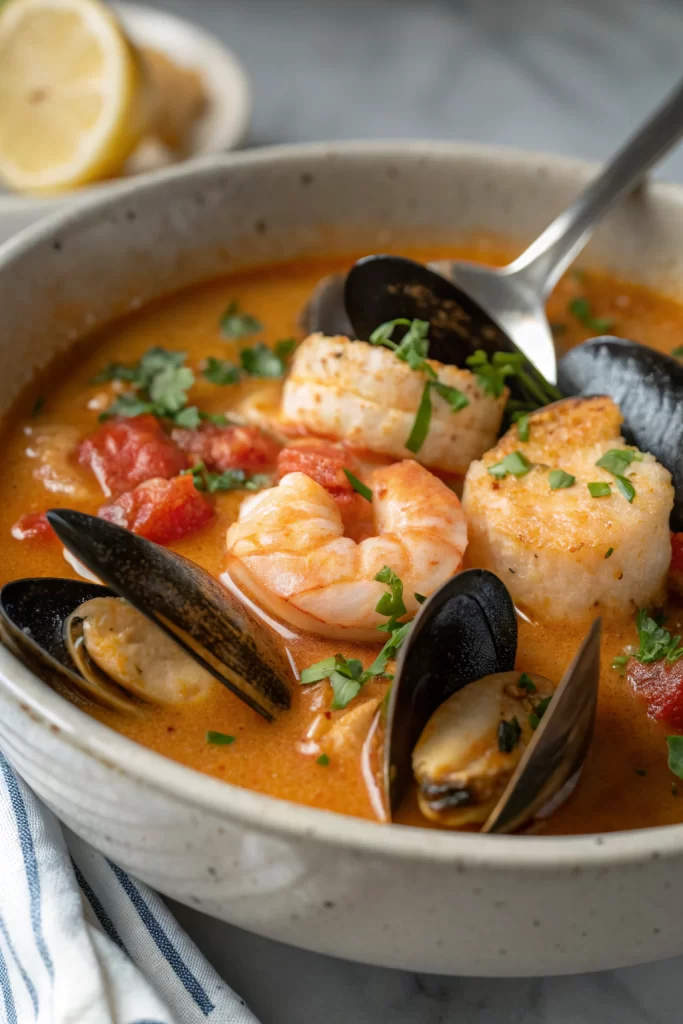
Bouillabaisse Recipe hits you with a rich saffron tomato broth, tender seafood, and a cozy briny aroma that feels like a trip to the French coast in a bowl. It suits seafood lovers who want a restaurant-level dish at home in about 1 hour 15 minutes, including prep and simmer time. I still remember ruining my first bouillabaisse a decade ago, so you can learn from my mistakes instead of repeating them in your kitchen.
Why Choose This Bouillabaisse Recipe
This bouillabaisse recipe focuses on flavor without making you hunt down impossible ingredients. You get a deep, layered broth with simple supermarket seafood and a few smart pantry shortcuts.
I tested this version many times to balance richness, acidity, and that classic saffron aroma. You can scale it for a date night or a small crowd without losing flavor or texture.
“This bouillabaisse recipe tastes like a fancy coastal restaurant meal, but I pulled it off in my tiny apartment kitchen. ★★★★★”
Ingredients You’ll Need
Seafood
Use very fresh seafood for the best bouillabaisse flavor. Frozen works in a pinch if you thaw it gently in the fridge.
- 1 pound firm white fish fillets, skinless, cut in large chunks
- Good options: cod, halibut, snapper, sea bass, haddock
- 1/2 pound mussels, scrubbed and debearded
- 1/2 pound clams, scrubbed
- 1/2 pound large shrimp, peeled and deveined, tails on or off
- 1/2 pound squid rings or tentacles, cleaned (optional but tasty)
You can swap in other shellfish like crab legs or scallops if you like. Keep total seafood around 2.5 to 3 pounds so the broth stays balanced.
Broth base
This section builds that classic bouillabaisse broth with tomato, saffron, and aromatics.
- 3 tablespoons olive oil
- 1 large yellow onion, finely chopped
- 1 medium fennel bulb, cored and finely sliced
- 2 medium leeks, white and light green parts only, sliced and rinsed well
- 4 garlic cloves, minced
- 1 large ripe tomato, chopped
- Pantry shortcut: use 1 cup canned crushed tomatoes if fresh tomatoes look sad
- 2 tablespoons tomato paste
- 1 teaspoon smoked paprika or sweet paprika
- 1/2 teaspoon crushed red pepper flakes (adjust to heat preference)
- 1/2 teaspoon dried thyme or 4 fresh thyme sprigs
- 2 bay leaves
- 1/2 teaspoon orange zest (or a 2-inch strip of orange peel)
- 1/2 teaspoon saffron threads, lightly crumbled
- 6 cups seafood stock or fish stock
- Shortcut: use bottled clam juice plus low sodium chicken broth in a 1:1 mix
- 1 cup water, as needed to adjust consistency
- 1 teaspoon kosher salt to start, plus more to taste
- 1/2 teaspoon freshly ground black pepper
If you use a salty store brand stock, reduce the added salt and adjust at the end. I like low sodium stock so I control the seasoning.
Rouille (optional but classic)
Rouille is a garlicky, saffron chili sauce that you spread on toasted bread and float on the bouillabaisse. It adds richness and a little heat.
- 1 small potato, peeled and cut in chunks
- 2 garlic cloves, minced
- 1/4 teaspoon saffron threads
- 1/2 teaspoon smoked paprika
- 1/4 teaspoon cayenne pepper or hot paprika
- 1 egg yolk
- 1/2 teaspoon Dijon mustard
- 1/2 teaspoon salt
- 1/2 cup olive oil
- 1–2 teaspoons lemon juice, to taste
If raw egg yolk concerns you, use pasteurized eggs or swap in 2 tablespoons mayonnaise and reduce the olive oil slightly.
Bread and finishing touches
- 1 baguette or crusty country bread, sliced
- 2 tablespoons olive oil, for brushing bread
- 1 lemon, cut in wedges
- Extra chopped fresh parsley or fennel fronds, for garnish
Equipment list
- Large heavy pot or Dutch oven, at least 6 quarts
- Lid for the pot
- Medium saucepan for rouille and potato
- Cutting board and sharp knife
- Wooden spoon or heatproof spatula
- Ladle
- Fine mesh strainer (optional, if you want a very smooth broth)
- Baking sheet for toasting bread
- Blender or immersion blender for rouille
Tips & Tricks
- Pat seafood dry with paper towels so it sears and cooks evenly in the broth.
- Add firm fish and shellfish in stages so nothing overcooks or turns rubbery.
- Keep the broth at a gentle simmer, not a hard boil, once you add seafood.
- Taste and adjust salt at the very end, since stock and shellfish can add salinity.
- Use saffron sparingly; a little gives fragrance, too much tastes metallic.
- Slice fennel and leeks thin so they soften and melt into the broth.
- Toast bread until crisp so it holds up when you dip it in the bouillabaisse.
- If you use frozen seafood, thaw it in the fridge overnight for better texture.
- Skim any foam from the top of the broth for a cleaner flavor.
- Serve the rouille on the side so everyone controls their own heat level.
How to Make Bouillabaisse Recipe
Step 1: Prep the seafood and aromatics
Rinse mussels and clams under cold water and scrub the shells. Discard any with cracked shells or ones that stay open when you tap them.
Cut fish into large chunks, about 2 inches, so they hold shape in the broth. Pat all seafood dry and keep it chilled in the fridge while you prep vegetables.
Chop onion, fennel, leeks, garlic, and tomato. Measure out spices, saffron, tomato paste, and stock so you move smoothly once you start cooking.
Step 2: Build the aromatic base
Heat 3 tablespoons olive oil in a large heavy pot over medium heat. Add onion, fennel, and leeks, then cook and stir until they turn soft and lightly golden, about 8 to 10 minutes.
Add garlic and cook 1 minute until fragrant. Stir in tomato, tomato paste, paprika, red pepper flakes, thyme, bay leaves, and orange zest.
Cook this mixture 3 to 4 minutes so the tomato paste darkens slightly and the flavors concentrate. This step builds a deep base for your bouillabaisse broth.
Step 3: Add stock and saffron
Pour in seafood stock and water, then stir well to loosen any browned bits from the bottom. Crumble saffron threads between your fingers and sprinkle them into the pot.
Bring the mixture to a gentle boil, then lower heat to a steady simmer. Cover partially and let it simmer 20 to 25 minutes so the flavors meld and the broth gains body.
Taste the broth and season with salt and black pepper. If the flavor tastes too strong, add a bit more water; if it tastes too mild, simmer a few more minutes uncovered.
Step 4: Optional step to strain the broth
If you want a very smooth bouillabaisse broth, strain it. Set a fine mesh strainer over a large bowl or another pot.
Ladle the broth through the strainer and press on the vegetables to extract maximum flavor. Discard the solids, then pour the clear broth back into the pot.
If you like a rustic style, skip the straining step and keep the vegetables in the soup. I usually keep them because they taste sweet and delicious.
Step 5: Cook the seafood in stages
Bring the broth back to a gentle simmer. Add the clams and mussels first, since they take longer.
Cover the pot and cook 5 to 7 minutes, until most shells open. Discard any clams or mussels that stay closed.
Add the fish chunks and squid, then simmer gently 3 to 4 minutes. Add the shrimp last and cook another 2 to 3 minutes, just until they turn pink and opaque.
Taste the broth again and adjust salt, pepper, or a pinch more red pepper flakes. Turn off the heat so the seafood does not overcook.
Step 6: Make the rouille
While the broth simmers, make the rouille. Place potato chunks in a small saucepan, cover with cold water, and add a pinch of salt.
Bring to a boil, then reduce heat and simmer until the potato turns very tender, about 10 to 12 minutes. Drain well and let the potato steam dry for a minute.
Place cooked potato, garlic, saffron, smoked paprika, cayenne, egg yolk, Dijon, and salt in a blender or a bowl for an immersion blender. Blend until smooth.
With the blender running, drizzle in olive oil slowly until the mixture thickens and looks creamy. Add lemon juice to taste and adjust salt.
If the rouille looks too thick, thin it with a teaspoon of warm water. If it looks too thin, blend in a bit more potato or a spoonful of mayonnaise.
Step 7: Toast the bread
Heat your broiler or set the oven to high heat. Arrange baguette slices on a baking sheet.
Brush both sides lightly with olive oil and sprinkle with a pinch of salt. Toast until golden and crisp on the edges, about 2 to 4 minutes, and flip halfway if needed.
You can rub the warm bread with a cut garlic clove if you want extra flavor. Set the toasted slices aside until serving.
Step 8: Serve the bouillabaisse
Ladle generous portions of seafood and broth into warm bowls. Sprinkle with chopped parsley or fennel fronds.
Serve toasted bread on the side with a bowl of rouille. Invite everyone to spread rouille on the bread and float it on top of the bouillabaisse or dip as they eat.
Add lemon wedges on the table so people can squeeze fresh juice into their bowls. That little hit of acidity brightens the saffron tomato broth.
What to Serve with it?
Bouillabaisse already feels like a full meal, so keep the sides simple and fresh. A crisp green salad with a light lemon vinaigrette pairs nicely and cuts through the richness of the broth. Steamed green beans, roasted carrots, or a mix of grilled vegetables also work well and keep the meal balanced.
You can serve extra crusty bread or garlic toast for dunking, especially if you love soaking up every drop of broth. A chilled sparkling water with citrus slices or a light herbal iced tea fits perfectly and keeps the focus on the seafood flavors.
Storage Options
- Cool leftover bouillabaisse to room temperature within 1 hour, then store it in airtight containers in the fridge for up to 2 days.
- Reheat gently on the stove over low to medium heat until hot; avoid boiling so the seafood stays tender.
- If you plan to freeze, store just the broth in freezer containers for up to 2 months and add fresh seafood when you reheat and serve.
- Keep rouille in a covered container in the fridge for up to 3 days and stir before serving; do not freeze it because the texture changes.
- Store toasted bread at room temperature in a paper bag for a day, then re-crisp it in a hot oven for a few minutes before serving.
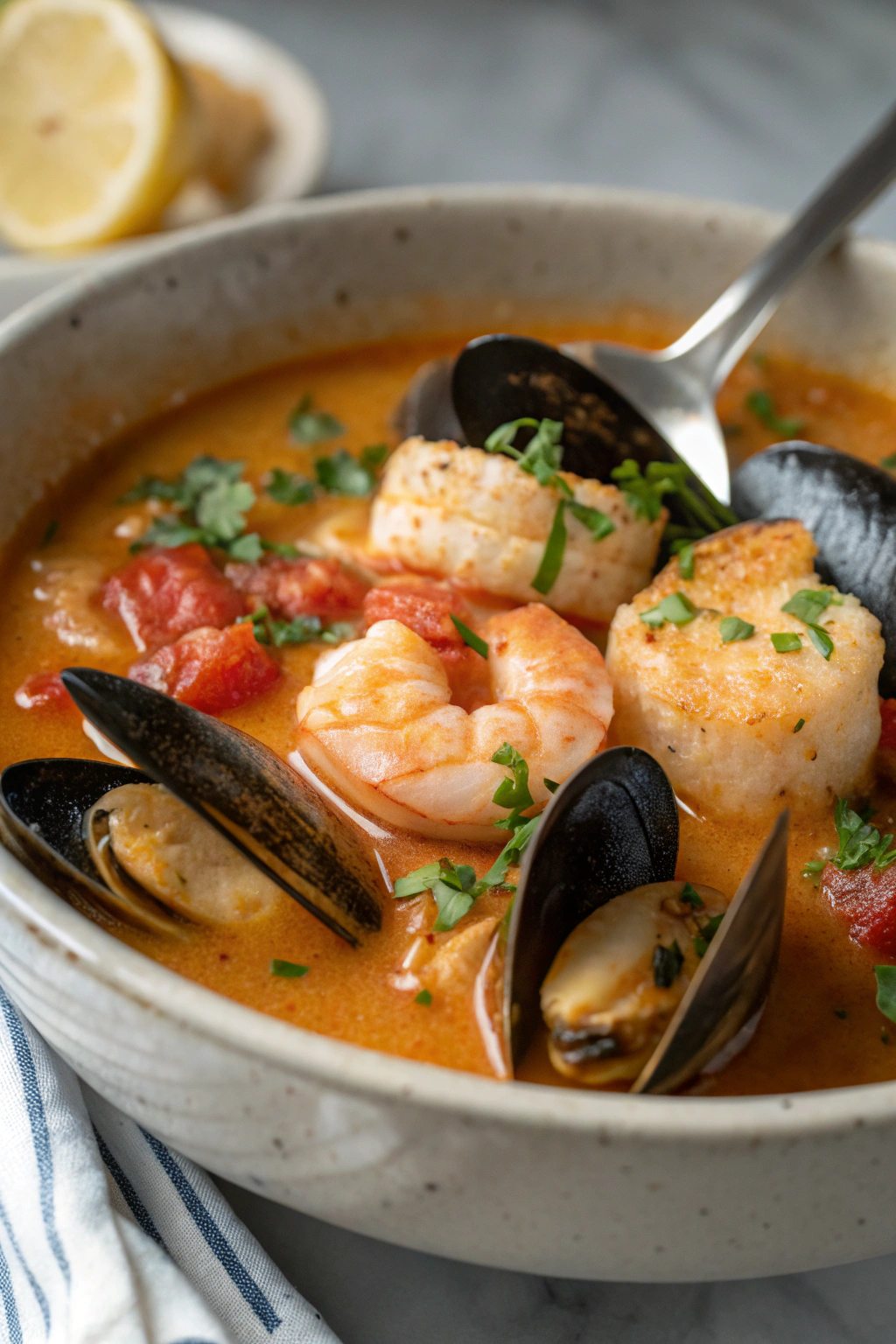
Bouillabaisse Recipe
Ingredients
Method
- Heat the olive oil in a large heavy pot or Dutch oven over medium heat.
- Add the sliced onion, leeks, and fennel. Cook, stirring occasionally, until softened and translucent, 8–10 minutes.
- Stir in the minced garlic and cook until fragrant, about 1 minute.
- Pour in the white wine, scraping up any browned bits from the bottom of the pot. Simmer for 2–3 minutes to reduce slightly.
- Add the crushed tomatoes, fish or seafood stock, orange peel, fennel seeds, saffron, bay leaf, salt, and pepper. Bring to a boil, then reduce heat and simmer gently, partially covered, for 20–25 minutes to develop flavor.
- Taste the broth and adjust seasoning with additional salt and pepper if needed.
- Increase heat to bring the broth to a gentle boil. Add the clams and mussels, cover, and cook for 4–5 minutes, until they begin to open.
- Add the fish chunks and shrimp, submerging them gently in the broth. Cover and cook for another 5–7 minutes, just until the fish is opaque, the shrimp are pink, and all the shellfish have opened. Discard any clams or mussels that do not open.
- Rub the toasted bread slices lightly with the cut side of the garlic clove, if using.
- Ladle the bouillabaisse into warm bowls, making sure each portion gets a mix of fish, shellfish, and broth.
- Garnish with chopped fresh parsley and serve hot with the garlic-rubbed toasted bread on the side.
Notes
Approximate per serving (bouillabaisse only, without bread): 360 calories; fat 14 g; saturated fat 2 g; carbohydrates 18 g; fiber 3 g; sugars 6 g; protein 39 g; sodium 980 mg. Values are estimates and will vary based on specific seafood selection, stock, and portion size.