
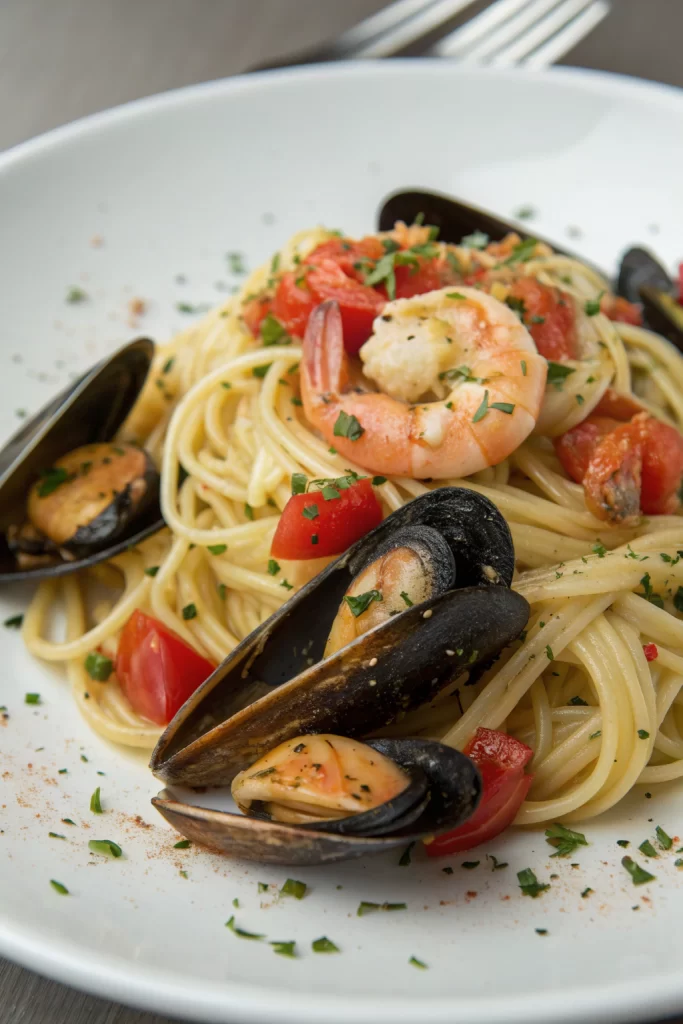
Seafood Pasta with Linguine Shrimp Mussels tastes rich, briny, garlicky, and just a little bit fancy while still feeling like a big cozy bowl of comfort. It suits busy home cooks who want a restaurant-style seafood pasta on the table in about 35 minutes, start to finish. I tested versions of this recipe so many times that my kids now judge all restaurant seafood pasta against “mom’s linguine night.”
Why Seafood Pasta with Linguine Shrimp Mussels Is Worth It
This pasta hits that perfect balance of simple and special. You toss sweet shrimp and tender mussels with linguine, garlic, olive oil, a quick tomato-wine style sauce (with broth as an easy swap), and a squeeze of lemon that brightens every bite.
You cook everything in layers in one large pan, so the seafood juices mingle with the sauce and coat each strand of linguine. The whole thing feels like a date-night meal, but you cook it on a random Tuesday in under an hour without breaking a sweat.
“Tastes like a coastal restaurant dinner, but you cook it in one pan and eat it in sweatpants.” ★★★★★
Ingredients You Need
Seafood
- Large shrimp, peeled and deveined
- I like 16–20 count shrimp so they stay juicy and visible in the pasta.
- Frozen shrimp work great; thaw them in cold water and pat them dry.
- Fresh mussels, scrubbed and debearded
- Choose tightly closed mussels that smell like the ocean, not fishy.
- If a mussel stays open after a firm tap, toss it.
Pasta
- Linguine
- Dry linguine holds the sauce nicely and cooks in about 9 to 11 minutes.
- Use regular or bronze-cut; bronze-cut grabs more sauce but costs more.
- You can swap with spaghetti or fettuccine if that is what you have.
Aromatics and Flavor Base
- Olive oil
- Use a decent extra virgin olive oil; this recipe leans on its flavor.
- Unsalted butter
- Butter rounds out the sauce and adds a silky finish.
- Garlic, finely minced
- Fresh garlic matters here; jarred garlic tastes sharper and less sweet.
- Shallot or yellow onion, finely chopped
- Shallots taste slightly sweeter and more delicate, but onion works fine.
- Crushed red pepper flakes
- Adjust to your heat preference; I use a small pinch for gentle warmth.
Sauce Components
- Crushed tomatoes or finely chopped canned tomatoes
- I like San Marzano style tomatoes for a sweeter, less acidic sauce.
- Seafood stock or low sodium chicken broth
- Seafood stock gives deeper flavor; chicken broth works as a pantry shortcut.
- Dry white cooking wine or extra broth
- If you avoid wine, just use more broth and a splash of extra lemon juice.
- Fresh lemon juice and zest
- Zest adds bright flavor without extra liquid; juice finishes the dish.
- Salt and freshly ground black pepper
Fresh Finishes
- Fresh parsley, chopped
- Flat leaf parsley adds color and freshness.
- Fresh basil, optional, torn or sliced
- Basil gives a sweeter, more aromatic finish if you enjoy that flavor.
- Extra crushed red pepper, optional, for serving
Pantry Shortcuts and Brand Notes
- Use frozen peeled shrimp to skip cleaning; I do this on weeknights.
- Shelf stable seafood stock works fine; I like Kitchen Basics or similar brands.
- Boxed crushed tomatoes save time; choose low sodium so you control the salt.
- Pre chopped onion from the produce section can help on very busy nights.
Equipment List
- Large heavy skillet or wide sauté pan with lid
- A 12 inch pan gives the mussels room to open and the pasta room to toss.
- Large pot for boiling pasta
- Tongs for tossing linguine with the sauce
- Fine mesh strainer or colander
- Cutting board and sharp knife
- Microplane or fine grater for lemon zest
- Measuring cups and spoons
Quick Tips & substitutions
- Salt the pasta water generously so the linguine tastes seasoned from the start.
- Cook the pasta just shy of al dente, then finish it in the sauce for better flavor.
- Pat the shrimp dry so they sear instead of steam.
- Discard any mussels that stay closed after cooking.
- Use broth instead of wine if you prefer an alcohol free version.
- Swap linguine with spaghetti, bucatini, or fettuccine if needed.
- Stir a spoonful of jarred marinara into the sauce if you want a sweeter tomato flavor.
- Add a splash of reserved pasta water if the sauce looks tight when you toss the pasta.
- Use gluten free linguine to keep the texture similar while avoiding gluten.
- Add extra crushed red pepper if you want more heat, or skip it for a mild version.
How to Make Seafood Pasta with Linguine Shrimp Mussels
Step 1: Prep the Seafood and Ingredients
Peel and devein the shrimp if needed, then pat them very dry with paper towels. Scrub the mussels under cold water and pull off any beards you see. Tap any open mussels on the counter and toss the ones that stay open.
Chop the shallot or onion and mince the garlic. Chop the parsley and zest the lemon, then cut the lemon into wedges. Keep everything close to the stove so you move quickly once the seafood goes in.
Step 2: Cook the Linguine
Bring a large pot of water to a strong boil and add a generous handful of salt. Drop in the linguine and stir so it does not stick. Cook until it reaches just shy of al dente, usually 1 to 2 minutes less than the package suggests.
Scoop out about 1 cup of starchy pasta water and set it aside. Drain the linguine but do not rinse it, since the starch helps the sauce cling. Toss the pasta with a small drizzle of olive oil so it does not clump while you finish the sauce.
Step 3: Build the Flavor Base
Heat olive oil and a small knob of butter in your large skillet over medium heat. Add the chopped shallot or onion with a pinch of salt and cook until it softens and turns translucent. Stir in the garlic and crushed red pepper and cook until the garlic smells fragrant, about 30 seconds.
Pour in the wine or extra broth and scrape up any browned bits from the bottom of the pan. Let the liquid bubble for a minute or two so the sharp alcohol flavor cooks off if you use wine. Add the crushed tomatoes and seafood stock or broth, then stir everything together.
Step 4: Simmer the Sauce
Bring the sauce to a gentle simmer and taste it. Add salt and pepper as needed, since different stocks and tomatoes have different salt levels. Let the sauce simmer for about 5 to 7 minutes so it thickens slightly and the flavors come together.
Stir in the lemon zest and a small squeeze of lemon juice. Keep the sauce at a gentle simmer while you cook the seafood. If it thickens too much, splash in a bit of pasta water or broth.
Step 5: Cook the Mussels
Slide the cleaned mussels into the simmering sauce and stir so they nestle into the liquid. Cover the pan with a lid and cook for about 4 to 6 minutes. Check after 4 minutes and pull the lid once most mussels open.
Use tongs to move any mussels that sit on top down into the sauce. Toss any mussels that stay closed after this cooking time. Taste the sauce again, since the mussels add a pleasant briny note.
Step 6: Sear the Shrimp
Push the mussels slightly to the edges of the pan to clear a bit of space in the center. Add a small drizzle of olive oil if the pan looks dry. Lay the shrimp in a single layer in the sauce and cook for about 1 to 2 minutes on the first side until they start to curl and turn pink.
Flip the shrimp and cook another 1 to 2 minutes until they turn opaque and just firm. Avoid overcooking them, since shrimp turn rubbery quickly. Once they look cooked through, lower the heat to medium low.
Step 7: Toss the Linguine With the Sauce
Add the drained linguine straight into the skillet with the sauce, shrimp, and mussels. Use tongs to toss everything together so the pasta soaks up the sauce and the seafood distributes evenly. If the mixture looks tight or dry, splash in some reserved pasta water until it looks glossy and loose.
Stir in a small knob of butter and a drizzle of olive oil for extra richness. Toss in most of the chopped parsley and taste again for salt, pepper, and lemon. Adjust seasoning until every bite tastes bright and balanced.
Step 8: Finish and Serve
Turn off the heat and let the pasta sit in the pan for 1 to 2 minutes so the flavors settle. Plate the linguine first, then arrange shrimp and mussels on top so they show off. Spoon extra sauce over each portion.
Sprinkle with the remaining parsley and a pinch of crushed red pepper if you like heat. Serve with lemon wedges on the side so everyone can add more brightness. Sit down and enjoy your seafood pasta with linguine shrimp mussels while it still steams.
Recipe Variations
- Gluten free: Use gluten free linguine or spaghetti and check that your stock carries a gluten free label.
- Dairy free: Skip the butter and finish with extra olive oil and lemon instead.
- Extra tomato: Add more crushed tomatoes and a spoonful of tomato paste for a thicker, deeper red sauce.
- Creamy version: Stir in a splash of heavy cream or coconut milk at the end for a richer sauce.
- Extra seafood: Add scallops or chunks of firm white fish and cook them gently in the sauce with the shrimp.
- Spicy version: Add more crushed red pepper and a pinch of smoked paprika for a little smoky heat.
- Low carb: Serve the shrimp and mussels with sauce over zucchini noodles or steamed broccoli instead of pasta.
- Herb twist: Swap parsley with fresh cilantro and basil for a different herbal profile.
Ways to Serve
- Pile the seafood pasta into warm shallow bowls and top with extra parsley and lemon.
- Serve with a simple green salad with olive oil, lemon, and a pinch of salt.
- Add a side of garlic bread or toasted baguette to soak up the sauce.
- Pair with sparkling water with lemon slices or a citrusy mocktail.
- Offer grated Parmesan on the side if your family likes cheese with seafood pasta.
Storage Success
Cool leftovers to room temperature, then transfer them to an airtight container and refrigerate for up to 2 days. Reheat gently in a skillet over low heat with a splash of water or broth so the linguine loosens and the shrimp do not overcook. Pull the mussels out of their shells before storing if you want easier reheating and eating later. I rarely see leftovers last more than a day in my house, but when they do, this method keeps the seafood pasta with linguine shrimp mussels tasty and safe.
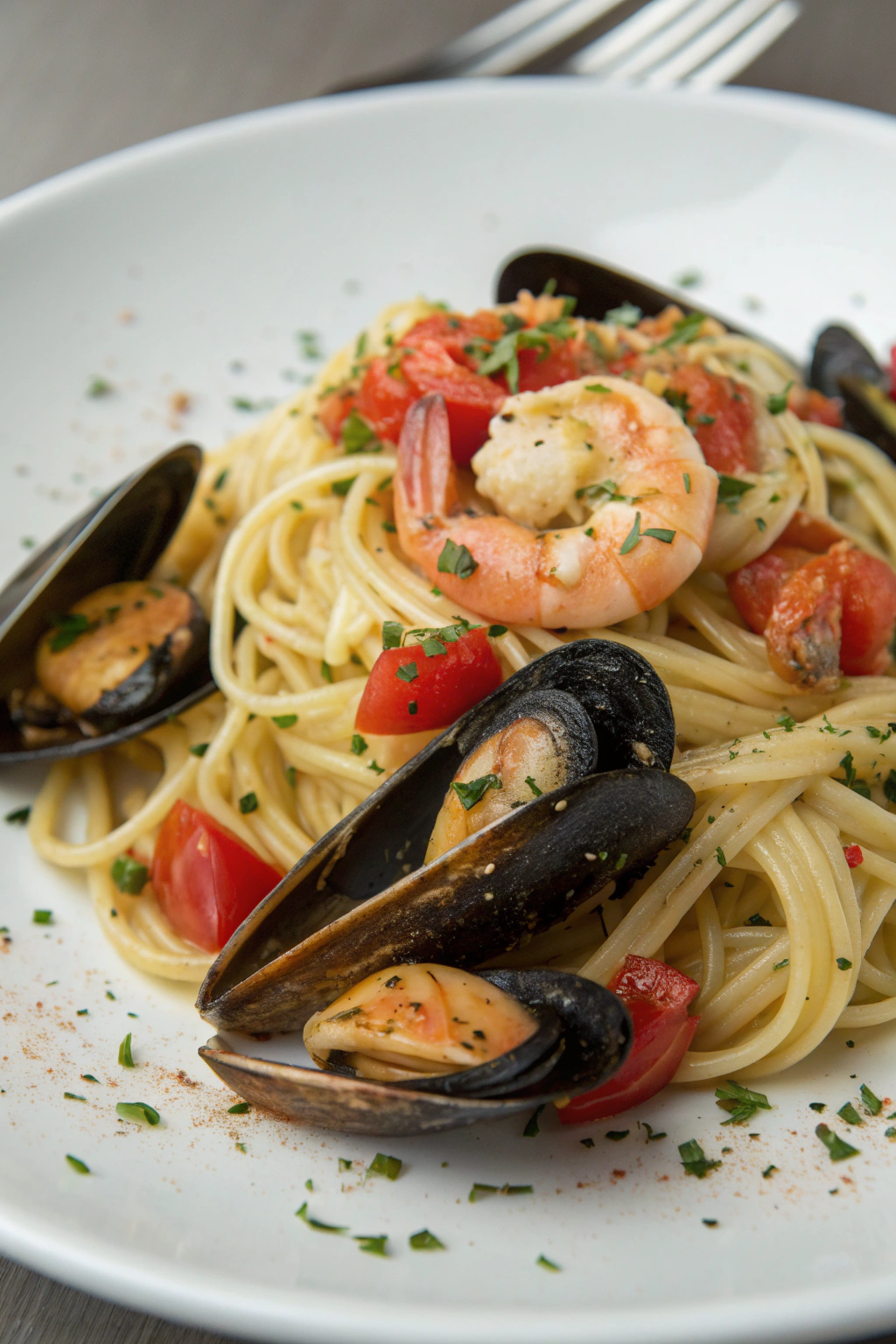
Seafood Linguine with Shrimp and Mussels
Ingredients
Method
- Cook the linguine in a large pot of well-salted boiling water until al dente according to package directions. Reserve about 1 cup of pasta cooking water, then drain and set aside.
- While the pasta cooks, heat the olive oil and 2 tablespoons of the butter in a large deep skillet over medium heat. Add the garlic and red pepper flakes and cook, stirring frequently, for 1–2 minutes until fragrant but not browned.
- Pour in the white wine and simmer for 2–3 minutes, scraping up any bits from the bottom of the pan. Add the seafood or chicken broth and crushed tomatoes, then season with salt and black pepper. Bring to a gentle simmer.
- Add the cleaned mussels to the skillet, cover with a lid, and cook for 4–5 minutes, shaking the pan occasionally, until most of the mussels have opened. Discard any mussels that do not open.
- Stir in the shrimp, cover again, and cook for 3–4 minutes more, just until the shrimp turn pink and opaque.
- Add the drained linguine directly to the skillet with the seafood. Toss gently to coat the pasta in the sauce, adding a splash of reserved pasta water as needed to loosen the sauce.
- Remove from heat and stir in the remaining 1 tablespoon butter, chopped parsley, and lemon juice. Taste and adjust seasoning with additional salt and pepper if needed.
- Serve immediately in warm bowls, topping with grated Parmesan or Pecorino if desired.
Notes
Approximate per serving (1/4 of recipe): 620 calories; fat 20 g; saturated fat 8 g; carbohydrates 75 g; fiber 4 g; sugars 6 g; protein 32 g; sodium 780 mg. Values are estimates and will vary based on specific ingredients, brands, and portion sizes.