
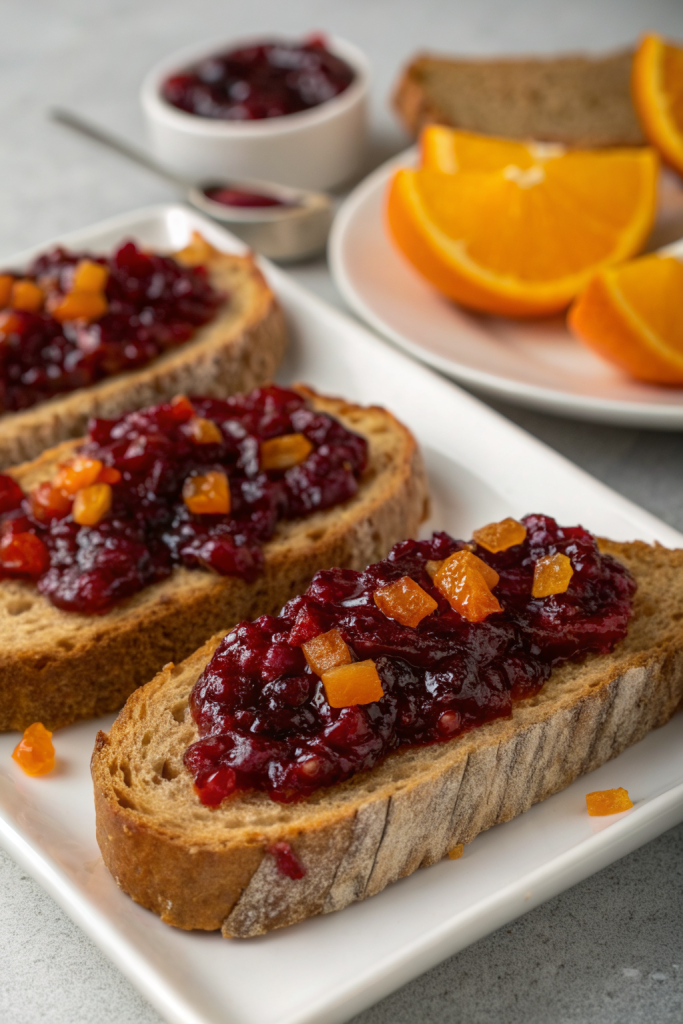
Cranberry Orange Marmalade Recipe tastes bright, tangy, and just sweet enough, perfect for anyone who loves a bold, citrusy spread and has about 1 hour to spare. It works well for holiday gifting, weekend brunch, or anytime you want toast that feels a little fancy without much effort. I first cooked a batch in a tiny apartment kitchen with one wobbly burner, so if I managed it there, you can nail it too.
Why Choose This Cranberry Orange Marmalade Recipe
This cranberry orange marmalade recipe uses whole oranges and fresh cranberries, so the flavor hits with citrus oils, tart berries, and a gentle bitterness that keeps it from tasting like candy. It sets softly, spreads easily, and tastes amazing on everything from toast to roast chicken.
You cook it in one pot, with simple ingredients you probably already keep around. The recipe scales well, so you can make a small batch for your fridge or a bigger one for gifting.
“Bright, tangy, and not too sweet, this cranberry orange marmalade recipe tastes like winter sunshine in a jar ★★★★★”
Ingredients You’ll Need
Cranberries
- 3 cups fresh cranberries
- You can use frozen cranberries without thawing; just add 2 to 3 extra minutes of cooking.
- I like Ocean Spray or any brand that looks firm and glossy.
Oranges
- 3 medium seedless oranges, preferably thin-skinned (navel or Cara Cara)
- Zest of all 3 oranges (use a microplane or fine grater)
- Segments and juice from the 3 oranges
- If your oranges have seeds, pick them out before cooking.
- You can swap in 1 blood orange for one of the regular oranges for a deeper color and flavor.
Lemon
- 1 large lemon, zest and juice
- Lemon adds brightness and natural pectin that helps the marmalade set.
- Bottled lemon juice works in a pinch, but fresh tastes brighter.
Sugar
- 2 ½ to 3 cups granulated sugar
- Start with 2 ½ cups; taste near the end and add the remaining ½ cup if you want it sweeter.
- Use plain white sugar; brown sugar darkens the color and adds a molasses note that can overpower the citrus.
Liquid
- 1 cup water
- You can swap half the water for orange juice if you like a sweeter, more citrus-forward marmalade.
Flavor boosters (optional but tasty)
- 1 teaspoon vanilla extract for a softer, rounder flavor
- ½ teaspoon ground cinnamon or 1 cinnamon stick for a cozy note
- ¼ teaspoon ground ginger or 1 tablespoon finely minced fresh ginger for a little warmth
- Pinch of salt to sharpen the flavors
Equipment
- Large, wide, heavy-bottomed pot or Dutch oven
- A wide pot helps the marmalade thicken faster.
- Sharp knife and cutting board
- Microplane or fine grater for zest
- Measuring cups and spoons
- Long-handled heatproof spoon or spatula
- Candy or instant-read thermometer (helpful but optional)
- Potato masher (optional, for breaking down cranberries)
- Clean glass jars with tight lids
- Use canning jars if you plan to water-bath can; regular jars work fine for fridge and freezer storage.
Tips & Tricks
- Zest the oranges and lemon before you cut them so you do not wrestle slippery fruit.
- Slice the orange peel very thin so it softens quickly and does not taste tough.
- Use a wide pot so the mixture reduces faster and thickens evenly.
- Stir often, especially near the end, to prevent scorching at the bottom of the pot.
- Keep the heat at a steady simmer; a wild boil can burn the sugars and toughen the peel.
- Test thickness by placing a small spoonful on a cold plate; if it wrinkles slightly when you push it, you reached setting point.
- If you do not own a thermometer, rely on the cold plate test and the look of slow, thick bubbles.
- Taste near the end and adjust sugar or lemon juice to balance sweetness and tartness.
- Add spices lightly; you want cranberry and orange to stay the stars.
- Use a potato masher if you prefer fewer whole cranberries and a smoother marmalade.
How to Make Cranberry Orange Marmalade Recipe
Step 1: Prep the citrus
Wash the oranges and lemon well, since you use the peel. Use a microplane or fine grater to zest all the oranges and the lemon, and set the zest aside. With a sharp knife, slice off the ends of the oranges, then cut away the peel in wide strips, leaving as much white pith as you can attached to the peel.
Stack a few strips of peel at a time and slice them into very thin matchsticks. Cut the peeled oranges into segments or small chunks, catching all the juice in a bowl. Zest the lemon, then cut it in half and squeeze out the juice, catching any seeds so they do not land in the pot.
Step 2: Soften the peel
Place the sliced orange peel in your pot. Add the 1 cup of water and bring it to a gentle boil over medium heat. Reduce to a simmer and cook 10 to 15 minutes until the peel turns tender and bends easily.
If the water level drops too low, add a splash more so the peel does not scorch. Taste a small piece of peel; it should feel soft, not crunchy or tough. When it reaches that point, move to the next step.
Step 3: Add cranberries, citrus, and sugar
Add the cranberries, orange segments with their juice, lemon zest, and lemon juice to the pot with the softened peel. Stir in 2 ½ cups of sugar and a pinch of salt. If you use cinnamon, ginger, or vanilla, add them now.
Stir everything together and bring the mixture back to a simmer over medium heat. The cranberries will start to pop and release juice, and the sugar will dissolve into a bright red syrup. If you want fewer whole berries, use a potato masher to gently crush some of them as they soften.
Step 4: Cook to setting point
Keep the mixture at a steady simmer and stir often. The cranberries will break down, the peel will turn translucent, and the liquid will thicken and darken slightly. Skim off any foam that gathers on top with a spoon so the marmalade looks clear and glossy.
Cook 20 to 30 minutes, depending on your pot and heat level. If you use a thermometer, aim for about 220°F at sea level, slightly lower if you live at higher altitude. If you do not use a thermometer, start testing after 20 minutes with the cold plate method.
Step 5: Test the thickness
Place a small plate in the freezer when you start cooking. When the marmalade looks thick and the bubbles rise slowly, spoon a little onto the cold plate. Wait 30 seconds, then push the edge of the puddle with your fingertip.
If the surface wrinkles slightly and the marmalade holds a soft mound, you reached a good set. If it still runs like warm syrup, keep cooking and test again every 3 to 5 minutes. Taste a small bit and add the remaining ½ cup sugar if you want it sweeter, then cook 3 to 5 more minutes to dissolve and thicken again.
Step 6: Rest and jar
Turn off the heat and let the cranberry orange marmalade sit for 5 minutes. This short rest helps the peel and fruit distribute evenly instead of floating to the top. Stir gently once more.
Ladle the hot marmalade into clean jars, leaving a little space at the top. Wipe the rims, seal with lids, and let them cool to room temperature. Store in the fridge or freezer, or process in a water bath if you follow safe canning guidelines.
What to Serve with it?
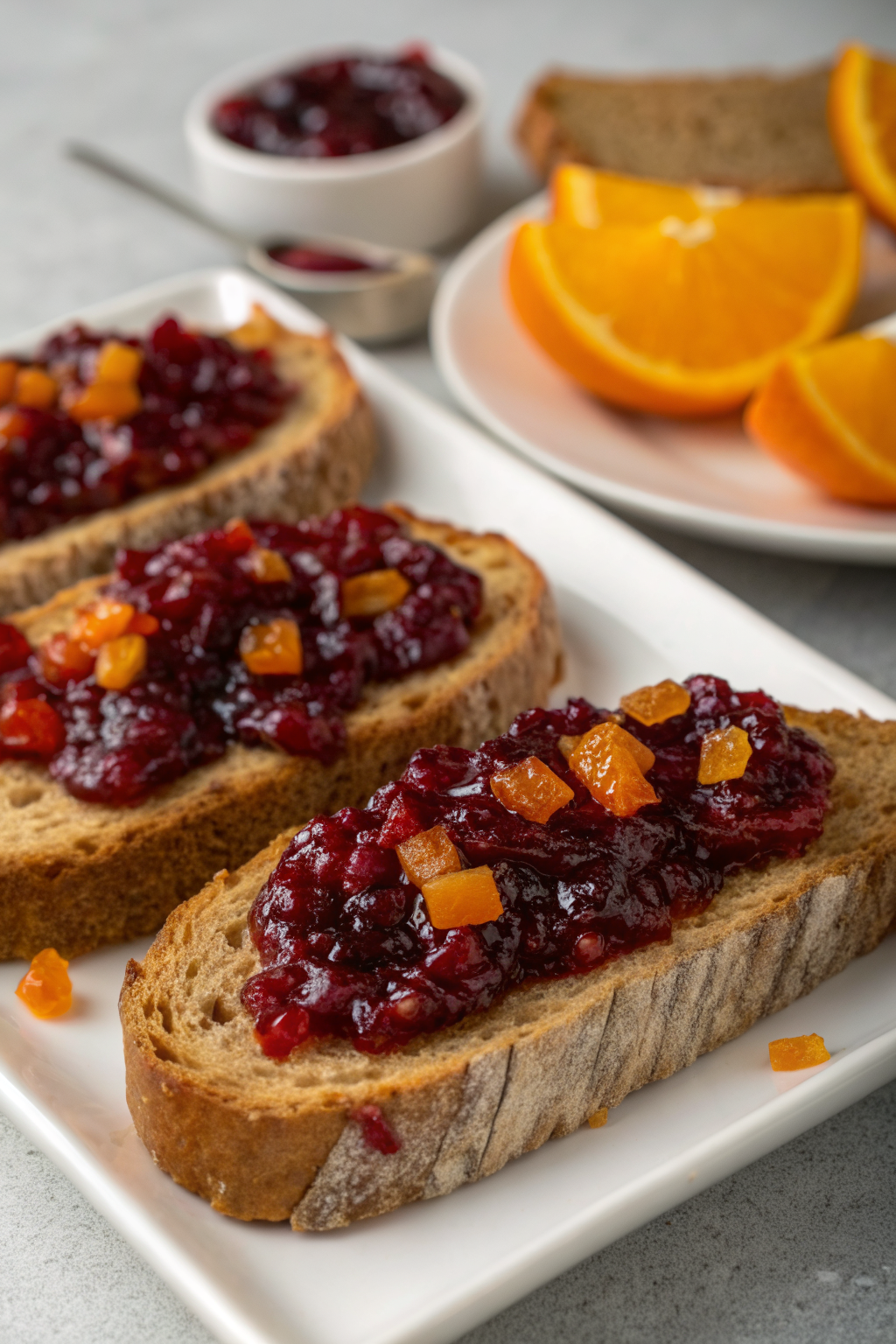
Spread this cranberry orange marmalade on buttered toast, English muffins, scones, or warm biscuits for breakfast that tastes like a holiday morning. Spoon it over plain yogurt or oatmeal to add color and bright flavor without extra fuss. Use it as a glaze for roasted chicken or turkey, or stir a spoonful into pan drippings to build a quick sauce.
It also pairs nicely with sharp cheddar, creamy brie, or goat cheese on a snack board, along with crackers and fresh fruit. Swirl it into vanilla ice cream or cheesecake batter for a tart, citrusy twist on dessert.
Storage Options
- Fridge: Store cooled cranberry orange marmalade in clean, tightly sealed jars in the refrigerator for up to 3 weeks.
- Freezer: Portion into freezer-safe jars or containers, leaving at least ½ inch of headspace, and freeze for up to 6 months. Thaw overnight in the fridge before using.
- Room temperature (canned): If you follow approved water-bath canning methods and use sterilized jars and lids, you can keep sealed jars in a cool, dark pantry for up to 1 year.
- Reheating / serving: Serve straight from the fridge, or warm gently in a small saucepan over low heat with a splash of water if it feels too thick. Stir until it loosens to your liking, then cool slightly before spooning over toast or desserts.
Cranberry Orange Marmalade Recipe
Ingredients
Method
- Wash the oranges and lemon well. Zest all 3 oranges and the lemon with a microplane or fine grater and set the zest aside.
- Slice the ends off the oranges, then cut away the peel in wide strips, leaving as much white pith attached to the peel as possible. Stack a few strips at a time and slice them into very thin matchsticks. Cut the peeled oranges into segments or small chunks, catching all the juice in a bowl. Juice the lemon, catching any seeds.
- Place the sliced orange peel in a large, wide, heavy-bottomed pot. Add the 1 cup of water and bring to a gentle boil over medium heat. Reduce to a simmer and cook 10–15 minutes, until the peel is tender and bends easily. Add a splash more water if needed to prevent scorching.
- Add the cranberries, orange segments with their juice, reserved orange and lemon zest, and lemon juice to the pot with the softened peel. Stir in 2 1/2 cups sugar and a pinch of salt. Add vanilla, cinnamon, and ginger if using.
- Bring the mixture back to a steady simmer over medium heat, stirring often. The cranberries will pop and release their juices as the sugar dissolves into a bright red syrup. Use a potato masher if you prefer fewer whole berries.
- Continue simmering, stirring frequently, for 20–30 minutes. Skim off any foam that rises so the marmalade stays clear and glossy. The cranberries will break down, the peel will become translucent, and the mixture will thicken and darken slightly.
- To test the set, place a small plate in the freezer at the start of cooking. When the marmalade looks thick and the bubbles rise slowly, spoon a little onto the cold plate. Wait 30 seconds, then push the edge with your fingertip; if it wrinkles slightly and holds a soft mound, it is ready. If it runs like warm syrup, keep cooking and test again every 3–5 minutes. Taste and add up to 1/2 cup more sugar if you want it sweeter, then cook a few minutes more to dissolve and thicken.
- Remove the pot from the heat and let the marmalade rest for 5 minutes so the fruit and peel distribute evenly instead of floating. Stir gently once more, then ladle the hot marmalade into clean jars, leaving a little headspace. Wipe rims, seal with lids, and let cool to room temperature before refrigerating, freezing, or canning according to safe water-bath canning guidelines.
Notes
Approximate per 2-tablespoon serving (about 24 servings per batch): 80–90 calories; fat 0 g; saturated fat 0 g; carbohydrates 22 g; fiber 1 g; sugars 20 g; protein 0 g; sodium 0–10 mg. Values will vary based on exact sugar amount, fruit size, and portion size.