
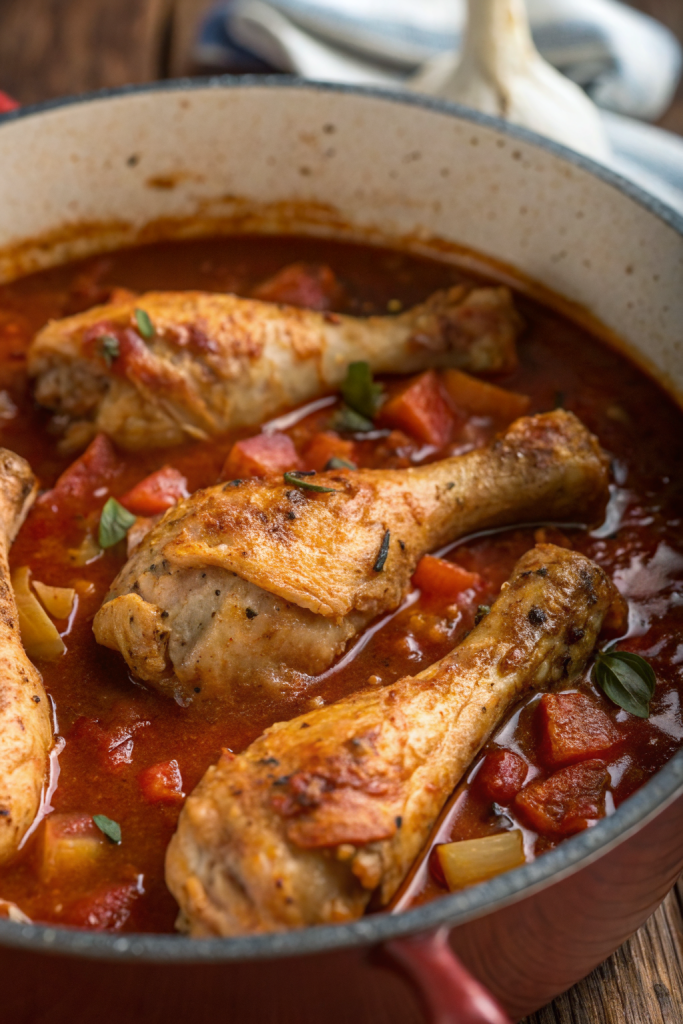
Korean Braised Spicy Chicken (Dak Doritang) Recipe hits that perfect spot between cozy comfort food and fiery, addictive flavor, and it lands on my table in about 45 to 55 minutes on a weeknight. It suits spice lovers, meal-preppers, and anyone who wants a hearty one-pot Korean chicken stew with potatoes, carrots, and a rich red broth. I grew up in a house that measured spice by how much we sweat, so this one feels like home to me.
Why Korean Braised Spicy Chicken (Dak Doritang) Recipe Is Worth It
This Korean Braised Spicy Chicken (Dak Doritang) Recipe gives you tender chicken, soft potatoes, and a bold, garlicky gochujang broth that clings to every bite. You get a full meal in one pot, so you skip juggling multiple pans and side dishes.
You can adjust the heat level easily, so it fits both mild and spicy palates at the same table. Leftovers taste even better the next day, which makes this stew a smart choice for busy weeks.
“This Korean Braised Spicy Chicken (Dak Doritang) Recipe tastes rich, spicy, and deeply comforting, like a hug in a bowl with a little kick to keep things interesting. ★★★★★”
Ingredients You Need
You can find most ingredients for Dak Doritang in a regular grocery store, and an Asian market fills in the rest.
Chicken
- 2 to 2.5 pounds bone-in chicken pieces
- Best: chicken thighs and drumsticks, skin-on or skin-off by preference
- You can use a whole chicken cut into 8 to 10 pieces
- Boneless thighs work, but shorten cooking time by about 5 minutes
Vegetables
- 2 medium russet or Yukon Gold potatoes, peeled and cut into large chunks
- 2 medium carrots, peeled and sliced into thick chunks
- 1 small yellow onion, sliced thick
- 3 to 4 cloves garlic, minced
- 1 teaspoon grated ginger (optional but tasty)
- 2 to 3 green onions, sliced (white and green parts separated)
- 1 small Korean green chili or jalapeño, sliced (optional for extra heat)
Broth base
- 1.5 cups water or low sodium chicken broth
- 1 tablespoon soy sauce for depth
- 1 teaspoon sugar or honey to balance the heat
Spicy seasoning sauce (Gochujang mixture)
Mix these in a bowl:
- 2 tablespoons gochujang (Korean red chili paste)
- I like brands such as Chung Jung One or CJ Haechandle
- Choose mild gochujang if you prefer less heat
- 1.5 to 2 tablespoons gochugaru (Korean red chili flakes)
- Use 1 tablespoon for mild, 2 tablespoons for spicy
- 2 tablespoons soy sauce
- 1 tablespoon rice wine or mirin
- You can swap with a splash of apple juice or water if needed
- 1 tablespoon sugar, honey, or Korean rice syrup
- 1 tablespoon minced garlic
- 1 teaspoon sesame oil
- 1 teaspoon grated ginger
- Freshly ground black pepper to taste
Optional add-ins
- 1 small zucchini, cut into half moons
- 1 cup Korean radish chunks
- 1 handful soaked glass noodles (dangmyeon) added near the end
- Extra gochugaru if you want a deeper red color and more heat
Garnish
- Sliced green onion tops
- Toasted sesame seeds
Pantry shortcuts & notes
- Use pre-minced garlic and ginger from jars if you want to save time.
- If you cannot find gochugaru, use a mix of mild chili flakes and a pinch of cayenne, but gochugaru gives the best flavor.
- If you cannot find gochujang, use a mix of miso paste and chili paste, though the taste shifts slightly.
Equipment list
- Large heavy pot with lid or a Dutch oven
- Cutting board and sharp knife
- Mixing bowl for the sauce
- Wooden spoon or spatula
- Measuring spoons and cups
Quick Tips & substitutions
- Cut potatoes and carrots into large chunks so they stay intact and do not turn mushy.
- Use bone-in chicken for deeper flavor and juicier meat.
- Trim excess fat from chicken if you prefer a lighter broth.
- Use water instead of broth if you want a cleaner, lighter taste.
- Reduce gochugaru and use mild gochujang if you cook for kids or spice-sensitive friends.
- Add a splash of extra water if the stew thickens more than you like.
- Stir the pot gently so potatoes keep their shape.
- Use gluten free tamari instead of soy sauce if you need a gluten free version.
- Swap chicken with firm tofu cubes and extra vegetables for a meatless version.
- Add glass noodles near the end of cooking for a heartier, almost one-bowl meal.
How to Make Korean Braised Spicy Chicken (Dak Doritang) Recipe
Step 1: Prep the chicken and vegetables
Pat the chicken pieces dry with paper towels so they brown and hold seasoning better. Cut potatoes into large chunks about 1.5 inches so they cook through but stay firm. Slice carrots into thick diagonal chunks and cut onion into thick slices so they hold up in the stew.
Mince garlic and grate ginger. Slice green onions and keep white parts separate from green tops. Set everything near the stove so you cook without scrambling around the kitchen.
Step 2: Mix the spicy seasoning sauce
In a medium bowl, add gochujang, gochugaru, soy sauce, rice wine or mirin, sugar or honey, minced garlic, grated ginger, sesame oil, and black pepper. Stir until the mixture turns smooth and glossy with no lumps of gochujang. Taste a tiny bit and adjust with more sugar for balance or more gochugaru for extra heat.
This sauce carries most of the flavor, so mix it well. You can make this sauce a day ahead and keep it in the fridge to speed things up.
Step 3: Build flavor in the pot
Place your heavy pot over medium heat and drizzle in a little neutral oil. Add the white parts of the green onions and sliced onion, then sauté for 2 to 3 minutes until the onion softens and smells sweet. Add minced garlic and ginger and stir for about 30 seconds so they release aroma but do not burn.
Add the chicken pieces in a single layer as much as you can. Sear each side for 2 to 3 minutes until the surface turns opaque and picks up a little color. You do not need deep browning, but a light sear adds flavor.
Step 4: Add broth, sauce, and start braising
Pour in water or chicken broth and soy sauce, then stir to loosen any browned bits from the bottom. Add the spicy seasoning sauce and stir so the chicken coats evenly. The liquid should almost cover the chicken but not drown it.
Bring the pot to a gentle boil over medium high heat. Once it boils, lower the heat to medium low so the stew simmers with small bubbles. Partially cover with a lid and simmer for about 10 minutes.
Step 5: Add potatoes and carrots
After 10 minutes, add potato and carrot chunks to the pot. Stir gently so the vegetables tuck into the broth and sauce. Keep the heat at a steady simmer and partially cover again.
Cook for another 15 to 20 minutes until the potatoes and carrots turn tender and the chicken cooks through. Stir once or twice during this time, but handle the potatoes gently so they keep their shape.
Step 6: Adjust thickness and seasoning
Check the stew. The broth should look rich, slightly thick, and bright red from the gochujang and gochugaru. If it looks too thick, add a splash of water and stir.
Taste the broth. Add a pinch of salt or a splash of soy sauce if it needs more seasoning, or a bit more sugar or honey if the heat feels too sharp. If you want more spice, sprinkle in a little extra gochugaru and simmer a couple more minutes.
Step 7: Add optional vegetables and finish
If you use zucchini or Korean radish, add them during the last 10 minutes of cooking so they soften but do not fall apart. If you use glass noodles, soak them in warm water until soft, then add them during the last 5 minutes so they soak up the broth. Stir in sliced green chili if you want extra kick.
Turn off the heat once the chicken feels tender and the potatoes pierce easily with a fork. Scatter the green onion tops and toasted sesame seeds over the stew. Let the pot sit for 5 minutes so the flavors settle, then serve hot.
Recipe Variations
-
Gluten free
- Use gluten free tamari instead of soy sauce.
- Check labels on gochujang and gochugaru to confirm they stay gluten free.
-
Vegan or vegetarian
- Swap chicken with firm or extra firm tofu cubes and mushrooms.
- Use vegetable broth and add more potatoes, carrots, and zucchini.
-
Low carb
- Replace potatoes with radish, zucchini, or cauliflower florets.
- Use less sugar and sweeten lightly with a small amount of monk fruit or stevia if you like.
-
Extra hearty version
- Add glass noodles or rice cakes during the last 5 to 10 minutes.
- Stir in more vegetables like bell peppers or napa cabbage.
-
Extra mild version
- Use mild gochujang and cut gochugaru to 1 teaspoon.
- Add a bit more broth and sugar to soften the heat.
Ways to Serve Korean Braised Spicy Chicken (Dak Doritang) Recipe
- Spoon Dak Doritang over hot steamed white rice or brown rice.
- Serve with kimchi, pickled radish, or simple cucumber salad for crunch and freshness.
- Ladle extra broth into bowls and add a side of plain rice cakes for dipping.
- Serve with a small bowl of roasted seaweed sheets so you can wrap rice and chicken bites.
- Offer extra sliced green onions and sesame seeds at the table for topping.
Storage Success
Let the Korean Braised Spicy Chicken (Dak Doritang) cool until it reaches room temperature, then store it in airtight containers in the fridge for up to 3 to 4 days. The flavors deepen overnight, so the stew often tastes even better the next day. Reheat gently on the stove over medium low heat and add a splash of water if the broth thickens too much. Freeze portions in freezer safe containers for up to 2 months and thaw in the fridge before reheating.
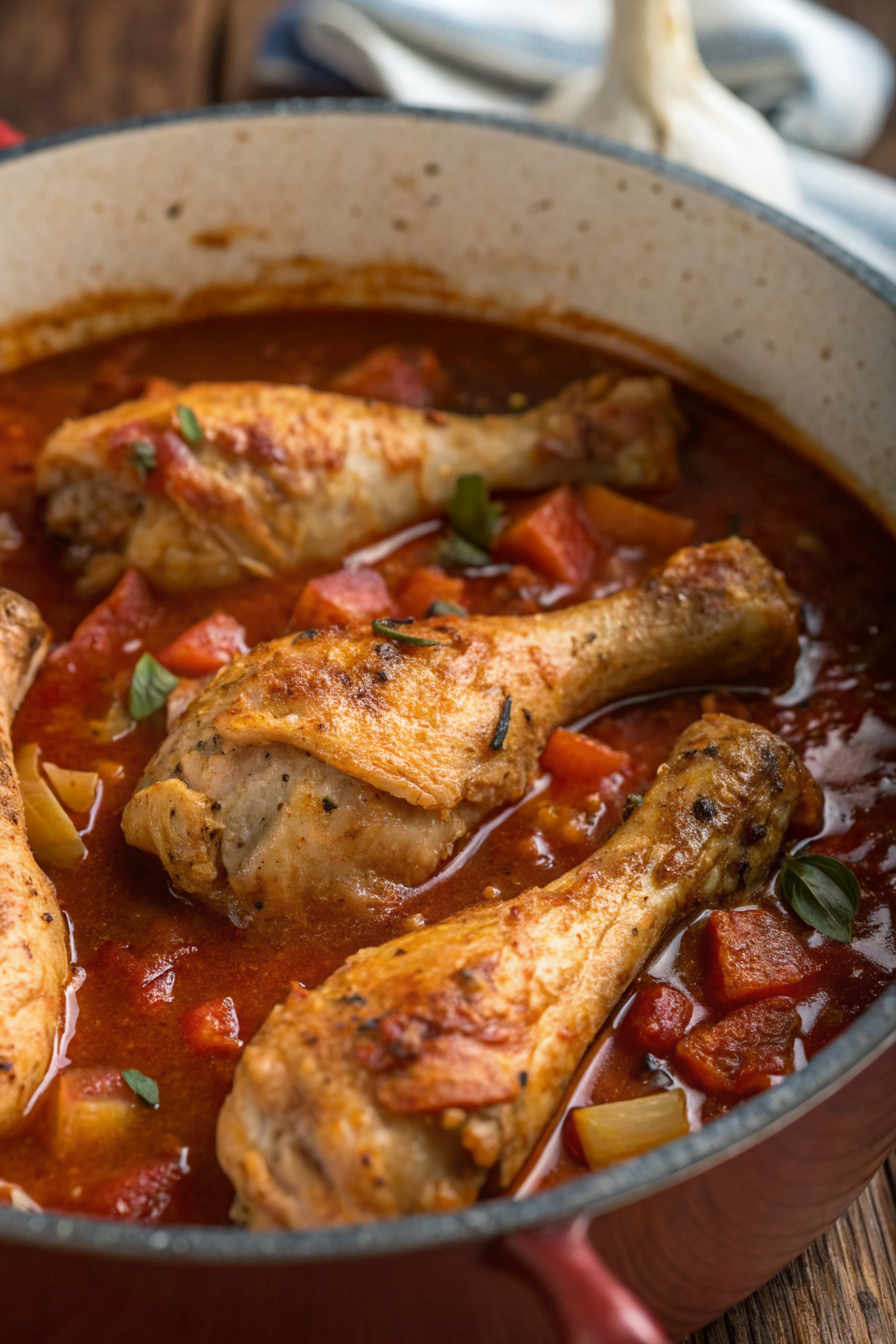
Korean Braised Spicy Chicken (Dak Doritang) Recipe
Ingredients
Method
- Pat the chicken pieces dry with paper towels. Peel and cut the potatoes into large chunks, slice the carrots into thick diagonal pieces, and slice the onion thickly. Mince the garlic, grate the ginger, and slice the green onions, keeping white parts separate from green tops.
- In a medium bowl, mix together the gochujang, gochugaru, soy sauce, rice wine or mirin, sugar or honey, minced garlic, grated ginger, sesame oil, and black pepper until smooth and glossy. Adjust sweetness or heat to taste and set aside.
- Heat a large heavy pot or Dutch oven over medium heat with a little neutral oil. Add the white parts of the green onions and the sliced onion and sauté for 2 to 3 minutes until softened and fragrant. Add minced garlic and ginger and cook for about 30 seconds, stirring.
- Add the chicken pieces in a single layer as much as possible. Sear for 2 to 3 minutes per side until the surface turns opaque and lightly browned; deep browning is not necessary.
- Pour in the water or chicken broth and the soy sauce for the broth base, scraping up any browned bits from the bottom. Add the prepared spicy seasoning sauce and stir to coat the chicken evenly. The liquid should almost cover the chicken. Bring to a gentle boil over medium-high heat, then reduce to medium-low and simmer partially covered for about 10 minutes.
- Add the potato and carrot chunks to the pot, stirring gently so they nestle into the broth. Maintain a steady simmer, partially covered, for another 15 to 20 minutes, stirring once or twice carefully so the potatoes keep their shape, until the chicken is cooked through and the vegetables are tender.
- Check the consistency of the broth. If it is too thick, add a splash of water and stir. Taste and adjust seasoning with a pinch of salt or a splash of soy sauce, more sugar or honey if the heat is too sharp, or additional gochugaru for extra spice.
- If using zucchini or Korean radish, add them during the last 10 minutes of cooking so they soften without falling apart. If using glass noodles, soak them in warm water until softened, then add during the last 5 minutes so they absorb the broth. Add sliced green chili for extra heat if desired.
- Once the chicken is tender and the potatoes are easily pierced with a fork, turn off the heat. Scatter the green onion tops and toasted sesame seeds over the stew. Let rest for about 5 minutes, then serve hot, ideally with steamed rice and simple side dishes.
Notes
Approximate per serving (4 servings): 420 calories; fat 17 g; saturated fat 4 g; carbohydrates 31 g; fiber 4 g; sugars 10 g; protein 33 g; sodium 1180 mg. Values will vary based on chicken cuts, added vegetables, brands, and portion size.