
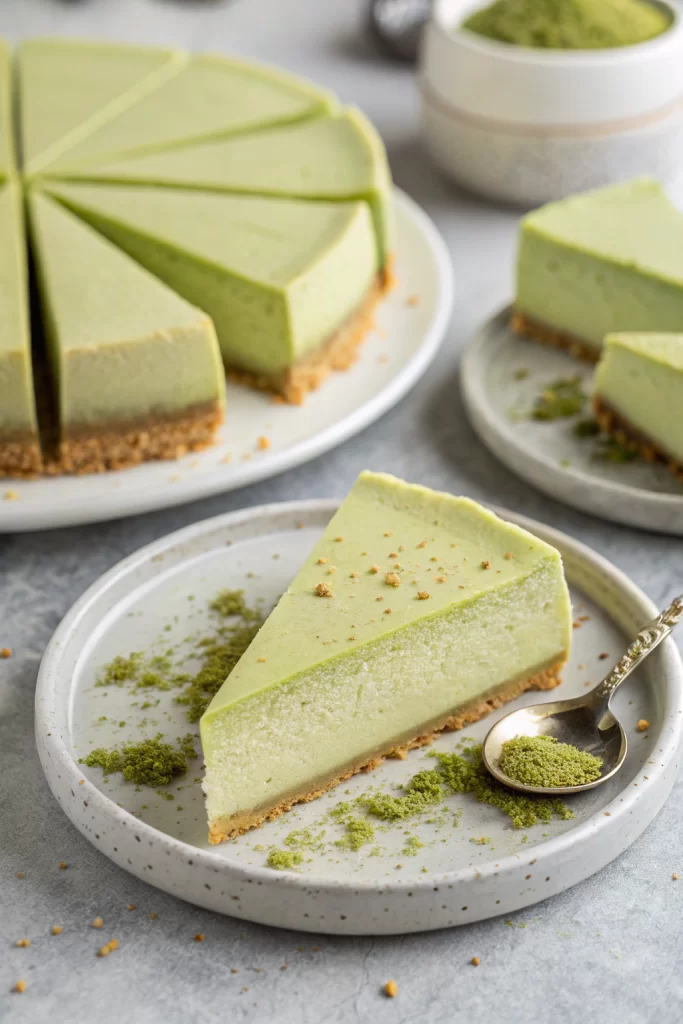
Original Matcha Japanese Cheesecake Recipe tastes like a cloud of green tea ice cream and New York cheesecake had a very polite, very fluffy baby, and it melts on your tongue with a gentle bittersweet finish. It works best for matcha lovers who want a lighter, jiggly Japanese cheesecake that still feels special, and you can finish the whole thing in about 2 hours including baking and cooling. I tested this version so many times that my neighbors now judge all other desserts by “that matcha cheesecake standard.”
Why Choose This Original Matcha Japanese Cheesecake Recipe
This recipe gives you that signature Japanese cotton cheesecake texture: tall, wobbly, and incredibly soft, with a clean slice that still feels airy. The matcha flavor comes through clearly but never tastes harsh, because the sugar, cream cheese, and low baking temperature keep it balanced.
You do not need fancy bakery tools or obscure ingredients, only a few smart techniques. The recipe also uses a gentle water bath and a specific oven method that keeps the top from cracking and the sides from shrinking.
“This Original Matcha Japanese Cheesecake Recipe tastes like a matcha cloud with cheesecake flavor, and it disappears from the plate in minutes. ★★★★★”
Ingredients You’ll Need
Dairy & Eggs
- 8 oz (225 g) full-fat cream cheese, room temperature
- Use block-style cream cheese, not whipped or spreadable. I like Philadelphia or a good store brand with minimal additives.
- 4 tbsp (55 g) unsalted butter, room temperature
- 1/2 cup (120 ml) whole milk, room temperature
- 5 large eggs, separated, room temperature
- Cold eggs whip poorly, so let them sit out 30 minutes.
Dry Ingredients
- 1/2 cup (100 g) granulated sugar, divided
- Use 2 tbsp for the yolk batter and the rest for the meringue.
- 1/2 cup (60 g) cake flour, sifted
- If you only have all-purpose flour, measure 1/2 cup, remove 1 tbsp, and add 1 tbsp cornstarch, then sift well.
- 2 tbsp (15 g) cornstarch, sifted
- 1 1/2 to 2 tbsp matcha powder, sifted
- Use a good culinary-grade matcha with bright green color and no dull brownish tint. I like brands such as Matcha Love or Ito En for baking.
- 1/4 tsp fine sea salt
- 1/4 tsp cream of tartar or 1/2 tsp lemon juice
- This helps stabilize the egg whites.
Flavor & Finishing
- 1 tsp pure vanilla extract
- Powdered sugar or extra matcha for dusting, optional
Equipment List
- 8-inch (20 cm) round cake pan or springform pan, at least 3 inches tall
- If you use a springform, wrap the outside tightly with heavy-duty foil to keep water out.
- Large roasting pan or deep baking tray for the water bath
- Parchment paper
- Hand mixer or stand mixer with whisk attachment
- Medium and large mixing bowls (clean and grease-free for the egg whites)
- Fine mesh sieve for sifting matcha and dry ingredients
- Rubber spatula
- Small saucepan or microwave-safe bowl
- Kitchen scale, optional but very helpful for accuracy
Tips & Tricks
- Line the bottom and sides of the pan with parchment so the cake rises evenly and releases cleanly.
- Wrap the outside of the pan with at least 2 layers of foil so the water bath never seeps in.
- Sift matcha, flour, and cornstarch together to avoid green clumps in the batter.
- Warm the cream cheese, butter, and milk gently so they blend into a silky base without lumps.
- Separate eggs while cold, then let whites and yolks reach room temperature before mixing.
- Whip egg whites to soft, glossy peaks, not stiff and dry, so the cake rises tall but stays tender.
- Fold the meringue into the batter in three additions with a gentle “scoop and turn” motion to keep the air.
- Tap the filled pan on the counter a few times to pop large air bubbles that cause tunnels or big cracks.
- Bake low and slow and avoid opening the oven door during the first 45 minutes.
- Cool the cheesecake gradually in the oven with the door slightly open so it does not collapse.
- Use a thin knife around the edge while still slightly warm to prevent the sides from sticking and shrinking.
- Chill the cake at least 4 hours, preferably overnight, for the best texture and clean slices.
How to Make Original Matcha Japanese Cheesecake Recipe
Step 1: Prepare the Pan and Oven
Preheat your oven to 320°F (160°C). Place a rack in the lower-middle position so the top of the cheesecake sits in the center of the oven. Line the bottom of your 8-inch pan with parchment and line the sides with a tall strip of parchment that rises about 1 inch above the rim.
If you use a springform pan, wrap the outside tightly with 2 to 3 layers of heavy-duty foil. Set the prepared pan aside. Place your large roasting pan on the oven rack so it heats while you mix the batter.
Step 2: Make the Cream Cheese Base
In a small saucepan, combine cream cheese, butter, and milk. Place over low heat and stir until the mixture turns smooth and silky, with no visible lumps. You can also microwave in 20 to 30 second bursts, stirring between each, until smooth.
Transfer this warm mixture to a medium bowl and let it cool until just slightly warm to the touch, not hot. Whisk in vanilla and the egg yolks, one at a time, until the mixture looks glossy and uniform.
Step 3: Add Dry Ingredients and Matcha
In a separate bowl, sift together cake flour, cornstarch, matcha powder, and salt. Sift this mixture again directly over the cream cheese yolk mixture. Whisk gently until no dry streaks remain and the batter looks smooth and evenly green.
If you see lumps of matcha or flour, push the batter through a fine sieve into a clean bowl and whisk again. Set this matcha cheesecake base aside while you whip the egg whites.
Step 4: Whip the Egg Whites
Place the egg whites in a clean, dry large mixing bowl. Add cream of tartar or lemon juice. Beat on medium speed until the mixture turns foamy and white.
Gradually add the remaining sugar in 3 to 4 additions while you continue to beat. Increase to medium-high speed and whip until the whites reach soft peaks that curl over gently when you lift the beaters. The meringue should look glossy, not chunky or dry.
Step 5: Fold the Meringue into the Matcha Batter
Add about one third of the meringue to the matcha batter. Use a rubber spatula to fold gently, scooping from the bottom and turning the bowl as you go, until the mixture looks mostly combined. This first addition lightens the batter.
Add the second third of the meringue and fold again, more gently this time. Add the final third and fold just until no white streaks remain. The batter should feel airy and pourable, with a consistent pale green color.
Step 6: Fill the Pan and Set Up the Water Bath
Pour the batter into the prepared pan. Tap the pan firmly on the counter 3 to 4 times to release large air bubbles. You can pop any visible surface bubbles with a toothpick.
Carefully slide the pan into the preheated roasting pan in the oven. Pour hot water into the roasting pan until it reaches about halfway up the sides of the cake pan. Use hot tap water or recently boiled water so the oven temperature stays stable.
Step 7: Bake the Cheesecake
Bake at 320°F (160°C) for 20 minutes. After 20 minutes, reduce the oven temperature to 285°F (140°C) without opening the door. Continue baking for another 40 to 45 minutes, until the top looks lightly golden and the center jiggles like soft jelly when you nudge the pan.
If the top browns too quickly, tent a piece of foil loosely over the pan without touching the surface of the cake. Once baked, turn off the oven and open the door slightly. Leave the cheesecake inside for 15 to 20 minutes so it cools gradually.
Step 8: Cool, Chill, and Serve
Remove the pan from the water bath and place it on a wire rack. Run a thin knife around the inside edge of the pan to loosen the cake from the sides. Let it cool to room temperature.
Once cool, cover the pan and chill the cheesecake in the fridge for at least 4 hours, or overnight for the best texture. When ready to serve, remove from the pan, peel off the parchment, and dust the top lightly with powdered sugar or a tiny pinch of matcha. Slice with a warm, thin knife and wipe the blade between cuts for clean edges.
What to Serve with it?
This Original Matcha Japanese Cheesecake Recipe pairs beautifully with fresh berries like strawberries, raspberries, or sliced kiwi, which brighten the earthy matcha flavor. A dollop of lightly sweetened whipped cream or a spoonful of vanilla yogurt adds a creamy contrast without overpowering the cake. You can pour hot green tea, jasmine tea, iced matcha latte, or simple milk for a cozy pairing. If you want a dessert plate moment, add a few crisp butter cookies or a small scoop of vanilla or coconut ice cream on the side.
Storage Options
- Store leftover matcha Japanese cheesecake covered in the fridge for up to 4 days; keep it in an airtight container so it does not absorb other fridge odors.
- Chill slices on a flat tray first, then wrap them individually if you plan to pack them for lunches or snacks.
- Freeze whole or sliced cheesecake tightly wrapped in plastic and then foil, or in a freezer-safe container, for up to 1 month.
- Thaw frozen cheesecake overnight in the fridge, then let slices sit at room temperature for 15 to 20 minutes before serving so the texture turns soft and fluffy again.
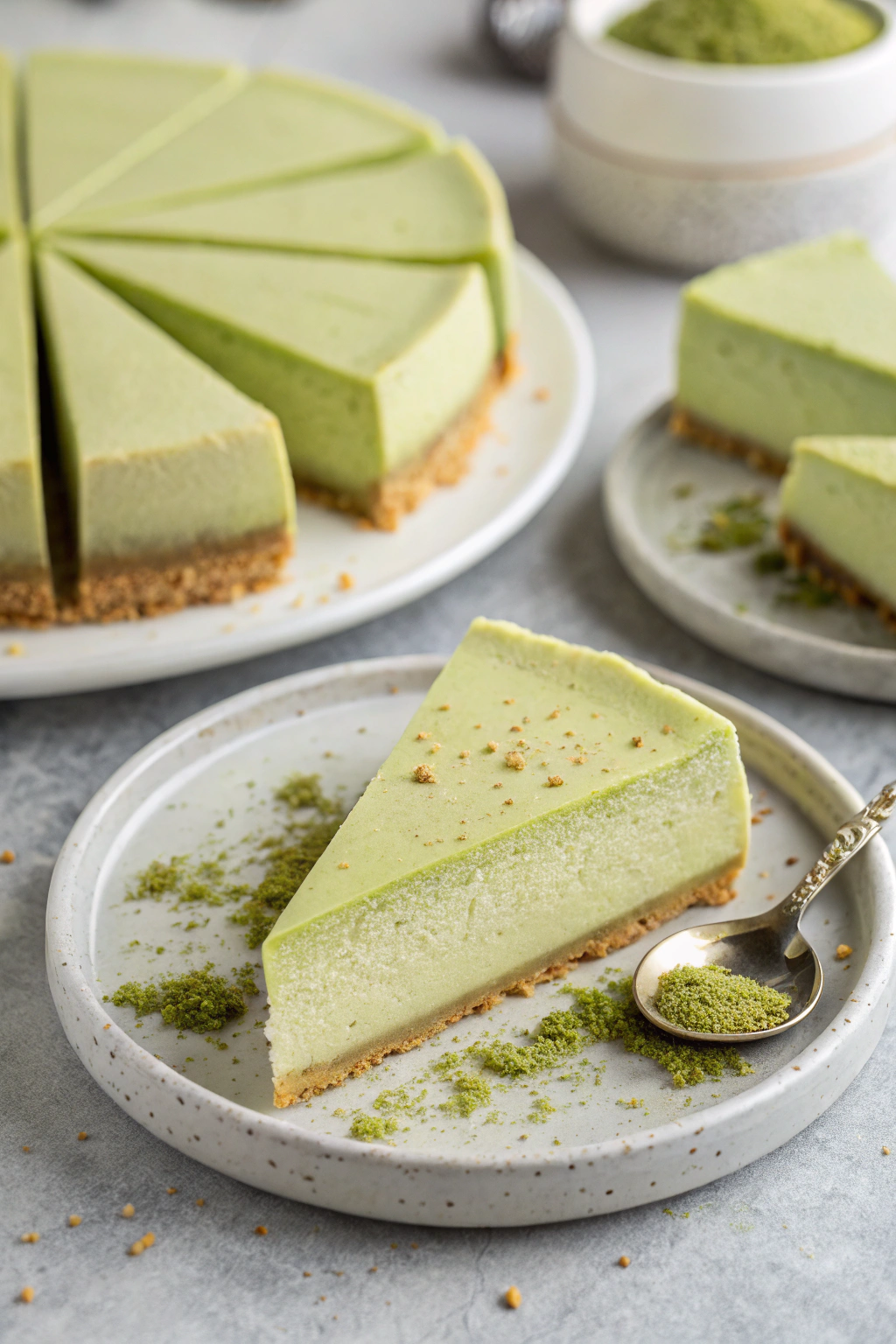
Original Matcha Japanese Cheesecake
Ingredients
Method
- Preheat the oven to 320°F (160°C). Line the bottom of an 8-inch round cake pan with parchment paper and lightly grease the sides. Wrap the outside of the pan with foil to prevent water from seeping in.
- Prepare a water bath by placing a larger baking pan in the oven and filling it with about 1 inch of hot water. Allow it to preheat with the oven.
- In a heatproof bowl over a double boiler on low heat, combine cream cheese, butter, and milk. Stir gently until smooth, then remove from heat and let cool slightly.
- Whisk 1/4 cup of the granulated sugar into the warm cream cheese mixture until dissolved. Add egg yolks one at a time, whisking well after each addition.
- Sift in cake flour, cornstarch, matcha powder, and salt. Whisk until the batter is smooth and no lumps remain. Set aside.
- In a clean mixing bowl, beat the egg whites with cream of tartar (if using) until foamy. Gradually add the remaining 1/4 cup plus 2 tablespoons granulated sugar while beating, and continue to whip until soft to medium peaks form.
- Gently fold one-third of the meringue into the matcha batter to lighten it. Then carefully fold in the remaining meringue in two additions, using a spatula and taking care not to deflate the mixture.
- Pour the batter into the prepared cake pan. Tap the pan lightly on the counter to remove large air bubbles.
- Place the cake pan into the preheated water bath. Bake at 320°F (160°C) for 20 minutes, then reduce the oven temperature to 285°F (140°C) and bake for another 40 minutes, or until the top is lightly golden and the center is set with a slight jiggle.
- Turn off the oven, open the door slightly, and let the cake cool in the oven for 15–20 minutes to prevent sudden shrinkage.
- Remove the cake from the water bath, run a thin knife around the edges, and carefully invert onto a plate, then flip right-side up. Cool completely. Dust with powdered sugar if desired before slicing and serving.
Notes
Approximate per 1 slice (1/10 recipe): 190 calories; fat 13 g; saturated fat 7 g; carbohydrates 15 g; fiber 0 g; sugars 11 g; protein 5 g; sodium 160 mg. Values will vary based on specific ingredients, brands, and portion size.