
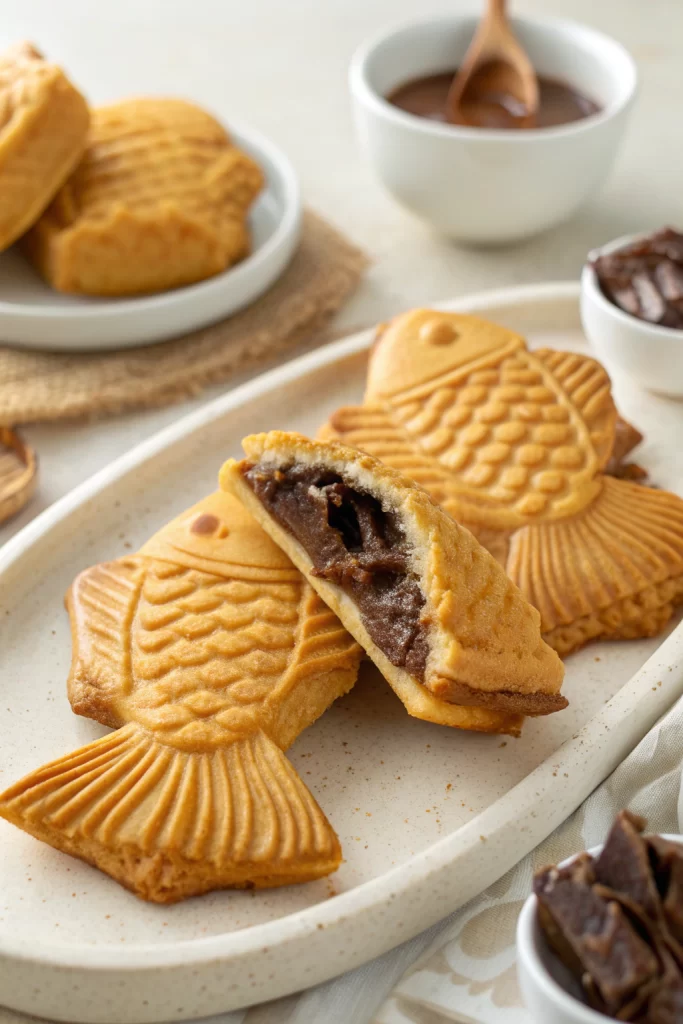
Taiyaki Japanese Fish Dessert Recipe tastes like a warm waffle cone stuffed with soft, custardy sweetness, and it works perfectly for anyone who loves fun, cute desserts that come together in about 45–60 minutes. This Taiyaki Japanese Fish Dessert Recipe fits busy weeknights, weekend projects with kids, or solo baking therapy sessions. I still remember burning my first batch in a tiny apartment kitchen and eating every single one anyway, because they tasted incredible.
Why Taiyaki Japanese Fish Dessert Recipe Is Worth It
Taiyaki looks impressive, but the batter uses simple pantry ingredients that you probably already own. You get a crisp, golden shell with a soft, fluffy interior and a rich filling that feels like street food straight from Tokyo.
The recipe also invites creativity. You can keep it classic with sweet red bean paste or go wild with Nutella, custard, or matcha cream without changing the base batter.
Tastes like a Japanese street festival in your kitchen, with crispy edges, creamy filling, and pure joy in every bite ★★★★★
Ingredients You Need
You can make this Taiyaki Japanese Fish Dessert Recipe with a basic pancake-style batter and a few fun fillings.
Batter ingredients
- 1 cup all-purpose flour
- 1 tablespoon cornstarch (helps keep the texture light and crisp)
- 1 teaspoon baking powder
- 2 tablespoons sugar
- 1 pinch fine sea salt
- 1 large egg, room temperature
- 3/4 cup milk (dairy or unsweetened soy milk; avoid strongly flavored milks)
- 1 teaspoon vanilla extract
- 1 tablespoon neutral oil (canola, vegetable, or light olive oil)
If you want a slightly chewier, more traditional texture, you can swap 2 tablespoons of the all-purpose flour with cake flour. I often use King Arthur or Bob’s Red Mill because they give consistent results.
Classic filling options
Pick one or mix and match. You need about 1 to 1 1/4 cups total filling.
- Sweet red bean paste (anko), smooth or chunky
- Use canned anko from a Japanese or Asian market for a shortcut.
- Custard or pastry cream
- Store-bought vanilla pudding works when you feel lazy.
- Chocolate hazelnut spread
- Thick matcha pastry cream or matcha pudding
- Sweet cream cheese filling (cream cheese + sugar + splash of milk)
Optional toppings
- Powdered sugar
- Matcha powder, lightly sifted
- Chocolate drizzle
- Fresh berries
- Scoop of vanilla or matcha ice cream
Equipment
- Taiyaki pan (stovetop cast aluminum or cast iron, fish-shaped)
- Small ladle or spouted measuring cup
- Heatproof spatula or chopsticks
- Small bowls for fillings
- Cooling rack
If you do not own a taiyaki pan, you can use a waffle iron or a sandwich maker, but you lose the fish shape. The flavor still hits the spot.
Quick Tips & substitutions
- Preheat the taiyaki pan fully so the batter crisps and browns nicely.
- Lightly oil the pan between batches to prevent sticking and to keep clean edges.
- Use a slightly thicker batter than pancake batter so it holds the filling.
- Chill soft fillings like custard or pudding so they do not run everywhere.
- Do not overfill; keep filling in the center and leave a border of batter.
- If you want less sweetness, cut the sugar in the batter to 1 tablespoon.
- Use oat milk, soy milk, or almond milk for dairy free batter.
- Swap anko with mashed sweet potato mixed with sugar for a cozy fall version.
- Use a low flame or medium-low heat to avoid burning the outside before the inside cooks.
- Test one taiyaki first, then adjust heat and batter amount before you cook the full batch.
How to Make Taiyaki Japanese Fish Dessert Recipe
Mix the batter
- Add flour, cornstarch, baking powder, sugar, and salt to a medium bowl. Whisk until everything looks evenly combined with no streaks.
- In another bowl, whisk the egg, milk, vanilla, and oil until smooth.
- Pour the wet ingredients into the dry ingredients while you whisk. Stir until the batter looks smooth with no visible lumps.
- Let the batter rest for 10 minutes so the flour hydrates and the texture turns more tender.
Prep the fillings and pan
- Scoop your chosen filling into a small bowl and stir it to loosen the texture.
- If the filling feels very soft, chill it in the fridge for 10 to 15 minutes so it thickens.
- Place the taiyaki pan on the stove over medium heat and let it preheat for a few minutes.
- Lightly brush or wipe the inside of each fish mold with a thin layer of oil.
Fill the molds
- Reduce the heat to medium-low once the pan feels hot.
- Pour a small amount of batter into one side of the fish mold, just enough to cover the bottom and reach the edges.
- Add about 1 tablespoon of filling in the center of the batter, leaving a border all around.
- Spoon a bit more batter over the filling to cover it completely without overflowing the mold.
Cook the taiyaki
- Close the taiyaki pan gently so the batter spreads into both sides of the mold.
- Cook for about 2 to 3 minutes, then flip the entire pan to cook the other side.
- Cook another 2 to 3 minutes, then open the pan slightly and check the color.
- When the taiyaki looks golden brown and feels slightly firm, use chopsticks or a spatula to lift it out and place it on a cooling rack.
Adjust and repeat
- Taste the first taiyaki and check the texture inside.
- If the inside feels undercooked, lower the heat slightly and cook each side longer on the next batch.
- If the outside browns too fast, reduce the heat and shorten the preheat time.
- Repeat the filling and cooking process until you use all the batter, oiling the molds lightly between batches.
Serve warm
- Dust the warm taiyaki with powdered sugar or matcha powder if you like.
- Serve plain or with a scoop of ice cream on the side.
- Enjoy while the outside still tastes crisp and the filling feels warm and soft.
Recipe Variations
- Gluten free: Use a 1 to 1 gluten free baking flour blend and add an extra teaspoon of cornstarch.
- Dairy free: Use plant milk and swap butter-based fillings with anko, dairy free chocolate spread, or coconut custard.
- Vegan: Use plant milk and replace the egg with 3 tablespoons aquafaba or a flax egg, and pick vegan fillings.
- Low sugar: Cut sugar in the batter to 1 tablespoon and use unsweetened red bean paste or lightly sweetened mashed sweet potato.
- Extra crispy: Add 1 extra tablespoon of cornstarch to the batter and cook slightly longer on lower heat.
- Kid friendly: Fill with chocolate chips, peanut butter, or strawberry jam.
Ways to Serve
- Serve warm with a scoop of vanilla or matcha ice cream.
- Pack a few taiyaki in lunchboxes as a fun dessert.
- Pair with hot green tea, hojicha, or milk tea.
- Serve on a dessert board with cut fruit, mochi, and dango.
- Offer different fillings at a party and let everyone pick their favorite.
Storage Success
Store leftover taiyaki in an airtight container at room temperature for up to 1 day if your filling does not contain dairy. If you use custard, pudding, or cream cheese, keep them in the fridge for up to 3 days. Reheat in a toaster oven or air fryer for a few minutes so the outside turns crisp again. Avoid the microwave when possible, since it softens the shell and makes the texture less fun.

Taiyaki Japanese Fish Dessert Recipe
Ingredients
Method
- In a bowl, whisk together flour, baking powder, salt, and sugar.
- In another bowl, whisk the egg, milk, vanilla (if using), and oil until smooth.
- Pour the wet ingredients into the dry ingredients and whisk just until combined; do not overmix. Let the batter rest for about 10 minutes.
- Preheat a taiyaki pan over medium heat and lightly brush the molds with oil.
- Pour a thin layer of batter into each side of the fish molds, just enough to cover the surface.
- Add about 1 to 1 1/2 tablespoons of red bean paste in the center of each mold, keeping it away from the edges.
- Cover the filling with a little more batter, being careful not to overfill.
- Close the pan and cook for 2–3 minutes on the first side, then flip and cook another 2–3 minutes, until golden brown and cooked through.
- Carefully remove the taiyaki from the pan and repeat with remaining batter and filling.
- Serve warm, or let cool slightly before eating.
Notes
Approximate per 1 taiyaki (1 of 8): 180–210 calories; fat 5–7 g; saturated fat 1–2 g; carbohydrates 32–36 g; fiber 2–3 g; sugars 10–14 g; protein 5–6 g; sodium 170–220 mg. Values are estimates and will vary based on brands, exact portion size, and filling amount.