
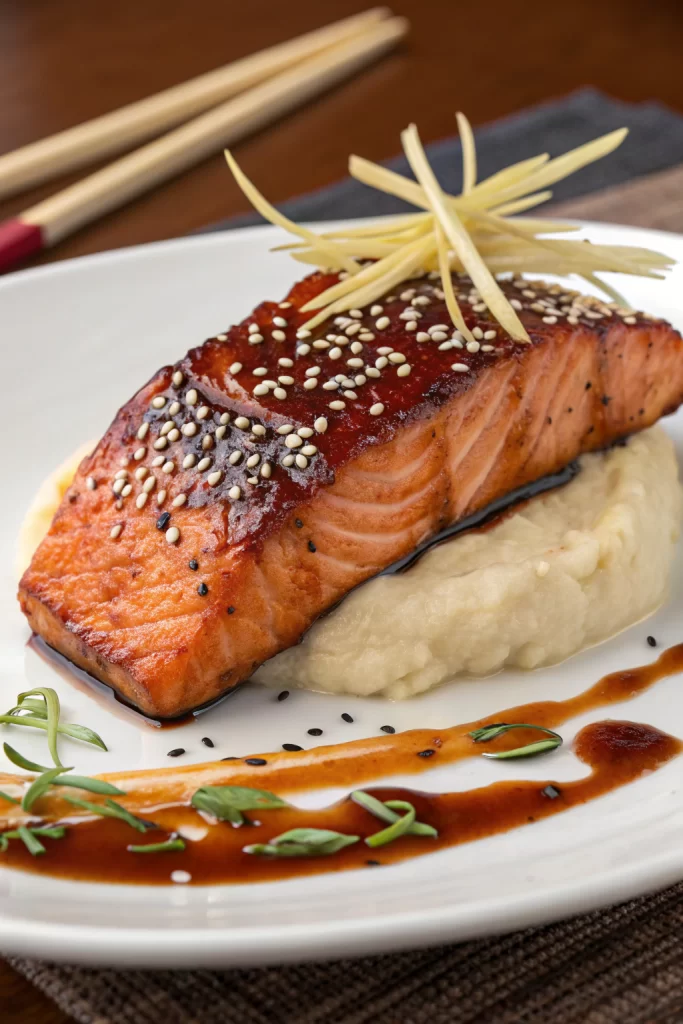
Sake-Glazed Salmon with Sesame Seeds tastes sweet, savory, a little nutty, and just rich enough to feel special on a weeknight. It works perfectly for busy home cooks who want restaurant-style salmon in about 25 minutes, start to finish. I first made this on a Tuesday when my sink overflowed and my day went sideways, and it still felt like a tiny victory on a plate.
Why Make This Sake-Glazed Salmon with Sesame Seeds at Home
You control the quality of the salmon, the sweetness of the glaze, and how deeply it caramelizes. Restaurants often overcook salmon or drown it in sauce, while you can cook it just until it flakes and still stays buttery.
You also save money and time, since the glaze uses simple pantry ingredients like soy sauce, sugar, and rice vinegar. Cleanup stays easy, especially if you line the pan and let the glaze do all the flavor work.
“This Sake-Glazed Salmon with Sesame Seeds tastes like a fancy Japanese bistro special, but I pulled it off in under 30 minutes in my tiny kitchen. ★★★★★”
Ingredients You Need
Salmon
- 4 salmon fillets, about 5 to 6 ounces each, skin on
- I prefer center-cut fillets since they cook more evenly.
- Use wild salmon for a firmer, more robust flavor, or farmed salmon for a richer, buttery texture.
Sake glaze
- 1/3 cup sake
- Any basic drinking sake works fine; no need for an expensive bottle.
- 3 tablespoons soy sauce
- Use low-sodium if you watch salt; regular soy sauce gives a deeper color.
- 2 tablespoons mirin
- If you do not have mirin, add 2 tablespoons sake plus 1 teaspoon sugar.
- 1 tablespoon rice vinegar
- Unseasoned rice vinegar tastes best; seasoned vinegar already contains sugar and salt, so reduce sugar slightly.
- 2 tablespoons brown sugar, packed
- Light brown sugar gives a gentle caramel flavor; dark brown adds more molasses notes.
- 1 tablespoon honey or maple syrup
- Honey thickens the glaze nicely; maple gives a subtle smoky sweetness.
- 2 teaspoons toasted sesame oil
- 2 cloves garlic, minced
- 1 teaspoon fresh ginger, grated or very finely minced
- 1 teaspoon cornstarch mixed with 1 teaspoon cold water (optional, for a thicker glaze)
Toppings and garnish
- 1 to 2 tablespoons toasted sesame seeds
- Use a mix of white and black sesame seeds if you want a pretty contrast.
- 2 green onions, thinly sliced
- Lime or lemon wedges for serving
Pantry shortcuts and notes
- Bottled minced garlic and ginger work in a pinch, though fresh gives brighter flavor.
- Pre-toasted sesame seeds save time and avoid burning them on the stove.
- If you keep a bottle of teriyaki sauce in the fridge, you can stir a spoonful into the glaze for extra depth.
Equipment
- Small saucepan for the glaze
- Whisk or small spatula
- Baking sheet or oven-safe skillet
- Parchment paper or foil for easier cleanup
- Instant-read thermometer (highly recommended for perfect doneness)
- Small brush or spoon for glazing
Tips & Mistakes
- Pat the salmon dry so the glaze sticks instead of sliding off.
- Bring the salmon to room temperature for 15 minutes so it cooks evenly and stays juicy.
- Do not overcrowd the pan; leave space between fillets so heat circulates and the glaze caramelizes.
- Keep the glaze at a gentle simmer; high heat burns the sugar and turns it bitter.
- Taste the glaze before you cook the fish and adjust salt or sweetness right away.
- Do not skip the sesame oil; it adds a nutty aroma that ties the whole dish together.
- Toast sesame seeds lightly and pull them off the heat as soon as they smell fragrant so they do not taste burnt.
- Watch the salmon closely in the last few minutes; it goes from perfect to dry very quickly.
- Aim for medium doneness; pull the salmon at 125 to 130°F and let it rest, since carryover heat finishes the cooking.
- Spoon extra glaze over the salmon right before serving so it looks glossy and tastes bold.
How to Make Sake-Glazed Salmon with Sesame Seeds
Step 1: Mix the glaze
Add sake, soy sauce, mirin, rice vinegar, brown sugar, honey, sesame oil, garlic, and ginger to a small saucepan. Whisk until the sugar dissolves and everything looks combined. Taste a drop and adjust with a pinch of sugar or a splash of soy sauce if needed.
Step 2: Reduce the glaze
Set the saucepan over medium heat. Bring the mixture to a gentle simmer and cook 4 to 6 minutes, stirring often, until it thickens slightly and smells fragrant. If you want a thicker glaze, stir in the cornstarch slurry and simmer 1 to 2 more minutes until glossy.
Step 3: Prep the salmon
Heat your oven to 400°F. Line a baking sheet with parchment or foil and lightly oil it. Pat the salmon fillets dry with paper towels, then place them skin side down on the sheet and sprinkle lightly with salt and pepper.
Step 4: Glaze the salmon
Brush or spoon a generous layer of the sake glaze over the top and sides of each fillet. Keep some glaze in the saucepan for basting and serving. The glaze should cling in a shiny coat, not pool in a huge puddle around the fish.
Step 5: Bake
Slide the tray into the hot oven. Bake 8 to 12 minutes, depending on thickness, until the salmon flakes easily with a fork and the center looks just slightly translucent. Baste once halfway through with more glaze to build a deeper, lacquered finish.
Step 6: Finish under the broiler (optional but tasty)
Switch the oven to broil on high and move the tray to the top rack. Broil 1 to 2 minutes, watching closely, until the glaze bubbles and caramelizes at the edges. Pull the salmon out as soon as you see light browning so the sugar does not scorch.
Step 7: Add sesame seeds and garnish
Sprinkle toasted sesame seeds over the hot salmon so they stick to the glaze. Add sliced green onions on top. Squeeze a little lime or lemon over each fillet right before serving to brighten the rich flavors.
Variations I’ve Tried
I sometimes swap half the sake with orange juice for a citrusy glaze that kids love. A spoonful of gochujang or chili garlic sauce turns the glaze into a sweet-spicy version that pairs well with plain rice.
You can cook the salmon in a skillet on the stove if you prefer; sear the fillets skin side down, then spoon the glaze in and let it bubble until the fish finishes cooking. I also tried this glaze on tofu and it worked surprisingly well, especially with extra sesame seeds and green onions.
How to Serve Sake-Glazed Salmon
Serve Sake-Glazed Salmon with Sesame Seeds over steamed jasmine rice, brown rice, or quinoa so the grains soak up the extra glaze. Add a simple side like roasted broccoli, sautéed green beans, or a crisp cucumber salad to keep the plate fresh and light. A bowl of miso-style soup or a side of edamame rounds out the meal without much extra work. I like to sprinkle extra sesame seeds at the table for crunch and a final drizzle of glaze for anyone who wants more sauce.
How to store
- Cool leftover salmon to room temperature within 30 minutes, then store in an airtight container in the fridge for up to 3 days.
- For longer storage, wrap each fillet tightly, place in a freezer-safe bag or container, and freeze for up to 2 months.
- Reheat gently in a covered skillet over low heat with a splash of water until warmed through, or warm in a 275°F oven for 10 to 15 minutes so the salmon stays tender.
- Avoid microwaving on high; use 50 percent power in short bursts if you need speed, and cover the salmon so it does not dry out.
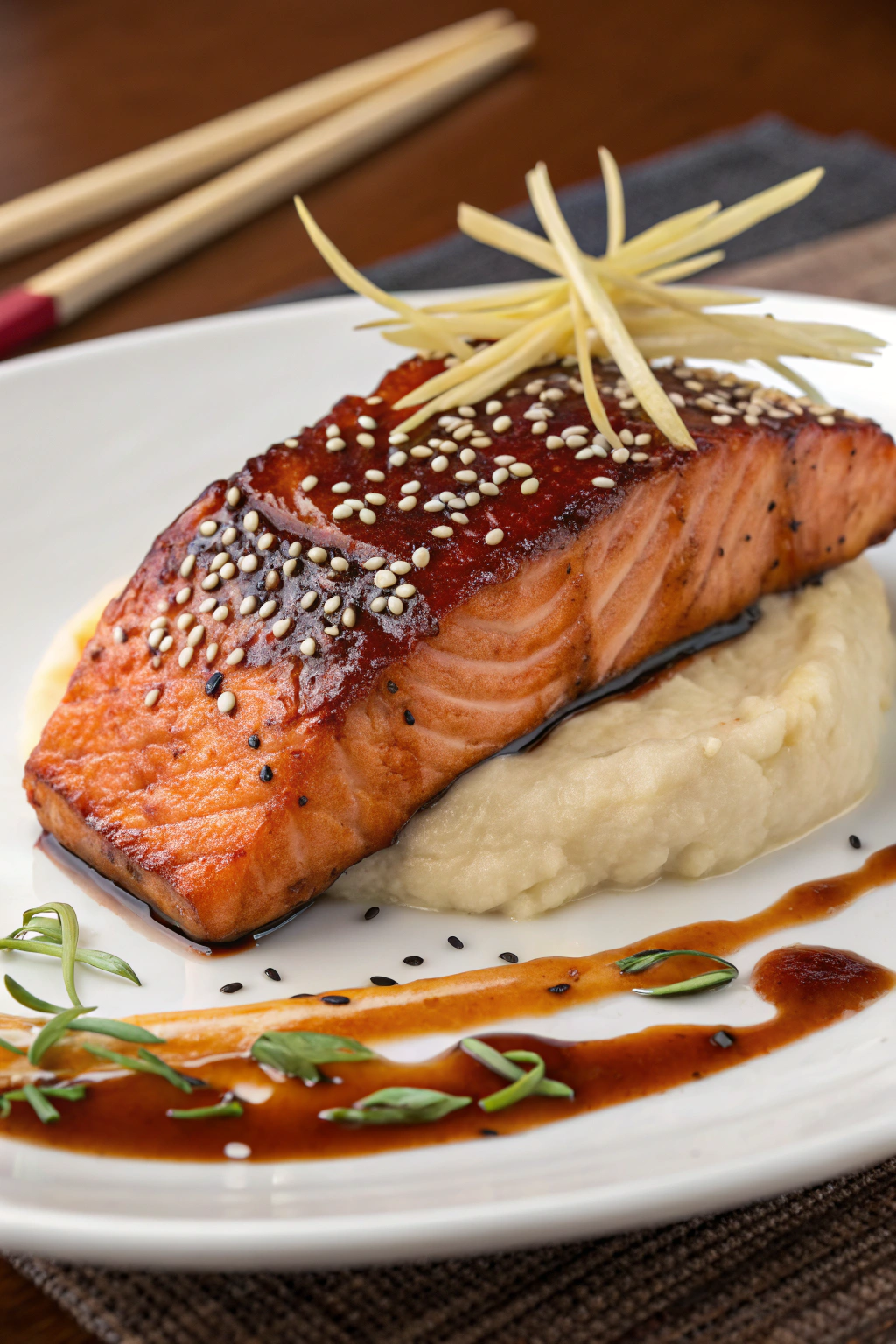
Sake-Glazed Salmon with Sesame Seeds
Ingredients
Method
- In a small saucepan, whisk together the sake, soy sauce, mirin, brown sugar, rice vinegar, garlic, and ginger.
- Bring to a gentle simmer over medium heat and cook for 4 to 6 minutes, stirring occasionally, until slightly thickened and glossy. Remove from heat and set aside.
- Pat the salmon fillets dry with paper towels, then season both sides lightly with salt and pepper.
- Heat the sesame oil in a large nonstick or cast-iron skillet over medium-high heat.
- Place the salmon fillets in the skillet, skin-side down if using skin-on, and sear for 3 to 4 minutes until the bottoms are browned.
- Flip the salmon fillets and pour the prepared sake glaze evenly over them.
- Reduce heat to medium and cook for another 3 to 5 minutes, spooning the glaze over the salmon as it thickens, until the salmon is just cooked through and flakes easily with a fork.
- Sprinkle the tops with toasted sesame seeds and cook 1 more minute to set the glaze.
- Transfer the salmon to serving plates, spooning any remaining glaze from the pan over the fillets.
- Garnish with sliced green onions if desired and serve immediately with rice and vegetables.
Notes
Approximate per serving (1 salmon fillet with glaze): 340 calories; fat 18 g; saturated fat 3 g; carbohydrates 9 g; fiber 0 g; sugars 6 g; protein 32 g; sodium 620 mg. Values will vary based on exact salmon size, brands of sauces, and portion size.