
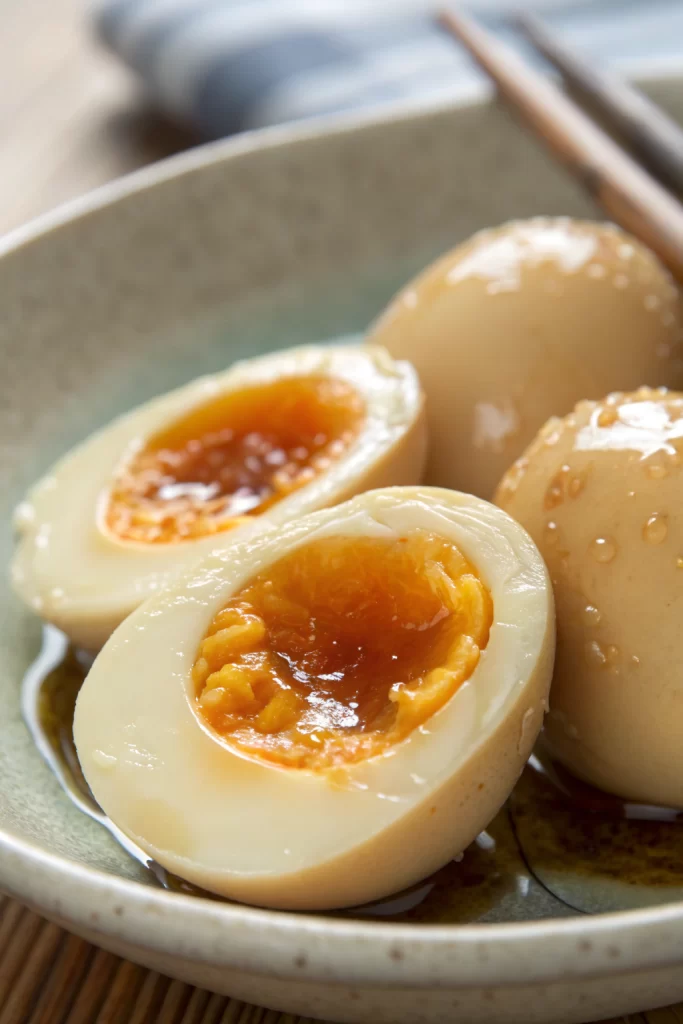
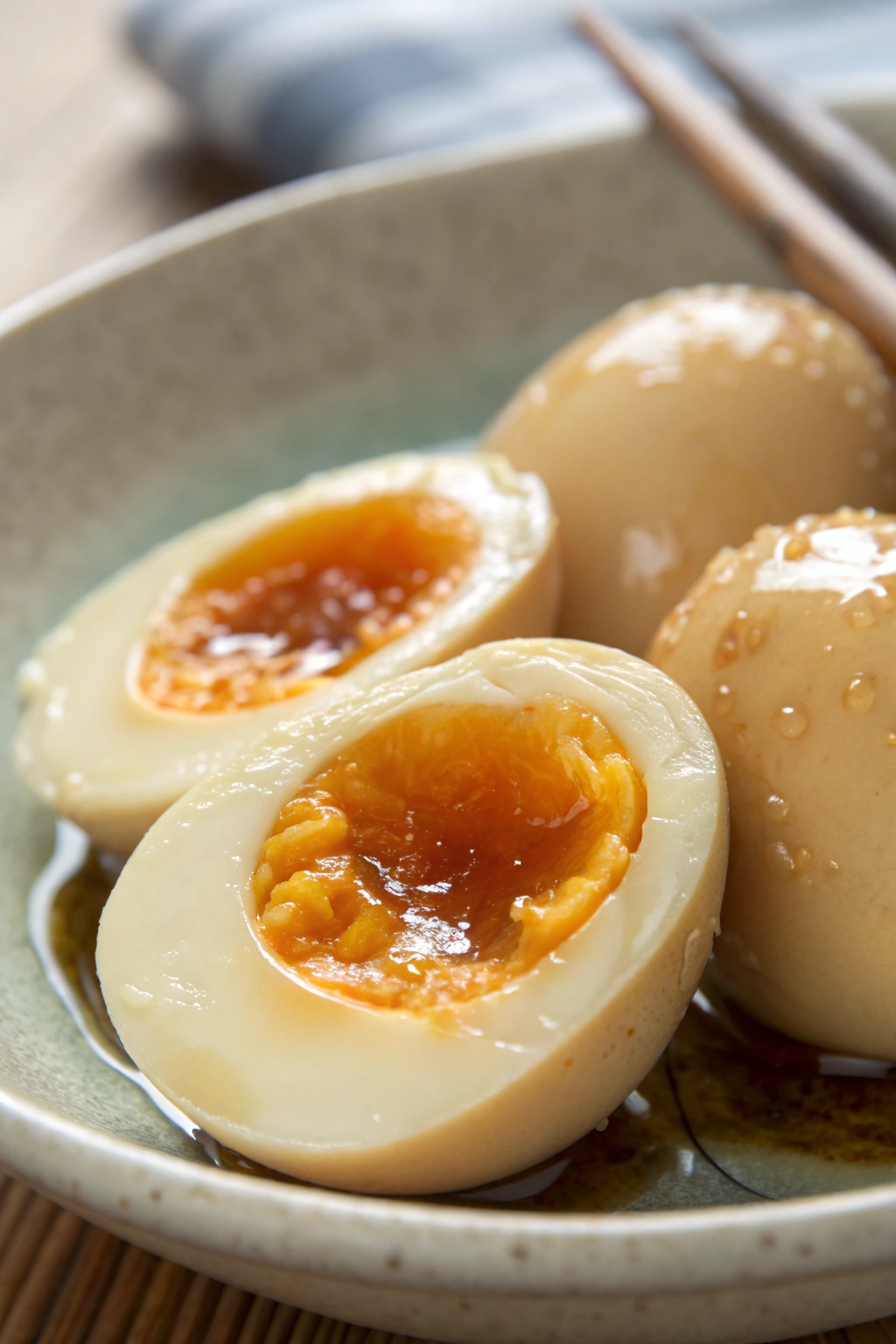
Ajitama Japanese Ramen Egg Recipe tastes rich, savory, and just a little sweet, with a jammy yolk that feels way fancier than the effort it takes. It works for busy home cooks who want restaurant-style ramen eggs in about 30 minutes of active time plus a short chill. I still remember the first time I nailed that custardy center and did a tiny victory dance in my kitchen.
Why Ajitama Japanese Ramen Egg Recipe Is Worth It
Ajitama eggs turn a simple bowl of noodles into something that feels like a ramen shop meal. The soy-based marinade soaks into the whites and seasons the yolk, so every bite tastes umami-rich and slightly smoky.
You can prep a batch on Sunday and enjoy perfect ramen eggs all week. The recipe uses basic pantry staples like soy sauce and mirin, so you skip specialty-store drama and still get that classic ajitama flavor.
“These ajitama ramen eggs taste like they came from a Tokyo ramen bar, but my tiny apartment kitchen pulled them off. ★★★★★”
Ingredients You Need
Eggs
- 6 large eggs, fridge cold
- Cold eggs help you time the cook more predictably.
- Use large size so the timing in this Ajitama Japanese Ramen Egg Recipe stays accurate.
Marinade
- 1 cup low sodium soy sauce
- Low sodium keeps the eggs from turning too salty.
- Use Japanese-style soy sauce if possible for classic flavor.
- 1 cup water
- Thins the marinade so it seasons gently and evenly.
- 1⁄2 cup mirin
- Mirin adds sweetness and a mild tang.
- Pantry shortcut: mix 1⁄2 cup water with 2 tablespoons sugar and 1 tablespoon rice vinegar if you do not have mirin.
- 2 tablespoons sugar
- Balances the saltiness of the soy sauce.
- You can use brown sugar for a deeper, caramel note.
- 2 tablespoons rice vinegar
- Adds brightness so the eggs do not taste flat.
- Apple cider vinegar works in a pinch, but use a tiny bit less.
- 2 cloves garlic, lightly crushed
- Adds aroma without overpowering the eggs.
- 1 small piece fresh ginger, about 1 inch, sliced
- Gives a warm, subtle spice that fits ramen flavors.
- 1 piece kombu (optional, about 2 by 2 inches)
- Adds extra umami if you have it in your pantry.
- Skip it if you do not keep kombu; the Ajitama Japanese Ramen Egg Recipe still tastes great.
Water and ice
- 2 quarts water for boiling
- 1 tray ice cubes for the ice bath
- The ice bath stops the cooking and keeps the yolks jammy.
Equipment
- Medium pot
- Slotted spoon
- Large bowl for ice bath
- Small pot or saucepan for marinade
- Measuring cups and spoons
- Timer
- Zip-top bag or small container that fits the eggs snugly
- Small plate or paper towel to help weigh eggs down in the marinade
Quick Tips & substitutions
- Use fridge-cold eggs so you can repeat the same cook time every batch.
- Prick a tiny hole in the wide end of each egg with a thumbtack to reduce cracking and help peeling.
- Stir the boiling water in a gentle circle before you lower the eggs so they sit in the center and cook evenly.
- Set a timer the second the eggs enter the water; 6 minutes 30 seconds gives a jammy yolk, 7 minutes gives a slightly firmer center.
- Swap mirin with a mix of water, sugar, and a splash of rice vinegar if you do not keep mirin.
- Use tamari instead of soy sauce if you want a gluten free version of this Ajitama Japanese Ramen Egg Recipe.
- Add a small piece of kombu or a few dried shiitake slices to the marinade for extra umami depth.
- Keep the eggs in a snug container or bag so the marinade covers them fully and seasons them evenly.
- Peel the eggs under a thin stream of running water to help the shell slide off cleanly.
- Taste the marinade before you chill it and adjust sweetness or salt to match your preference.
How to Make Ajitama Japanese Ramen Egg Recipe
Step 1: Mix the marinade
- Add soy sauce, water, mirin, sugar, and rice vinegar to a small pot.
- Toss in the garlic cloves, ginger slices, and kombu if you use it.
- Heat over medium until the mixture just starts to steam and the sugar dissolves, then turn off the heat.
- Let the marinade cool to room temperature, then move it to the fridge so it chills while you cook the eggs.
Step 2: Boil the eggs
- Fill a medium pot with about 2 quarts of water and bring it to a rolling boil.
- While the water heats, set up a large bowl with cold water and plenty of ice.
- When the water boils, lower the heat slightly so it still bubbles but does not splash too hard.
- Gently lower the cold eggs into the pot with a slotted spoon and start your timer right away.
Step 3: Time the perfect yolk
- Cook the eggs 6 minutes 30 seconds for a very jammy yolk that barely holds, or 7 minutes for a slightly firmer but still soft center.
- Keep the water at a steady simmer so the eggs cook evenly.
- While the eggs cook, stir the water gently once or twice so the eggs move and cook on all sides.
- When the timer rings, lift the eggs out with the slotted spoon and drop them straight into the ice bath.
Step 4: Chill and peel
- Let the eggs sit in the ice bath at least 10 minutes so the centers cool and stop cooking.
- Tap each egg all over on the counter to crack the shell lightly.
- Peel under a small stream of running water to help the shell and membrane slide off.
- Pat the peeled eggs dry with a paper towel.
Step 5: Marinate the eggs
- Pour the chilled marinade into a zip-top bag or a small container.
- Add the peeled eggs and press out extra air so the liquid covers them fully.
- If the eggs float, place a small clean plate or folded paper towel on top to keep them submerged.
- Chill at least 4 hours, but aim for 8 to 12 hours for the best Ajitama Japanese Ramen Egg Recipe flavor.
Step 6: Serve
- When you feel hungry, lift an egg from the marinade and slice it in half lengthwise with a sharp knife.
- Wipe the knife between cuts so the yolk stays neat and glossy.
- Spoon the eggs onto hot ramen, rice bowls, or salads.
- Drizzle a tiny bit of leftover marinade over the top if you want extra flavor.
Recipe Variations
- Gluten free: Use tamari or certified gluten free soy sauce and check your mirin label.
- Low carb: Cut the sugar in half and use a low carb sweetener that dissolves well.
- No soy: Use coconut aminos instead of soy sauce and reduce the sugar slightly since coconut aminos taste sweeter.
- Extra spicy: Add a teaspoon of chili flakes or a spoon of chili crisp to the marinade.
- Smoky: Add a tiny splash of smoked soy sauce or a pinch of smoked salt.
- Vegan style: Use soft tofu cubes or marinated mushrooms in the same marinade instead of eggs for a ramen topping.
Ways to Serve
- Halved on top of a steaming bowl of chicken or vegetable ramen.
- Sliced over a simple bowl of rice with scallions and sesame seeds.
- As a protein snack straight from the fridge with cucumber sticks.
- Chopped into a cold noodle salad with soy dressing and crunchy veggies.
- On avocado toast with a sprinkle of furikake or toasted sesame seeds.
- As a side with grilled chicken, tofu, or fish and a simple green salad.
Storage Success
Store the ajitama eggs in their marinade in a sealed container in the fridge for up to 3 days. The flavor grows stronger each day, so eat the saltiest ones last in a bowl of broth or over plenty of rice. If the eggs sit longer than 24 hours, pull them from the marinade and keep them dry so they do not turn too salty. Keep the leftover marinade in the fridge up to 3 days and use it as a seasoning splash for stir fries or rice.
Ajitama Japanese Ramen Egg Recipe
Ingredients
Method
- In a small saucepan, combine water, soy sauce, mirin, sake if using, and sugar. Add garlic and ginger if using.
- Bring the mixture just to a simmer over medium heat, stirring to dissolve the sugar. Remove from heat and let cool to room temperature.
- Bring a pot of water to a gentle boil. Using a spoon, carefully lower the eggs into the boiling water.
- Cook the eggs for 6 to 7 minutes for a jammy yolk, adjusting slightly for your preferred doneness.
- While the eggs cook, prepare a large bowl of ice water.
- When the time is up, transfer the eggs immediately to the ice water and let cool completely, about 10 minutes.
- Gently crack and peel the eggs under running water to avoid tearing the whites.
- Place the peeled eggs in a zip-top bag or small container and pour the cooled marinade over them, ensuring they are fully submerged.
- Refrigerate for at least 4 hours, preferably overnight, and up to 2 days, turning the eggs occasionally for even coloring.
- To serve, slice the ajitama in half and place on top of ramen or enjoy as a snack.
Notes
Approximate per 1 egg: 90 calories; fat 6 g; saturated fat 2 g; carbohydrates 3 g; fiber 0 g; sugars 2 g; protein 7 g; sodium 420 mg. Values will vary based on brands, exact marinade absorption, and portion size.