
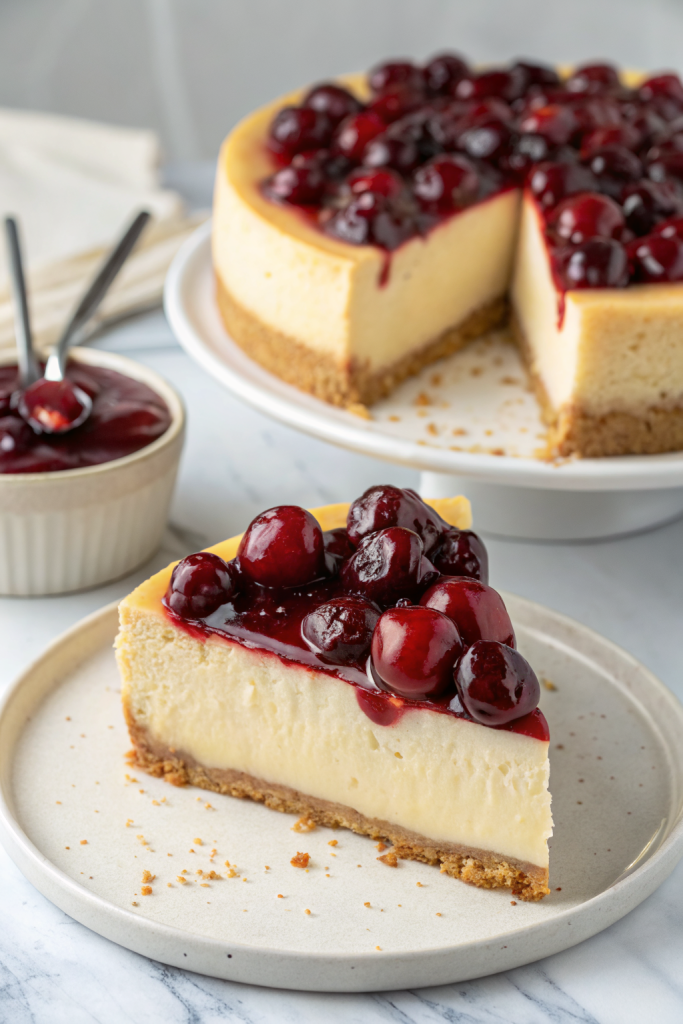
Perfect Cheesecake Recipe tastes ultra creamy, slightly tangy, and rich enough that one slice feels like a tiny celebration, and it works for beginners and seasoned home bakers in about 1 hour of bake time plus chilling. This recipe fits anyone who wants a bakery-style New York cheesecake without strange ingredients or fancy equipment. I still remember my first wobbly, cracked cheesecake 12 years ago, and this version fixes every mistake I made back then.
Why Make This Perfect Cheesecake Recipe at Home
Homemade cheesecake tastes richer, fresher, and creamier than anything from a grocery store bakery case. You control the sweetness, the crust thickness, and the toppings, so every slice matches what you crave.
You also save money, especially when you bake it for birthdays, holidays, or potlucks. People treat it like a luxury dessert, but you secretly know it uses simple ingredients from the fridge and pantry.
“This Perfect Cheesecake Recipe tastes like a fancy bakery dessert, but my family begged for seconds and swore it came from a restaurant. ★★★★★”
Ingredients You Need
You can make this Perfect Cheesecake Recipe with basic ingredients that you probably recognize and trust. I list my favorite brands and easy swaps so you avoid last-minute grocery runs.
Crust Ingredients
- 1 1/2 cups (about 150 g) graham cracker crumbs
- Use honey graham crackers or plain; avoid cinnamon if you want classic flavor.
- You can crush them in a zip-top bag with a rolling pin or use a food processor.
- 2 tablespoons granulated sugar
- 1/8 teaspoon fine sea salt
- 6 tablespoons unsalted butter, melted
- I like a good quality American butter like Challenge or Land O Lakes.
- If you only have salted butter, skip the added salt in the crust.
Cheesecake Filling Ingredients
- 32 ounces (4 bricks) full-fat cream cheese, softened to room temperature
- Use block-style cream cheese, not the whipped tub version.
- Philadelphia gives the most consistent texture, but store brands often work fine.
- 1 cup granulated sugar
- 1/4 teaspoon fine sea salt
- 1 cup full-fat sour cream, room temperature
- Greek yogurt can stand in for sour cream in a pinch, but sour cream gives a silkier texture.
- 1 tablespoon fresh lemon juice
- Bottled lemon juice works if you do not have fresh, but fresh tastes brighter.
- 2 teaspoons pure vanilla extract
- I like Nielsen-Massey or a good store-brand pure vanilla; avoid imitation if you can.
- 4 large eggs, room temperature
Optional Topping Ingredients
- 1 cup sour cream
- 2 tablespoons powdered sugar
- 1 teaspoon vanilla extract
Or use:
- Fresh berries
- Fruit compote or pie filling
- Caramel sauce or chocolate sauce
- Shaved chocolate or crushed cookies
Pantry Shortcuts and Substitutions
- Use pre-made graham cracker crumbs to skip crushing crackers.
- Swap graham crackers with vanilla wafers, digestive biscuits, or chocolate cookies for a twist.
- Use Greek yogurt in place of sour cream in both the filling and topping, but keep it full-fat for best texture.
- If you only have medium or small eggs, weigh them; you want about 200 g of egg without shells.
Equipment List
- 9-inch springform pan (nonstick if possible)
- Large roasting pan or deep baking dish for the water bath
- Heavy-duty aluminum foil
- Mixing bowls
- Electric hand mixer or stand mixer with paddle attachment
- Rubber spatula
- Measuring cups and spoons
- Cooling rack
- Sharp knife and thin spatula for slicing and serving
Tips & Mistakes
- Bring cream cheese, eggs, and sour cream to room temperature so the batter mixes smooth and creamy.
- Mix on low to medium speed and stop when everything looks combined so you avoid too much air and giant cracks.
- Scrape the bowl often so no lumps of cream cheese hide at the bottom.
- Wrap the springform pan tightly with heavy-duty foil so water from the bath never sneaks into the crust.
- Use hot tap water or boiling water in the roasting pan so the cheesecake bakes gently and evenly.
- Do not overbake; pull the cheesecake when the edges look set and the center jiggles like Jell-O.
- Cool the cheesecake slowly in the oven with the door cracked so the top stays smooth and avoids big cracks.
- Chill for at least 8 hours or overnight so the texture sets and slices cleanly.
- Run a thin knife around the edge after baking so the cheesecake releases from the pan and avoids tearing.
- Slice with a hot, clean knife and wipe between cuts so every slice looks bakery-level.
How to Make Perfect Cheesecake Recipe
Step 1: Prep the Pan and Oven
Preheat your oven to 325°F (163°C). Place the oven rack in the lower-middle position so the cheesecake sits in the center of the heat. Wrap the outside of your 9-inch springform pan with at least two layers of heavy-duty foil, covering the bottom and sides.
Set the wrapped pan inside a large roasting pan or deep baking dish. Grease the inside of the springform pan lightly with butter or nonstick spray. This step helps the cheesecake release cleanly after baking.
Step 2: Make the Graham Cracker Crust
Stir the graham cracker crumbs, sugar, and salt together in a bowl. Pour in the melted butter and mix until the crumbs feel like wet sand and hold together when you squeeze a handful. If the mixture looks dry and crumbly, add another tablespoon of melted butter.
Press the crumbs firmly into the bottom of the springform pan and slightly up the sides, about 1 inch. Use the bottom of a measuring cup to pack the crust tightly so it bakes crisp and does not crumble. Bake the crust for 8 to 10 minutes, then remove it and let it cool slightly while you mix the filling.
Step 3: Mix the Cheesecake Filling
Beat the softened cream cheese in a large bowl with a mixer on medium speed until it looks smooth and fluffy, about 2 minutes. Add the sugar and salt and mix again until the mixture looks creamy and no gritty sugar remains. Scrape the bowl and beaters so everything blends evenly.
Add the sour cream, lemon juice, and vanilla extract and mix on low speed until combined. Crack in the eggs one at a time, mixing on low after each addition just until the yolk disappears. Stop the mixer as soon as the batter looks smooth and silky; overmixing adds air and leads to cracks.
Step 4: Fill the Pan and Set Up the Water Bath
Pour the cheesecake batter over the slightly cooled crust in the springform pan. Tap the pan gently on the counter a few times to pop any large air bubbles. Smooth the top with a spatula.
Place the roasting pan with the cheesecake on the oven rack. Carefully pour hot water into the roasting pan until it reaches about halfway up the sides of the springform pan. Work slowly so no water splashes into the cheesecake.
Step 5: Bake the Cheesecake
Bake at 325°F (163°C) for 55 to 70 minutes. Start checking at 55 minutes; the edges should look set and slightly puffed, while the center should still jiggle like a soft custard when you nudge the pan. If the entire surface looks firm with no jiggle, you went a bit long, but the cheesecake still tastes great.
If the top browns too quickly, tent it loosely with foil. Avoid opening the oven door often, since big temperature swings can cause cracks. Trust the jiggle test more than the clock, since every oven behaves a little differently.
Step 6: Cool the Cheesecake Slowly
Turn off the oven and crack the door open a few inches. Leave the cheesecake inside the water bath for 45 to 60 minutes so it cools gradually. This slow cool helps prevent cracks and keeps the texture velvety.
After that hour, remove the roasting pan from the oven. Lift the springform pan out of the water and place it on a cooling rack. Run a thin knife around the edge of the cheesecake to loosen it from the sides of the pan, then let it cool to room temperature, about 1 to 2 hours.
Step 7: Chill Until Set
Cover the cooled cheesecake (still in the pan) with plastic wrap or foil. Chill it in the refrigerator for at least 8 hours, or overnight if you can wait. The chilling time lets the cheesecake firm up and develop that classic dense, creamy texture.
Do not rush this step, even if the cheesecake looks set. If you slice too early, the center can slump and smear. Overnight chilling gives you clean, picture-perfect slices.
Step 8: Add Optional Sour Cream Topping
If you want a tangy, bakery-style finish, stir together the sour cream, powdered sugar, and vanilla until smooth. Spread the topping gently over the chilled cheesecake in a thin, even layer. You can add this topping right before serving or a few hours ahead.
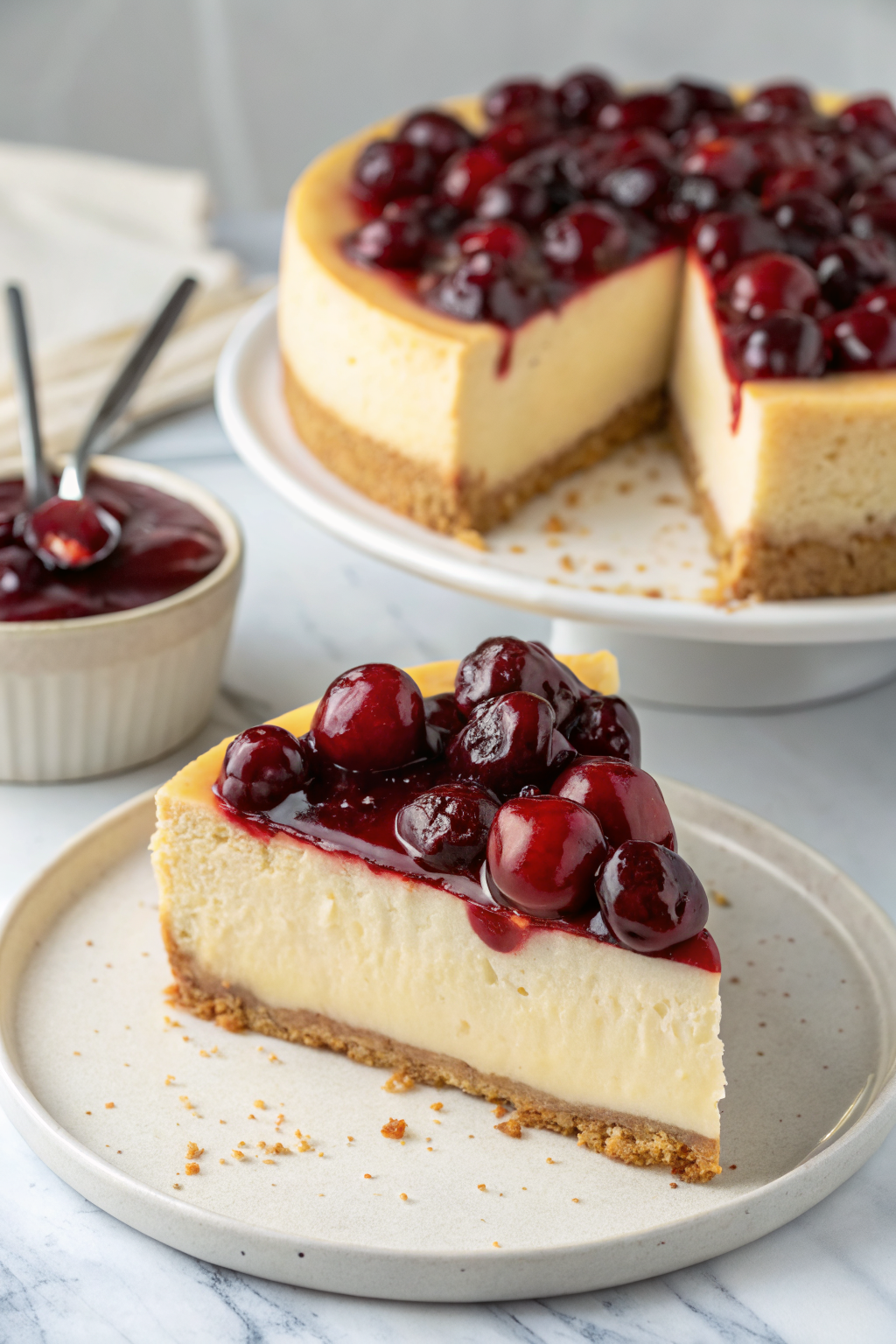
Top with fresh berries, fruit sauce, or chocolate shavings if you like. The topping hides any tiny cracks and adds a nice flavor contrast. It also makes the cheesecake look like it came from a fancy dessert case.
Step 9: Slice and Serve
Release the springform latch and remove the outer ring. Use a long, sharp knife dipped in hot water and wiped dry to slice. Clean the knife between cuts so each slice looks neat.
Slide a thin spatula under each slice to lift it out cleanly. Serve chilled or let the slice sit at room temperature for 10 to 15 minutes for a softer bite. Either way, the texture stays rich and creamy.
Variations I've Tried
-
Chocolate swirl cheesecake: Swirl 1 cup of melted, slightly cooled dark chocolate into the batter before baking. Drag a knife through the top to create a marbled look. This version tastes like a truffle and a cheesecake had a very delicious meeting.
-
Lemon cheesecake: Add extra lemon zest and a bit more lemon juice to the batter, and top with lemon curd. The flavor turns bright and citrusy, perfect for spring and summer gatherings. A vanilla wafer crust pairs especially well with this version.
-
Berry-topped cheesecake: Spoon a thick layer of mixed berry compote or fresh strawberries over the chilled cheesecake. The tart fruit balances the richness and adds color. Kids usually go straight for this one.
-
Oreo cheesecake: Swap the graham crackers for chocolate sandwich cookies in the crust and fold chopped cookies into the batter. The result tastes like cookies and cream ice cream in cheesecake form. This version disappears first at every party.
-
Salted caramel cheesecake: Drizzle salted caramel sauce over each slice and sprinkle with a tiny pinch of flaky salt. Use a plain graham crust so the caramel flavor stands out. This one feels extra indulgent without extra work.
How to Serve Perfect Cheesecake Recipe
Serve this Perfect Cheesecake Recipe well chilled so the slices hold their shape, but let each slice sit for about 10 minutes at room temperature if you want a softer, creamier bite. Add fresh berries, sliced strawberries, or a simple berry sauce on top for a bright, fruity contrast. A drizzle of chocolate sauce or caramel sauce also pairs beautifully with the tangy filling.
You can serve it plain for cheesecake purists and set out bowls of toppings so everyone customizes their own slice. It works as a showstopper dessert for birthdays, holidays, or casual Sunday dinners.
How to store
-
In the fridge: Cover the cheesecake tightly with plastic wrap or store slices in airtight containers. Keep in the refrigerator for up to 5 days. The flavor actually improves slightly on day two and three.
-
In the freezer (whole cheesecake): Chill the cheesecake completely, then freeze it uncovered until firm. Wrap it in plastic wrap, then foil, and freeze for up to 2 months. Thaw overnight in the fridge before serving.
-
In the freezer (individual slices): Freeze slices on a parchment-lined baking sheet until solid. Wrap each slice in plastic wrap and place in a freezer bag, then freeze for up to 2 months. Thaw slices in the fridge for several hours or on the counter for about 30 to 45 minutes.
-
Best way to reheat or soften: Cheesecake tastes best chilled or just slightly cool. If you want a softer texture, let a slice sit at room temperature for 15 to 20 minutes instead of using the microwave, which can turn the texture rubbery.
Perfect Cheesecake Recipe
Ingredients
Method
- Preheat the oven to 325°F (165°C). Lightly grease a 9-inch springform pan and line the bottom with parchment paper.
- In a medium bowl, combine graham cracker crumbs, sugar, and melted butter. Stir until all crumbs are evenly moistened.
- Press the crumb mixture firmly into the bottom and slightly up the sides of the prepared pan. Use the bottom of a measuring cup to compact the crust.
- Bake the crust for 8–10 minutes, then remove from the oven and let cool slightly while you prepare the filling.
- Reduce oven temperature to 300°F (150°C).
- In a large mixing bowl, beat the softened cream cheese on medium speed until completely smooth and free of lumps, scraping down the bowl as needed.
- Add the sugar and beat until well combined and creamy.
- Mix in the sour cream, heavy cream, vanilla, and salt on low speed until just combined.
- Add the eggs one at a time, mixing on low speed after each addition just until incorporated. Avoid overmixing to minimize air bubbles.
- Wrap the outside of the springform pan tightly with two layers of heavy-duty aluminum foil to prevent water from seeping in.
- Place the wrapped pan in a large roasting pan. Pour the cheesecake batter over the crust and smooth the top.
- Pour hot water into the roasting pan until it comes about halfway up the sides of the springform pan, creating a water bath.
- Bake at 300°F (150°C) for 55–70 minutes, or until the edges are set and the center still has a slight wobble when gently shaken.
- Turn off the oven, crack the door slightly, and let the cheesecake cool in the oven for 1 hour to help prevent cracking.
- Carefully remove the cheesecake from the water bath and discard the foil. Run a thin knife around the edge to loosen it from the pan.
- Let the cheesecake cool completely at room temperature, then cover and refrigerate for at least 4 hours or overnight until fully chilled.
- Before serving, release the springform ring. Top with fresh berries and warmed jam if desired, slice with a sharp knife, and serve chilled.
Notes
Approximate per 1 slice (1/12 of recipe): 470 calories; fat 34 g; saturated fat 20 g; carbohydrates 33 g; fiber 0 g; sugars 26 g; protein 7 g; sodium 330 mg. Values will vary based on specific ingredients, add-ins, and portion size.