

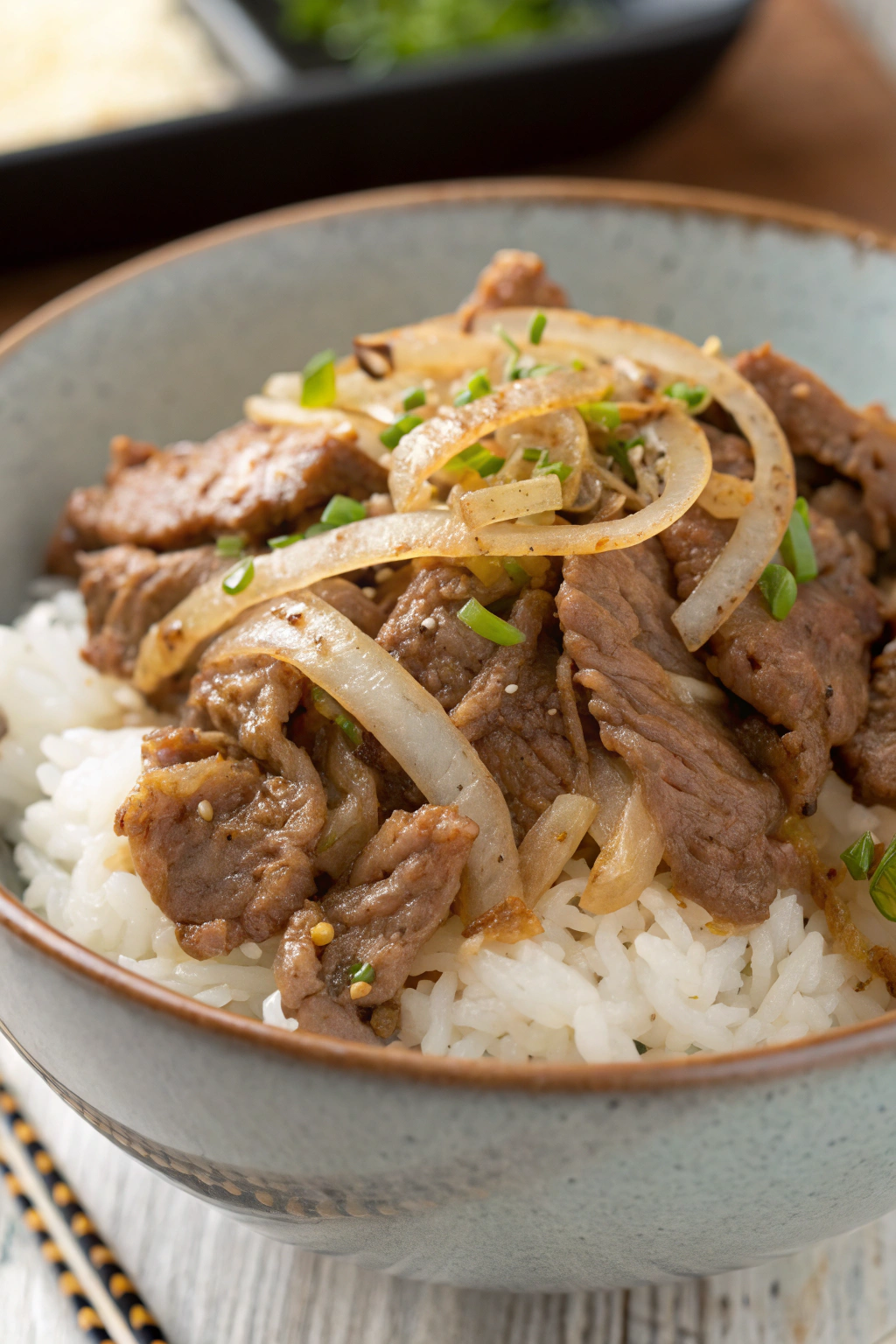
Gyudon Japanese Beef Rice Bowl Recipe tastes savory, slightly sweet, and ultra comforting, like a cozy hug over hot rice. It works perfectly for busy weeknights, students, or anyone who wants a fast Japanese-style dinner in about 25 minutes. I first learned this version after burning a different beef bowl recipe in college, so you can say this one carries some tasty redemption.
Why Choose This Gyudon Japanese Beef Rice Bowl Recipe
This gyudon Japanese beef rice bowl recipe uses thinly sliced beef, sweet onion, and a soy-based sauce that cooks in minutes. You get restaurant-style flavor with simple pantry ingredients and minimal chopping.
You cook everything in one pan, which means less cleanup and more time to eat. The recipe scales easily, so you can cook it for one, two, or a hungry crowd without extra effort.
“This Gyudon Japanese Beef Rice Bowl Recipe tastes like my favorite Tokyo beef bowl shop, but I made it in 20 minutes at home! ★★★★★”
Ingredients You’ll Need
Beef & Rice
- 1 pound thinly sliced beef (ribeye, sirloin, or chuck; use pre-sliced “shabu shabu” or “hot pot” beef if your store carries it)
- 4 cups cooked Japanese short-grain rice (or any medium/short-grain white rice; leftover rice works great)
Vegetables & Aromatics
- 1 large yellow onion, thinly sliced
- 2 green onions, thinly sliced (for garnish)
- 1 small knob fresh ginger, finely grated (about 1 teaspoon; use ginger paste as a shortcut)
- 1 clove garlic, minced (optional, not traditional but tasty)
Sauce (Gyudon Broth)
- 1 cup dashi stock (homemade, instant dashi powder, or substitute low-sodium chicken broth)
- 3 tablespoons soy sauce (use low-sodium if you watch salt)
- 3 tablespoons mirin (Japanese sweet rice wine; use “aji-mirin” from most supermarkets)
- 2 tablespoons sake (optional; if you skip it, add 1 extra tablespoon mirin plus 1 tablespoon water)
- 1 tablespoon sugar (white or light brown)
- 1 teaspoon neutral oil (canola, vegetable, or avocado)
Toppings
- 2 to 4 eggs (you can poach, soft boil, or fry them)
- Beni shoga (red pickled ginger), to taste
- Shichimi togarashi (Japanese seven spice), to taste
- Toasted sesame seeds, optional
Pantry & Brand Notes
- Use Kikkoman or Yamasa soy sauce for classic flavor.
- Use Hondashi granules for quick dashi; follow the package ratio with hot water.
- Use frozen pre-sliced beef from Asian markets for super tender meat and easy prep.
Equipment
- Medium or large skillet or shallow saucepan
- Cutting board and sharp knife
- Rice cooker or pot for rice
- Small bowl and whisk or chopsticks for mixing sauce
- Tongs or chopsticks for handling beef
Tips & Tricks
- Slice beef very thin so it cooks in seconds and stays tender.
- Partially freeze the beef for 30 minutes to make thin slicing easier.
- Use yellow or sweet onions since they soften and caramelize nicely.
- Cook onions low and slow at first so they turn silky and sweet.
- Taste the broth before you add the beef and adjust salt or sweetness.
- Do not overcook the beef; simmer it just until the color changes.
- Serve over hot rice so the sauce soaks in and seasons every bite.
- Keep some extra sauce in the pan and spoon it over the rice.
- Add a soft egg on top for extra richness and that classic gyudon vibe.
- Use leftover beef and onions as a topping for noodles the next day.
How to Make Gyudon Japanese Beef Rice Bowl Recipe
Step 1: Cook the Rice
- Rinse the rice under cold water until the water runs mostly clear.
- Cook the rice in a rice cooker or pot according to package directions.
- Keep the rice warm and covered while you cook the beef and onions.
Step 2: Prep the Beef and Vegetables
- If the beef does not come sliced, place it in the freezer for 20 to 30 minutes.
- Slice the beef thinly across the grain into bite-size pieces.
- Slice the onion into thin half-moons and slice the green onions for garnish.
- Grate the ginger and mince the garlic if you use it.
Step 3: Mix the Gyudon Sauce
- In a small bowl, add dashi, soy sauce, mirin, sake, and sugar.
- Stir until the sugar dissolves completely.
- Taste the sauce and adjust with a pinch more sugar or soy if you like.
Step 4: Cook the Onions
- Heat the neutral oil in a skillet over medium heat.
- Add the sliced onions and a pinch of salt.
- Cook and stir until the onions turn translucent and start to soften, about 5 to 7 minutes.
- Add the ginger and garlic, then cook 30 seconds until fragrant.
Step 5: Simmer with Sauce
- Pour the sauce mixture into the skillet with the onions.
- Bring it to a gentle simmer over medium heat.
- Let the onions simmer in the sauce for 3 to 5 minutes until they turn very soft and sweet.
- Taste the broth again and tweak seasoning if needed.
Step 6: Add and Cook the Beef
- Spread the beef slices over the simmering onions in a single layer.
- Gently push the beef into the sauce with chopsticks or tongs.
- Simmer for 2 to 4 minutes until the beef just loses its pink color.
- Turn off the heat so the beef stays tender and juicy.
Step 7: Cook the Eggs
- While the beef simmers, cook your eggs how you like them.
- Soft boil them for 6 to 7 minutes, or fry them sunny-side-up until the whites set and yolks stay runny.
- You can also poach eggs in simmering water for 3 to 4 minutes.
- Keep the eggs warm until you assemble the bowls.
Step 8: Assemble the Gyudon Bowls
- Scoop hot rice into serving bowls and fluff it lightly.
- Spoon onions and beef over the rice, then ladle some extra sauce on top.
- Place an egg in the center of each bowl.
- Garnish with green onions, beni shoga, shichimi togarashi, and sesame seeds.
What to Serve with it?
Serve this gyudon Japanese beef rice bowl recipe with a simple miso soup and a side of steamed edamame for a complete meal. Add a small salad with crisp lettuce, cucumber, and a light sesame dressing for freshness. You can also serve it with blanched broccoli or green beans for extra vegetables. A cup of hot green tea or iced barley tea pairs nicely and keeps the meal light.
Storage Options
- Store leftover beef and onions in an airtight container in the fridge for up to 3 days.
- Keep cooked rice in a separate container in the fridge for up to 3 days.
- Freeze the beef and onion mixture in freezer-safe containers or bags for up to 2 months.
- Reheat beef and onions gently in a skillet over low heat with a splash of water or dashi until hot.
- Reheat rice in the microwave with a damp paper towel on top so it stays soft and fluffy.
Gyudon Japanese Beef Rice Bowl Recipe
Ingredients
Method
- If not already sliced, place the beef in the freezer for 20–30 minutes to firm up, then slice it very thinly against the grain.
- Peel and thinly slice the onions. Slice the green onions for garnish and set aside.
- In a large skillet or shallow saucepan, heat the neutral oil over medium heat.
- Add the sliced onions and cook, stirring occasionally, until they begin to soften and turn translucent, about 4–5 minutes.
- Pour in the dashi stock, soy sauce, mirin, sake (if using), and sugar. Add the grated ginger if using. Stir to combine and bring the mixture to a gentle simmer.
- Once simmering, add the sliced beef, spreading it out so the pieces are mostly submerged in the broth. Skim off any foam or scum that rises to the surface.
- Simmer gently over medium-low heat until the beef is just cooked through and tender and the onions are very soft, about 5–7 minutes. Do not overcook to keep the beef tender.
- Taste the broth and adjust seasoning if needed with a little more soy sauce or sugar to balance the savory-sweet flavor.
- While the beef simmers, cook Japanese short-grain rice according to package directions so it is hot and fluffy when serving.
- If serving with eggs, prepare onsen tamago or soft-cooked eggs so the yolks remain runny or jammy.
- Scoop hot cooked rice into 4 serving bowls.
- Top each bowl of rice with a generous portion of beef and onions, along with some of the savory-sweet broth.
- Place an egg on top of each bowl if using. Garnish with sliced green onions and a small mound of beni shoga.
- Sprinkle with shichimi togarashi if desired and serve immediately while hot.
Notes
Approximate per serving (1 bowl with rice, beef, onions, and egg): 620 calories; fat 22 g; saturated fat 7 g; carbohydrates 77 g; fiber 2 g; sugars 13 g; protein 30 g; sodium 1350 mg. Values are estimates and will vary based on exact cut of beef, brand of ingredients, portion size, and whether optional toppings are included.